The Future of Electronic Medical Records: What Indian Healthcare Must Prepare For
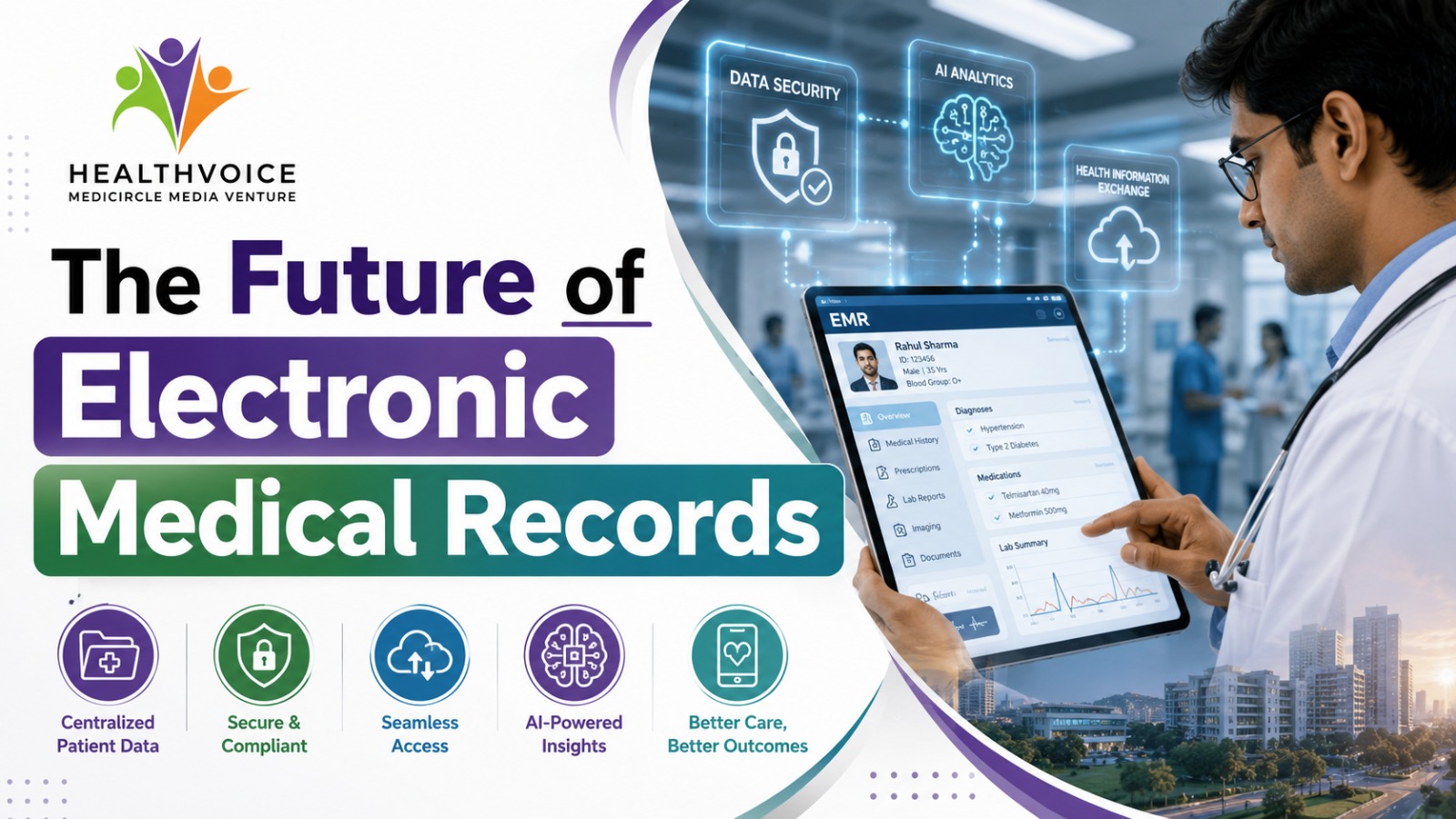
Electronic medical records in India are evolving rapidly through AI, ABDM integration, cloud technology, and interoperability frameworks, reshaping clinical documentation and strengthening coordinated, patient-centred healthcare delivery nationwide.
Introduction
The way Indian doctors document, share, and act on patient information is undergoing a fundamental shift. Electronic medical records, once considered a luxury of large private hospital chains, are steadily becoming the standard of care delivery across the country. From busy tertiary care hospitals in Mumbai and Delhi to primary health centres in smaller towns, the movement toward digital health records is gaining momentum like never before.
India's healthcare system handles an enormous volume of patient interactions every day. According to the National Health Systems Resource Centre, India has over 25,000 government hospitals, more than 1.5 lakh public health centres, and millions of private clinics. Most of these facilities, until recently, depended on paper-based systems that created problems of legibility, continuity, retrieval, and coordination. The shift to electronic medical records is not merely a technological upgrade. It is a clinical necessity.
What makes this moment particularly important is the convergence of several forces: the Ayushman Bharat Digital Mission (ABDM), the rapid expansion of affordable internet connectivity, the rise of artificial intelligence in clinical settings, and a growing recognition among Indian doctors that digital records improve outcomes, reduce errors, and save time. This article examines where electronic medical records in India are headed, what forces are shaping that trajectory, and what healthcare professionals must understand to remain effective in this changing landscape.
Understanding Electronic Medical Records and Their Role in Indian Healthcare
An electronic medical record is a digital version of the traditional paper chart maintained by a healthcare provider. It captures clinical information generated within a single practice or facility, including patient demographics, diagnoses, prescribed medications, laboratory results, imaging reports, clinical notes, and visit histories. The terms electronic medical record (EMR) and electronic health record (EHR) are often used interchangeably, though there is a distinction worth understanding.
An EMR contains the clinical data of a single provider or institution. An EHR is designed to travel with the patient across multiple providers and settings, offering a more longitudinal and comprehensive view of a person's health. India's national digital health strategy, anchored by ABDM and the Health Data Management Policy, is essentially building the infrastructure for a nationwide EHR ecosystem where every citizen's health data can be securely accessed by authorised providers.
The Ayushman Bharat Digital Mission, launched in 2021 and expanded significantly in subsequent years, has been the single most important policy driver for EMR adoption in India. It introduced the Ayushman Bharat Health Account (ABHA) number, a unique health ID for every Indian citizen, and the Health Facility Registry (HFR), which maps verified healthcare institutions across the country. These building blocks are enabling a future where a patient's medical history is linked, portable, and accessible in real time.
For Indian doctors, this represents both an opportunity and a responsibility. The opportunity lies in better clinical decision-making, reduced duplication of tests, and seamless referrals. The responsibility is to engage with and contribute to this ecosystem rather than remain passive observers.
The Driving Forces Behind EMR Adoption in India
Several distinct forces are accelerating the move toward electronic medical records across Indian healthcare, and understanding them helps frame what the future will look like.
Policy and regulatory momentum is perhaps the strongest driver. The National Medical Commission, the Ministry of Health and Family Welfare, and ABDM are collectively creating a policy environment where digital health records are not optional but expected. Hospitals seeking NABH accreditation are increasingly evaluated on their digital health infrastructure. Government-funded schemes under Ayushman Bharat now require empanelled hospitals to maintain digital records for auditing and reimbursement purposes.
Smartphone and internet penetration has dramatically changed what is feasible. India has over 800 million internet users, and cloud-based EMR platforms can now be accessed on affordable smartphones without requiring sophisticated hardware. This has opened the door for smaller clinics and rural practitioners to adopt digital records in ways that were simply not possible five years ago.
Patient expectations are also evolving. Urban patients increasingly expect to receive their lab reports, prescriptions, and consultation summaries in digital formats. They want to share records easily across providers. This demand is pushing clinics and hospitals to modernise faster than purely policy-driven timelines might require.
The economics of error are becoming impossible to ignore. Studies from organisations such as the Indian Council of Medical Research (ICMR) and published in peer-reviewed journals consistently show that poor medical record-keeping contributes to adverse drug events, missed diagnoses, and unnecessary repeat investigations. Digital records directly address these gaps.
Key Trends Shaping the Future of Electronic Medical Records in India
Artificial Intelligence and Intelligent Documentation
The integration of artificial intelligence into electronic medical record systems is arguably the most transformative trend underway globally, and Indian healthcare is beginning to experience its early effects. AI-powered EMR platforms are moving beyond simple data storage and retrieval to become active clinical support tools.
Natural Language Processing (NLP) allows these systems to convert spoken clinical notes into structured digital entries, reducing the time doctors spend on documentation. Voice-enabled AI scribing tools, already being piloted in some Indian hospital chains, can listen to a doctor-patient conversation and generate a clinical note that is accurate, codified, and ready for the record. This directly addresses one of the most common complaints among Indian doctors: the documentation burden that takes time away from patient care.
Beyond documentation, AI in EMR systems is enabling:
- Predictive risk scoring for chronic conditions such as diabetes, hypertension, and chronic kidney disease, which carry enormous disease burden in India
- Automated flagging of abnormal laboratory values and imaging findings
- Drug interaction alerts that consider the patient's complete medication list
- Differential diagnosis support based on symptom patterns and clinical context
Indian EMR developers are also building AI tools trained specifically on Indian clinical data, which is important given that disease presentations, medication choices, and patient demographics in India differ from Western populations.
Interoperability and the ABDM Ecosystem
For electronic medical records to deliver their full potential, they must be able to communicate with each other. This is the principle of interoperability, and it has historically been one of the most challenging problems in health informatics. A patient who visits a cardiologist at one hospital, a nephrologist at another, and a general physician at a third should have all of those providers working from the same complete clinical picture. Currently, that is rarely the case in India.
ABDM's Health Information Exchange and Consent Manager (HIE-CM) framework, built on the Health Data Standards prescribed by the National Health Authority, is India's national answer to this problem. It uses FHIR (Fast Healthcare Interoperability Resources) standards to enable secure, consent-based sharing of health data across systems. When fully operational at scale, this means a doctor in Lucknow can access, with the patient's consent, records generated in a Bengaluru hospital weeks earlier.
For this ecosystem to function, individual EMR systems must become ABDM-compliant, meaning they must support ABHA-linked record creation, FHIR-based data formats, and the consent framework mandated by the Health Data Management Policy. This compliance requirement is pushing EMR vendors to rapidly upgrade their platforms, and it is creating a market opportunity for Indian healthtech companies that build to these standards from the ground up.
Cloud-Based Systems and Rural Reach
Traditional EMR deployments required expensive local servers, dedicated IT staff, and reliable power infrastructure, all of which were significant barriers for smaller facilities and rural health settings. Cloud-based EMR platforms have fundamentally changed this equation.
A cloud-hosted EMR can be accessed from any device with an internet connection, updated remotely by the vendor, and scaled up or down based on the facility's needs. For a district hospital in Jharkhand or a community health centre in Rajasthan, cloud-based EMR makes digital records a realistic possibility rather than a distant aspiration.
The Indian government's PM-WANI scheme to expand public WiFi infrastructure, combined with the rapid growth of affordable 4G and 5G connectivity, means that the connectivity barrier is receding even in Tier 2 and Tier 3 towns. This opens a significant opportunity for responsible rollout of EMR systems across India's vast network of public health facilities.
Wearables, Remote Monitoring, and Data Integration
India is experiencing rapid growth in the use of wearable health devices. Smartwatches that track heart rate, blood oxygen levels, sleep quality, and physical activity are increasingly common among urban populations. Glucometers, blood pressure monitors, and pulse oximeters that connect to smartphones are being used for home monitoring of chronic conditions.
The future of electronic medical records includes the seamless integration of this continuously generated health data into the clinical record. When a cardiologist can see not just the values recorded in a clinic but a week of heart rate data from a patient's wearable device, the clinical picture becomes substantially richer. EMR platforms are increasingly building APIs that allow this integration, and India's healthtech ecosystem is developing solutions tailored to common Indian use cases, including diabetes management, cardiac monitoring, and maternal health tracking.
Patient Portals and Empowered Health Consumers
One of the most significant shifts in the philosophy of electronic health records is the move from provider-controlled records to patient-accessible records. Modern EMR systems are increasingly paired with patient-facing portals and mobile applications that allow individuals to view their medical history, download their records, receive appointment reminders, access lab reports, and communicate securely with their care team.
Under ABDM's framework, every Indian with an ABHA number has the right to access their health records through the ABHA application. This represents a fundamental change in how health information is owned and controlled in India. Doctors and healthcare systems that embrace this shift will find that better-informed patients are more engaged, more adherent to treatment plans, and more likely to maintain continuity of care.
Cybersecurity and Data Privacy
As healthcare data moves onto digital platforms, the risks of data breaches, ransomware attacks, and unauthorised access become real clinical and legal concerns. The Digital Personal Data Protection Act, 2023 (DPDPA) establishes a legal framework for how personal data, including health data, must be handled in India. Healthcare institutions that maintain EMR systems are now data fiduciaries with legal obligations around data security, consent, and breach notification.
EMR systems of the future must incorporate end-to-end encryption, multi-factor authentication, granular access controls, and comprehensive audit trails as baseline features rather than optional add-ons. The responsibility for ensuring these protections lies with both the technology vendors and the healthcare institutions that deploy their systems.
Challenges That Indian Healthcare Must Honestly Address
An honest assessment of the future of electronic medical records in India must acknowledge the genuine challenges that remain. Awareness of these barriers is the first step toward addressing them.
The digital literacy gap among healthcare workers, particularly in smaller towns and rural areas, remains significant. Many doctors trained in paper-based systems find the transition to EMR platforms uncomfortable and time-consuming. Sustainable adoption requires sustained training, user-friendly interface design, and peer-led change management rather than top-down mandates alone.
Fragmentation of the vendor landscape in India means that there are hundreds of EMR products in the market with varying levels of quality, compliance, and support. Not all of these products meet ABDM compliance standards, and some smaller vendors may not have the resources to keep pace with evolving regulatory requirements. Healthcare institutions must make carefully considered choices when selecting EMR systems.
Infrastructure gaps persist in certain regions. Reliable electricity and internet connectivity, while improving nationally, remain inconsistent in some areas. EMR systems designed for Indian deployment must account for offline functionality and data synchronisation when connectivity is restored.
Physician burnout from documentation is a concern globally and in India as well. If EMR systems are poorly designed or require excessive data entry, they can add to clinical workload rather than reduce it. The future of EMR must prioritise interface design that minimises clicks, streamlines workflows, and reduces the time doctors spend interacting with the system.
What This Means for Indian Doctors and Healthcare Associations
The transformation of electronic medical records is not simply an information technology matter. It is a clinical leadership issue. Indian doctors, medical associations, and healthcare institutions have a vital role to play in shaping how this transformation unfolds.
Medical associations, including specialty societies and state medical councils, are uniquely positioned to set standards for EMR use within their communities, advocate for physician-friendly design requirements, provide training and orientation to members, and ensure that the voices of practising clinicians are heard in policy discussions around digital health.
Platforms such as HealthVoice, which are built specifically to amplify doctor voices and strengthen healthcare community engagement, offer an important forum for these conversations. When doctors, associations, and healthcare leaders discuss EMR challenges and solutions openly within their professional communities, they generate the collective intelligence needed to make digital transformation work for clinical practice rather than against it.
Staying informed about ABDM developments, understanding what FHIR compliance means for daily practice, engaging with EMR training programmes, and participating in association-level discussions about digital health standards are all ways in which individual doctors and professional bodies can contribute to a better digital health future for India.
Conclusion
Electronic medical records in India are at an inflection point. The combination of national policy momentum through ABDM, technological advances in artificial intelligence and cloud computing, growing patient demand for digital engagement, and the increasing interconnectedness of India's healthcare ecosystem means that the future of clinical documentation is digital, data-rich, and collaborative.
The road ahead is not without its challenges. Issues of interoperability, data privacy, physician training, and infrastructure equity require thoughtful, sustained effort. But the direction is clear, and the opportunity is significant. For doctors and healthcare associations that engage proactively with this transition, electronic medical records represent not just an administrative tool but a genuine pathway to better, safer, more coordinated care for Indian patients.
The goal, ultimately, is not digitisation for its own sake. It is a healthcare system where no patient's history is lost, no critical drug interaction goes unnoticed, and no doctor works without the complete clinical picture. Electronic medical records, done right, can deliver exactly that.
Frequently Asked Questions
Q1: What is the difference between an EMR and an EHR, and which is more relevant for Indian healthcare?
An EMR (Electronic Medical Record) stores clinical data generated within a single provider or facility, while an EHR (Electronic Health Record) is designed to be shared across multiple providers and settings. In the context of India's ABDM framework, the country is building toward an EHR ecosystem where patient health information is portable across providers through the ABHA system. For Indian doctors, understanding both concepts is important, as facility-level EMR systems will increasingly need to connect to the national EHR infrastructure.
Q2: How does the Ayushman Bharat Digital Mission (ABDM) affect EMR adoption for private practitioners in India?
ABDM creates the national digital infrastructure for health data exchange in India, including the ABHA health ID system, Health Facility Registry, and Health Information Exchange. Private practitioners who register their facilities on HFR and begin issuing ABHA-linked digital health records become part of this ecosystem. While participation is currently voluntary for many private practitioners, hospitals empanelled under Ayushman Bharat schemes and those seeking NABH accreditation face increasing digital compliance expectations.
Q3: What should Indian doctors look for when choosing an EMR system for their clinic or hospital?
Doctors evaluating EMR systems should prioritise ABDM compliance and FHIR-based interoperability, ease of use and minimal documentation burden, local language support where relevant, robust data security and DPDPA compliance, offline functionality for areas with unreliable connectivity, and the quality of ongoing vendor support and training. It is also advisable to look for systems that have been validated in Indian clinical settings rather than adapted from Western platforms.
Q4: How are AI and machine learning changing the way EMR systems work in 2026?
AI is transforming EMR systems from passive record repositories into active clinical support tools. Key developments include AI-powered voice scribing that converts spoken notes to structured records, predictive analytics that flag high-risk patients, automated drug interaction alerts, and clinical decision support based on evidence-based guidelines. In the Indian context, AI tools are beginning to be trained on local datasets, making them more relevant to Indian disease patterns and clinical practice.
Q5: What are the legal obligations of Indian healthcare providers regarding electronic health records and patient data?
Indian healthcare providers maintaining electronic health records have obligations under multiple frameworks including the Digital Personal Data Protection Act 2023, the Health Data Management Policy under ABDM, and the Clinical Establishments Act where applicable. Key obligations include obtaining informed consent for data collection and sharing, implementing appropriate data security measures, maintaining audit trails of record access, and having a breach notification protocol. The National Health Authority's guidelines on ABDM compliance provide specific technical and procedural requirements for healthcare facilities participating in the digital health ecosystem.
Resources
- Ayushman Bharat Digital Mission (ABDM), National Health Authority: Official guidelines, ABHA framework, and EMR compliance standards for India's digital health ecosystem.
- Indian Council of Medical Research (ICMR): Evidence-based research on health informatics, digital health outcomes, and electronic health record implementation in Indian settings.
- Ministry of Health and Family Welfare, Government of India: Policy documents, national health programme updates, and Clinical Establishments Act regulations relevant to EMR adoption.
- World Health Organization (WHO), India Country Office: Global and regional guidance on digital health strategy, interoperability standards, and health information systems.
- National Health Systems Resource Centre (NHSRC): Technical support documents for digital health implementation in public health facilities across India.
Interlinking Keywords:
Ayushman Bharat Digital Mission, ABHA health ID, electronic health records India, NABH accreditation, health data interoperability, AI in clinical documentation, telemedicine India, Health Data Management Policy, digital health transformation, doctor community platform
Last medically reviewed by:
Editorial and Medical Advisory Team, HealthVoice 31 July 2026
Medical Disclaimer:
The information provided in this article is intended for educational and informational purposes only and is directed at healthcare professionals, medical associations, and health policy stakeholders. It does not constitute medical advice and should not be used as a substitute for professional clinical judgment. Readers are encouraged to consult relevant regulatory guidelines, including those issued by the National Health Authority, the National Medical Commission, and the Ministry of Health and Family Welfare, for the most current and authoritative guidance on electronic health record compliance and digital health standards in India.
 Team Healthvoice
#DigitalHealth #ElectronicMedicalRecords
