Doctors for the Hills or Dues for the Bonds? Uttarakhand’s Push for Accountability in Healthcare
As Uttarakhand moves ahead with fresh recruitment and stricter monitoring, one can hope that the hill districts will finally see hospitals that are not just buildings but centers of healing.
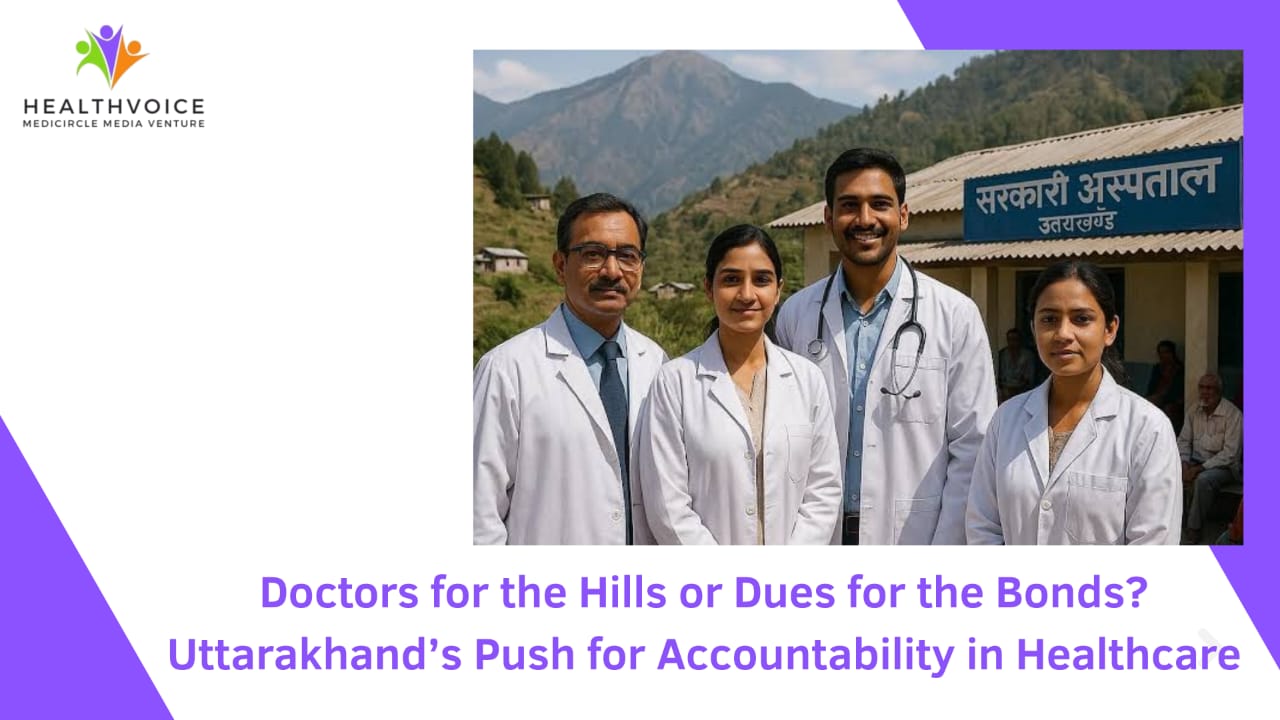
In the valleys and towering mountains of Uttarakhand, healthcare has long been an uphill climb. The picturesque landscape hides a difficult reality of villages where hospitals stand waiting for doctors who never arrive, patients traveling hours across treacherous terrain for basic medical attention, and families who suffer silently because a functional health system feels like a luxury too far from reach. Against this backdrop, the state government has taken a decisive step that has stirred conversations not only in Uttarakhand but across the medical fraternity of India. In a bold announcement, Health and Medical Education Minister Dr. Dhan Singh Rawat revealed that while the state is preparing to recruit 300 more doctors to strengthen its fragile healthcare system, the government has also terminated the services of 56 bond-holding doctors who abandoned their duties despite repeated notices.
The move might appear harsh to some, but it reflects a deeper issue that lies at the heart of India’s healthcare system of commitment, accountability, and the balance between opportunity and responsibility. The government’s stance has been clear that Uttarakhand will not tolerate negligence when the lives of its people are at stake. Over the years, the state has invested heavily in creating opportunities for medical education, offering subsidized MBBS seats in its government medical colleges with one condition that the graduates return to serve in the difficult hill districts where doctors are desperately needed. The bond system was designed not as a punishment but as a promise, a way to ensure that public investment in medical education translates into service for the public good.
But promises are only as strong as the will to keep them. Many young doctors, after completing their MBBS degrees at minimal cost to their families, chose to walk away from their obligations. Some sought lucrative positions in private hospitals, while others preferred metropolitan lifestyles, unwilling to spend their early careers in rural health centers that lack infrastructure, connectivity, and the glamour of big cities. In the last round of reviews, notices were sent to 234 such doctors who had been absent without authorization. While 178 eventually returned to duty after being warned, 56 chose defiance. The government has now dismissed them and initiated proceedings to recover the bond amount, reinforcing the principle that contracts and commitments in public service are not optional.
The health minister’s announcement comes at a time when Uttarakhand is pushing to reimagine its healthcare delivery model. With 220 new medical officers already deployed in remote regions and another 300 posts soon to be filled, the government is attempting to solve the dual crisis of shortage and accessibility. For the people living in districts where hospitals often exist only on paper, the presence of even a single doctor can mean the difference between life and death. It is this reality that gives context to the government’s strict action.
At the center of this debate lies the doctor–patient relationship, which begins not in the consultation room but in the social contract of medical education itself. When the state subsidizes a medical student’s education, it does so with the expectation that the investment will yield skilled professionals who return the favor by serving the community. In Uttarakhand, this expectation is legally tied through a bond of five years mandatory service in the hill districts after graduation, failing which the doctor must repay the subsidized cost. Yet for years, the enforcement of this bond remained weak, leaving hospitals understaffed and communities underserved. The current crackdown marks a turning point that sends a clear message to future graduates that the bond is not symbolic paperwork but a binding agreement.
What makes this initiative particularly significant is the dual approach of carrot and stick. While the government is recruiting new doctors and investing in strengthening infrastructure in rural areas, it is simultaneously holding negligent personnel accountable. The health minister has emphasized that the state is committed to creating a better health system, not only by adding staff but by ensuring that those entrusted with responsibility honor it. This reflects an understanding that healthcare delivery is not only about numbers but about discipline, trust, and continuity.
Consider for a moment the irony of the situation. Hundreds of students enter medical colleges each year in Uttarakhand, many paying only a fraction of what their counterparts in private colleges across India spend. They graduate with the prestigious MBBS degree, their pathways to careers abroad or in high-paying private hospitals wide open. Yet when the state calls upon them to serve in the very regions that nurtured their education, a significant number vanish, citing inconvenience or career ambitions. For the villagers in Chamoli or Pithoragarh, who walk miles to reach a health sub-center, this abandonment is not just professional negligence it is betrayal.
The new recruitment drive of 300 doctors will hopefully plug some of these gaps. Placing fresh recruits in remote health centers is expected to improve access, but the larger question remains: how do you motivate doctors to stay? Infrastructure is one answer. Many young professionals hesitate to serve in rural areas not because of the patients but because of the lack of facilities like poor equipment, inadequate staff, and the absence of housing or safety. The government’s efforts to upgrade infrastructure in remote health units are therefore as critical as recruitment itself. A hospital without equipment or medicines cannot sustain a doctor’s commitment, no matter how dedicated they are.
Another angle worth noting is the legal precedent this crackdown could set. Across India, several states have similar bond systems for medical graduates, but enforcement has often been inconsistent. Uttarakhand’s decision to terminate defaulters and initiate recovery of dues could embolden other states to follow suit, creating a stronger culture of accountability. For doctors, this means the bond will no longer be viewed as a loose formality but as a serious obligation. For policymakers, it presents a chance to re-examine whether such bonds need restructuring perhaps with better incentives, mentorship, or gradual career progression for those who serve faithfully.
The debate also ties into the larger national narrative on healthcare equity. India’s healthcare system is marked by huge disparities like world-class hospitals in cities on one side, and primary health centers struggling without doctors on the other. Bridging this gap requires systemic changes, but it also demands personal accountability from professionals. If the dream of universal healthcare is to be realized, then doctors, governments, and communities must each hold up their end of the bargain.
The story of Uttarakhand’s terminated doctors is therefore more than a state-level administrative decision. It is a reflection of the struggle to align medical education with healthcare needs, of ensuring that public investment does not become private profit alone, and of reminding professionals that the Hippocratic oath extends beyond personal ambition. In an era when healthcare workers are often hailed as frontline heroes, this reminder feels both timely and necessary.
As Uttarakhand moves ahead with fresh recruitment and stricter monitoring, one can hope that the hill districts will finally see hospitals that are not just buildings but centers of healing. Perhaps the day is not far when villagers no longer need to carry their sick across mountains to reach a doctor, when medical graduates view rural service not as punishment but as an opportunity to make a real difference, and when the bond between state and student is honored not out of compulsion but out of commitment.
Until then, the message from Uttarakhand stands tall: doctors who take from the system must give back to it, either through service or through dues. In the balance of opportunity and obligation, the scales must tilt towards accountability, for only then can healthcare truly reach those who need it most.
 Sunny Parayan
#UttarakhandHealth #HealthcareForAll #RuralHealthcare #DoctorBond #MedicalAccountability #HealthEquity #PublicHealthIndia #HealthcareChallenges #DutyAndService #StrengtheningHealthcare #healthvoice