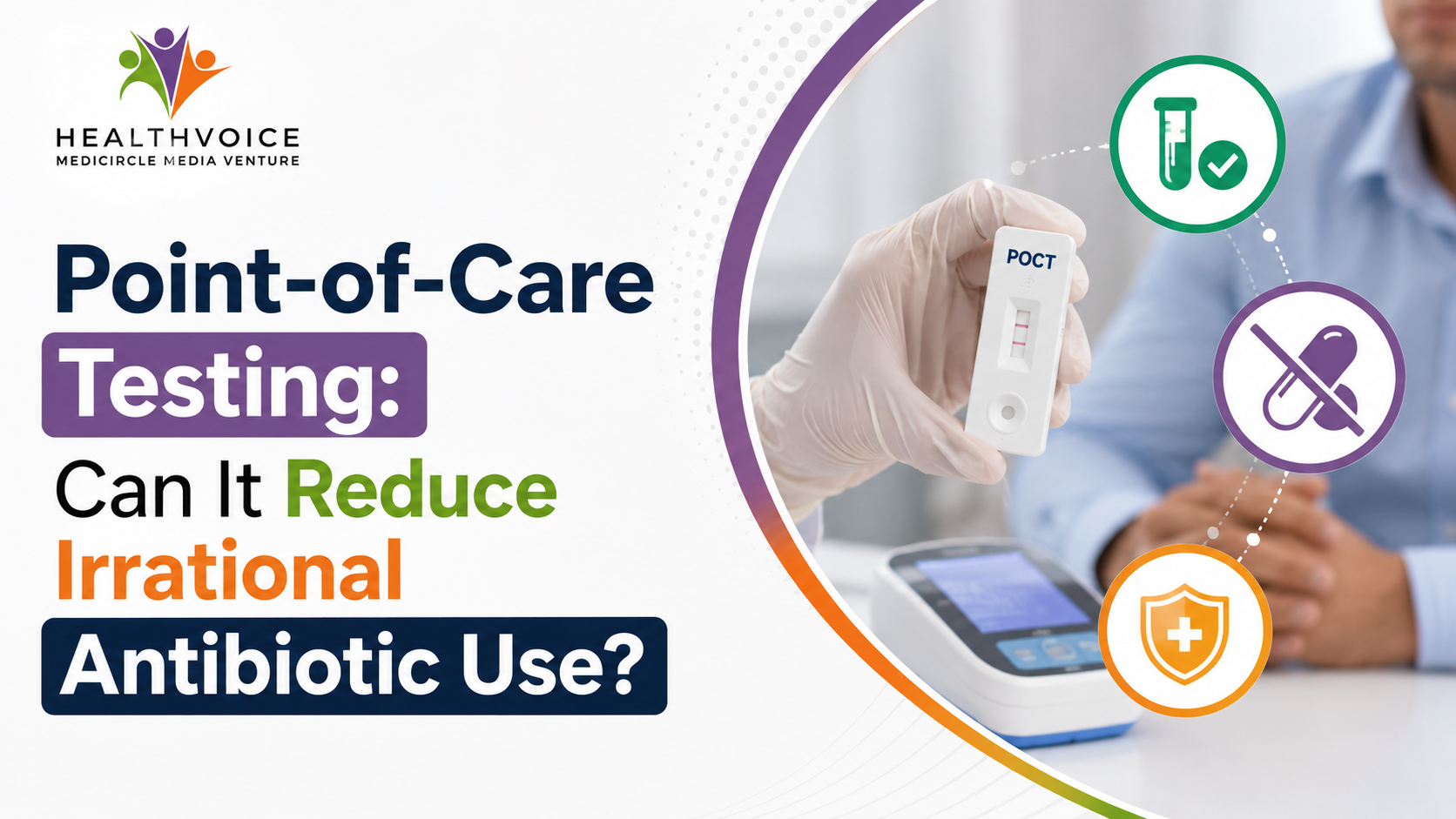
Point-of-Care Testing: Can It Reduce Irrational Antibiotic Use?
Point-of-care testing offers significant potential to reduce irrational antibiotic use in India when embedded within robust antimicrobial stewardship frameworks, but requires stronger infrastructure, training, and policy integration to achieve meaningful clinical impact.
Point-of-Care Testing for Infection: Can It Finally Reduce Irrational Antibiotic Use in India?
The Growing Crisis of Antibiotic Misuse in India
India is confronting one of its most serious and slow-moving public health emergencies. Antimicrobial resistance (AMR) has escalated to levels that threaten to reverse decades of medical progress, and the country bears a disproportionate share of the global burden. At the root of this problem lies a deeply entrenched pattern of irrational antibiotic prescribing, a practice that spans tertiary hospitals, primary health centres, private clinics, and over-the-counter pharmacy counters alike.
The scale of the problem is staggering. India contributes significantly to global AMR, driven by extensive antibiotic misuse that includes over-the-counter dispensing without prescriptions, patients refilling antibiotics using older prescriptions, and prescriptions issued without adequate diagnostic confirmation. The Indian Council of Medical Research's AMR Surveillance Network has consistently tracked rising resistance across key pathogens, with Carbapenem-resistant Enterobacterales and multidrug-resistant organisms appearing with alarming regularity in both hospital and community settings.
One key reason antibiotic misuse persists so stubbornly is diagnostic uncertainty. When a doctor cannot quickly determine whether an infection is bacterial or viral, the default response is often to prescribe antibiotics. This is not carelessness. It is a clinical and systemic problem rooted in the absence of fast, accurate, and affordable diagnostics at the point where patients seek care.
This is precisely where point-of-care testing (POCT) enters the conversation. The central question being asked by clinicians, researchers, and policymakers across India and the world is this: Can rapid diagnostic testing at the bedside or clinic level meaningfully reduce the irrational use of antibiotics? The answer, as emerging evidence suggests, is nuanced, but the potential is significant.
What Is Point-of-Care Testing and Why Does It Matter?
Point-of-care testing refers to diagnostic testing performed at or near the location of patient care, rather than in a centralized laboratory. These tests deliver results within minutes to a few hours, enabling clinical decisions to be made during the same patient encounter without waiting for laboratory turnaround times that can stretch to days.
In the context of infectious diseases, POCT encompasses a wide range of tools. C-reactive protein (CRP) tests can indicate whether an infection is bacterial or inflammatory in origin. Rapid antigen detection tests identify specific pathogens such as Group A Streptococcus, influenza viruses, or SARS-CoV-2. Molecular point-of-care platforms, such as multiplex polymerase chain reaction (PCR) panels, can simultaneously test for dozens of respiratory viruses and atypical bacteria within an hour.
The clinical logic is straightforward. If a doctor can confirm at the time of consultation that a patient's respiratory infection is caused by a virus rather than a bacterium, there is no rational basis for prescribing an antibiotic. Conversely, confirmed bacterial infection immediately justifies targeted antibiotic therapy, potentially with a narrower-spectrum agent guided by susceptibility results.
For India, the appeal of POCT is especially strong. The National Action Plan on AMR (NAP-AMR 2.0, 2025 to 2029) explicitly includes leveraging point-of-care testing as a strategy to strengthen diagnosis and reduce dependence on empirical, broad-spectrum antibiotic use. The National Academy of Medical Sciences has similarly highlighted that India lacks adequate diagnostic facilities to identify resistant pathogens, and that rapid diagnostic tests in point-of-care settings can facilitate timely therapy and reduce hospital stay, cost, and mortality.
What the Latest Evidence Tells Us
The promise of POCT in reducing antibiotic use has been tested rigorously in recent years, and the results are both encouraging and sobering.
In 2026, findings from the PRUDENCE trial, a large international clinical trial conducted across 13 European countries involving 2,639 patients, were published in The Lancet Primary Care. The trial examined whether point-of-care diagnostic testing for respiratory tract infections reduced antibiotic prescribing by general practitioners. The overall result showed no significant reduction in antibiotic prescribing when POCT was used alone. However, and this is a critical nuance, among patients in whom a viral infection was specifically detected, antibiotic prescribing was meaningfully reduced.
A parallel UK-based randomised trial, the RAPID-TEST study, similarly found that rapid microbiological POCT for 19 respiratory viruses and four atypical bacteria did not reduce same-day antibiotic prescribing compared to usual care. Yet again, the subgroup of patients with confirmed viral detection showed significantly lower antibiotic prescribing odds.
What these trials collectively demonstrate is that POCT is a powerful tool for informing the prescriber. However, a positive result alone does not automatically translate into changed prescribing behaviour. Clinician attitudes, patient pressure, fear of missing a bacterial co-infection, and lack of stewardship frameworks all moderate the eventual prescription decision.
This is a vital insight for India's healthcare system. The diagnostic tool is necessary but not sufficient on its own.
POCT in the Indian Context: Opportunities and Real-World Challenges
India's point-of-care diagnostics market is growing rapidly. Industry data suggests the market was valued at approximately 9.8 billion USD in 2020 and was expected to reach 22.7 billion USD by 2025, reflecting an annual growth rate exceeding 18 percent. The COVID-19 pandemic was a turning point. It demonstrated to both clinicians and the public that rapid antigen tests could deliver reliable results quickly and at scale, which has significantly increased acceptance of POCT as a concept.
The ICMR's National Essential Diagnostics List includes several rapid tests relevant to infection diagnosis, and the National Health Mission has frameworks for diagnostic support at primary health centres. However, a scoping review of point-of-care devices in Indian primary care settings published in 2024 identified a persistent gap between the availability of POCT technologies and their effective implementation, particularly in rural and semi-urban regions.
Several structural challenges limit the impact of POCT in India's real-world clinical settings. These include fragmented laboratory infrastructure, inadequate training of non-laboratory clinical staff who may administer these tests, supply chain inconsistencies that lead to test kit stockouts, poor integration of POCT results with existing healthcare information systems, and limited quality control oversight. A study published in the National Medical Journal of India outlined the layered challenges of POCT implementation in multispecialty hospital settings, including instrumentation issues, competency gaps, and reagent handling problems.
There is also the issue of over-the-counter antibiotic sales, which bypasses the physician entirely and represents a dimension of irrational antibiotic use that no POCT intervention at the clinic level can address. India's Red Line Campaign and the 2024 Fixed-Dose Combination ban targeting 156 irrational drug formulations reflect policy recognition of this gap, but enforcement remains inconsistent across states.
Despite these challenges, the evidence from low- and middle-income country contexts is instructive. A randomized controlled trial from Ghana demonstrated that POCT use among children in primary healthcare settings significantly reduced antibiotic prescriptions compared to usual care, with antibiotic use in the intervention group falling to 35.9 percent compared to 60 percent in the control group.
Where POCT Can Make the Greatest Difference in India
Given the geography and healthcare structure of India, certain settings offer particularly high leverage for POCT deployment as part of an antimicrobial stewardship strategy.
District Hospitals and Community Health Centres are where a large proportion of antibiotic prescribing decisions happen outside major cities. These facilities often lack microbiology laboratory capacity but typically have basic infrastructure and trained clinical staff. Introducing CRP testing and rapid streptococcal antigen tests at these levels can immediately inform prescribing decisions for the most common presentations, including sore throat, acute respiratory infections, and urinary tract infections.
Private Outpatient Clinics represent a critical but currently under-regulated environment. A significant share of antibiotic prescriptions in urban India originates from private practitioners who may face time constraints, patient expectation pressure, and limited access to same-visit diagnostic results. Portable and affordable POCT platforms designed for single-physician practices represent an underexplored opportunity.
Paediatric Settings are especially relevant. Children present disproportionately with respiratory tract infections, and the instinct to prescribe antibiotics to avoid complications in a febrile child is understandable. Evidence from multiple studies, including research on CRP-guided antibiotic decisions in children with acute respiratory infections, demonstrates meaningful reductions in antibiotic use when POCT results guide clinical decisions.
Telemedicine and Technology-Integrated Models are emerging as a particularly relevant avenue in the Indian context. The government's National Digital Health Mission and the rapid growth of digital health platforms have opened the door for POCT results to be transmitted in real time to supervising clinicians, enabling remote stewardship guidance in settings where specialist input would otherwise be unavailable.
POCT Must Be Embedded in Antimicrobial Stewardship, Not Used in Isolation
Perhaps the most important lesson from the current evidence base is that POCT is not a standalone solution to irrational antibiotic prescribing. The PRUDENCE trial and related research converge on a clear conclusion: diagnostic testing must be embedded within a broader antimicrobial stewardship framework to produce sustained behaviour change among prescribers.
Antimicrobial stewardship programmes (ASPs) combine multiple elements, including prescriber education, audit and feedback on prescribing patterns, formulary restrictions on certain antibiotics, patient communication tools, and institutional commitment at the hospital and health system level. When POCT is introduced as one element within such a framework, its impact is amplified substantially. In isolation, a rapid test result competes with habit, time pressure, clinical uncertainty, and the social dynamics of the doctor-patient relationship.
India's AMR policy frameworks acknowledge this integration imperative. The NAP-AMR 2.0 calls for strengthening antimicrobial stewardship across human and animal sectors simultaneously. Medical associations, including the bodies working under the umbrella of the Indian Medical Association and specialty societies, have roles to play in training clinicians to interpret and act on rapid diagnostic results appropriately.
This is where platforms such as HealthVoice can contribute meaningfully. As a doctor-focused healthcare community platform committed to knowledge sharing, clinical awareness, and professional engagement, HealthVoice is positioned to serve as a trusted bridge between emerging diagnostic evidence and the clinical community. By facilitating structured conversations among doctors about POCT adoption, sharing peer experience and evidence, and supporting medical associations in disseminating AMR stewardship guidance to their members, HealthVoice can help translate policy intent into clinical behaviour change at scale. Healthcare brands working in the diagnostics space, including rapid test manufacturers and point-of-care device companies, can also reach a highly relevant medical audience through such platforms to communicate clinical evidence and training support.
The Road Ahead: Building a Diagnostic-Informed Antibiotic Future
India stands at a critical inflection point in its fight against antimicrobial resistance. The tools for better prescribing are increasingly available. Rapid diagnostic tests are more affordable, more accurate, and more portable than ever before. Regulatory frameworks are tightening. Awareness among physicians is growing. The question is whether the healthcare system can translate this convergence of opportunity into practice at scale.
Several steps are essential for POCT to fulfil its potential in reducing irrational antibiotic use across India. National and state health authorities must prioritise POCT procurement and integration within primary and secondary healthcare infrastructure. Medical education and continuing professional development programmes must include training on rapid diagnostics and stewardship-informed prescribing. The private sector must be engaged through incentive structures and professional norms rather than left to operate without accountability frameworks.
The medical community itself must lead this transition. Physicians who understand the clinical and epidemiological implications of antimicrobial resistance, and who are equipped with accessible diagnostic tools, are the most powerful agents of change. Supporting doctors with knowledge, community, and evidence-based guidance is not just a platform objective. It is a public health imperative.
Conclusion
Point-of-care testing for infection holds genuine and evidence-supported potential to reduce irrational antibiotic use in India. However, its effectiveness depends not on the diagnostic tool alone but on the broader ecosystem in which it operates. When POCT is deployed within robust antimicrobial stewardship programmes, supported by trained clinicians, quality-assured supply chains, and integrated digital health infrastructure, it can meaningfully shift prescribing practices and help protect the long-term efficacy of antibiotics.
India's AMR crisis is urgent. The solutions, fortunately, are within reach. Rapid diagnostics, policy commitment, and an informed and engaged medical community working together represent the most credible path toward a future where antibiotics are prescribed rationally, resistance is slowed, and patients receive treatment that is both precise and appropriate.
Frequently Asked Questions
What is point-of-care testing and how is it different from regular laboratory testing?
Point-of-care testing refers to diagnostic tests performed at or near the patient's location, such as a clinic, doctor's office, or bedside, rather than a centralised laboratory. The primary difference is the turnaround time. POCT delivers results within minutes to a few hours, enabling clinical decisions to be made during the same visit. Regular laboratory tests may take hours to days depending on the facility and the type of test, which often leads clinicians to prescribe antibiotics empirically before results return.
Can point-of-care tests actually reduce antibiotic prescriptions in Indian hospitals and clinics?
The evidence is promising but conditional. Studies show that POCT can reduce antibiotic prescribing when doctors receive a confirmed result identifying a viral rather than bacterial infection. However, when used in isolation without broader stewardship support, POCT alone does not automatically change prescribing behaviour. For India, the most effective approach involves integrating POCT into antimicrobial stewardship programmes at district hospitals, community health centres, and private outpatient clinics.
What are the biggest barriers to expanding point-of-care testing for infections across India?
The key barriers include inadequate laboratory infrastructure at the primary and secondary healthcare levels, inconsistent supply chains for test kits, limited training of clinical staff in administering and interpreting POCT results, poor integration with digital health records, and the absence of quality control oversight in many settings. Beyond the clinical context, over-the-counter antibiotic sales bypass the diagnostic step entirely, representing a parallel challenge that requires regulatory and community-level interventions alongside POCT expansion.
ABSTRACT
Point-of-care testing offers significant potential to reduce irrational antibiotic use in India when embedded within robust antimicrobial stewardship frameworks, but requires stronger infrastructure, training, and policy integration to achieve meaningful clinical impact.
 Team Healthvoice
#AntibioticResistance #DiagnosticTesting