Ethical Use of Social Media by Doctors: Education, Promotion and Professional Boundaries
This article examines how Indian doctors can use social media ethically, balancing patient education, professional promotion, confidentiality, and NMC-aligned professional boundaries in digital practice.
Introduction
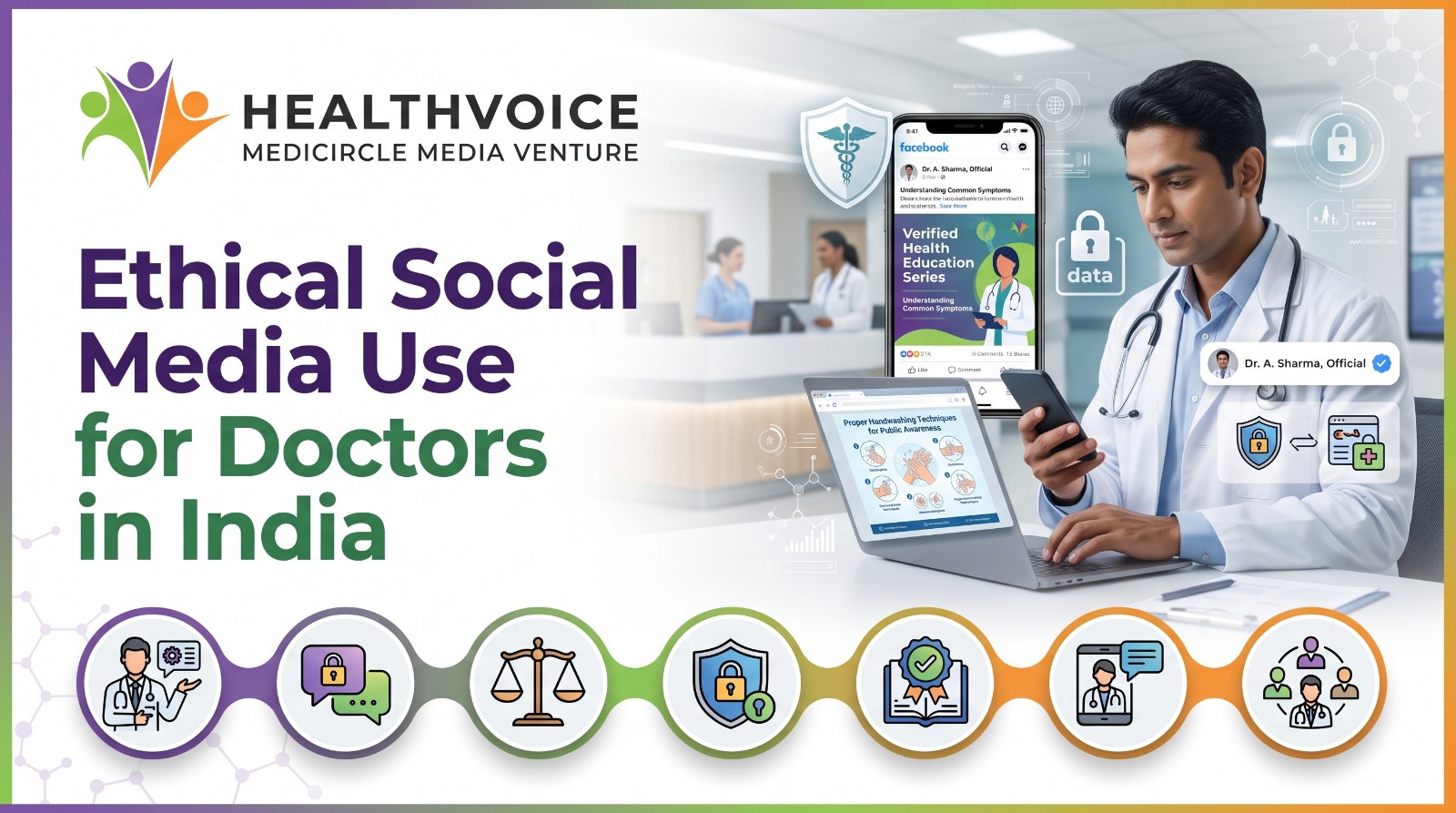
Social media has become part of everyday professional life for doctors across India. From sharing health awareness content to building a credible digital presence, platforms such as Instagram, LinkedIn, and X are increasingly used by medical professionals to educate patients, connect with peers, and highlight their expertise. However, this growing digital visibility also raises important ethical questions. Where does patient education end and self-promotion begin? How much personal information is too much? And what boundaries must a doctor maintain to protect both patient trust and professional integrity?
For Indian doctors, these questions carry additional weight. The country has over 13 lakh registered allopathic doctors, a rapidly digitising healthcare system under the Ayushman Bharat Digital Mission, and a patient population that increasingly looks to social media for health information before, or instead of, a clinical consultation. Understanding the ethical framework around social media use is no longer optional. It is a core part of modern medical professionalism, one that protects the doctor, the patient, and the credibility of the medical community as a whole.
This article examines the practical and ethical dimensions of social media use by doctors, drawing on international medical ethics guidance and the realities of practising medicine in India.
Why Social Media Matters for Indian Doctors Today
India's digital health landscape has changed considerably in the past few years. With growing smartphone penetration in Tier 1 and Tier 2 cities, and government-backed initiatives such as ABDM and the National Health Portal encouraging digital engagement, patients are more connected than ever. Many now search social media for information on symptoms, treatments, and even specific doctors before booking an appointment.
This shift presents a genuine opportunity. Doctors who communicate clearly and responsibly on social media can correct misinformation, improve health literacy, and build long-term trust with their communities. Medical associations, too, are finding that a well-managed digital presence helps them engage members, promote continuing medical education, and highlight the achievements of their fraternity. At the same time, unregulated or careless use of these platforms introduces real risks around confidentiality, professional boundaries, and the credibility of the profession itself.
Understanding the Line Between Education and Promotion
One of the most common areas of confusion for doctors is distinguishing between health education and self-promotion. Sharing general information about a condition, its symptoms, or preventive measures is widely considered ethical and valuable. Problems tend to arise when educational content shifts toward promoting a specific product, procedure, or the doctor's own practice in a manner that resembles advertising rather than information sharing.
The National Medical Commission, which governs professional conduct for registered doctors in India, maintains restrictions on advertising and solicitation of patients. While these rules were originally framed with print and broadcast media in mind, their underlying principle, that a doctor's communication should never mislead or unduly influence a patient's choice, applies equally to social media. A useful practical approach is to ask whether a post primarily informs the public or primarily promotes the doctor's own services. Content that leans heavily toward the latter deserves a more cautious, disclosure-based approach.
Doctors who wish to build professional visibility can do so ethically by focusing on genuine expertise, sharing case-based learnings without identifiable patient details, and participating in association-led awareness campaigns. This is precisely the kind of credible, community-oriented visibility that platforms built for the medical fraternity aim to support, allowing doctors and associations to share their professional voice without crossing into commercial territory.
Maintaining Professional Boundaries With Patients
Global research on this subject offers useful insight for Indian practitioners. Studies involving medical students and interns have found that a meaningful proportion have patients or patients' family members listed as social media contacts, and some have shared content they would consider inappropriate if seen by senior colleagues. This pattern is not unique to any one country and reflects a broader challenge in the digital age: the blurring of personal and professional identity online.
Professional bodies internationally, including the World Medical Association, recommend that doctors maintain the same boundaries online that they would maintain in person. This means being cautious about accepting friend requests or follow requests from patients, avoiding direct medical advice through personal messaging, and being mindful that online "friendships" with patients can alter the fundamental nature of the doctor-patient relationship. Many doctors find it useful to maintain separate personal and professional accounts, using the professional profile strictly for education, association engagement, and credible networking.
Confidentiality remains the single most important boundary. Even when patient identity is not directly named, details such as a rare diagnosis, a specific treatment timeline, or an identifiable photograph can inadvertently reveal who the patient is, particularly in smaller towns or close-knit communities common across many Indian cities. Before posting any case-based content, doctors should always obtain explicit consent and remove all identifying details, a principle echoed clearly in international surgical ethics guidance as well.
Consent, Confidentiality and Legal Considerations in India
Indian doctors operate under a layered set of obligations when it comes to patient privacy. The Indian Medical Council (Professional Conduct, Etiquette and Ethics) Regulations require doctors to maintain confidentiality regarding patient information. Separately, the Digital Personal Data Protection Act adds obligations around the handling of personal data, including health information, which is treated as sensitive personal data requiring careful consent and safeguarding practices.
For content shared for educational purposes, such as case discussions in closed professional groups or public awareness posts, the safest approach is always de-identification combined with documented consent. This should include removing names, faces (unless explicit consent is given and the context is appropriate), locations, and any detail that could allow a patient or their family to be identified by others in their community. It is worth remembering that content posted online rarely disappears completely, even after deletion, making this an area where caution significantly outweighs any short-term engagement benefit.
Doctors should also exercise care around using patient testimonials or before-and-after images, particularly in specialities like dermatology, cosmetic surgery, and dentistry, where such content can shade into promotional territory if not handled with appropriate disclaimers and genuine informed consent.
Building a Credible Digital Presence the Right Way
A thoughtful, ethical social media presence can genuinely benefit a doctor's career and the wider healthcare ecosystem. Sharing verified health information helps counter the spread of misinformation, a growing concern given how quickly unverified health claims can circulate across Indian social media users. Participating in association activities, highlighting continuing medical education achievements, and engaging respectfully with peers all contribute to a stronger, more organised professional identity.
Doctors who are new to building this kind of presence often benefit from a few grounded practices. Including a simple disclaimer that personal opinions do not represent an employer or institution helps manage conflicts of interest. Maintaining a measured, evidence-based tone, even on topics that attract strong public opinion, protects both credibility and reputation. Being selective about which platforms to use for which purpose, keeping professional networking on platforms designed for medical communities and reserving more casual platforms for personal use, also helps maintain appropriate boundaries.
This is where structured, doctor-focused digital spaces add real value. Rather than navigating the ambiguity of general social media platforms alone, doctors and medical associations can benefit from platforms specifically designed around professional credibility, where the audience, tone, and purpose are already aligned with responsible medical communication.
Common Pitfalls Doctors Should Avoid
A few recurring mistakes tend to create the most risk for practising doctors. Posting clinical photographs without explicit, documented consent remains one of the most common issues, particularly when images are shared informally in group chats before being reposted elsewhere. Offering specific medical advice in public comment sections, rather than directing the individual to book a proper consultation, is another frequent misstep that can create liability concerns and also sets an inappropriate precedent for other patients seeking free advice online.
Doctors should also be cautious about engaging in heated debates or making strong personal statements on unrelated social or political topics using a professional account, since this can affect how patients and colleagues perceive their objectivity. Finally, sharing promotional content for pharmaceutical products, devices, or supplements without clear disclosure of any commercial relationship raises both ethical and regulatory concerns under Indian advertising standards.
The Way Forward for Indian Medical Professionals
As India's healthcare system continues to digitise, social media will only become a larger part of how doctors communicate with patients, peers, and the public. The doctors and associations who benefit most from this shift will be those who approach it with the same rigour and respect they bring to clinical practice. This means treating every post as a form of professional communication, maintaining clear boundaries with patients, protecting confidentiality above all else, and using digital visibility to build genuine trust rather than short-term attention.
Medical associations, too, have an important role to play in this transition. By establishing clear internal guidelines, encouraging continuing education on digital professionalism, and providing members with credible platforms to share their voice, associations can help ensure that the profession's move into digital spaces strengthens, rather than weakens, public trust in Indian medicine.
Frequently Asked Questions
Q1: Can doctors in India promote their practice on social media?
Doctors may share educational content and general practice updates, provided the communication stays factual and avoids exaggerated claims, in line with National Medical Commission guidance on professional advertising.
Q2: Is it acceptable for doctors to accept friend requests from patients?
Most professional bodies advise against connecting with patients on personal accounts, as this can blur professional boundaries and affect confidentiality.
Q3: What are the risks of sharing patient information on social media?
Sharing identifiable patient details, even unintentionally, can breach confidentiality obligations and applicable data protection laws, and may lead to professional or legal consequences.
Q4: Does the National Medical Commission have specific social media guidelines?
The National Medical Commission regulates professional conduct and advertising for registered doctors, and these principles extend naturally to digital and social media communication.
Q5: How can doctors use social media responsibly for health education?
Doctors can share general, evidence-based information, avoid giving personalised medical advice publicly, and clearly state that posts do not replace an in-person consultation.
Resources
- National Medical Commission: Regulations on professional conduct and advertising for registered medical practitioners in India
- World Medical Association: Statement on the Professional and Ethical Use of Social Media
- Indian Council of Medical Research: Ethical guidelines relevant to medical communication and patient confidentiality
- Ministry of Electronics and Information Technology: Digital Personal Data Protection Act provisions relevant to health data
- Ayushman Bharat Digital Mission: Overview of India's digital health ecosystem and patient data considerations
Interlinking Keywords
doctor professional boundaries, medical association engagement, patient confidentiality guidelines, doctor digital presence, healthcare social media ethics, continuing medical education India
Last medically reviewed by:
Editorial Medical Review Team, HealthVoice on July 9, 2026
Medical Disclaimer:
The content of this article is intended for general informational and educational purposes only and is not a substitute for professional legal, regulatory, or medical council advice. While every effort has been made to ensure accuracy at the time of publication, medical ethics guidelines, National Medical Commission regulations, and data protection laws are subject to change. Doctors and healthcare professionals should consult the relevant regulatory bodies, their employing institutions, or a qualified legal advisor before making decisions regarding their professional conduct on social media. HealthVoice does not accept liability for any actions taken based on the information provided in this article.
 Team Healthvoice
#MedicalEthics #DoctorOnSocialMedia