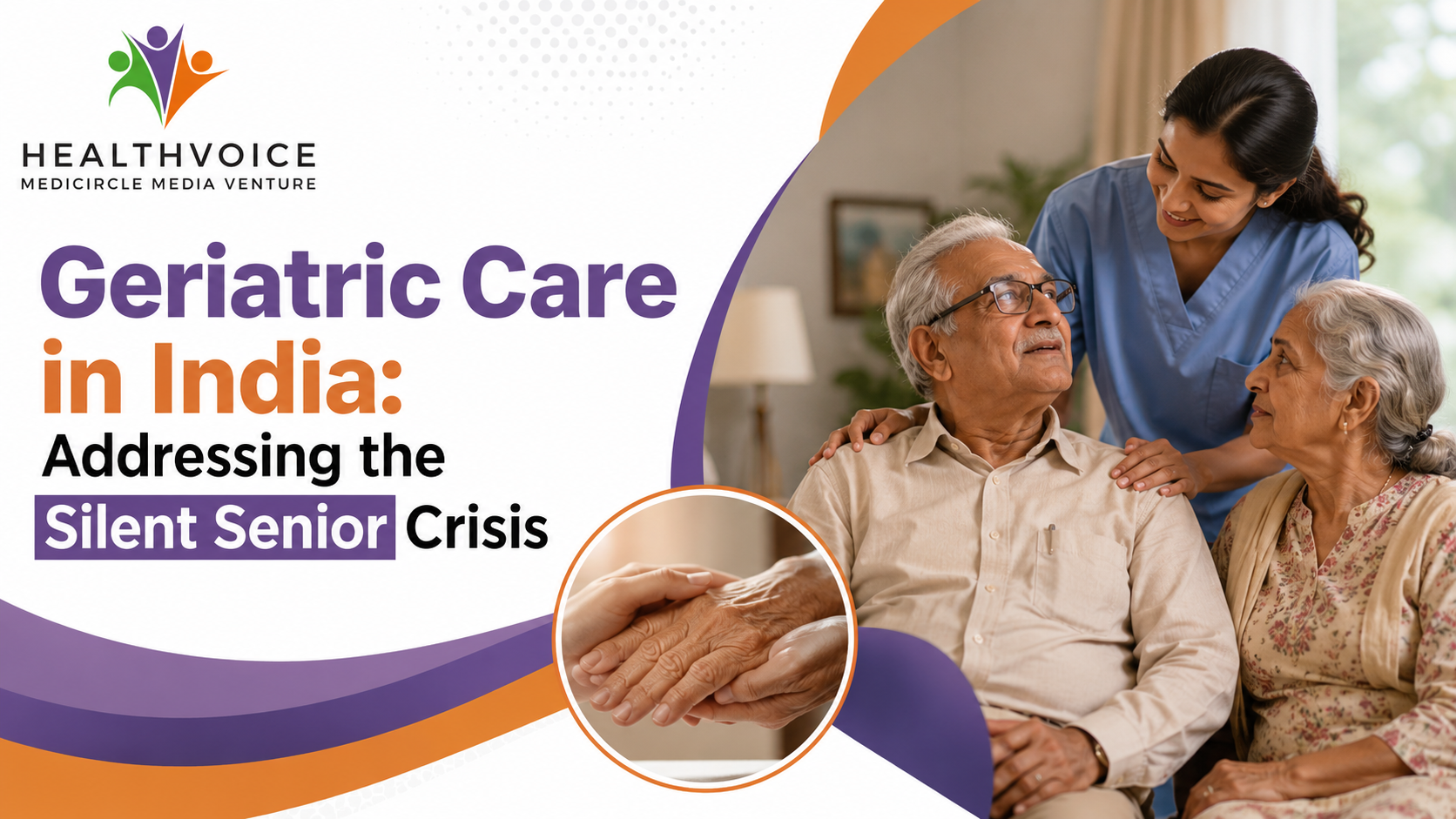
Geriatric Care in India: Addressing the Silent Senior Crisis
For decades, India's development agenda centered on harnessing its demographic dividend, emphasizing a young and expanding workforce as the nation's greatest strength. Today, evolving population trends, changing age structures, and new public health priorities are reshaping policy, encouraging a broader focus on healthy ageing, workforce sustainability, and long-term economic resilience.
Geriatric Care in India: The Systemic Neglect of an Aging Population
For decades, India's public policy, corporate strategies, and public health campaigns focused almost entirely on its "demographic dividend." Boasting one of the youngest average populations globally, the nation prioritized maternal health, pediatric immunization, and youth employment pipelines to fuel rapid economic growth. However, this intense focus on youth has obscured a massive demographic shift: India is aging at an unprecedented rate, and its social infrastructure is profoundly unprepared.
Data from national registries, economic surveys, and global population prospects show that the population aged 60 and above stands at over 150 million people, a figure projected to skyrocket to 230 million by 2036 and cross 340 million by 2050.
This means that by mid-century, nearly 1 in 5 Indians will be a senior citizen. Even more striking is that the population aged 75 and above is growing faster than any other demographic, expanding the intensive care needs of a group that will soon account for nearly 45% of the country's total chronic disease burden.
[ THE SENIOR CARE INFRASTRUCTURE DISRUPTION ] │ ┌───────────────────────────┴───────────────────────────┐ ▼ ▼ [ PASSIVE NUCLEATED DISMISSAL ] [ PROACTIVE GERIATRIC ARCHITECTURE ] • Opaque reliance on shrinking family nets • Standardized home health & skilled carer grids • Low-budget NPHCE lines (<0.1% state pool) • Universal financial protection under expanded PM-JAY • Fragmented, unlinked local medical files • Seamless digital health logs using verified ABHA IDs • Outcome: High elderly poverty & untreated decay • Outcome: Active, healthy aging with physical dignity
Treating senior care as an afterthought or assuming traditional family nets can handle the burden indefinitely introduces severe social and economic risks. The breakdown of traditional joint families in favor of nuclear urban households, coupled with massive youth migration, has left millions of elders socially isolated, financially insecure, and physically vulnerable.
Resolving this crisis requires moving past reactive crisis management to establish a comprehensive, specialized geriatric system. By integrating digital public health tracking, building community-based long-term care networks, and expanding universal financial shields, India can transform this demographic challenge into a model of dignified, active aging.
1. The Core Infrastructure Gaps in Senior Care
To understand why aging in India has become a highly precarious experience, public health experts must evaluate the specific systemic vulnerabilities that cut across modern Indian society:
The Illusion of the Intact Informal Family Care Net
The dominant cultural narrative in India assumes that children will provide complete physical, emotional, and financial support to their aging parents. However, rapid urbanization, rising economic pressures, and the growth of nuclear families have fractured this informal safety net.
Over 70% of Indian elders are entirely dependent on others for daily maintenance, and since 7 out of 10 seniors reside in rural areas while their children migrate to urban metros or overseas for work, millions are left fending for themselves through severe, complex medical crises.
Extreme Financial Insecurity and Pension Gaps
The vast majority of the aging population faces immediate financial vulnerability. Nearly 78% of Indian elders lack any form of formal pension coverage, a direct result of more than 80% of the active workforce operating within the unorganized sector without structured retirement savings.
When a chronic health issue flares up, the lack of regular income combined with high out-of-pocket medical costs quickly drains lifetime family savings, pushing vulnerable households directly into poverty.
Severe Shortages in Specialized Geriatric Workforce and Funds
Despite the massive scale of the senior demographic, specialized medical resources remain incredibly scarce. The National Programme for Health Care of the Elderly (NPHCE) remains underfunded, with a review of budget allocations revealing that less than 0.1% of the total health budgets in India's most populous states are earmarked for elderly care.
Furthermore, the country faces a severe shortage of trained geriatricians, specialized physical therapists, and multi-skilled caregivers, leaving primary health centers unequipped to manage age-related conditions like dementia, Alzheimer's, and multi-morbidity fractions.
2. Core Infrastructure: The Modern Senior Care Matrix
To successfully build an integrated care network that protects senior wellness across rural and urban communities, the national framework must anchor around three precision pillars:
- Universal Financial Protection and Insurance Net Extensions: Move past restrictive income requirements. Expanding frameworks like the Ayushman Bharat Pradhan Mantri Jan Arogya Yojana (PM-JAY) to offer universal health coverage to all citizens aged 70 years and above, regardless of income status, serves as a vital enabler to lower out-of-pocket medical burdens cleanly.
- Hyperlocal, Multi-Skilled Home Care and Caregiver Initiatives: Shift the center of care from crowded tertiary hospitals straight to the home. Executing large-scale public programs to train over 1.5 lakh multi-skilled caregivers and allied health professionals ensures rural and urban seniors can access high-integrity assistance for daily living, bathing, and mobility needs, allowing them to age in place safely.
- Seamless Digital Continuity of Care Platforms: Protect older adults from the confusion of fragmented medical charts. By using digital health systems to coordinate teleconsultations, home health visits, and electronic prescriptions, healthcare providers can track chronic conditions continuously, ensuring early intervention before emergencies can trigger.
Comparative Matrix: Fragmented Legacy Care vs. Proactive Geriatric Systems
The table below contrasts the limitations of traditional, reactive senior management with the sustainable benefits of an integrated geriatric architecture.
Geriatric Performance Axis
Fragmented Legacy Care Architecture
Proactive Geriatric System Framework
Systemic Senior Longevity Edge
Financial Security Grid
Relying on low-value, unstructured savings or family allowances.
Universal PM-JAY access for 70+ paired with indexed pensions.
Geriatrics: Shields family assets from catastrophic out-of-pocket health spikes.
Workforce Capacity Scale
Minimal specialized training, relying on unorganized, costly home care.
Targeted training loops for 1.5 lakh multi-skilled carers.
Geriatrics: Delivers reliable, professional assistance tailored to high-risk profiles.
Medical Data Continuum
Lost paper clinic cards and unlinked records across regions.
Automated digital syncing natively linked to ABHA profiles.
Geriatrics: Provides an instant, complete health timeline to any remote specialist.
Primary Site of Care
Reactive emergency room admissions after advanced organ flares.
Preventive, hyperlocal home care with AI fall-risk predictions.
Geriatrics: Drastically reduces hospital stays, preserving everyday independence.
Social Vulnerability Focus
Disregarding mental health, leaving isolation and dementia hidden.
Upgraded national mental health centers tracking senior well-being.
Geriatrics: Identifies cognitive and emotional struggles early, reducing suffering.
3. High-Performance Action Plan for Public Health Directors and Executives
To successfully upgrade your district's senior care workflows and launch precision-driven geriatric tracking networks across your local facilities, execute this multi-phase protocol:
- Execute a Complete Regional Senior Demographic and Asset Gap AuditPhase 1Locate hidden vulnerabilities early. Check local household registries to identify the exact count of senior citizens living independently or alone within your district, mapping out current chronic disease patterns to set a clear resource baseline.
- Deploy Hyperlocal Caregiver Teams and Integrate Digital Checkup HubsPhase 2Bring healthcare straight to the neighborhood. Route multi-skilled caregiver teams into community centers, and launch accessible teleconsultation networks to check vital health baselines regularly without requiring long hospital travel.
- Enforce Automatic Digital Syncing Across All Senior Health EvaluationsPhase 3Lock in your community records permanently. Ensure every local health measurement and prescription connects securely with national digital databases, uploading results straight into a senior's personal profile to maintain a reliable history.
Actionable Strategy: Your Long-Term Wellness Roadmap
- Link Senior Inpatient Summaries Natively with the Universal ABHA Infrastructure: Prevent fragmented records and stop diagnostic tracking friction. Ensure all local clinic notes, geriatric checkup sheets, and prescription logs sync cleanly using a verified ABHA ID via the Ayushman Bharat Digital Mission (ABDM) pipeline, preserving an unbroken, highly portable medical history that streamlines multi-specialist care.
- Coordinate Clinical Geriatric Training Natively via the National APAAR ID Network: Connect your educational goals directly with workforce modernization. Track all specialized geriatric care certifications, multi-skilled caregiver completions, and advanced health informatics coursework completed by your staff natively using the APAAR ID system within the Academic Bank of Credits (ABC) network to simplify credentialing audits.
- Conduct Semi-Annual Senior Vulnerability and Out-of-Pocket Expenditure Audits: Keep a continuous, data-driven eye on public health health. Appoint a dedicated quality assurance board to audit your district's eldercare pipelines twice a year, tracking metrics like average diagnostic velocity speeds and household medical expense trends to optimize your preventive strategies continuously.
Frequently Asked Questions (FAQs)
Q1. Why is India's aging population expanding rapidly despite its global reputation as a young nation?
Due to steady declines in total fertility rates and substantial improvements in average life expectancy over the past few decades, the percentage of older adults is expanding rapidly, driving a permanent structural shift in national demographics.
Q2. What exactly is the "feminization of aging," and why does it complicate public healthcare?
Women in India tend to have a higher average life expectancy than men, but they frequently possess fewer personal assets, lower rates of formal pension coverage, and limited independent access to healthcare, making them highly vulnerable to economic and physical neglect in late life.
Q3. How does the expansion of the PM-JAY scheme to all citizens aged 70+ protect families?
By removing income-based eligibility barriers, the expanded PM-JAY net provides comprehensive, free health insurance coverage up to pre-set limits for all seniors aged 70 and above, directly cutting down on devastating out-of-pocket medical bills.
Q4. How does linking senior care platforms to an ABHA ID protect elders from fragmented histories?
An Ayushman Bharat Health Account (ABHA) ID acts as a secure, unique digital key that links a senior's historical lab files, medication details, and specialist prescriptions cleanly across all verified health networks, ensuring continuity of care.
Q5. What is the role of an APAAR ID in building a national caregiver workforce?
An Automated Permanent Academic Account Registry (APAAR) ID serves as a secure, lifelong digital passport that logs a student's verified academic credits, technical certifications, and field training hours cleanly across repositories, simplifying credential verification.
Q6. Why do advanced perimenopausal and post-menopausal shifts accelerate bone mineral loss in older women?
As estrogen levels drop sharply during the post-menopausal transition, the natural balance of bone remodeling is disrupted. Estrogen no longer suppresses the cells that break down bone, leading to rapid mineral loss and a high vulnerability to osteoporosis and fractures.
Q7. What are the early warning signs that show an independent senior requires home care support?
Primary indicators include uncharacteristic physical fatigue during basic daily routines, recurring difficulty managing complex multi-medication lists, unexplained balance issues or minor falls, sudden changes in short-term memory, and an increase in social withdrawal.
Q8. What parameters are continuously monitored on a 360-degree senior wellness scorecard?
A holistic eldercare scorecard tracks data past simple clinical headcounts, cross-referencing daily mobility independence scores, nutritional balance indexes, universal health insurance utilization rates, sleep consistency metrics, and social engagement frequencies.
Q9. How fast can a district care network expect an improvement in senior wellness after updating systems?
When an urban or rural care network updates its strategy to launch multi-skilled caregiver teams, deploy accessible teleconsultations, and automate digital record syncing, the return is steady. You can observe improved health resilience and lower emergency room drop-ins within 4 to 6 weeks of active execution.
Q10. What immediate steps should a community lead take if an elderly resident flags for high social isolation?
The lead must act swiftly within a structured plan: immediately deploy a trained community health worker to conduct an integrated mental and physical health check, link their records directly to a secure digital profile, connect them with local senior activity groups, and set up routine weekly tele-health check-in blocks.
Q11. How does a high old-age dependency ratio impact the working-age population?
A high dependency ratio means a smaller pool of working-age citizens must bear a larger financial, emotional, and physical care burden to support the elderly population, creating significant structural strains on household income and corporate productivity.
Q12. Why do standard primary health centers frequently miss diagnosing early-stage dementia or Alzheimer's?
Standard clinics often look past subtle cognitive declines, attributing memory lapses or mood changes to normal aging. Without specific geriatric screening tools and trained personnel, complex neurodegenerative conditions remain undiagnosed until they reach advanced stages.
Q13. Can a regular physical movement routine actively slow down the progression of age-related sarcopenia?
Yes, exceptionally effectively. Engaging in regular, structured resistance exercises and balance training stimulates protein synthesis in skeletal tissue, helping older adults maintain crucial muscle mass (sarcopenia\ prevention), preserve joint stability, and lower their overall fall risks.
Q14. What specific role does the National Programme for Health Care of the Elderly (NPHCE) play?
The NPHCE provides the core technical and structural blueprint to integrate dedicated geriatric services into the public healthcare grid, setting up specialized outpatient clinics, setting aside 10-bed geriatric wards in district hospitals, and coordinating regional tertiary aging centers.
Q15. How do portable health keys protect elderly travelers from missing daily medication balances?
Centralized records linked to secure digital platforms store a patient's complete active prescription history permanently. Having immediate access to this shared dashboard allows any local pharmacist or emergency physician nationwide to verify their dosing requirements instantly, preventing severe drug interactions.
 Team Healthvoice
#GeriatricCareIndia #HealthyAgeing