How Can Future Doctors Plan Their Careers When the NMC Doesn’t Know Where the Hospitals Are?
This current moment offers the NMC an opportunity to strengthen its processes and rebuild trust among students who want nothing more than a fair and reliable pathway to their future.
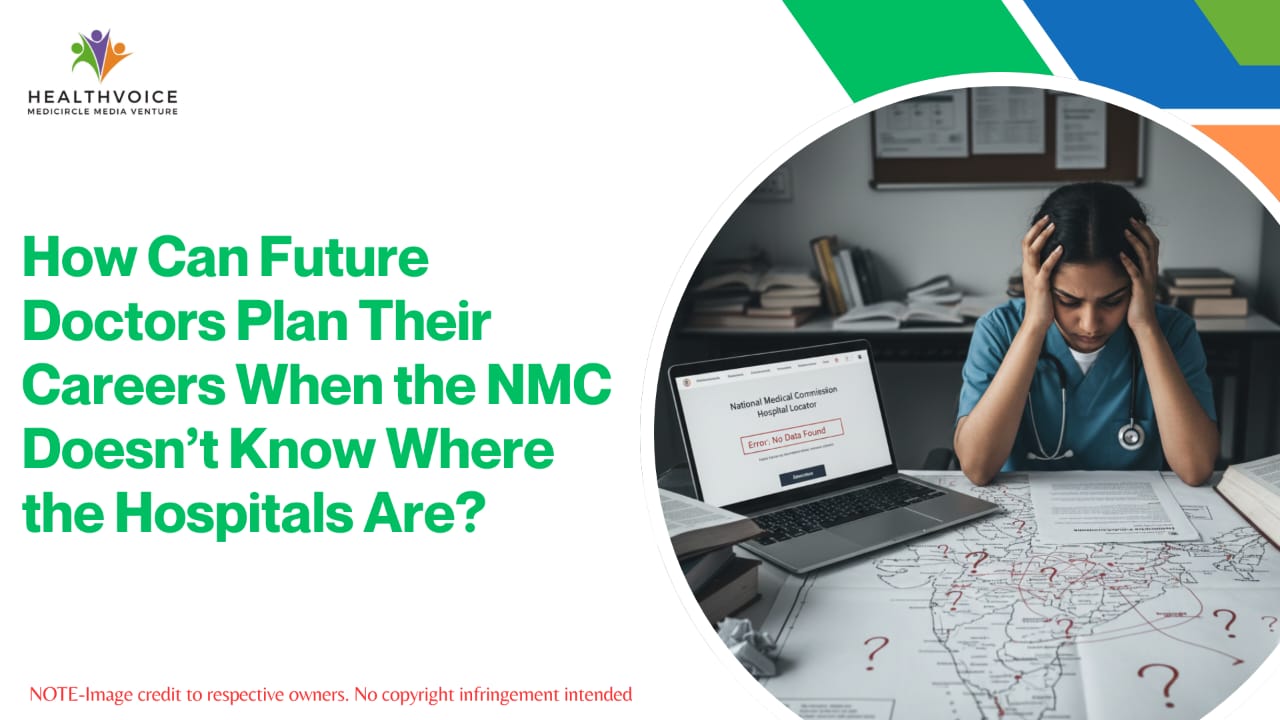
The conversation around medical education in India has taken a sharp turn in recent weeks, and it has left many young doctors wondering how they are expected to build stable futures when the system meant to guide them is struggling with its own gaps. The National Medical Commission, the country’s highest medical regulatory body, recently acknowledged that it does not have accurate data on the number of hospitals with 220 to 499 beds in India, even though it has amended crucial postgraduate rules that directly depend on this category. For thousands of medical students who dream of becoming specialists and educators, this gap in basic information has created a sense of confusion, anxiety, and frustration at a time when clarity should have been the priority.
For years, postgraduate medical students were required to complete their senior residency in hospitals with at least 500 beds to ensure the residency was recognised and valid for future academic roles. This rule looked clear on paper, but the reality on the ground was much harsher. India does not have a widespread network of 500-bed hospitals, especially outside major metro cities. In many regions, such large hospitals are scarce, leaving postgraduate students competing for very limited senior residency positions. The scarcity pushed many students into long waiting periods, delays in training, and even forced compromises on their specialisation plans. Over time, this issue became a recurring complaint across states, especially in regions like Gujarat, where students repeatedly appealed to the NMC to expand eligibility.
After continuous representations from medical students, medical associations, and bodies working on healthcare reforms, the NMC finally decided to revise its regulations. Its new rules recognised senior residency completed in hospitals with 220 to 499 beds, saying that these would be treated on par with residency completed in 500-bed hospitals. The decision was welcomed across the country because it created a larger pool of eligible institutions and reduced the intense pressure on students chasing limited large hospitals. For the first time in many years, students felt that the system was becoming more flexible and accommodating to ground realities. They could choose hospitals closer to home, avoid overcrowded institutions, and complete their training without unnecessary hurdles.
But just when the relief was settling in, a new controversy emerged. The Medical Students Association filed an RTI application asking for the total number of hospitals in this newly recognised category i.e. the 220 to 499 bed segment. The answer they received was unexpected and deeply unsettling. The NMC stated that it does not have precise data on the number of such hospitals in India. This admission has opened a floodgate of questions. The most important one being: how can a regulation be changed to include a category of hospitals when the regulatory body does not know the size or availability of that category?
This sudden revelation has left students feeling confused about how to plan their academic paths. Senior residency plays a critical role in shaping one’s professional future. It is not merely a year or two of service; it is the foundation for future roles such as assistant professor, associate professor, or professor in medical colleges. During academic interviews, candidates must clearly specify where they completed their senior residency, and the recognition status of the hospital becomes a deciding factor in whether their application is accepted or rejected. When even the NMC cannot confirm how many hospitals fall under the new recognised range, students are now unsure whether their choices will hold weight in future academic evaluations.
Medical education in India is already under pressure, with high competition, limited seats, increasing expectations, and evolving healthcare demands. Students rely heavily on regulatory bodies like the NMC for guidance, clarity, and accurate information. Yet, the current situation reveals a gap between regulation and ground-level data, raising concerns about transparency and reliability in decision-making. Without an updated and verified national database of hospitals and their capacities, policies may appear progressive on paper but leave students in a grey zone when it comes to actual implementation.
The uncertainty extends beyond simple numbers. Without a clear list of eligible hospitals, students might unknowingly select institutions that are later deemed non-compliant or insufficient based on criteria that are not yet defined. A postgraduate student invests years of effort, time, and often significant financial resources into completing residency, and it is unfair that the legitimacy of that investment may depend on incomplete data or unclear guidelines. The purpose of making reforms in medical education is to improve accessibility and reduce stress, not transfer ambiguity onto the shoulders of young doctors who already face high academic pressure.
This situation has also sparked a wider conversation in the healthcare community about the need for more robust data systems in India’s medical governance. In an age when healthcare analytics, digital hospital systems, electronic medical records, and AI-driven hospital mapping tools are growing rapidly, it is surprising that a national regulatory body does not have access to an accurate count of mid-sized hospitals. This reflects how important structural details are still not being tracked with the precision needed for national-level regulation.
The need for transparency becomes even more important when considering that India is expanding its medical infrastructure at a rapid pace. New hospitals are opening in tier 1, tier 2, and tier 3 cities, private healthcare is growing, state governments are upgrading existing hospitals, and many institutions are moving from smaller capacities to larger ones. In such a dynamic environment, a static or outdated database cannot support accurate policymaking. Medical students expect the NMC to lead with data-driven planning, where every rule is backed by clear, accessible, and verifiable information. Without this, each policy amendment risks creating new layers of confusion instead of solving existing issues.
Students today are not just seeking degrees; they are seeking direction. They want to know which hospitals qualify, where they should apply, whether their residency will be recognised, and how it will impact their future appointments. These are not minor administrative details, these decisions shape careers that span decades, influence medical teaching in India, and ultimately determine how skilled and well-trained our doctors will be.
For many doctors across the country, the rise of digital health, hospital digitisation, and healthcare data analytics has made it clear that modern medical administration should rely on accuracy, traceability, and accountability. When a rule is introduced, it must be accompanied by clear guidelines, updated lists, and transparent communication. Regulatory clarity is especially important for postgraduate education because senior residency forms the backbone of the doctor’s teaching experience, patient management skills, and speciality expertise.
In the absence of reliable data, students fear the possibility of future complications. What if years later, a hospital’s bed count is disputed? What if recruitment committees start questioning the validity of residency done in a hospital that cannot be clearly verified against the NMC’s records? What if the lack of a transparent list leads to unfair rejections during academic appointments? These concerns are becoming common among students planning their careers with precision and long-term vision.
Students want regulations that are clear, grounded in accurate data, and supported by reliable systems. They want to choose hospitals with confidence, knowing that their residency will stand strong when they face interviews, apply for teaching positions, or pursue higher goals in medical education. The current situation places unnecessary emotional and professional stress on young medical professionals at a time when the healthcare sector should be encouraging and supporting them.
This episode is also a reminder of why India needs stronger healthcare data systems tied into national regulatory frameworks. With thousands of hospitals across the country, each with changing capacities and varying levels of infrastructure, a national dashboard or updated registry could solve many problems. A digital platform mapping all hospitals with detailed information including bed strength, departments, teaching status, and accreditation would empower both regulators and students. It would make policy decisions smoother and offer students transparent access to all the information they need before choosing where to train.
As conversations continue among students, medical associations, and healthcare leaders, one message is becoming clear: clarity is essential. The NMC’s reform was a positive step, but the lack of data has overshadowed its benefits. Students want assurance that their career-building years will not be clouded by administrative uncertainty. They want to know that the institution guiding India’s medical education is equipped with complete, accurate, and updated information.
India’s healthcare system is growing, and the country needs confident, well-trained, and well-supported doctors to shape its future. To make this possible, every regulation must be backed by strong data and clear communication. The trust between students and regulators depends on this foundation. As young doctors stand at the starting point of their long careers, they deserve clarity, stability, and a system that recognises their effort without adding confusion.
A robust medical education ecosystem thrives on certainty. It thrives on rules that are backed by facts, decisions that are transparent, and guidelines that are easy to understand. This current moment offers the NMC an opportunity to strengthen its processes and rebuild trust among students who want nothing more than a fair and reliable pathway to their future. If India aims to create a strong and skilled medical workforce, then clarity cannot be optional, it must be the core of every regulation that shapes the journey of our future doctors.
 Sunny Parayan
#MedicalEducation #NMC #MedicalStudents #DoctorsOfIndia #FutureDoctors #DigitalHealth #MedicalAspirants #HealthPolicy #HealthcareChallenges #PublicHealth #MedicalCareers #HealthcareReforms #MedicalStudents #healthvoice
