How younger doctors view medical careers
Young doctors are expanding careers beyond traditional clinical roles, balancing well-being with innovation, technology, research, policy, and communication to reshape modern healthcare practice and impact.
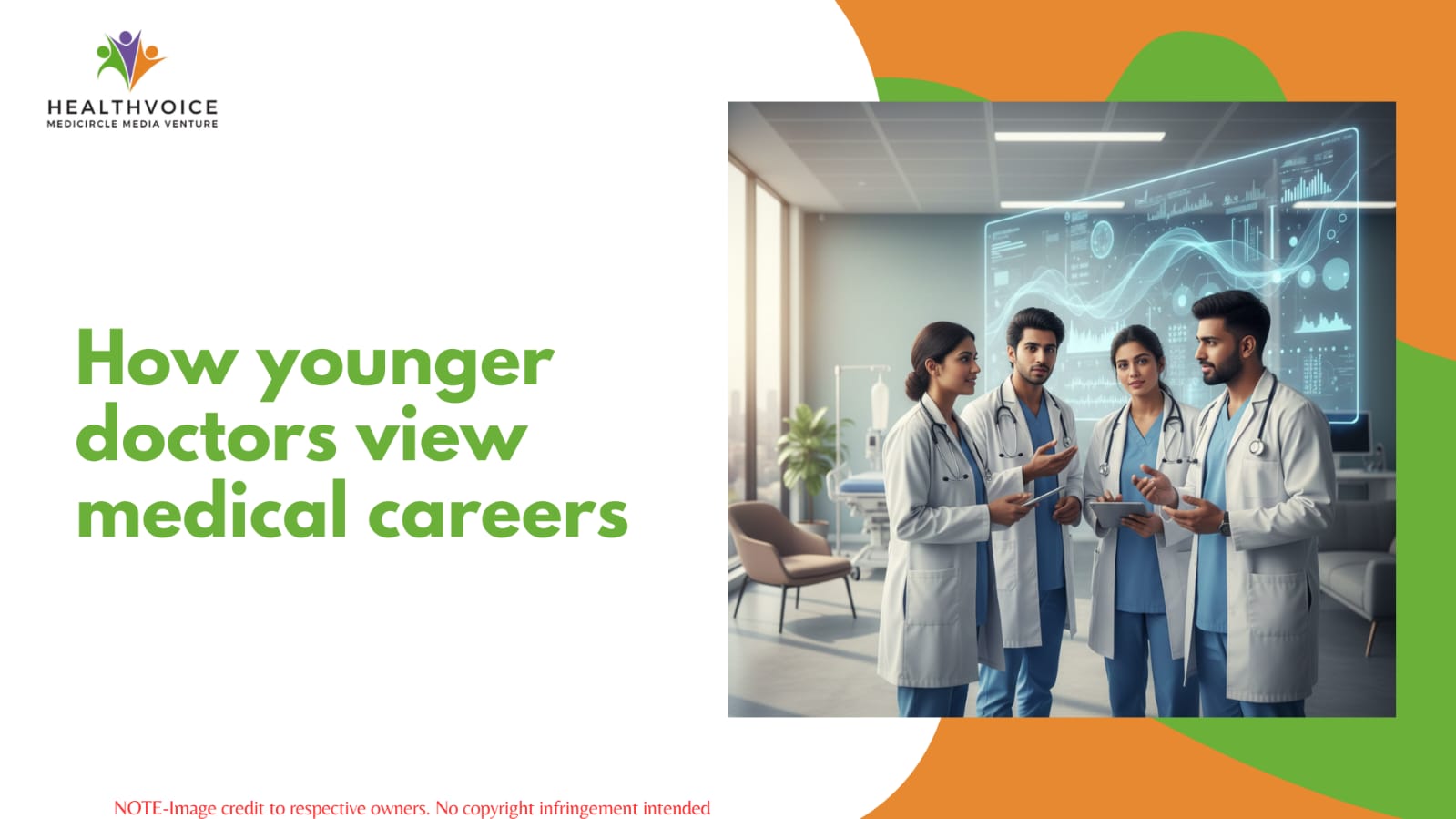
Let us talk about the doctor next door. The image used to be so clear, the stethoscope around the neck, the long hours in the clinic or hospital, a lifetime defined by patient rounds. But something is shifting. If you speak to medical graduates today, you will find their dreams are broader, their vision wider. They are not leaving medicine behind; they are creatively building upon it. That hard earned MBBS degree is now seen as a foundation, a Launchpad for a multitude of journeys that value healing, yes, but also personal well-being, technological integration and diverse impact.
This is not a rebellion against tradition. It is a thoughtful evolution. The core desire to serve and heal remains, but the how and where are getting a fascinating update.
Balance Is Not a Luxury:
Ask a young doctor what they want, and a sustainable life often tops the list. This is not code for being less dedicated. It is a direct response to the very real stories of burnout and exhaustion that have come to light. After the immense pressures witnessed globally, the goal has crystallized, to build a career that lasts, without sacrificing one’s own health at the altar of the job.
This means actively seeking environments that respect predictable schedules. It means valuing time for family, hobbies and rest not as an afterthought, but as a critical component of being a good, present and effective physician. They have seen the toll that constant stress takes, and they are choosing a different road, one where they can care for their community for decades, not just a few intense years.
The Digital Native Healer:
Think about it, this is the first generation of doctors who grew up with the internet in their pockets. They do not adapt to technology; they intuitively weave it into their workflow. Where older colleagues might have seen a new digital patient record system as a hurdle, a younger doctor is more likely to see a tool waiting to be mastered.
This fluency makes them natural bridge builders. They are the ones collaborating with tech teams to design more intuitive health apps. They can pilot a telemedicine platform with ease, extending care to remote corners. They are cautious yet optimistic about AI tools, able to assess their real world clinical value. For them, tech is not a replacement for the human touch; it is the amplifier that makes that touch reach further and work smarter.
Beyond the Clinic:
Have you noticed how many doors that medical degree can open? Young doctors are exploring this entire building. They are realizing that their deep understanding of healthcare is desperately needed in many fields, and they are answering the call.
The system improvers move into hospital management or health policy. Who better to streamline a patient’s journey or design a better public health programme than someone who has been on the frontline?
The discoverers head into research labs or pharmaceutical companies. Their clinical insight is gold when designing a new drug trial or understanding a disease mechanism, turning individual patient observations into breakthroughs for millions.
The communicators dive into medical writing and health journalism. They translate complex studies into clear language for both doctors and the public, ensuring vital information is understood, not just published.
The innovators become entrepreneurs. Spotting a gap in care delivery, be it in diabetic management or mental health access, they use their firsthand experience to build solutions. They are founding startups, creating apps and developing new models of care that are grounded in real medical need.
A Calling Reimagined:
You might hear someone say that for this generation, medicine is just a job. That misses the point entirely. The passion is still there, it has simply matured into a more conscious choice. The calling is now about intentional impact.
It is about having the agency to align work with personal values. This could mean blending part time clinical work with a role in health tech. It might involve choosing locum tenens positions for flexibility or volunteering with NGOs for a different perspective. For many, the ideal is a portfolio career, maybe 70 percent seeing patients and 30 percent working on a health education project. This blend keeps the fire alive, preventing monotony and fostering a sense of broader contribution.
Humanizing Healthcare:
So, what does this all mean for the rest of us, the patients and the community? It signals a promising shift. This new breed of Indian doctor is building a more resilient, versatile and thoughtful healthcare ecosystem. They are proving that you can be an excellent healer while also being a systems thinker, an innovator or a communicator.
They are redefining the stethoscope, not as a symbol of a single, rigid path, but as a tool for listening to patients, to data and to their own inner compass. This is not a departure from the heart of medicine. It is, perhaps, its most human evolution yet, promising a healthier future for both those who provide care and those who receive it.
 Team Healthvoice
#YoungDoctors #JuniorDoctor #FutureDoctor #DoctorLife #DoctorsOfIndia #MedLife #MedSchoolToMedicine #MedicalCareer #NewGenerationDoctors #WomenInMedicine #MedicineAndTechnology #HealthTech #PortfolioCareer #WorkLifeBalance #ModernMedicine #healthvoice
