India's Healthcare Workforce Challenge: Where Are the Doctors Needed Most?
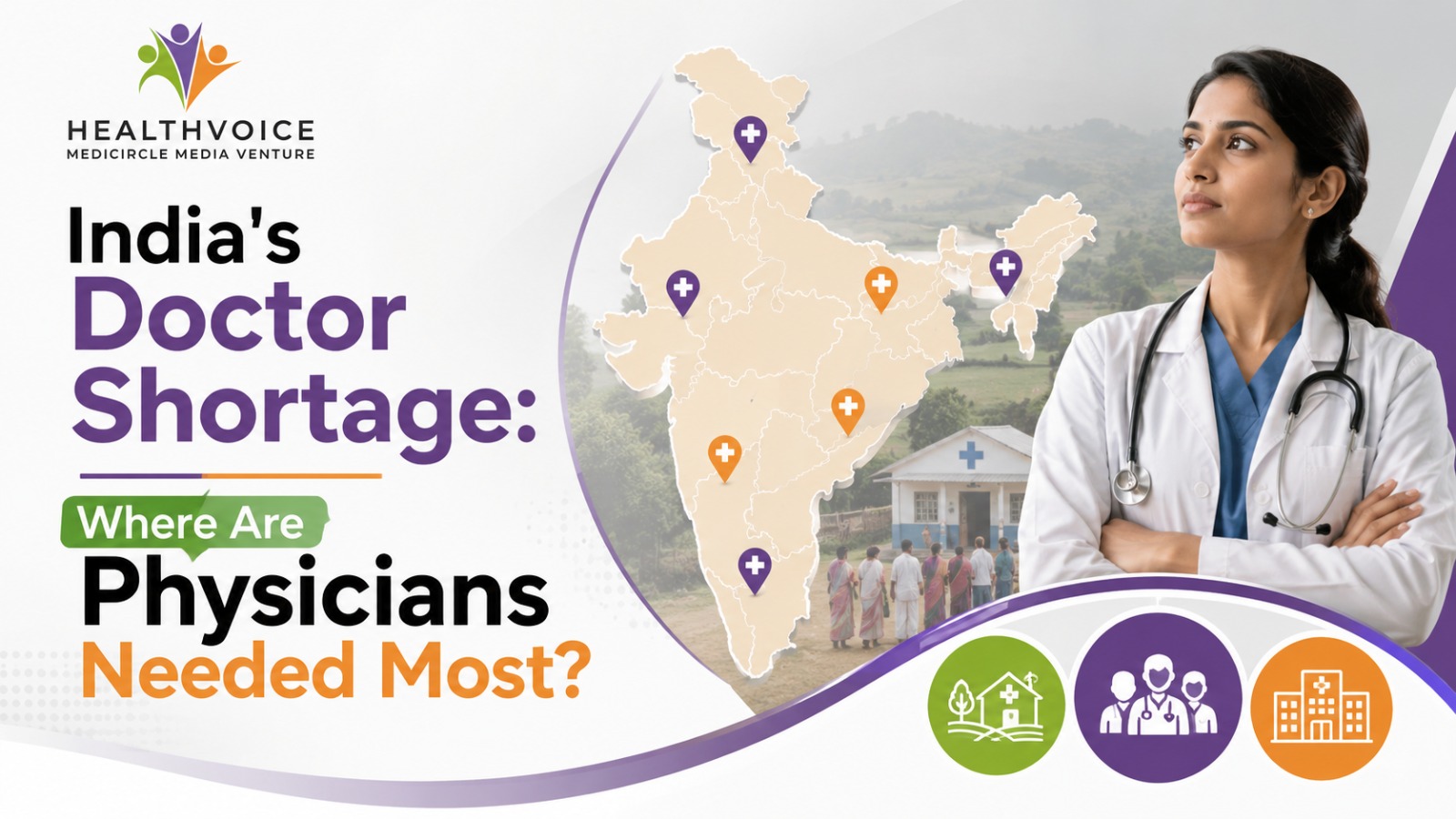
India's doctor shortage is a maldistribution crisis, with most physicians concentrated in cities while rural and tribal regions face severe gaps demanding urgent policy, community, and technology-driven solutions.
Introduction
India has produced some of the world's finest medical professionals. Indian doctors serve in top hospitals across five continents, lead groundbreaking research, and hold senior positions in global health organizations. Yet within India itself, a stark and deeply troubling reality persists: millions of citizens, particularly those living in rural and semi-urban areas, have inadequate or no reliable access to a qualified doctor.
This is not a new problem. But it is a problem that has grown more visible, more urgent, and more complex with each passing decade. As India's population surpasses 1.4 billion and the burden of both communicable and non-communicable diseases grows heavier, the question of where doctors are needed most becomes one of the most important healthcare policy questions of this generation.
Understanding the geography of doctor shortage in India requires looking beyond aggregate numbers. It requires understanding how and why the healthcare workforce is distributed so unevenly, which communities bear the greatest cost of this imbalance, and what both institutional responses and individual practitioners can do to address it.
Understanding India's Doctor-to-Population Reality
The World Health Organization recommends a minimum ratio of 1 doctor for every 1,000 people. India, on paper, appears to be approaching this threshold. According to National Medical Commission data, India had approximately 13.08 lakh registered allopathic doctors as of recent years, with additional practitioners registered under AYUSH systems. When combined, India's overall doctor-to-population ratio looks more acceptable.
However, aggregate numbers tell only part of the story. The critical issue is not the total count of doctors but where those doctors choose to practice.
Estimates consistently suggest that over 70 percent of India's doctors are concentrated in urban areas, serving roughly 31 percent of the population. Meanwhile, nearly 65 to 70 percent of Indians living in rural areas are served by the remaining minority of the medical workforce. This maldistribution is the heart of India's healthcare workforce challenge.
Key facts that define the scale of the problem include:
- India has approximately 6 lakh villages, many of which have no permanent qualified medical officer.
- Community Health Centres across India face significant shortfalls in specialist availability, including surgeons, physicians, gynaecologists, and paediatricians.
- Government health facilities in rural areas routinely report vacancies that go unfilled for months or years.
Where the Gaps Are Deepest: State-Level and Regional Disparities
Not all states face the same degree of shortage. The healthcare workforce crisis in India has a distinct geographic character, and the states that suffer most are often those that also face poverty, poor infrastructure, and historically weaker public investment in health.
The Empowered Action Group States
The eight Empowered Action Group (EAG) states, which include Uttar Pradesh, Bihar, Madhya Pradesh, Rajasthan, Odisha, Chhattisgarh, Jharkhand, and Uttarakhand, collectively account for a large share of India's disease burden but have some of the country's weakest doctor-to-population ratios. Bihar and Uttar Pradesh in particular struggle with among the highest patient loads per doctor in the country.
The Northeastern States
States such as Manipur, Meghalaya, Nagaland, and Arunachal Pradesh face compounded challenges. Geographic terrain, poor road connectivity, limited medical college infrastructure, and inadequate incentive structures make recruitment and retention of doctors in these regions exceptionally difficult.
Tribal and Forest Districts
Across central and eastern India, districts with significant scheduled tribe populations, including parts of Chhattisgarh, Jharkhand, Odisha, and Madhya Pradesh, face acute shortages. Doctors are reluctant to serve in areas with poor living conditions, limited educational facilities for their families, and professional isolation.
Coastal and Island Territories
Remote coastal communities and union territories such as Lakshadweep and parts of the Andaman and Nicobar Islands face unique challenges in accessing specialists, particularly for emergencies and referral care.
By contrast, states such as Kerala, Tamil Nadu, Maharashtra, Karnataka, and Delhi have higher concentrations of both public and private sector doctors, urban specialty hospitals, and postgraduate training institutions. The disparity between these two groups of states reflects decades of investment differences in health infrastructure, education, and governance capacity.
Why Doctors Concentrate in Cities: The Structural Causes
Addressing doctor shortage in rural India requires understanding why the imbalance exists in the first place. The causes are structural, economic, and deeply human.
Professional and Career Incentives
Urban hospitals, particularly private tertiary care institutions, offer higher salaries, access to advanced technology, opportunities for specialisation, and exposure to complex case volumes that advance medical careers. For a young doctor who has invested 10 to 12 years in their education, the career mathematics of joining a corporate hospital in a metro city often appears more favourable than a rural posting.
Educational Infrastructure and Family Considerations
Doctors are human beings with families. Access to quality schooling for children, professional opportunities for spouses, and urban amenities are factors that influence location decisions just as they do for professionals in any field. Rural postings frequently mean sacrifice across multiple dimensions of personal life.
Safety and Professional Isolation
Violence against doctors, though reported across settings, is more common in resource-poor public facilities. Additionally, doctors practising alone in remote areas carry enormous clinical responsibility without the support of colleagues or diagnostic infrastructure, creating professional anxiety and burnout risk.
Regulatory and Administrative Friction
Government service postings in rural areas are sometimes accompanied by delayed salaries, inadequate housing, dysfunctional equipment, and bureaucratic inertia that frustrates motivated practitioners. These systemic failures deter many doctors who might otherwise consider public service.
Policy Responses and What Is Being Attempted
India has not ignored this challenge. Multiple policy frameworks and government initiatives have attempted to address the healthcare workforce distribution problem over the years.
Ayushman Bharat and Health and Wellness Centres
The Ayushman Bharat initiative, which includes the creation of Health and Wellness Centres (now called Ayushman Arogya Mandirs) across the country, is one of the most ambitious attempts to bring primary care closer to underserved populations. These centres are intended to deliver comprehensive primary health services, reduce the burden on higher-level facilities, and serve as touchpoints staffed by community health officers and primary care providers.
National Medical Commission Reforms
The National Medical Commission has introduced reforms around medical education, licensing, and rural service obligations. The proposal to require MBBS graduates to complete a mandatory rural service period has been debated extensively. While some states have implemented versions of this requirement, its implementation and outcomes vary significantly.
Increase in Medical Seats
India has expanded its medical college capacity considerably over the past decade, with new government medical colleges established in districts that previously had none. The intent is to produce doctors from smaller cities and semi-urban backgrounds who may be more willing to serve in those communities.
AYUSH Integration
The government has also moved to deploy AYUSH practitioners (Ayurveda, Yoga, Unani, Siddha, and Homeopathy) at primary care facilities in areas where allopathic doctors are unavailable. While this has expanded access to some extent, it remains a subject of clinical and policy debate regarding scope of practice and quality of care.
Telemedicine and Digital Health
Following the COVID-19 pandemic, telemedicine gained significant legitimacy and regulatory backing in India through the Telemedicine Practice Guidelines issued by the Ministry of Health and Family Welfare. Platforms enabling remote consultations have expanded reach to patients in underserved areas, though digital literacy, connectivity, and language barriers remain obstacles.
The Role of Medical Professionals and Institutions in Bridging the Gap
Policy and infrastructure are necessary but not sufficient. The engagement, advocacy, and professional conscience of India's medical community will ultimately shape how effectively the healthcare workforce gap is addressed.
Medical associations have a particularly important role to play. When professional bodies raise their collective voice around systemic issues such as rural service conditions, safety for healthcare workers in government facilities, and equitable career pathways, they create pressure for meaningful reform. Individual doctors who share their experiences of rural practice, community health challenges, and frontline realities help shift the professional narrative and inspire the next generation.
Platforms built for the medical community, such as HealthVoice, serve as important spaces for these conversations. When doctors and medical associations can communicate openly about the realities of healthcare delivery in underserved India, when leaders can highlight innovative models of rural service, and when achievements in community health are given the recognition they deserve, it builds a culture of engagement around the most pressing challenges in Indian medicine.
The healthcare workforce crisis in India is not simply a government problem to solve in isolation. It is a shared challenge for the entire medical ecosystem, including educators, associations, practitioners, healthcare brands, and digital platforms committed to the advancement of Indian healthcare.
Conclusion
India's healthcare workforce challenge is one of the defining public health issues of this era. The country has no shortage of medical talent in absolute terms. What it faces is a profound mismatch between where doctors are and where patients most desperately need them.
Addressing this requires a combination of better incentive structures, improved service conditions in rural and tribal areas, technology-enabled care models, expanded medical education in underserved districts, and a renewed sense of collective responsibility within the medical community itself. Progress is possible, and in several states and communities, it is already happening.
The conversation, however, must remain open, data-driven, and led by those who understand it best: the doctors, associations, and healthcare leaders who navigate these realities every day. Giving that community a stronger, more connected voice is not a peripheral goal. It is central to building a healthier, more equitable India.
Frequently Asked Questions
Q1: What is the current doctor-to-population ratio in India?
India has been working toward the WHO-recommended ratio of 1 doctor per 1,000 people. While registered doctor numbers have grown considerably, the ratio is significantly worse in rural areas due to urban concentration of the workforce.
Q2: Which states in India have the most severe doctor shortages?
The Empowered Action Group states, including Bihar, Uttar Pradesh, Madhya Pradesh, Rajasthan, and Chhattisgarh, as well as several northeastern states and tribal-dominated districts, face the most acute shortages of qualified doctors.
Q3: Why do most Indian doctors prefer to work in cities?
Urban areas offer higher earning potential, access to advanced medical technology, better schooling for children, postgraduate training opportunities, and professional peer networks. Rural postings often lack these advantages, making urban practice more attractive for most graduates.
Q4: What is the government doing to address the doctor shortage in rural India?
Key government responses include the Ayushman Bharat Health and Wellness Centres programme, expansion of medical colleges in underserved districts, telemedicine guidelines, AYUSH deployment at primary care levels, and ongoing discussions about mandatory rural service for MBBS graduates.
Q5: Can telemedicine solve India's rural doctor shortage?
Telemedicine can significantly extend the reach of qualified doctors to remote communities and has shown strong results in outpatient consultation and chronic disease management. However, it cannot fully replace in-person care for emergency medicine, surgery, childbirth, and complex diagnosis. It works best as a complement to physical healthcare infrastructure.
Resources
- National Medical Commission (NMC): Official regulatory body for medical education and practice in India; publishes registered doctor data and policy updates.
- Ministry of Health and Family Welfare, Government of India: Primary source for national health policy documents, rural health statistics, and Ayushman Bharat programme updates.
- World Health Organization India Country Office: Publishes health workforce data, SDG health indicators, and country-level analyses relevant to doctor distribution.
- NITI Aayog Health Reports: Provides state-level health index rankings and comparative analysis of healthcare infrastructure across Indian states.
- Indian Council of Medical Research (ICMR): Publishes research on disease burden, health systems, and evidence-based public health policy in India.
Interlinking Keywords:
doctor shortage India, rural healthcare access, Ayushman Bharat Health and Wellness Centres, healthcare workforce distribution, National Medical Commission reforms, telemedicine in India, medical professional community
Last reviewed by:
HealthVoice Editorial and Medical Content Team on August 27, 2026.
Disclaimer:
The information provided in this article is intended for general awareness and informational purposes only. It does not constitute medical advice, clinical guidance, or professional policy recommendation. Readers are advised to consult qualified healthcare professionals and refer to official government and regulatory sources for decisions related to healthcare practice, policy, or service delivery.
 Team Healthvoice
#DoctorShortageIndia #RuralHealthcareIndia
