Why Association Leadership Needs a Digital-First Strategy
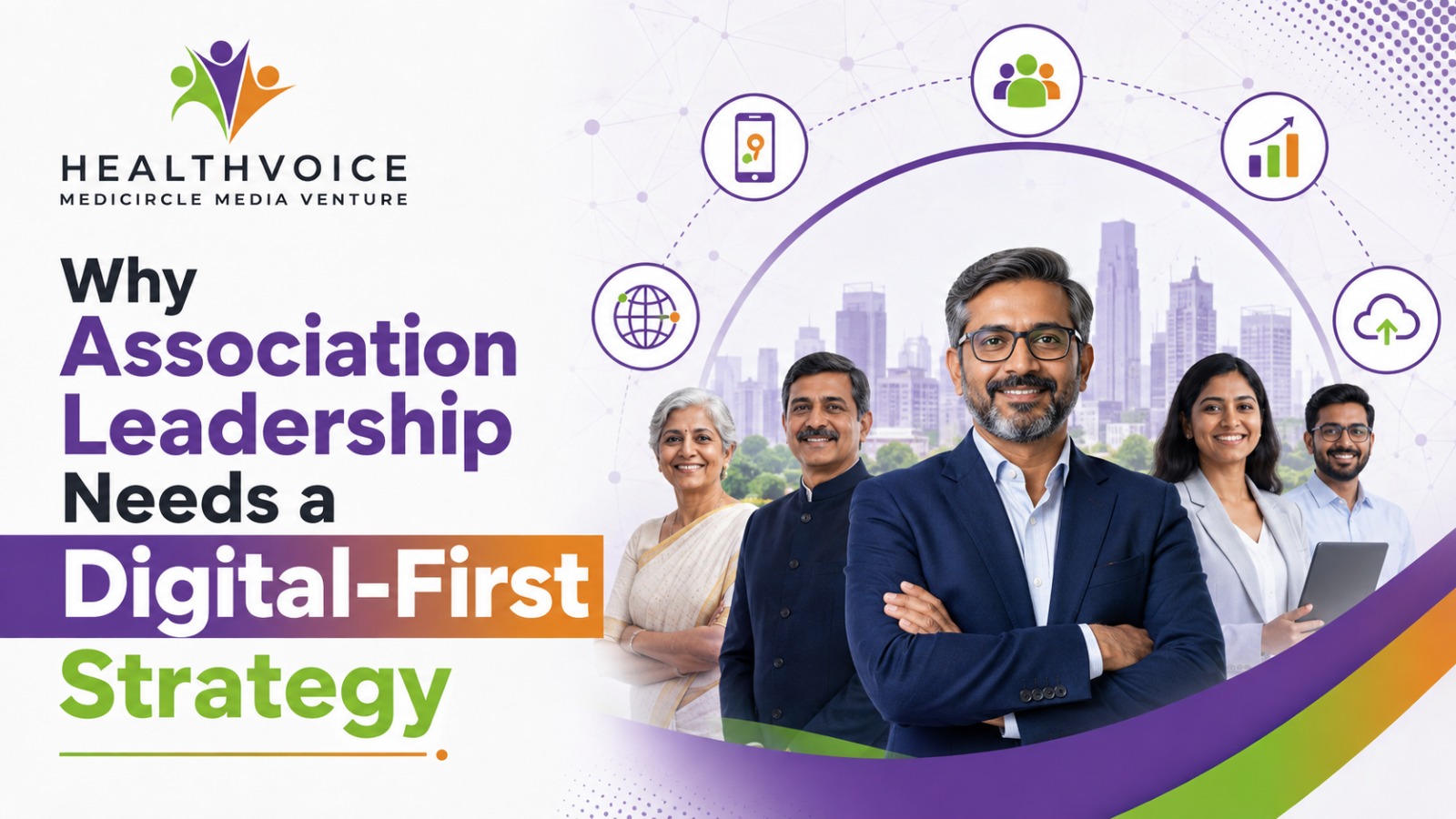
Association leadership in India must embrace a digital-first strategy to sustain member engagement, amplify advocacy, and remain professionally relevant in a rapidly transforming healthcare ecosystem.
Introduction
Medical associations in India have always carried a responsibility that goes far beyond administrative formality. They represent the collective voice of doctors, define professional standards, shape health policy, and serve as the backbone of organized medical practice across the country. The Indian Medical Association, with its vast national presence and specialty associations across cardiology, oncology, pediatrics, and dozens of other disciplines, has historically been a powerful force in shaping how healthcare is practiced and governed in India.
But the world that these associations were built for has changed significantly. The doctor community is no longer waiting for a printed circular to learn about an important policy update. Young physicians are not attending a formal dinner to feel professionally connected. Healthcare information, professional networking, advocacy communication, and continuing education have all migrated to digital platforms at a pace that no association can afford to ignore.
The question facing association leadership today is not whether to go digital. That decision was made by broader societal forces long ago. The real question is whether association leadership is willing to place a digital-first strategy at the center of how their organization thinks, communicates, and leads.
Understanding What Digital-First Actually Means for Associations
There is a common misconception that going digital means having a website or sending a WhatsApp broadcast once a month. A genuine digital-first strategy is something fundamentally different and far more intentional.
A digital-first association does not simply use technology as a support tool. It designs its entire communication structure, member engagement model, event delivery, advocacy communication, and governance around digital channels as the primary mode of operation. Offline activities become a meaningful complement to an already strong digital foundation, not the other way around.
For Indian medical associations, this shift involves:
- Maintaining a professionally managed and regularly updated digital presence across a dedicated website and relevant platforms
- Creating original content that reflects the association's expertise, policy positions, and community events
- Using data and member feedback to understand what doctors actually want from their association
- Building digital engagement touchpoints that members can access from Tier 1 cities like Mumbai and Delhi, as well as from smaller cities like Nashik, Coimbatore, or Bhubaneswar
This is not a cosmetic change. It is a leadership philosophy that recognizes digital channels as the most powerful lever an association has to stay relevant to its members and influential in its field.
Why the Current Moment Demands Urgency
India is undergoing one of the most ambitious digital health transformations in the world. The Ayushman Bharat Digital Mission has already crossed 90 crore ABHA registrations, making it one of the largest digital health identity programmes globally. The Healthcare Professionals Registry under ABDM is building a verified digital database of doctors across the country. The National Medical Commission is progressively modernizing regulatory frameworks. Government health schemes, telemedicine policies, and digital health record systems are reshaping how doctors practice and how patients access care.
In this environment, medical association leadership that remains anchored in purely offline modes of operation is not being cautious. It is being left behind.
Younger doctors, who form the future of every association's membership base, have entirely different expectations. They expect updates delivered in real time. They expect events to have a hybrid or digital option. They expect their association to have a credible, visible, and active presence where they already spend professional attention. When an association fails to meet those expectations, the practical consequence is disengagement. Members may continue paying dues, but the sense of belonging, the trust in association leadership, and the willingness to participate in association activities quietly erodes.
At a national level, associations are at a pivotal moment, where adapting to digital trends will determine how well they thrive in the years ahead, and the data from leadership surveys consistently highlights AI adoption, digital literacy, and data-driven decision-making as the top priorities for associations that want to remain competitive and community-relevant.
The Core Pillars of a Digital-First Association Strategy
Member Communication and Content Leadership
The most immediate and impactful area where associations must build digital capability is communication. An association that communicates well commands attention and trust. An association that communicates poorly becomes invisible over time, regardless of how much important work it does offline.
Digital-first communication means moving beyond printed newsletters and sporadic SMS broadcasts to a structured content strategy. This includes regular thought leadership articles authored by association leaders or expert members, timely updates on policy changes and government health schemes, celebration of member achievements and milestones, and clear information about upcoming events, CPD opportunities, and advocacy positions.
The tone of this communication matters enormously. Doctors respond to content that treats them as intelligent professionals with limited time. Clear, credible, and concise communication builds loyalty. Overly formal, delayed, or generic content does not.
Digital Member Engagement and Community Building
An association's greatest asset is its members. A digital-first strategy creates structured, ongoing opportunities for members to engage with each other and with the association's leadership through digital means.
This does not mean replacing meaningful professional interaction with hollow online activity. It means creating digital forums where specialists can share clinical updates, platforms where young doctors can connect with senior mentors, and spaces where members from across India can participate in association discussions without requiring physical travel. For doctors practicing in Tier 2 and Tier 3 cities, this digital inclusion is not merely a convenience. It is the difference between feeling like a valued member and feeling invisible to association leadership.
Advocacy in the Digital Age
Medical associations derive a significant part of their institutional authority from their ability to represent the profession in policy conversations. This advocacy function has traditionally relied on formal letters, press conferences, and delegations to government bodies.
Digital platforms have added an entirely new and powerful dimension to this advocacy capability. When association leadership publishes well-reasoned, evidence-based commentary on a healthcare policy issue through digital channels, it reaches media professionals, government officials, healthcare administrators, and fellow doctors simultaneously. The reach of a well-crafted digital communication far exceeds what any press release sent to a limited media list could achieve.
The Indian Medical Association, one of the largest physician associations in the world, has a long history of policy engagement at national and state levels across multiple issues, but the effectiveness of that engagement in the digital era depends increasingly on whether that voice is being amplified through credible digital platforms.
Events, CME, and Knowledge Delivery
Continuing Medical Education is both a professional obligation and a powerful membership benefit that associations provide. The delivery model for CME has been permanently altered by the pandemic experience, and the associations that have recognized this shift have built hybrid CME capabilities that expand their reach dramatically.
A doctor practicing in a district hospital in Rajasthan or a rural area of Jharkhand can access expert-led CME content if the association delivers it digitally. A specialist in Lucknow or Patna can attend a national association event without the cost and time of travel. These are not compromises on quality. They are expansions of access that strengthen the association's relevance to every member, not just those in major metropolitan centers.
The Leadership Mindset Shift
Technology tools are only part of the answer. The deeper requirement is a shift in how association leaders think about their role in the digital era.
Leadership in a digital-first association requires comfort with transparency. Digital communication is inherently more visible than internal circulars. Members can see what positions their association takes, how quickly it responds to emerging issues, and how actively it communicates. This visibility holds leadership accountable in productive ways and builds member trust when association leaders embrace it genuinely.
It also requires investment. Building a credible digital presence requires dedicated resources. This means allocating budget for content creation, platform management, and potentially professional digital communication support. Associations that treat digital communication as a task to be completed with existing administrative staff at minimal cost will not build the kind of presence that truly serves their members or advances their advocacy goals.
The lack of digital competencies among health workers remains a critical bottleneck, often leaving them behind in rapidly evolving digital ecosystems, and the same challenge applies to association leadership teams. Building internal digital capability or partnering with platforms specifically designed for the medical community is an investment that pays substantial returns in member relevance and organizational influence.
How Dedicated Healthcare Platforms Strengthen Association Presence
Medical associations in India do not need to build their digital infrastructure entirely from scratch. Purpose-built platforms for the medical community offer associations a credible and professional digital home that is already aligned with the values and communication standards expected by doctors.
Platforms like HealthVoice are designed specifically for the needs of the medical community. They offer associations the ability to share updates, promote events, highlight member achievements, publish expert commentary, and engage with a focused audience of doctors and healthcare professionals. This is fundamentally different from attempting to build association visibility on general social media platforms, where medical content competes with entertainment, advertising, and an enormous volume of unfiltered information.
A dedicated medical platform provides the credibility, the professional environment, and the focused audience that makes association content meaningful. It offers association leaders a trusted space to share their voice and represent their members' interests with the seriousness that medical communication deserves.
Building Toward Long-Term Digital Authority
Associations that commit to a digital-first strategy do not build overnight results. What they build is long-term digital authority. Over time, an association that consistently publishes credible content, engages its members digitally, and participates actively in online healthcare conversations becomes the definitive reference point for its specialty or region.
This authority translates into practical benefits. Media professionals turn to digitally active associations for expert commentary. Government bodies recognize associations with a documented, visible track record of informed advocacy. Young doctors looking for a professional home are drawn to associations whose digital presence reflects a dynamic and engaged community.
The Digital Healthcare Transformation Initiative launched in 2024 leverages public-private cooperation to harness digital health's full potential, bridging the gap between future promise and current reality. Medical associations in India have a role to play in this transformation, and the associations that lead digitally will be the ones most effectively shaping it.
Conclusion
The argument for a digital-first strategy in association leadership is not a technological argument. It is a leadership argument. Associations exist to serve their members, advance their profession, and contribute to better healthcare outcomes for the communities they represent. In 2025 and beyond, fulfilling all three of those purposes requires a deliberate, well-resourced, and sustained commitment to digital communication, digital engagement, and digital visibility.
The associations that recognize this reality and act on it will grow in member trust, professional influence, and institutional relevance. Those that delay will find that the energy, attention, and loyalty of the next generation of doctors has moved to communities and platforms that meet them where they are. Association leadership has always required the courage to lead through change. The digital transformation of Indian healthcare is the defining change of this era.
Frequently Asked Questions
Q1: Why do Indian medical associations need a digital-first strategy?
Indian medical associations need a digital-first strategy to improve member engagement, communicate policy positions faster, promote events digitally, and stay relevant in a healthcare environment that is rapidly shifting toward online communication and digital governance. Younger doctors especially expect their professional associations to have an active and credible digital presence.
Q2: What does a digital-first strategy mean for an association?
A digital-first strategy means placing digital tools, platforms, and online communication at the center of how an association operates, engages with members, shares information, runs events, and builds its public presence. It is not simply about having a website but about treating digital channels as the primary mode of organizational communication and community building.
Q3: How can medical associations in India improve member engagement digitally?
Medical associations can improve digital member engagement through dedicated online portals, professional content publishing, webinars, digital newsletters, hybrid CME events, and purpose-built platforms like HealthVoice that are designed specifically for the medical community. Regular and credible communication keeps members informed, valued, and connected to the association.
Q4: What role does ABDM play in pushing associations toward digital adoption?
The Ayushman Bharat Digital Mission is building a national digital health infrastructure across India. Medical associations that understand and actively participate in this shift can guide their members through ABHA registration, digital health records, and compliance requirements. This positions the association as a knowledgeable and indispensable professional resource for its members.
Q5: What is the risk for associations that do not adopt a digital-first approach?
Associations that delay their digital transition risk losing member relevance, reduced participation in association activities, weaker policy influence, and an inability to attract younger doctors who expect digital-first communication. Over time, this disengagement can erode the financial stability, institutional authority, and community standing that medical associations depend on to fulfill their mission.
RESOURCES
- Indian Medical Association (IMA): The largest national body of physicians in India, with a documented history of policy engagement and professional representation across multiple health domains.
- Ayushman Bharat Digital Mission (ABDM), National Health Authority: The government's flagship initiative building India's national digital health ecosystem, including ABHA registrations, the Healthcare Professionals Registry, and interoperable health data exchange.
- World Health Organization, Global Strategy on Digital Health 2020 to 2025: WHO's strategic framework for aligning countries and stakeholders in digital health adoption, capacity building, and governance.
- National Medical Commission (NMC): India's apex regulatory body for medical education and professional standards, providing context for the regulatory environment in which Indian medical associations operate.
- HealthVoice (healthvoice.in): A dedicated doctor-focused community platform designed to give medical associations, doctors, and healthcare organizations a credible and professional digital presence.
Interlinking Keywords
digital-first strategy for associations, medical association engagement India, doctor community platform, association leadership communication, ABDM digital health India, healthcare professional visibility, IMA member engagement, medical association digital transformation, CME digital delivery India, healthcare association content strategy
Last reviewed by:
HealthVoice Editorial and Medical Content Team on August 25, 2026.
Disclaimer:
This article is intended for informational and professional development purposes only. It does not constitute legal, regulatory, or governance advice. Medical associations and healthcare organizations should consult qualified professionals before making significant strategic or operational decisions. References to government programmes such as ABDM are based on publicly available information at the time of publication.
 Team Healthvoice
#DigitalHealthcare #MedicalAssociations
