Infection Control Rounds: What Doctors Must Look For
Infection control rounds are a structured, proactive strategy enabling doctors to identify hand hygiene lapses, device-associated risks, isolation failures, and environmental hazards that contribute to preventable hospital-acquired infections in Indian healthcare settings.
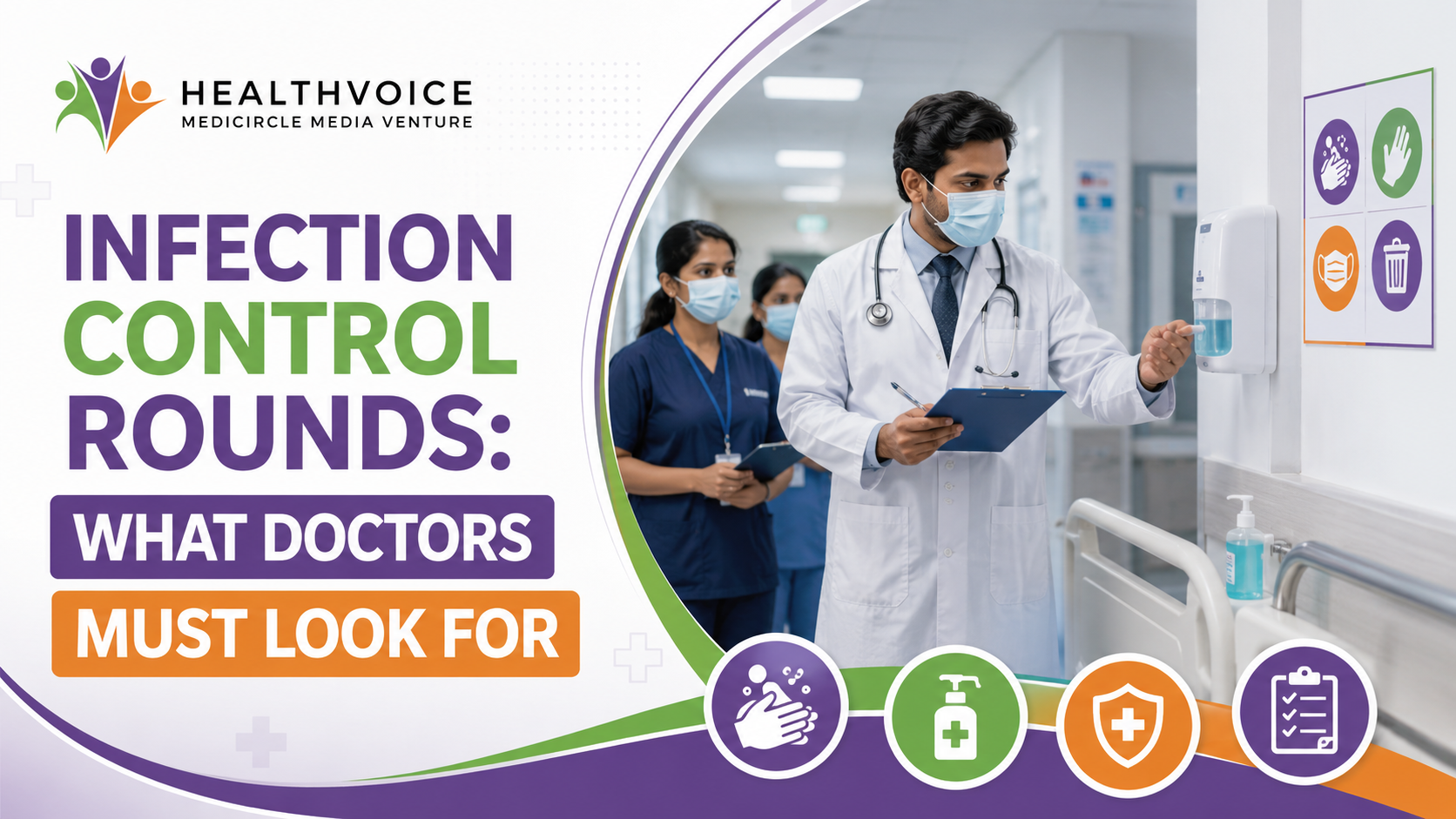
Infection Control Rounds: What Doctors Should Actively Look For
In hospitals across India, from large tertiary care centres in Mumbai and Delhi to district hospitals in tier-two cities, healthcare-associated infections (HAIs) remain one of the most persistent threats to patient safety. Every year, millions of hospitalised patients develop infections that were not present when they were admitted. These infections prolong hospital stays, escalate treatment costs, increase antibiotic resistance, and in severe cases, claim lives that could have been saved. The burden is not invisible. It shows up in patient outcomes, in microbiology reports, and in the financial records of healthcare institutions trying to manage preventable complications.
Infection control rounds are among the most effective structured practices a hospital can implement to reduce this burden. These are systematic, scheduled walkthrough assessments conducted by doctors, infection control nurses, microbiologists, and hospital administrators to identify lapses in infection prevention before they lead to patient harm. Unlike reactive responses to reported outbreaks, infection control rounds are a proactive intervention, a disciplined way of looking at the environment, practices, and people with a trained clinical eye.
Yet many hospitals in India treat these rounds as a compliance ritual rather than a genuine clinical strategy. Doctors who conduct them may be following a checklist without fully understanding what to look for, why it matters, and how their observations directly influence patient outcomes. This article addresses that gap by outlining, in practical and actionable terms, what doctors should actively look for during infection control rounds.
Understanding the Purpose of Infection Control Rounds
Infection control rounds serve a fundamentally different purpose from routine ward rounds. In a standard patient round, the doctor is focused on the clinical condition of individual patients. In an infection control round, the doctor steps back and examines the entire environment as a system of risk. The ward, the procedures being carried out, the equipment in use, and the behaviour of healthcare staff all become subject to scrutiny.
The National Accreditation Board for Hospitals and Healthcare Providers (NABH) in India has dedicated a full chapter to infection control within its accreditation standards. Hospitals seeking NABH accreditation are required to establish active surveillance programs, conduct regular infection control audits, and maintain documented evidence of these activities. This regulatory framework gives infection control rounds an institutional foundation, but the clinical quality of those rounds depends entirely on the doctor conducting them.
A well-conducted infection control round should achieve three things. It should identify current risks that could harm patients already in the ward. It should detect patterns or systemic failures that require policy-level correction. And it should reinforce a culture of infection prevention among all staff who observe the round being conducted. Each of these outcomes depends on the doctor knowing precisely what to look for.
Hand Hygiene Compliance: The Single Most Important Observation
No infection control intervention has stronger evidence behind it than hand hygiene. The World Health Organisation's Five Moments for Hand Hygiene framework, which specifies exactly when healthcare workers should clean their hands during patient care, is internationally recognised and forms the basis of hand hygiene protocols in accredited Indian hospitals as well. Despite this, hand hygiene compliance remains disappointingly low in many healthcare settings, often falling well below the 80 percent benchmark considered minimally acceptable.
During an infection control round, the doctor must actively observe hand hygiene behaviour across the entire ward, not just at one handwashing station. The observation should include whether staff are performing hand hygiene before and after patient contact, before performing any aseptic procedure, after exposure to body fluids, and after touching the patient environment. The doctor should also check whether alcohol-based hand rub dispensers are placed at every point of care, whether they are adequately stocked, and whether staff are applying the correct technique.
In Indian hospitals, particularly in high-patient-load settings, hand hygiene failures often occur not from negligence but from logistical barriers. Dispensers run out and are not replenished promptly. Sinks may lack soap or paper towels. Staff may be managing such high patient volumes that the moments for hand hygiene pass without attention. The doctor conducting the round should identify these structural barriers and escalate them to hospital administration as systemic issues, not individual failures.
Isolation Precautions and Patient Placement
One of the most critical observations a doctor must make during infection control rounds concerns the appropriate placement of patients with known or suspected infectious conditions. Not every hospital in India has the capacity for negative-pressure isolation rooms, but every ward should have a clear protocol for managing patients who may transmit infection through contact, droplet, or airborne routes.
Doctors should verify that patients with multidrug-resistant organisms (MDROs) such as carbapenem-resistant Enterobacteriaceae, methicillin-resistant Staphylococcus aureus, or extensively drug-resistant tuberculosis are being managed in designated isolation spaces or, at a minimum, placed at the end of the ward with clear signage and specific nursing assignments. The presence of isolation signage, the availability of personal protective equipment such as gloves and gowns outside the room, and the adherence of all staff to the specific precautions for that patient are all points of active observation.
In Indian hospitals where space constraints are a genuine challenge, the doctor should assess whether the minimum recommended bed spacing of 2.4 metres between adjacent beds is being maintained and whether cohort nursing, where patients with the same infection are grouped together and is being implemented appropriately. These spatial assessments directly affect the probability of cross-transmission and must not be overlooked.
Device-Associated Infection Risks: Lines, Catheters, and Ventilators
Central Line-Associated Bloodstream Infections
Central venous catheters are a critical source of bloodstream infections in intensive care units and high-dependency wards. During infection control rounds, the doctor must check every patient with a central line for several key indicators. The insertion site should be examined for signs of redness, swelling, discharge, or tenderness, any of which may indicate early catheter-related infection. The dressing should be intact, clearly dated, and within the acceptable change interval. The line should have a documented indication for its continued use.
The question of line necessity is one of the most important clinical decisions in infection prevention. A central line that is no longer clinically required should be removed promptly. In many wards, catheters remain in place longer than necessary simply because the removal order was not given or the risk of the device was not actively reconsidered. The infection control round is the appropriate moment to review all indwelling devices and ask, for each one, whether it is still needed.
Catheter-Associated Urinary Tract Infections
Urinary catheters are among the most commonly inserted devices in hospital patients and among the most common sources of preventable infections. The doctor should verify during the round that every patient with a urinary catheter has a documented clinical indication, that the drainage bag is positioned below the level of the bladder, that the closed drainage system is intact, and that the catheter has not been in place longer than the recommended duration. Catheter-associated urinary tract infections (CAUTIs) are preventable through early removal, proper maintenance, and avoidance of unnecessary insertion, and the infection control round provides a structured opportunity to enforce all three.
Ventilator-Associated Pneumonia
In the intensive care unit, ventilator-associated pneumonia (VAP) is a leading cause of morbidity and mortality. The doctor conducting infection control rounds in the ICU should observe whether the head-of-bed elevation is maintained at the recommended 30 to 45 degrees, whether oral hygiene using chlorhexidine is being performed at specified intervals, and whether subglottic secretion drainage is available for patients expected to require prolonged ventilation. Compliance with the VAP prevention bundle should be assessed against the documented protocol, not informally assumed.
Surgical Site Infection Prevention in Surgical Wards
For hospitals with active surgical programs, infection control rounds in surgical wards carry a particularly high-stakes quality. Surgical site infections (SSIs) are among the most studied and most preventable of all healthcare-associated infections, yet they continue to occur due to lapses in pre-operative, intra-operative, and post-operative practices.
During rounds in the surgical ward, the doctor should review whether pre-operative antibiotic prophylaxis is being administered within the recommended window, whether hair removal is being performed using clippers rather than razors, and whether wound dressings are being changed using proper aseptic technique. Dressings that are wet, soiled, or left unchanged beyond the recommended interval increase infection risk significantly. The doctor should also look at whether surgical drains are being managed correctly and whether there is a systematic approach to SSI surveillance with feedback to the operating surgeon.
Environmental Hygiene and Disinfection Standards
The hospital environment, including surfaces, equipment, and shared items, serves as a reservoir for pathogens. During infection control rounds, the doctor should assess the cleanliness of the ward environment with a clinical, not merely aesthetic, eye. High-touch surfaces such as bed rails, call buttons, intravenous poles, blood pressure cuffs, and door handles should be visibly clean and free of organic matter.
The doctor should ask housekeeping staff or nursing staff about the frequency and method of environmental disinfection, which disinfectants are used and at what concentrations, and how terminal cleaning is performed after a patient with a known infection is discharged. In Indian hospitals, inconsistent dilution of disinfectants is a common but underrecognized problem. A disinfectant used at the wrong concentration, whether too dilute or too concentrated, may not achieve the intended microbial reduction.
The doctor should also examine the sterile supply area and instrument storage, looking for any evidence of expired products, damaged packaging, or inappropriate storage conditions. Sterilisation failures are rare but catastrophic in their consequences, and regular visual checks during infection control rounds provide an important layer of oversight.
Antibiotic Stewardship Observations During Rounds
Antibiotic stewardship and infection control are inseparable disciplines. During infection control rounds, the doctor should take note of antibiotic prescribing practices visible in the ward. This includes checking whether patients on broad-spectrum antibiotics have a documented indication and a planned de-escalation strategy based on culture results, whether empirical therapy is being reviewed at 48 to 72 hours, and whether the hospital antibiotic policy is being followed.
India carries a disproportionately high burden of antimicrobial resistance, partly driven by inappropriate antibiotic use in both community and hospital settings. Infection control rounds that include an antibiotic stewardship lens help reinforce the connection between prescribing behaviour and the larger challenge of preserving the effectiveness of available antimicrobials. This is particularly important in tertiary care hospitals in India, where carbapenem resistance rates in gram-negative organisms are among the highest reported globally.
Staff Education, Signage, and Infection Control Culture
Beyond clinical observations, infection control rounds offer the doctor a valuable opportunity to assess the infection prevention culture of the ward. This is not easily measured by a checklist, but it is perceptible to an experienced clinician. Are staff confident about the protocols they are expected to follow? Do they know what to do when they encounter a deviation from standard practice? Is there a channel through which they can raise infection control concerns without fear of dismissal?
Visible signage is one indicator of how seriously infection control is prioritized in a ward. Isolation precaution signs, hand hygiene reminder posters, and waste disposal instructions should be present, legible, and placed where they are most likely to be seen. Staff working in the ward should be able to answer basic questions about infection prevention protocols without hesitation.
The doctor conducting the round should also check whether infection control training records are up to date for all ward staff, whether there is a mechanism for reporting sharps injuries and exposure incidents, and whether those incidents are being documented and followed up. In Indian hospitals, sharps injuries remain underreported, and many healthcare workers do not receive post-exposure prophylaxis in a timely manner. These are systemic gaps that infection control rounds can help surface and resolve.
Documentation, Surveillance, and Feedback Mechanisms
Infection control rounds are only as useful as the actions they generate. The doctor should ensure that every round produces a documented report with findings, corrective actions identified, responsibilities assigned, and timelines established. This documentation is not only a regulatory requirement under NABH standards but a clinical governance tool that creates accountability and enables trend analysis over time.
The findings from infection control rounds should feed into the hospital's broader HAI surveillance program. When the round identifies a cluster of similar infections in a ward, it should trigger a formal outbreak investigation. When it finds recurring compliance gaps in the same area, it should prompt a targeted re-education intervention. The loop from observation to documentation to corrective action to reassessment is the essential mechanism through which infection control rounds deliver measurable improvement.
How HealthVoice Supports Infection Control Awareness Among Indian Doctors
Platforms like HealthVoice (healthvoice.in) play a meaningful role in strengthening infection control practice across India's healthcare community. HealthVoice is a doctor-focused community platform that connects physicians, medical associations, healthcare institutions, and healthcare brands through structured professional communication and knowledge sharing. For infection control specialists, hospital administrators, and frontline clinicians alike, HealthVoice offers a channel to disseminate evidence-based updates, share institutional case studies, highlight best practices from accredited hospitals, and engage with peers on emerging challenges in infection prevention.
Through its community-driven model, HealthVoice allows medical associations dealing with infection control policy, hospital epidemiology, and antibiotic stewardship to reach their members with relevant, credible, and timely information. Healthcare institutions seeking to build a culture of infection prevention can use the platform to share their infection control achievements, recognize their infection control teams, and inspire peer hospitals to raise their standards. For doctors actively working in infection control, HealthVoice offers the professional visibility and community engagement needed to amplify their expertise and influence positive change at scale.
Conclusion
Infection control rounds, when conducted with discipline, clinical intent, and genuine observational rigour, are one of the most powerful tools available to hospitals in their effort to eliminate preventable patient harm. The doctor who conducts these rounds is not merely fulfilling an accreditation requirement but serving as the first and most important line of defence against infections that should never occur.
Every observation matters, from a missing hand rub dispenser to an unnecessary urinary catheter, from an undated dressing to a culture report that was never reviewed. The collective impact of these observations, acted upon consistently and systematically, is a measurable reduction in HAI rates, shorter hospital stays, lower antibiotic consumption, and ultimately, patients who leave the hospital healthier than when they arrived.
In a healthcare environment as complex and resource-variable as India's, infection control rounds offer a structured, affordable, and evidence-supported pathway to better outcomes. Doctors who invest their attention and expertise in these rounds are not only protecting their patients but demonstrating the kind of clinical leadership that raises the standard of care for everyone.
Frequently Asked Questions
How often should infection control rounds be conducted in a hospital?
Most accreditation standards, including NABH guidelines, recommend that formal infection control rounds be conducted at least once a week in high-risk areas such as intensive care units, operation theatres, and neonatal units. General wards may be assessed fortnightly or monthly, depending on hospital size and HAI risk profile. Hospitals experiencing an active outbreak or a cluster of infections should increase the frequency of rounds until the situation is resolved and root causes are addressed.
Who should ideally be part of an infection control round team?
An effective infection control round is a multidisciplinary exercise. The core team typically includes the infection control doctor or hospital epidemiologist, an infection control nurse, a microbiologist, and a representative from hospital administration. In larger hospitals, the round may also include a pharmacist for antibiotic stewardship observations, a housekeeping supervisor for environmental hygiene assessment, and a quality officer for documentation purposes. Multidisciplinary involvement ensures that findings are acted upon across departments rather than remaining siloed in one clinical area.
What is the difference between infection control rounds and a hospital infection audit?
Infection control rounds are regular, proactive observational visits to wards and clinical areas, focused on identifying real-time risks and compliance gaps. A hospital infection audit, by contrast, is a more structured retrospective review that analyses infection data, reviews patient records, evaluates policy compliance, and benchmarks outcomes against defined indicators. Both activities are complementary. Infection control rounds generate the ground-level observations that inform audits, and audit findings guide the focus areas for future rounds. Together, they form the backbone of a robust hospital infection prevention and control program.
Abstract
Infection control rounds are a structured, proactive strategy enabling doctors to identify hand hygiene lapses, device-associated risks, isolation failures, and environmental hazards that contribute to preventable hospital-acquired infections in Indian healthcare settings.
 Team Healthvoice
#InfectionControl #PatientSafetyFirst