Public Health Management of Lymphatic Filariasis: Mass Drug Administration (MDA) Campaign Challenges
Mass Drug Administration is central to eliminating lymphatic filariasis, but success depends on effective coverage, compliance, community engagement, digital tracking, adverse-event management, and directly observed treatment strategies.
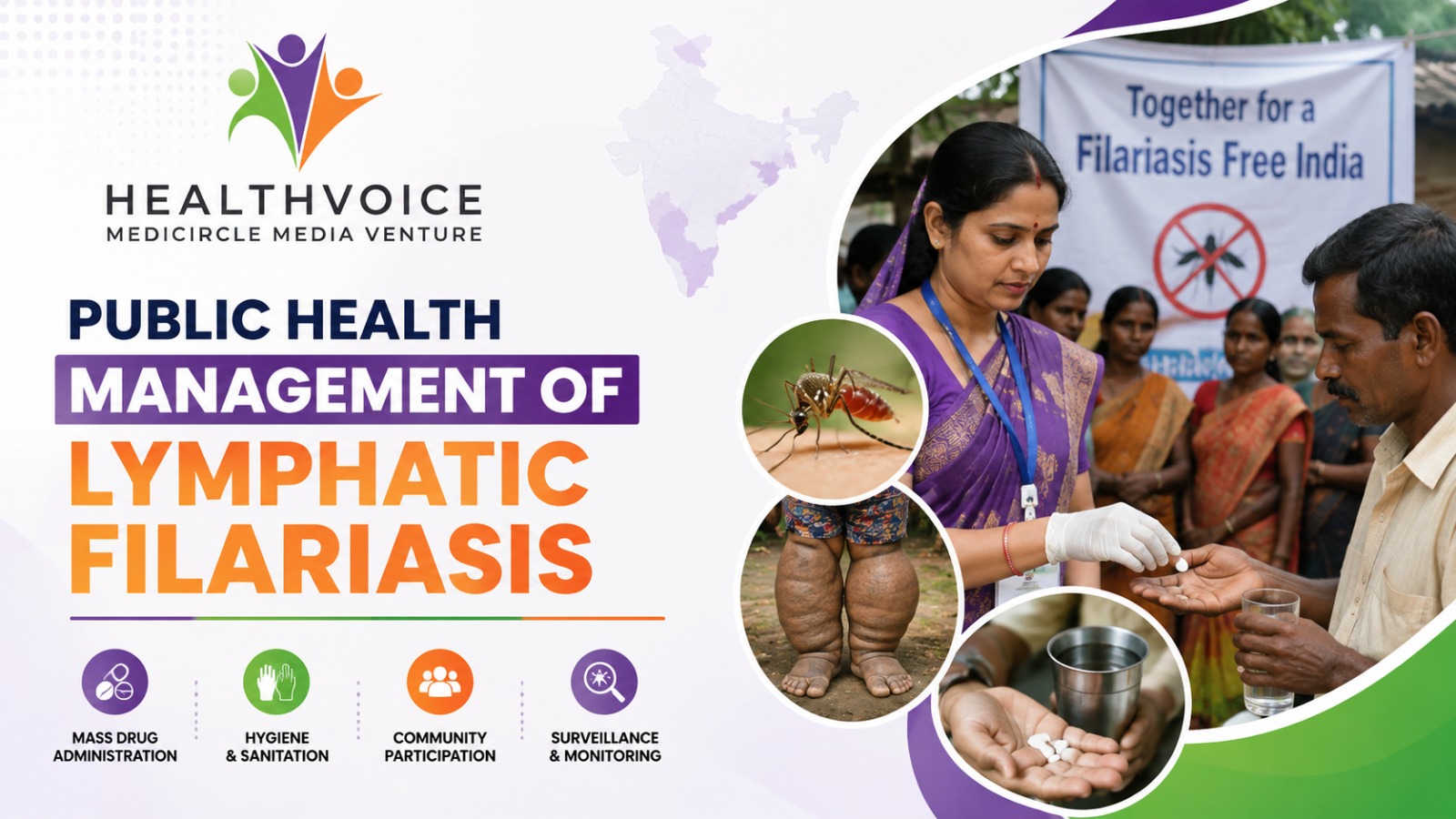
Lymphatic Filariasis (LF), commonly known as elephantiasis, is a debilitating Neglected Tropical Disease (NTD) caused by infection with tissue-dwelling filarial nematodes (Wuchereria bancrofti, Brugia malayi, or Brugia timori). Transmitted by mosquitoes, the microscopic worms lodge in the human lymphatic system, causing chronic inflammation, severe lymphedema of the limbs and genitals, hydrocele, and permanent disability.
To eliminate LF as a public health problem, global health programs rely heavily on Mass Drug Administration (MDA). MDA involves administering preventive chemotherapy once annually to entire at-risk populations in endemic areas. Despite significant progress, public health agencies face severe operational, social, and logistics challenges in achieving the epidemiological coverage required to interrupt transmission.
1. Biological Rationale and Drug Regimens of MDA
MDA does not instantly cure established chronic lymphatic pathology; rather, it aims to clear circulating microfilariae (the microscopic larval stage of the parasite) from the human bloodstream, preventing mosquitoes from acquiring the infection and transmitting it to others.
Key Therapeutic Regimens
- Triple Therapy (IDA): Combines Ivermectin (200\,\mu\text{g/kg}), Diethylcarbamazine citrate / DEC (6\,\text{mg/kg}), and Albendazole (400\,\text{mg}). This potent combination rapidly clears microfilariae and suppresses microfilarial production for up to two years, reducing the required MDA rounds in non-co-endemic regions from 5–6 years down to just 2–3 years.
- Dual Therapy (DA): Combines DEC (6\,\text{mg/kg}) and Albendazole (400\,\text{mg}). Used in regions non-co-endemic for Onchocerca volvulus or Loa loa.
- Albendazole Dual Therapy (with Ivermectin): Used in areas co-endemic with Onchocerca volvulus (river blindness), where DEC is contraindicated due to severe adverse ocular and systemic reactions.
2. Primary Challenges Facing MDA Campaigns
Achieving the threshold of \ge 65\% effective epidemiological coverage across endemic districts for consecutive years requires overcoming several structural barriers:
A. The "Coverage vs. Compliance" Gap
In many endemic districts, official drug distribution reports indicate high coverage (tablets handed out), but post-MDA coverage evaluation surveys reveal low actual compliance (tablets directly swallowed). Fear of side effects, lack of perceived disease risk in asymptomatic individuals, and rumors about medication safety cause many residents to accept tablets from health workers but discard them later.
B. Adverse Event Management and Rumor Control
When MDA drugs destroy microfilariae in heavily infected individuals, the release of parasitic antigens triggers transient systemic reactions (fever, headache, body ache, nausea, dizziness). Without proper pre-campaign counseling and rapid post-dose management by community health workers, these predictable side effects provoke panic and fuel local vaccine or medicine hesitancy.
C. Urban Migration and Mobile Populations
MDA campaigns struggle in dense urban centers and migrant corridors. Unlike tight-knit rural communities, urban populations exhibit high mobility, varied work shifts, less reliance on community volunteers, and low institutional trust, resulting in major coverage gaps in informal settlements and construction sites.
D. Co-Endemicity Bottlenecks (Loa loa and Onchocerca)
In regions of Central and West Africa co-endemic with Loa loa (African eye worm), high-density microfilaremia carries a risk of severe, life-threatening encephalopathy when treated with Ivermectin or DEC. This necessitates rigorous pre-MDA mapping and cell-by-cell screening strategies.
3. Structural Comparison: Standard Distribution vs. Directly Observed MDA
Evaluating traditional mass distribution against modernized directly observed therapy protocols highlights essential operational improvements:
- Distribution Strategy: Standard distribution relies on door-to-door tablet drop-offs for self-administration later. Directly Observed MDA requires drug administrators to observe and confirm every resident swallowing their dose on the spot.
- Adherence Validation: Standard distribution depends on self-reported compliance logs, which often overestimate true consumption. Directly Observed MDA uses real-time direct verification and digital household tracking.
- Side-Effect Management: Standard models offer reactive care at distant health posts after severe symptoms present. Directly Observed MDA incorporates immediate post-dose monitoring by trained local health workers.
- Urban Campaign Success: Standard models experience low urban retention due to missed house calls and mobile populations. Directly Observed MDA deploys flexible booth-based, night-shift, and workplace distribution stations.
- Epidemiological Impact: Standard distribution risks prolonged, sub-optimal campaign cycles that fail to stop parasite transmission. Directly Observed MDA achieves rapid microfilariae clearance, shortening the timeline to Transmission Assessment Surveys (TAS).
4. Strategic Framework for Campaign Optimization
Public health managers and NTD program directors should execute a four-pillar operational strategy to overcome MDA bottlenecks:
- Pillar 1: Institutionalize Directly Observed Therapy (DOT): Transition from mere drug distribution to mandatory DOT, ensuring frontline workers provide drinking water and observe tablet consumption directly.
- Pillar 2: Deploy Micro-Targeted Social Mobilization: Engage local community leaders, religious heads, and trusted influencers 2–3 weeks prior to drug distribution to address safety fears, explain side effects, and highlight non-LF benefits (e.g., intestinal worm clearance from albendazole).
- Pillar 3: Integrate Digital Micro-Planning and GPS Mapping: Replace manual paper registries with mobile-based GIS mapping tools to track team routes in real time, identify missed households, and capture accurate population denominators.
- Pillar 4: Establish Rapid Adverse Event Response Teams: Station mobile medical management units at primary health centers during the 48-hour post-MDA window to manage mild reactions promptly and maintain community confidence.
10 Frequently Asked Questions (FAQs)
Q1. What is Lymphatic Filariasis, and how is it transmitted?
Lymphatic Filariasis (LF) is a vector-borne parasitic disease caused by microscopic filarial worms (Wuchereria bancrofti, Brugia malayi, or Brugia timori) transmitted between humans through the bites of infected mosquitoes (such as Culex, Anopheles, and Aedes species).
Q2. What is Mass Drug Administration (MDA), and what is its main goal?
MDA is a public health strategy where entire populations in endemic geographic areas are given preventive anti-parasitic medications annually, regardless of individual symptom status. Its goal is to lower microfilariae levels in the blood below the threshold needed to sustain mosquito transmission.
Q3. Why do people without symptoms need to take MDA medications?
Many individuals infected with filarial worms show no outward symptoms for years while carrying millions of microfilariae in their blood. If they are not treated, mosquitoes can bite them and spread the infection to others in the community.
Q4. What is the difference between drug "coverage" and drug "compliance" in MDA campaigns?
Coverage refers to the percentage of the target population that receives the MDA tablets. Compliance refers to the percentage of the target population that actually swallows the medication. A large gap between coverage and compliance is a primary cause of campaign delays.
Q5. What causes side effects after taking MDA drugs?
Side effects such as fever, headache, body ache, or nausea are typically not caused by drug toxicity itself, but by the body's immune system reacting to the sudden death of microscopic filarial worms in the bloodstream.
Q6. What is the "IDA" triple-therapy regimen, and why is it considered a breakthrough?
IDA combines Ivermectin, Diethylcarbamazine (DEC), and Albendazole. It is considered a breakthrough because a single dose clears microfilariae more effectively and for longer durations than dual therapies, reducing the required MDA campaign rounds from 5+ years down to 2–3 years.
Q7. Why is DEC (Diethylcarbamazine) contraindicated in areas with Onchocerca or Loa loa?
In patients carrying heavy infections of Onchocerca volvulus or Loa loa, DEC can trigger severe, life-threatening allergic reactions, serious ocular damage (blindness), or encephalopathy.
Q8. What is a Transmission Assessment Survey (TAS)?
A Transmission Assessment Survey (TAS) is a standardized epidemiological evaluation conducted after completing recommended rounds of effective MDA. It checks whether infection levels in young children have dropped below critical thresholds, indicating that MDA can safely stop.
Q9. Does MDA cure individuals who already have severe lymphedema or elephantiasis?
No. MDA destroys microfilariae to stop disease transmission, but it cannot reverse advanced structural damage to lymphatic vessels. Patients with established lymphedema require clinical Morbidity Management and Disability Prevention (MMDP) services, such as hygiene care, skincare, and surgery for hydrocele.
Q10. How many years of MDA are typically required to eliminate Lymphatic Filariasis?
With standard dual therapy (DEC + Albendazole), at least 5 to 6 consecutive annual rounds with \ge 65\% effective coverage are usually required. With triple therapy (IDA), elimination targets can often be met in 2 to 3 consecutive annual rounds.
 Team Healthvoice
#LymphaticFilariasis #MassDrugAdministration