The Hidden Crisis: Combating AMR in Semi-Urban Districts
Antimicrobial Resistance (AMR) is emerging as a major public health threat in India, reducing the effectiveness of medicines against common infections and making treatments increasingly difficult. As bacteria, viruses, fungi, and parasites evolve resistance to drugs, AMR is driving higher healthcare costs, prolonged illnesses, and a growing risk of severe complications and mortality.
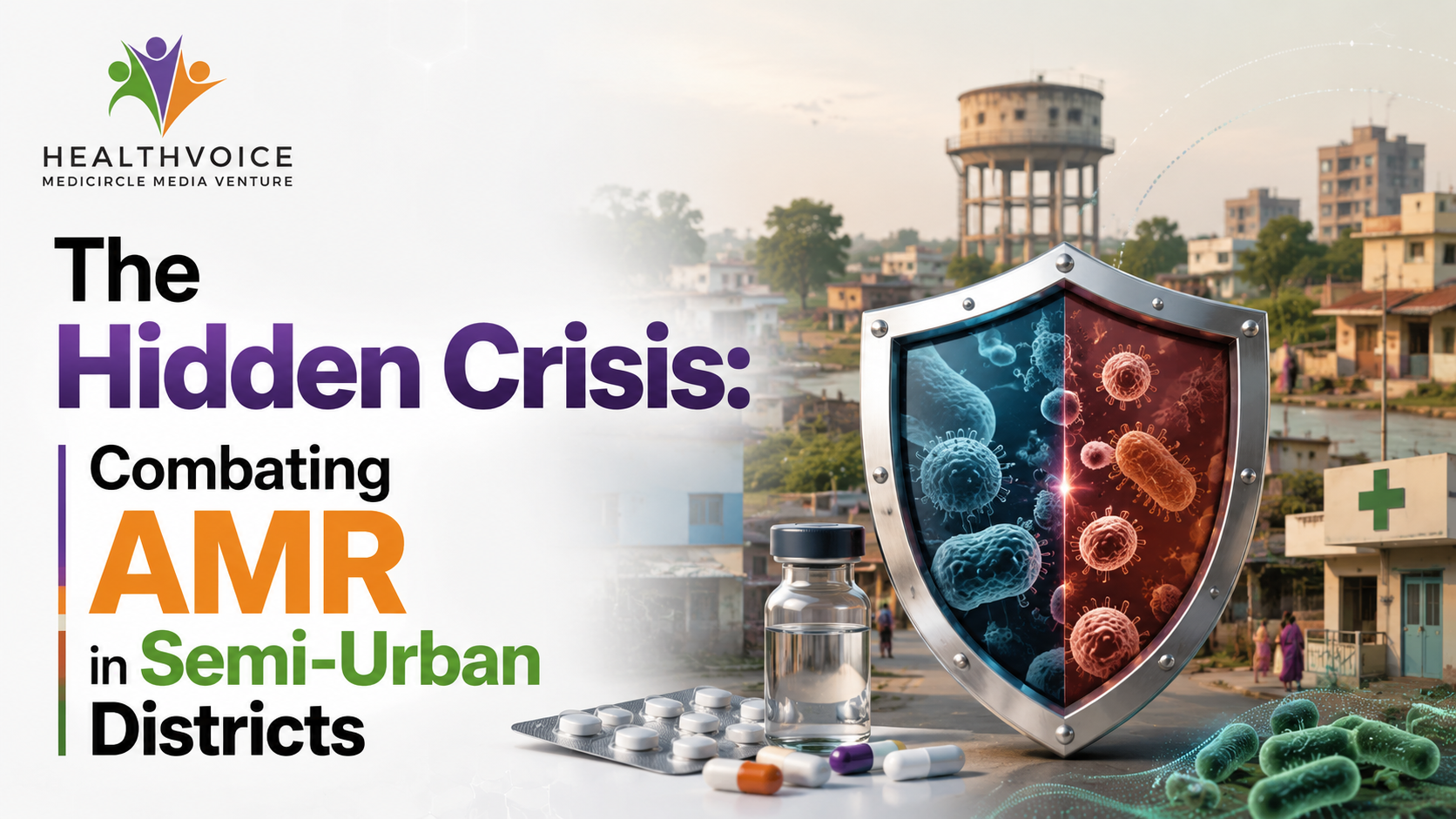
The Hidden Crisis: Combating Rising Antimicrobial Resistance in Semi-Urban Districts
While global health systems focus heavily on high-profile viral outbreaks, a silent pandemic is quietly expanding beneath the surface of India’s healthcare landscape: Antimicrobial Resistance (AMR). AMR occurs when bacteria, viruses, fungi, and parasites evolve over time and no longer respond to medicines, making common infections harder to treat and increasing the risk of severe illness or death.
While major metropolitan hospitals closely monitor drug-resistant superbugs, the real fault line has shifted to semi-urban districts (Tier 2 and Tier 3 towns). These rapidly expanding regions bridge the gap between rural landscapes and major cities. However, they frequently feature a dangerous combination of growing economic resources, high population densities, and fragmented healthcare regulations.
For healthcare journalists, medical professionals, and policy advocates, addressing the systemic drivers of AMR in these secondary districts is an urgent public health priority.
The Perfect Storm: Why AMR is Surging in Semi-Urban Areas
Semi-urban districts face unique infrastructural and cultural dynamics that make them highly vulnerable to accelerating drug resistance:
1. Unregulated Over-the-Counter (OTC) Sales
In many small towns and semi-urban centers, the local pharmacy acts as the first line of clinical consultation. Due to relaxed enforcement of Schedule H and Schedule H1 drug regulations, powerful, broad-spectrum antibiotics are routinely dispensed without a valid prescription from a registered medical practitioner. Patients frequently buy partial doses of antibiotics based on casual recommendations to save money, leading to incomplete treatment cycles that accelerate bacterial mutation.
2. Diagnostic Limitations and Empirical Over-Prescribing
Unlike major urban tertiary care facilities, semi-urban clinics and district hospitals often lack advanced microbiological laboratories.
- The Diagnostic Delay: Performing a bacterial culture and sensitivity test can take 48 to 72 hours, and sample transportation pipelines are frequently inadequate.
- Empirical Treatment: To provide immediate relief, local clinicians often rely heavily on broad-spectrum antibiotics as a first-line treatment rather than prescribing targeted narrow-spectrum options.
3. The Animal Husbandry and Aquaculture Overlap
Semi-urban districts frequently border agricultural zones, where poultry farming, dairy production, and aquaculture are major economic drivers. In these settings, antibiotics are routinely used not just to treat sick animals, but as non-therapeutic growth promoters and mass preventive treatments in feed. These residual antibiotics enter local water tables and the food supply, exposing human populations to low, continuous doses of antimicrobials and accelerating environmental resistance.
Public Health Consequences for Local Communities
The rise of AMR in secondary districts compromises decades of medical progress, turning routine medical events into high-risk procedures:
- Escalating Treatment Costs: As first-line antibiotics (like amoxicillin or cephalosporins) fail, patients are forced to use expensive, patent-protected last-resort drugs, significantly increasing out-of-pocket medical expenses.
- Compromised Surgical Safety: Routine procedures, maternal deliveries, and basic orthopedic surgeries become dangerous if the prophylactic antibiotics used to prevent post-operative infections are no longer effective against localized superbugs.
- Increased Mortality Rates: Delayed access to effective, targeted antibiotics can cause minor localized infections to quickly escalate into life-threatening systemic sepsis.
Comparative Matrix: Urban vs. Semi-Urban AMR Dynamics
Critical Factor
Metropolitan Centers
Semi-Urban Districts
Diagnostic Access
Readily available automated culture systems (e.g., VITEK).
Limited facilities; heavy reliance on basic clinical symptoms.
Prescription Control
Stricter compliance audits and corporate hospital oversight.
High rates of over-the-counter sales and self-medication.
Environmental Exposure
Industrial runoff and heavy municipal waste management.
Direct exposure to agricultural runoff and animal farm wastewater.
A Strategic Framework to Combat AMR in Secondary Districts
Addressing the AMR crisis in semi-urban areas requires a coordinated approach across human health, animal health, and environmental safety:
[Enforce OTC Drug Regulations] ➔ [Deploy Rapid Point-of-Care Diagnostics] ➔ [Launch Local Stewardship Programs] ➔ [Monitor Agricultural Antibiotic Use]
- Enforce Pharmacy Compliance Tracking: State drug control departments must strictly enforce Schedule H1 logs in Tier 2 and Tier 3 towns, mandating that pharmacies record details for all dispensed antibiotics to curb over-the-counter sales.
- Deploy Rapid Point-of-Care Diagnostics: Introduce affordable, field-ready diagnostic tools—such as C-Reactive Protein (CRP) testing kits—in primary and district health centers to help clinicians quickly distinguish between viral and bacterial infections.
- Launch Local Antibiotic Stewardship Initiatives: Establish active AMR committees within district-level medical associations to train general practitioners on updated, standardized clinical prescribing protocols.
- Implement Environmental and Agricultural Surveys: Monitor waste discharge from local pharmaceutical units, community medical clinics, and commercial livestock farms to prevent active antimicrobial residues from polluting regional water sources.
Frequently Asked Questions (FAQs)
Q1: Why is antimicrobial resistance considered a "hidden crisis"?
AMR is called a hidden crisis because it does not present as a single, dramatic outbreak. Instead, it works quietly across the healthcare system, gradually rendering standard medicines ineffective and causing common infections to become silently life-threatening.
Q2: How does buying a partial dose of antibiotics contribute to AMR?
When a patient stops taking antibiotics early or takes a partial dose, the medicine kills only the weakest bacteria, leaving the strongest and most resilient strains alive. These surviving bacteria multiply, mutate, and pass on their drug-resistant traits.
Q3: What role does the environment play in spreading drug-resistant superbugs?
Active antibiotic residues excreted by humans and livestock enter the environment through untreated sewage and agricultural runoff. This exposes environmental bacteria to low levels of drugs, turning local soil and waterways into breeding grounds for resistant superbugs.
Q4: Why are broad-spectrum antibiotics overprescribed in semi-urban areas?
Due to limited access to local diagnostic laboratories, doctors often cannot wait days for culture test results. To treat a sick patient immediately, they frequently prescribe broad-spectrum antibiotics, which target a wide range of bacteria but accelerate resistance.
Q5: What is the difference between an antibiotic and an antimicrobial?
Antibiotics specifically target and destroy bacteria. Antimicrobials is a broader term that includes medicines used to fight all types of microorganisms, including bacteria, viruses, fungi, and parasites.
Q6: Can a person become personally immune to antibiotic medications?
No. It is the bacteria themselves that mutate and become resistant to the drugs, not the human body. When a drug-resistant infection develops, standard treatments fail regardless of the patient's individual health history.
Q7: What are Schedule H1 regulations in Indian pharmacy laws?
Schedule H1 is a special class of prescription drugs introduced to control the sale of potent medicines, including third- and fourth-generation antibiotics. By law, these drugs can only be sold with a valid prescription, and the pharmacy must maintain a dedicated register detailing the doctor's name, patient identity, and quantity sold.
Q8: How does the routine use of antibiotics in animal farming impact human health?
When livestock are consistently given sub-therapeutic levels of antibiotics for growth promotion, it creates drug-resistant bacteria within the animals. These superbugs can spread to humans through direct contact, handling raw meat, or consuming contaminated groundwater.
Q9: What simple diagnostic tools can help reduce unnecessary antibiotic prescriptions?
Affordable point-of-care tools like C-Reactive Protein (CRP) latex agglutination tests and basic complete blood count (CBC) panels can help doctors differentiate between viral infections (which do not require antibiotics) and bacterial infections.
Q10: How can ordinary citizens contribute to curbing the rise of AMR?
Citizens can help by never self-prescribing antibiotics, avoiding asking doctors for quick-fix antibiotic prescriptions for cold or flu symptoms, completing the full course of any prescribed medication, and sourcing medications only from licensed pharmacies with a valid prescription.
Schema Markup (JSON-LD)
{ "@context": "https://schema.org", "@type": "Article", "mainEntityOfPage": { "@type": "WebPage", "@id": "https://healthvoice.in/combating-antimicrobial-resistance-semi-urban-districts" }, "headline": "The Hidden Crisis: Combating Rising Antimicrobial Resistance in Semi-Urban Districts", "description": "An analysis of the surging antimicrobial resistance (AMR) crisis in semi-urban districts, exploring regional causes, diagnostic gaps, and required systemic public health responses.", "image": "https://healthvoice.in/images/amr-semi-urban-crisis.jpg", "author": { "@type": "Organization", "name": "HealthVoice Medical Journalism Unit" }, "publisher": { "@type": "Organization", "name": "HealthVoice", "logo": { "@type": "ImageObject", "url": "https://healthvoice.in/logo.png" } }, "datePublished": "2026-06-21", "dateModified": "2026-06-21"}Antimicrobial Resistance (AMR) is emerging as a major public health threat in India, reducing the effectiveness of medicines against common infections and making treatments increasingly difficult. As bacteria, viruses, fungi, and parasites evolve resistance to drugs, AMR is driving higher healthcare costs, prolonged illnesses, and a growing risk of severe complications and mortality.
 Team Healthvoice
#AntimicrobialResistance #PublicHealthIndia
