The Thin Line Between Medical Error and Medical Fate
Doctors are not infallible, but neither are they villains when science reaches its limits. Recognising this balance is essential if we want a healthcare system that is compassionate, accountable, and resilient.
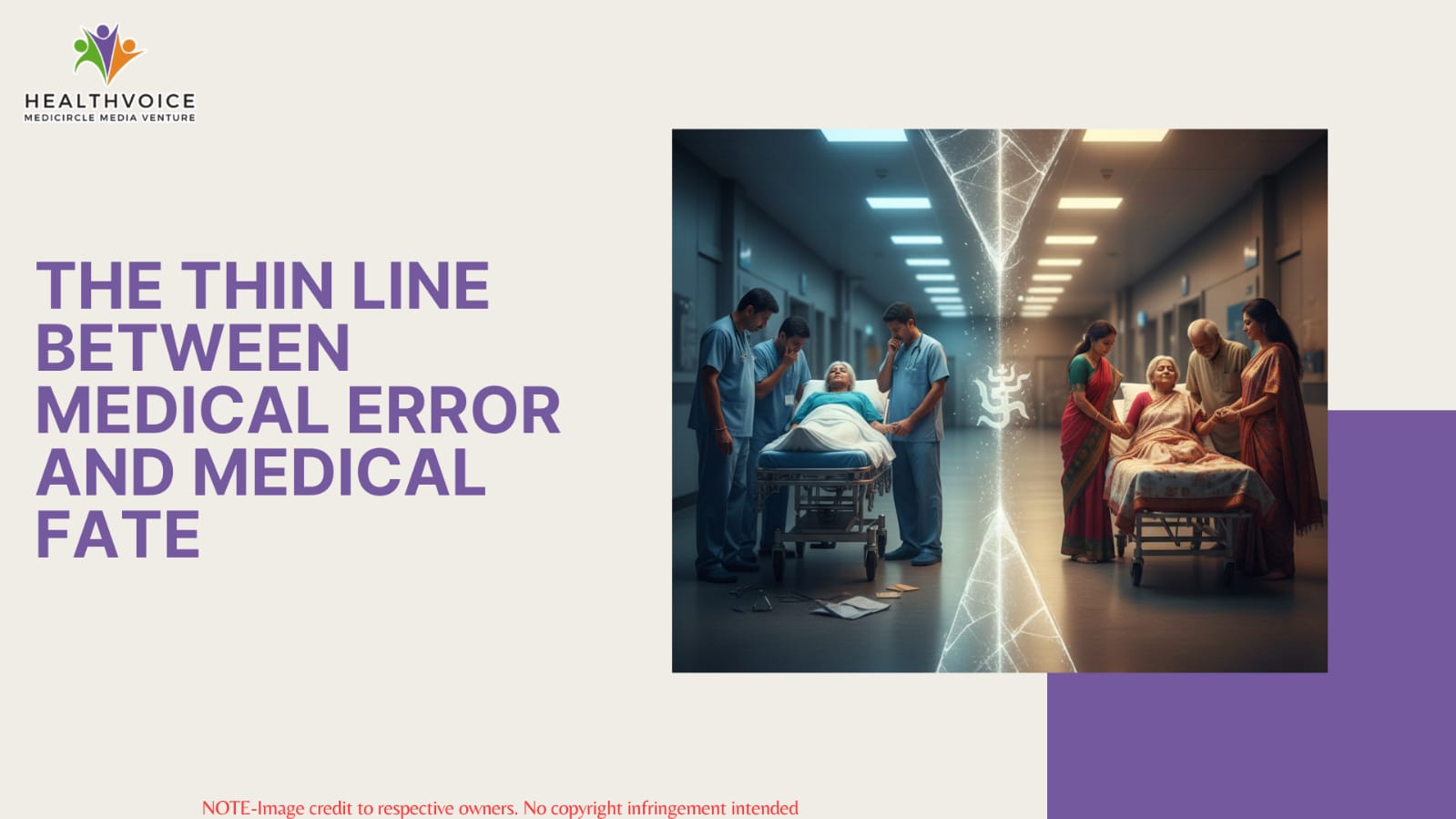
In Indian hospitals, especially tertiary care centres, doctors often fight two battles at the same time. One is against disease, unpredictable physiology, and failing organs. The other is against suspicion, allegations, and a growing tendency to equate every adverse outcome with medical negligence. A recent decision by the State Consumer Disputes Redressal Commission of Madhya Pradesh has once again brought this uncomfortable reality into sharp focus. By absolving a leading government hospital in Bhopal and its cardiologist of negligence charges in a two-decade-old case, the Commission has sent a strong message that deserves careful reading by doctors, healthcare administrators, legal professionals, and patients alike.
The case traces back to 2003, a time when interventional cardiology in India was still evolving, cath labs were fewer, and protocols were not as standardised as they are today. The patient at the centre of this long legal journey was a middle-aged woman with serious cardiac complaints. She presented with chest pain and was under the care of a cardiologist who, after clinical evaluation, advised coronary angiography to assess the extent of heart disease. Given her condition, ambulance support was arranged to shift her for further investigation. What followed was a prolonged sequence of complications, interventions, allegations, and ultimately, a tragic death that left behind grief and unanswered questions.
It was alleged that during transfer from the ambulance, the patient fell, leading to pulmonary complications. There were claims of delayed investigations, questionable decisions during angiography and angioplasty, and serious concerns regarding blood transfusion practices. According to the complaint, the administration of blood with a different Rh factor worsened the patient’s condition, setting off a chain reaction that ended in septicemia, renal failure, dialysis, and death. The family further alleged that medical records were withheld, suggesting an attempt to hide lapses in care. These allegations, if proven, would indeed point towards grave medical negligence.
Yet, medicine is rarely that linear. What the Commission examined was not just the emotional weight of loss but the clinical reality documented in case sheets, investigation reports, and treatment notes. One of the most critical observations made during the adjudication was that the patient was already in a highly unstable state when she arrived at the hospital. The records showed that she was suffering from an acute extensive anterior wall myocardial infarction, pulmonary edema, cardiogenic shock, diabetes, and obesity. These are not minor diagnoses. Each of them independently carries a high risk of mortality. Together, they form a clinical picture where survival itself becomes uncertain, even in the best-equipped centres.
Pulmonary edema, in particular, emerged as a crucial detail. The medical records indicated that this life-threatening condition was present before the patient was shifted to the treating hospital. This finding directly weakened the allegation that the edema developed due to mishandling during transfer. In acute cardiac care, pulmonary edema often accompanies severe heart attacks and cardiogenic shock. Fluid accumulation in the lungs can occur rapidly and unpredictably, and its presence significantly complicates both diagnosis and treatment.
The Commission also examined the allegation related to blood transfusion. In public discourse, blood group mismatch is often viewed as a clear-cut error with inevitable consequences. However, clinical nuance matters. The treating hospital argued that the transfusion was not responsible for the patient’s deterioration. The records did not conclusively establish that the transfusion triggered the downward spiral. In critically ill cardiac patients, multi-organ failure can develop due to prolonged low blood pressure, poor cardiac output, sepsis, and metabolic stress. Renal failure in such cases is unfortunately a known complication, even when protocols are followed diligently.
Another major contention was the alleged delay in investigations and failure to involve senior specialists or refer the patient to a higher centre. While hindsight often makes decisions appear flawed, the Commission took a more grounded view. It noted that angiography and angioplasty were performed, stents were placed, dialysis was initiated when renal failure developed, and supportive care was provided throughout the hospital stay. The fact that the patient’s condition continued to worsen despite these measures did not automatically translate into negligence. Medicine does not guarantee outcomes; it promises effort, expertise, and adherence to accepted standards of care.
This verdict touches a sensitive nerve. Over the years, consumer protection laws have increasingly included medical services, making healthcare providers accountable for deficiencies. While accountability is essential, there is growing concern within the medical community about the criminalisation of clinical judgment. Complex cases, especially in cardiology and critical care, involve rapid decision-making under uncertainty. Even internationally accepted guidelines allow room for clinical discretion based on patient condition. When adverse outcomes are judged without appreciating this complexity, it creates an environment of defensive medicine, where doctors focus more on legal safety than patient welfare.
The issue of medical documentation also deserves attention. The complainant alleged resistance in providing records, while the hospital stated that documents were shared after pending dues were cleared. This aspect highlights a recurring problem in Indian healthcare. Transparency and timely sharing of medical records are crucial for trust. At the same time, hospitals often struggle with administrative bottlenecks, billing disputes, and poorly defined processes. While the Commission did not find this issue sufficient to establish negligence, it serves as a reminder that documentation practices must improve across the system.
What makes this case particularly significant is its duration. A medical episode from 2003 was finally adjudicated years later. For the doctor involved, this meant living under the shadow of litigation for a substantial part of their professional life. For the family, it meant prolonged emotional distress in pursuit of closure. Such delays benefit no one. They underline the urgent need for faster, more specialised medico-legal dispute resolution mechanisms that understand both law and medicine.
Bad outcomes are not synonymous with bad care. In a country like India, where patients often reach hospitals late, with advanced disease and multiple comorbidities, mortality rates cannot be judged in isolation. Doctors frequently manage cases where the margin between life and death is razor-thin. Holding them negligent without clear evidence of deviation from standard medical practice risks demoralising an already overstretched workforce.
At the same time, this judgment should not be misread as a free pass for medical errors. Genuine negligence, where protocols are ignored, competence is lacking, or unethical practices occur, must be addressed firmly. The challenge lies in distinguishing between an error of judgment in a high-risk scenario and a breach of duty. The Commission’s detailed reliance on medical records, clinical history, and documented diagnosis reflects a balanced approach that the system desperately needs.
The case is a reminder of the importance of meticulous documentation, clear communication with families, and adherence to evidence-based practices. In the courtroom, it is not verbal assurances but written records that speak. Detailed case sheets, timely investigations, and transparent consent processes are not administrative burdens; they are safeguards for both patients and doctors.
Modern healthcare has advanced remarkably, but it remains vulnerable to biology, late presentations, and complex disease processes. Trust in the doctor-patient relationship cannot be built on the assumption that every loss has a culprit. It must be grounded in understanding, communication, and realistic expectations.
This case opens up a larger conversation about medical negligence laws in India, the role of consumer courts, and the emotional toll of litigation on healthcare providers. As India continues to expand access to advanced medical care, disputes are likely to rise. The need of the hour is not to dilute accountability but to strengthen medical literacy within the legal system and public discourse.
The Commission’s observation that pulmonary edema was present even before hospital admission may seem like a technical detail, but it carries profound implications. It demonstrates how clinical timelines, when properly documented, can change the entire interpretation of a case. It also underscores why expert medical opinions must guide legal decisions in healthcare disputes.
Ultimately, this verdict reinforces a principle that healthcare professionals have long advocated for: that intention, effort, and adherence to standard care matter, even when outcomes are tragic. It urges society to move beyond blame and towards understanding the inherent uncertainties of medicine.
As India debates reforms in healthcare delivery, medical education, and patient rights, cases like this remind us that the pursuit of justice must be nuanced. Doctors are not infallible, but neither are they villains when science reaches its limits. Recognising this balance is essential if we want a healthcare system that is compassionate, accountable, and resilient.
In the end, the story is not just about one patient, one doctor, or one hospital. It is about how a nation views medical failure, how courts interpret clinical complexity, and how trust is built or broken in the most vulnerable moments of human life. The Madhya Pradesh Commission’s decision may not end the debate on medical negligence, but it certainly deepens it in a way that Indian healthcare urgently needs.
 Sunny Parayan
#MedicalNegligence #IndianHealthcare #HealthcareJustice #CriticalCare #PatientSafety #MedicalEthics #HealthcareLaw #AccountabilityInHealthcare #TrustInMedicine #EvidenceBasedCare #SaveOurDoctors #HealthcareReality #healthvoice