Why Rigid Medical Regulations Hurt the Very Doctors They Create
An aspirant struggling with worsening disability or serious medical issues is unlikely to perform at their best, regardless of how strict the rules are.
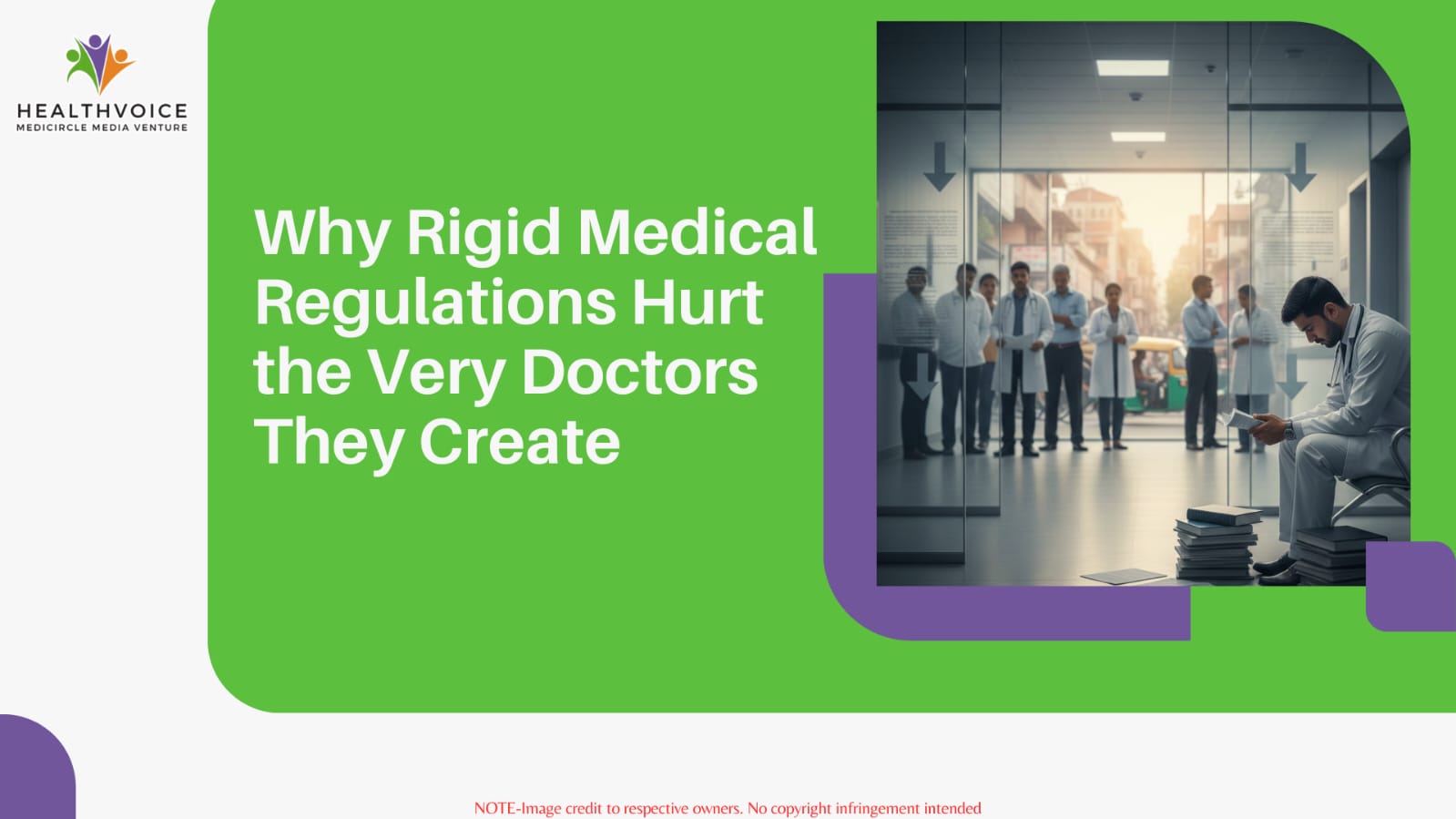
Medical education in India has always walked a tightrope between regulation and reason. On one side lies the need for uniform standards, predictable systems, and orderly administration. On the other stands the lived reality of students who enter medicine carrying their health conditions, disabilities, family circumstances, and unforeseen hardships along with their dreams. A recent judgment of the Delhi High Court has firmly reminded regulators that rules, however well-intentioned, cannot become blind to human dignity. By striking down the absolute ban on migration of MBBS students under the Graduate Medical Education Regulations, 2023, the court has reopened an important conversation that the medical fraternity can no longer afford to ignore.
For years, migration during undergraduate medical education has been treated as an exception rather than a right. It was never meant to be routine. Earlier regulations allowed it sparingly, under strict conditions, and usually in rare or compassionate cases. The 2023 regulations changed this balance entirely by imposing a complete prohibition. No matter the circumstance, no matter the hardship, no matter the medical or disability-related need, a student once allotted a medical college was expected to stay put. In theory, this ensured administrative certainty. In practice, it ignored life itself.
The case that prompted judicial scrutiny involved a young medical student with significant visual impairment, someone who had already faced hurdles even before stepping into a medical college. Despite qualifying NEET-UG under the Persons with Disabilities category, administrative delays and procedural lapses meant he could participate in counselling only at a late stage. With choices already narrowed, he accepted a seat at a government medical college in Barmer, Rajasthan. What followed was not a change of mind, but a change in health. The harsh climate aggravated his eye condition, and specialised care available in Delhi became a medical necessity rather than a personal wish. Yet, when he sought migration, the response was a flat refusal. The reason was that the rules no longer allowed it.
The Delhi High Court saw through the problem immediately. The judges did not question the authority of the National Medical Commission to regulate medical education. They acknowledged that preventing misuse of migration provisions is a legitimate concern. What they rejected was the idea that fear of misuse can justify a complete denial of relief in genuine cases. The court held that such a blanket ban violates the constitutional promise of equality, fairness, and reasonableness. In doing so, it placed the spotlight back on a principle that doctors understand instinctively but administrators often overlook: every clinical decision must be individualised, and so must every regulatory decision that affects human lives.
This judgment resonates far beyond one student or one regulation. It speaks to the kind of medical system we are shaping. Medical education is been about nurturing professionals who are expected to show empathy, judgement, and ethical clarity. When students see a system that refuses to acknowledge genuine hardship, it teaches them that rules matter more than people. That lesson is dangerous for a profession built on care.
The High Court’s reasoning draws heavily from constitutional values and disability rights. The Rights of Persons with Disabilities Act, 2016, is not a token law. It places a positive duty on authorities to provide reasonable accommodation and ensure that individuals with disabilities are not excluded through rigid processes. Reasonable accommodation does not mean lowering standards or offering undue advantage. It means recognising that equal treatment sometimes requires different approaches. For a visually impaired medical student, access to appropriate healthcare facilities, supportive environments, and continuity of care is foundational to his ability to learn, train, and eventually serve patients.
What makes this case particularly significant is the court’s rejection of the argument that the student should have anticipated his difficulties at the time of admission. Medicine teaches us that conditions evolve, complications arise, and environments matter. To expect a student to predict deterioration in health, especially when that deterioration is influenced by climate and geography, is neither fair nor scientific. The court rightly observed that holding the student responsible for circumstances shaped by administrative delay and systemic failure goes against basic principles of reasonableness.
The judgment also exposes a deeper tension within medical regulation. Over the years, there has been a growing tendency to address potential misuse by tightening rules to the point of inflexibility. Whether it is seat allocation, stipend disclosure, internship conditions, or now migration, the instinct has been to impose uniform restrictions rather than develop nuanced oversight mechanisms. While such approaches may simplify governance on paper, they often shift the burden onto students and young doctors, who have the least power to push back.
Migration in exceptional cases does not threaten academic standards. Medical curriculum are largely standardised across institutions under the NMC framework. Clinical exposure may vary, but that variation exists even without migration. What truly threatens standards is forcing a student to train in conditions that compromise health, learning, or safety. A student struggling with worsening disability or serious medical issues is unlikely to perform at their best, regardless of how strict the rules are.
The Delhi High Court has not called for open migration or free movement between colleges. On the contrary, it has urged the NMC to formulate a clear, structured policy that permits migration only under exceptional and deserving circumstances, supported by safeguards to prevent misuse. This is a balanced approach that aligns with clinical reasoning. In medicine, we do not ban a procedure because it can be misused. We regulate it, define indications, set protocols, and monitor outcomes. Education governance should be no different.
A system that refuses accommodation to a disabled student sends a message that disability is a liability rather than a diversity of experience. Yet, doctors with disabilities have historically enriched the profession with resilience, empathy, and unique perspectives. Excluding or marginalising them through rigid rules contradicts the inclusive values that modern healthcare claims to uphold.
The court has directed the NMC to reconsider the student’s migration request without relying on the invalidated regulation and to decide the matter afresh within a defined timeframe. More importantly, it has asked the Commission to amend or frame regulations that allow migration under strict, transparent, and human conditions. This is an opportunity, not a setback. A well-crafted policy can protect institutions from misuse while safeguarding students from injustice.
Doctors understand better than most that medicine operates in shades of grey. Protocols guide us, but judgement defines us. This judgment invites regulators to adopt the same philosophy. Uniformity should not come at the cost of humanity. Administrative efficiency should not override constitutional morality. Medical education should prepare students for the realities of patient care, not expose them to avoidable suffering under the guise of discipline.
In the end, the question is not whether migration should be allowed freely. The question is whether the medical education system can recognise genuine need when it stands before it. The Delhi High Court has answered that question with clarity and compassion. It has reminded us that rules exist to serve people, not the other way around. For a profession built on healing, that reminder could not have come at a more necessary time.
 Sunny Parayan
#MedicalEducation #HealthcarePolicy #DoctorsOfIndia #MedicalStudents #InclusiveHealthcare #HealthLaw #MedicalEthics #NMC #IndianHealthcare #FutureOfMedicine #HealthcareLeadership #EvidenceBasedPolicy #EquityInHealthcare #ClinicalJudgement #healthvoice