AIIMS Vacancy Crisis: A Structural Failure in Healthcare Workforce Planning
Addressing nearly twenty thousand vacant posts is a commitment to patients waiting in crowded OPDs, residents seeking mentorship, and communities relying on tertiary care
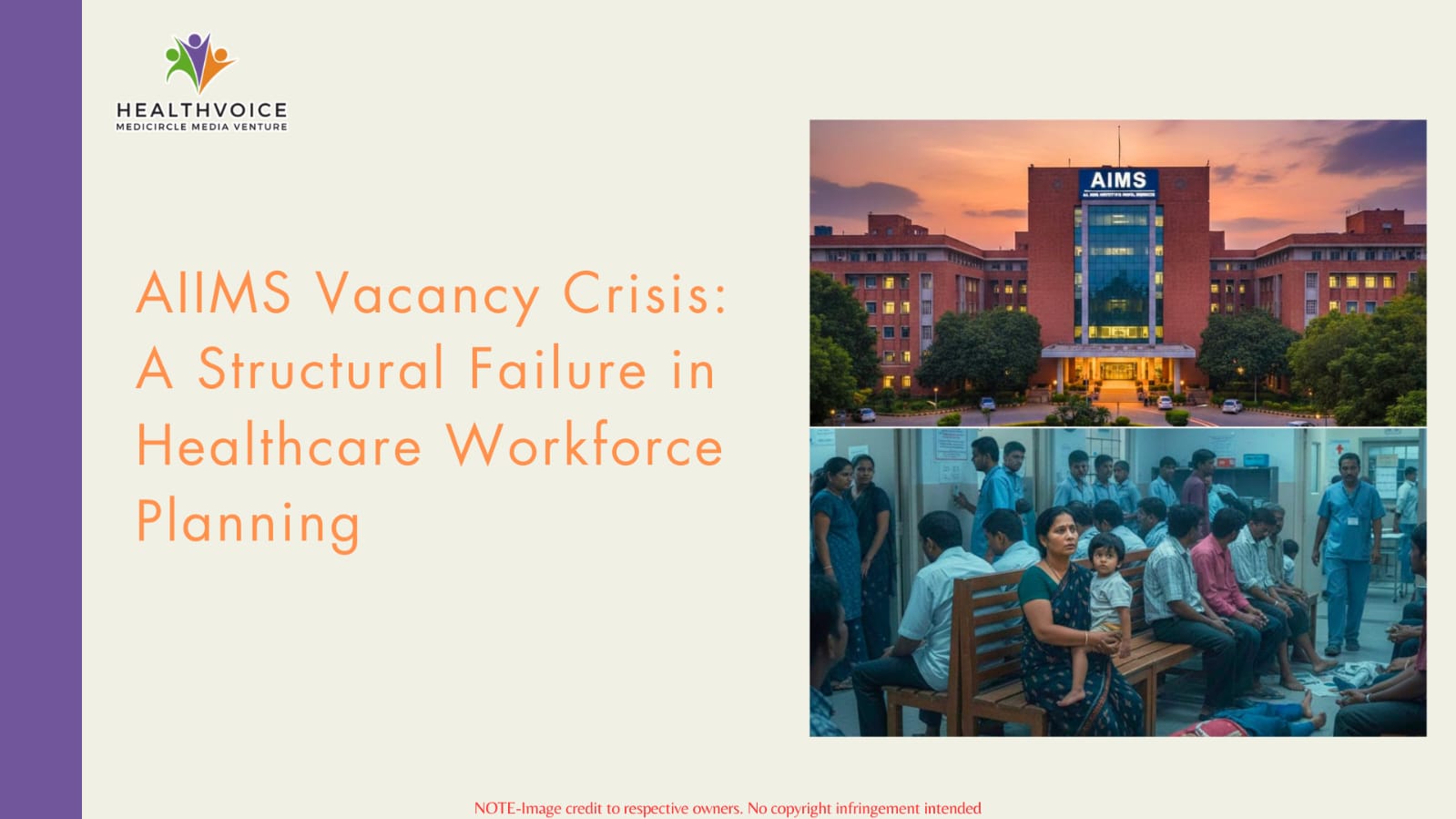
For generations of Indian doctors, the name All India Institute of Medical Sciences has carried weight. To train at an AIIMS campus, to teach there, to build a career within its walls, has long been seen as a professional milestone. AIIMS represents academic excellence, tertiary care, super speciality services, cutting-edge research, and public trust. Yet, recent data placed before the Lok Sabha has forced the medical community to confront a difficult truth. Across 20 operational AIIMS institutions in the country, nearly 19,561 positions remain unfilled. Among these are 2,356 faculty posts and 17,205 non-faculty posts. These are not abstract numbers. They are empty consulting rooms, overburdened wards, delayed surgeries, and stretched residency programs.
The disclosure came from Union Health Minister Jagat Prakash Nadda during a parliamentary session. In response to questions regarding staffing levels at various AIIMS institutions, he shared detailed figures on sanctioned, occupied, and vacant positions. What emerged was a stark picture of manpower shortages across the country’s most prestigious government medical institutes. AIIMS New Delhi alone reported 2,988 vacant posts, including 446 faculty and 2,542 non-faculty positions. AIIMS Rishikesh followed with 1,270 vacancies, while AIIMS Patna, AIIMS Raipur, and AIIMS Bhubaneswar also reported substantial shortfalls. Together, these five institutes account for a significant proportion of the overall gap.
Faculty shortages affect academic mentorship, postgraduate medical education, super speciality training, and research output. Non-faculty vacancies influence nursing services, laboratory functioning, operation theatre management, radiology workflows, and administrative efficiency. When almost twenty thousand posts lie vacant, the strain on those in service is inevitable.
The AIIMS network was expanded over the past decade with the goal of decentralising tertiary healthcare and medical education. New campuses were established in states that previously lacked institutions of national importance. The vision was clear: equitable access to advanced healthcare, strengthened MBBS and postgraduate medical seats, and improved public health outcomes. However, infrastructure without adequate staffing risks becoming symbolic. Buildings do not treat patients; doctors, nurses, technicians, and support staff do.
According to the Health Ministry, recruitment and creation of posts is a continuous exercise. Filling vacancies depends on multiple variables, including availability of eligible candidates, adherence to reservation rosters, geographic location of institutes, and administrative processes. This explanation is not unfamiliar to healthcare administrators. Recruitment in public institutions involves layers of scrutiny, statutory approvals, and compliance checks. Yet, the persistence of such a large vacancy burden suggests systemic challenges that merit deeper discussion.
One factor often cited by medical professionals is location. Several newer AIIMS campuses are situated in regions where urban amenities, schooling options, research ecosystems, and private practice opportunities may be limited. While the mission to bring advanced healthcare to underserved areas is laudable, attracting and retaining senior faculty in such locations can be difficult. Professors and super specialists, after decades of training, weigh multiple considerations before relocating. Academic growth, spousal employment, children’s education, and research funding influence decisions.
Another element is the length of recruitment cycles. Selection of faculty members at AIIMS institutions requires constitution of a Standing Selection Committee as mandated under their respective Acts. Each institute is expected to hold four meetings of this committee annually to evaluate and appoint candidates. Despite this structure, delays can arise from procedural bottlenecks, litigation, or insufficient applicant pools in certain super speciality disciplines. In highly specialised fields such as interventional radiology, paediatric cardiac surgery, or advanced oncology, the pool of qualified candidates remains limited.
The Health Ministry has outlined several measures aimed at addressing the gap. Retired faculty from Institutes of National Importance and government medical colleges can be engaged on contract up to the age of seventy years. This step allows experienced professors to support newer AIIMS campuses in building departments and guiding junior faculty. A Visiting Faculty Scheme has also been introduced to enable senior academicians from government institutions within India or abroad to contribute to teaching in new AIIMS on a temporary basis. While such measures provide interim relief, they cannot fully substitute stable, long-term appointments.
On the non-faculty side, centralised recruitment mechanisms have been strengthened. The Nursing Officer Recruitment Common Eligibility Test, conducted twice a year by AIIMS New Delhi, seeks to streamline nursing appointments across multiple AIIMS institutions. Similarly, the Common Recruitment Examination addresses Group B and Group C non-faculty posts. These include roles essential to hospital functioning such as technicians, pharmacists, clerks, and administrative officers. For junior and senior residents, the INI-CET and INI-SS examinations continue to serve as gateways to academic positions across AIIMS campuses. These steps demonstrate an attempt at harmonised recruitment, yet the vacancy numbers suggest that demand outpaces supply.
The situation at AIIMS New Delhi deserves particular attention. As the flagship institution, it carries immense patient load and national visibility. With 860 faculty members currently in position, the institute continues to function at a high academic and clinical level. However, resignations over the past three years have drawn interest. Nineteen faculty members left in 2023, thirteen in 2024, and twelve in 2025. In any large institution, attrition is expected. Yet departures from a premier medical institute prompt reflection. Are faculty members seeking better research opportunities abroad? Are they transitioning to private healthcare institutions? Are administrative pressures contributing to burnout?
Across India’s healthcare system, doctor burnout has become a recurrent theme. Long duty hours, medico-legal stress, rising patient expectations, and administrative responsibilities create cumulative strain. In institutions where vacancies remain high, the workload on existing staff increases further. A department operating with half its sanctioned faculty strength cannot distribute responsibilities evenly. Teaching commitments, clinical duties, research supervision, and committee assignments converge on fewer shoulders. Over time, this environment risks fatigue and dissatisfaction.
The strength of a medical institute lies in its mentorship culture. A professor who supervises too many residents may struggle to provide individual attention. Research guidance can suffer. Clinical rounds may become hurried. The expansion of AIIMS campuses was intended to enhance medical education capacity across India. Ensuring adequate faculty presence is central to that mission.
Non-faculty vacancies carry equal weight. Nursing officers form the backbone of inpatient care. Laboratory technicians ensure timely diagnostics. Radiographers and OT technicians enable surgical services. Administrative staff coordinate patient records, appointments, and procurement. When these positions remain unfilled, workflow disruptions become routine. Doctors may find themselves compensating for gaps outside their core clinical roles, further intensifying workload.
AIIMS Raebareli offers another dimension to the discussion. Currently operating with 610 beds and 34 functional departments, including broad and super specialities, the institute represents the government’s commitment to strengthening healthcare access in Uttar Pradesh. Expansion is being undertaken in phases. Yet growth in infrastructure must be matched with proportional human resource planning. As patient inflow rises, the need for adequate faculty, residents, nursing staff, and support personnel becomes urgent.
The broader question before the medical fraternity is how India balances rapid institutional expansion with sustainable staffing models. Over the past decade, the number of medical colleges and MBBS seats has increased substantially. The National Medical Commission has pursued reforms aimed at enhancing medical education standards. However, faculty development remains a long-term endeavour. Training a professor or super specialist requires decades. Recruitment cannot be accelerated beyond a point without compromising quality.
Some experts argue that collaborative models could mitigate shortages. Shared faculty appointments between nearby medical colleges, tele-education platforms for academic sessions, and structured mentorship networks across AIIMS campuses may provide interim solutions. Digital health infrastructure allows lectures, case discussions, and grand rounds to be conducted across geographical boundaries. While clinical care requires physical presence, academic teaching can leverage technology.
Retention strategies are equally critical. Competitive research grants, transparent promotion policies, supportive administrative culture, and opportunities for international collaboration can strengthen faculty satisfaction. Public sector medical institutions compete with private hospitals and overseas universities for talent. Ensuring an environment conducive to academic growth may reduce attrition.
At the policy level, long-term workforce planning must align with projected healthcare demands. India’s disease burden is shifting towards non-communicable diseases, complex surgeries, and advanced diagnostics. AIIMS institutions play a pivotal role in tertiary and quaternary care. Their staffing patterns should anticipate rising case loads in oncology, cardiology, neurology, transplant medicine, and critical care.
For young doctors contemplating careers in academic medicine, the vacancy data presents a paradox. On one hand, it signals opportunity. Thousands of positions await qualified candidates. On the other hand, it reflects systemic hurdles in recruitment and deployment. Navigating these pathways requires persistence and awareness of institutional processes.
Ultimately, the credibility of India’s public healthcare system rests on the performance of its flagship institutions. AIIMS campuses symbolise excellence. Their corridors train future specialists, conduct landmark research, and deliver life-saving care to patients from across the country. Empty chairs in faculty rooms and nursing stations are more than administrative statistics. They represent unrealised potential.
The conversation must move beyond headline numbers to sustained action. Recruitment drives, streamlined selection processes, retention incentives, and regional support structures need consistent monitoring. Parliament has been informed of the situation. The medical community now watches for measurable progress.
As India strives to improve healthcare delivery and medical education standards, the AIIMS vacancy crisis serves as a reminder that infrastructure without manpower is incomplete. Addressing nearly twenty thousand vacant posts is not simply a bureaucratic task. It is a commitment to patients waiting in crowded OPDs, residents seeking mentorship, and communities relying on tertiary care. The future of India’s premier medical institutions depends on how decisively this challenge is met
 Team Healthvoice
#AIIMSRishikesh #AIIMSPatna #aiimsbhubaneswar #JP_Nadda #HealthcareInfrastructure #HospitalAdministration #MedicalRecruitment #INI_CET #HealthcareReform #WorkforcePlanning #HealthcareLeadershipip #FutureOfHealthcare #healthvoice