Should a 19-Year-Old Have to Argue for His MBBS Seat?
In a system as vast and competitive as India’s, safeguarding fairness in NEET admissions and EWS reservation is essential to nurturing the next generation of doctors
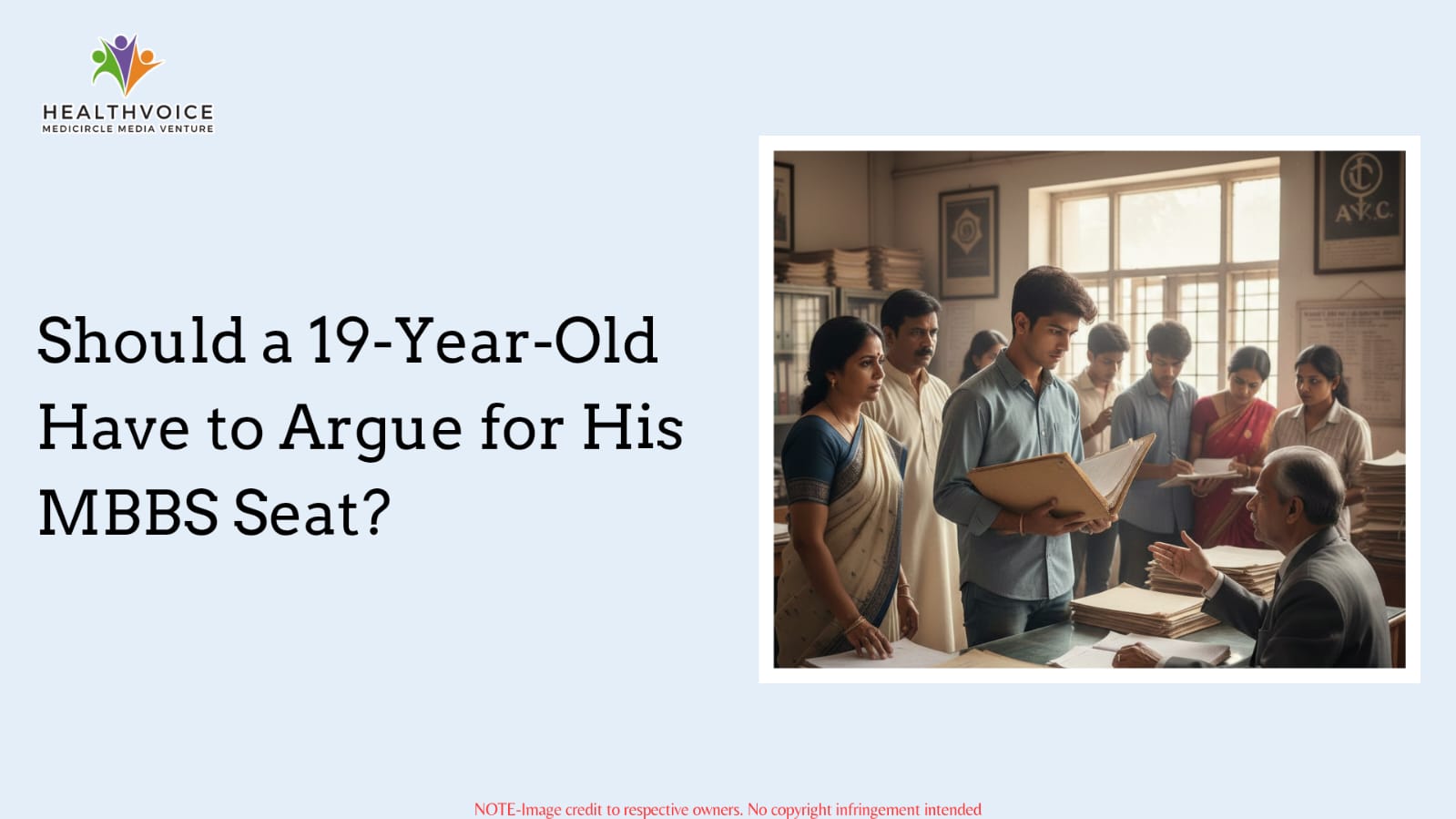
In a country where lakhs of students compete for a handful of MBBS seats every year, the National Eligibility cum Entrance Test has become more than an examination. NEET is a test of endurance, family savings, mental resilience and, for many, social mobility. Behind every NEET rank lies years of coaching classes, borrowed textbooks, and endless sacrifices. But even after clearing NEET with a respectable score, admission to a medical college is not always guaranteed. Policy gaps, quota implementation failures, and administrative delays can derail a candidate’s dream. Recently, a 19-year-old NEET aspirant from Jabalpur reminded the system that merit and law must align. He did so not through protest, but by standing alone before the highest court in the land.
Atharva Chaturvedi secured 530 marks out of 720 in NEET 2024–25. For many students, such a score represents years of disciplined preparation and a realistic shot at an MBBS admission, particularly under reserved categories. Atharva belonged to the Economically Weaker Section category, introduced through the 103rd Constitutional Amendment. The amendment enabled a 10 per cent reservation for EWS candidates in educational institutions, including private non-minority colleges, through Articles 15(6) and 16(6) of the Constitution of India. On paper, the provision was clear. In practice, its implementation in certain private medical colleges in Madhya Pradesh lagged behind.
Despite qualifying NEET and securing an EWS rank that should have brought him within reach of a medical seat, Atharva found himself excluded from the admission process. The reason was the state’s failure to operationalise the EWS quota in private medical colleges as mandated by constitutional provisions and judicial directions. For a young aspirant who had cleared NEET more than once, the denial could have been crushing. In India’s hyper-competitive medical admission landscape, many students accept such setbacks as fate and move on to the next attempt.
Atharva chose a different route. Without formal legal training, he began studying the relevant constitutional provisions and previous court orders. He approached the Madhya Pradesh High Court, arguing that the non-implementation of EWS reservation in private medical colleges was inconsistent with constitutional guarantees. The High Court directed the state authorities to implement the EWS quota within a specified time frame. For a brief moment, it seemed that the matter had been settled.
However, the following admission cycle unfolded with the same administrative inertia. Despite the earlier judicial direction, the EWS reservation was not effectively applied in private medical colleges in the state. Atharva once again found himself without an MBBS seat, even after securing an EWS rank of 164 in NEET 2025–26. For doctors and healthcare professionals observing from a distance, this sequence of events raises troubling questions about policy execution in medical education. The integrity of the NEET counselling process depends on transparent and uniform implementation of reservation policies across government and private institutions.
Faced with repeated denial, Atharva filed a petition before the Supreme Court of India. In an era where litigation often involves seasoned senior advocates and complex procedural manoeuvres, a teenager representing himself is an unusual sight. Yet that is precisely what unfolded. When his case came up before a three-judge bench led by Justice Surya Kant, Atharva sought a brief opportunity to present his arguments personally. For a 19-year-old aspiring doctor to stand in a courtroom known for constitutional debates and national controversies is remarkable. It reflects a generation that is more legally aware, digitally informed, and unwilling to accept administrative silence as the final word.
The Supreme Court examined the circumstances and observed that Atharva had been denied admission due to factors beyond his control. The failure lay not in his NEET performance or eligibility, but in the state’s delay in complying with earlier judicial directions regarding EWS reservation in private medical colleges. The Court directed the National Medical Commission and the state government to facilitate his admission to an MBBS course in a private medical college. The order underscored a simple principle: students should not suffer for administrative lapses.
At one level, it is about a determined NEET aspirant who fought for his rightful MBBS seat. At another level, it reflects systemic challenges in medical education governance. The introduction of EWS reservation through the 103rd Constitutional Amendment was a major policy shift. Its implementation required coordination between central authorities, state governments, private medical colleges, and regulatory bodies such as the National Medical Commission. When such coordination falters, the immediate casualty is the student.
The medical education ecosystem in India has grown increasingly complex. With the expansion of private medical colleges, rising MBBS fees, and evolving reservation policies, the NEET counselling process is no longer a straightforward merit list allocation. It is a matrix of state quotas, All India Quota seats, category ranks, institutional policies, and regulatory oversight. For EWS candidates, the promise of reservation is meant to level the playing field in a system where financial barriers often determine access. When that promise is inconsistently applied, it undermines trust in the fairness of the admission process.
Atharva’s case also highlights the growing intersection between constitutional law and medical admissions. Doctors may recall how litigation has shaped NEET eligibility criteria, All India Quota reservations, OBC and EWS implementation, and domicile rules. Each court ruling influences the composition of future MBBS batches. The Supreme Court’s involvement in medical education matters is no longer exceptional; it is frequent. For aspiring doctors, legal literacy has become an unexpected but valuable tool.
What stands out in this episode is Atharva’s composure and preparation. By his own account, he studied earlier court orders and constitutional provisions before presenting his case. This speaks to a larger shift in how students engage with policy. Digital access to judgments, online filing systems, and social media discussions have demystified legal processes. A NEET aspirant today is often aware of reservation percentages, counselling timelines, and statutory rights.
The Supreme Court’s direction to ensure his admission carries broader implications. It reinforces that reservation policies, once constitutionally embedded and judicially endorsed, cannot remain symbolic. Implementation is as critical as legislation. There is also a human dimension to this narrative that resonates deeply within the medical fraternity. Every practising doctor remembers the anxiety of NEET or its predecessor exams, the uncertainty of counselling rounds, and the weight of expectations from family. Securing an MBBS seat often defines the trajectory of a career. To be denied that opportunity due to administrative gaps would be profoundly disheartening. Atharva’s perseverance serves as a reminder that advocacy for one’s rights can coexist with academic ambition.
Interestingly, some observers questioned why a student who argued confidently before the Supreme Court would still pursue medicine instead of law. His answer was simple. He intends to become a doctor. The courtroom was a means to protect his educational path, not a detour from it. This distinction matters. It shows that his legal intervention was born of necessity, not a change in vocation.
The story also invites a broader conversation about administrative accountability. Judicial directions carry weight, yet their translation into policy action can be uneven. In medical education, where timelines are tight and academic calendars rigid, delays can cost students an entire year. Courts can provide remedies in individual cases, but systemic reform requires proactive governance.
Ultimately, this episode is about more than one MBBS seat. It is about faith in the system. When a student clears NEET with determination and merit, the pathway to medical education should be governed by clarity and fairness. Constitutional amendments, reservation policies, and regulatory bodies exist to structure that pathway. When gaps appear, they must be addressed promptly.
Atharva Chaturvedi’s decision to stand before the Supreme Court was extraordinary for his age. Yet the principles he invoked were straightforward: constitutional rights, equal opportunity, and administrative compliance. His provisional MBBS admission is a personal victory, but it is also a reminder that medical education in India operates within a constitutional framework that demands vigilance.
For the medical fraternity, the takeaway is both practical and philosophical. The journey to becoming a doctor begins long before the first patient encounter. It starts with an entrance exam, a counselling list, and, sometimes, a courtroom argument. In a system as vast and competitive as India’s, safeguarding fairness in NEET admissions and EWS reservation is essential to nurturing the next generation of doctors.
Medicine thrives when merit meets opportunity. Ensuring that this meeting point is protected by law and faithfully implemented by authorities is in the interest of the entire healthcare system. A 19-year-old aspirant from Jabalpur reminded the nation of that truth
 Team Healthvoice
#NEET #NEET2025 #MBBSAdmission #MedicalEducation #EWSReservation #SupremeCourtOfIndia #MedicalAspirant #HealthcareFuture #ReservationPolicy #ConstitutionOfIndia #StudentRights #MedicalLaw #NEETCounselling #FutureDoctors #IndianEducation #EqualOpportunity #HealthcarePolicy #healthvoice