Building Research Networks Across Indian Medical Colleges
Building research networks across Indian medical colleges can transform fragmented academic efforts into powerful collaborative systems that generate evidence relevant to India's unique healthcare challenges and population.
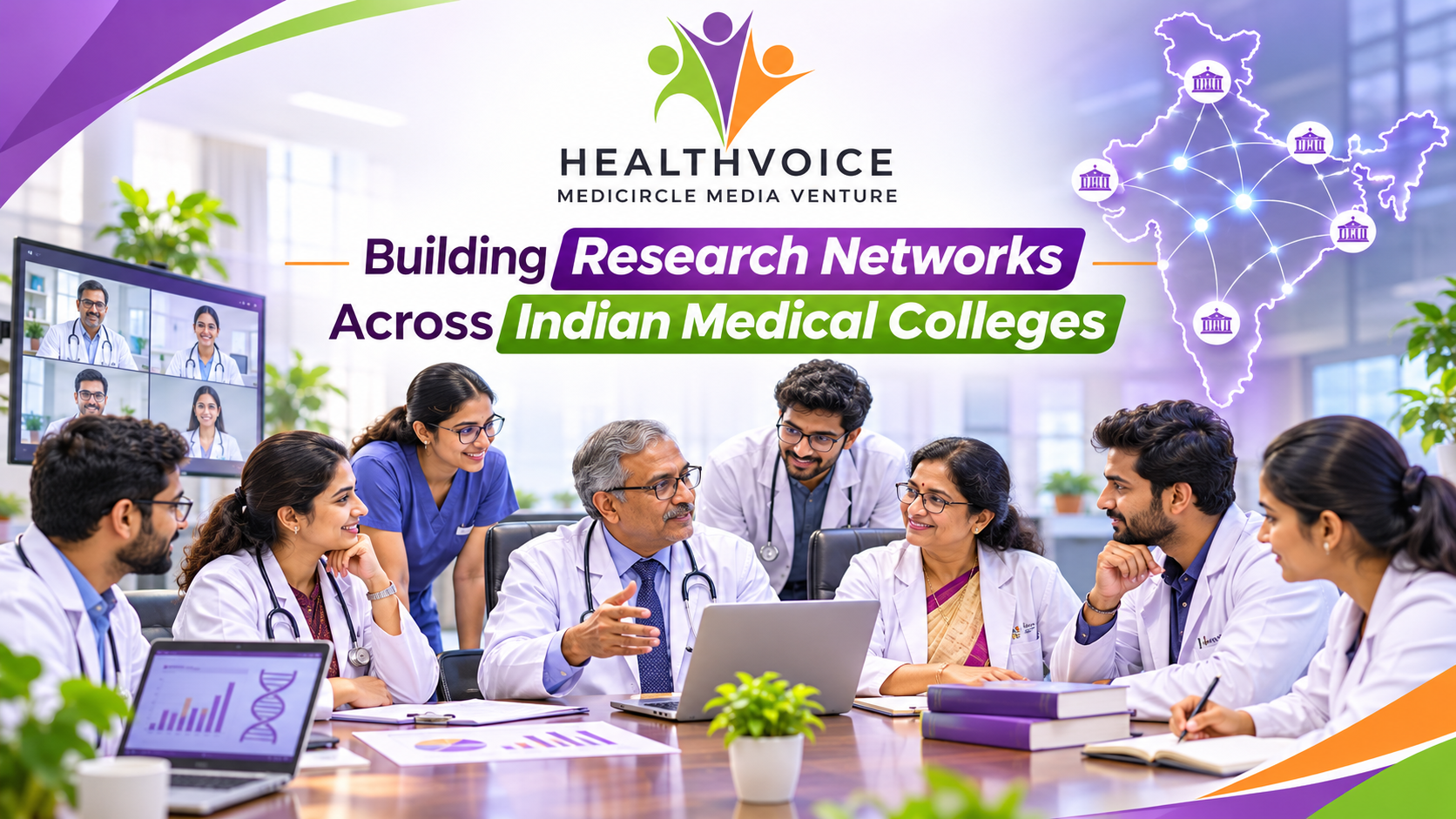
Building Research Networks Across Indian Medical Colleges: A Path Toward Collaborative Medical Excellence
Introduction
India has one of the largest networks of medical colleges in the world, with over 700 medical institutions producing thousands of doctors and specialists every year. Yet despite this remarkable scale, the full potential of research collaboration across these institutions remains largely untapped. Medical research in India has historically been fragmented, with individual colleges working in isolation, limited cross-institutional data sharing, and insufficient infrastructure to support sustained, multi-centre research efforts.
This gap is not simply an academic problem. It directly affects the quality of evidence available to guide clinical practice, public health policy, and healthcare innovation in India. Building structured research networks across Indian medical colleges is not just a desirable goal. It is a national necessity if the country is to address its complex burden of disease, from non-communicable conditions such as diabetes and cardiovascular disease to infectious diseases, maternal health challenges, and emerging health threats.
The good news is that momentum is building. Policy frameworks, digital health infrastructure, and a growing culture of academic ambition among young doctors are creating the conditions for genuine change. This article explores the current landscape, the core challenges, and the practical pathways toward building effective, sustainable, and India-specific research networks across medical colleges.
The Current State of Medical Research Collaboration in India
India produces a significant volume of medical research each year, but much of it originates from a small number of premier institutions such as the All India Institute of Medical Sciences (AIIMS), the Post Graduate Institute of Medical Education and Research (PGIMER), and select government medical colleges in major metropolitan areas. The vast majority of medical colleges across Tier 2 and Tier 3 cities remain peripheral contributors to the national research ecosystem.
Several structural reasons explain this imbalance. Faculty at smaller colleges carry enormous clinical and teaching loads, leaving little time or institutional support for research. Research funding allocation tends to favour established institutions, creating a cycle where newer or smaller colleges struggle to build the credibility needed to attract grants. Many institutions also lack access to well-equipped research laboratories, biostatistical expertise, and experienced mentors who can guide junior faculty through the process of designing and publishing rigorous studies.
Furthermore, there is currently no unified national platform through which medical colleges can formally connect for research collaboration, share patient data under appropriate ethical frameworks, or jointly apply for multi-centre study grants. The result is a research ecosystem that is active at the individual level but disconnected at the systemic level.
Why Research Networks Matter for Indian Healthcare
A research network is more than an administrative arrangement. It is a structured system through which institutions share data, expertise, infrastructure, and intellectual resources to pursue research questions that no single institution could answer on its own.
The benefits of building such networks across Indian medical colleges are substantial and far-reaching.
First, multi-centre research dramatically improves the statistical power and generalisability of findings. A clinical study conducted across twenty medical colleges in five Indian states produces evidence that is far more relevant to Indian patients than a single-centre study from one metropolitan hospital.
Second, research networks help address India-specific clinical questions that are often underrepresented in global medical literature. The phenotypic presentation of diabetes in Indians, the epidemiology of tuberculosis co-infections, and the outcomes of treatment protocols adapted for Indian populations are all areas where nationally networked research is urgently needed.
Third, collaborative networks allow smaller institutions to participate meaningfully in research by contributing patient populations and clinical data while benefiting from the methodological expertise and resources of larger partner institutions. This creates a more equitable research ecosystem and builds capacity across the entire spectrum of Indian medical education.
Fourth, well-structured research networks attract international collaboration, funding from bodies such as the Indian Council of Medical Research (ICMR), the Department of Biotechnology (DBT), and global health organisations including the World Health Organization (WHO) and the Gates Foundation.
Key Challenges in Building Research Networks Across Indian Medical Colleges
Understanding the obstacles is essential before proposing solutions. The challenges are real, deeply embedded in institutional culture and policy frameworks, and they require honest acknowledgment.
Institutional and administrative barriers represent the most immediate challenge. Research collaborations require formal memoranda of understanding, ethical clearances from multiple institutional review boards, and data-sharing agreements that protect patient privacy. For many colleges, particularly those in smaller cities, navigating these administrative processes is unfamiliar territory that can delay or discourage collaboration before it begins.
Faculty capacity and workload are another significant constraint. The doctor-to-patient ratio in India remains strained. Faculty members at medical colleges are expected to fulfil clinical, teaching, and administrative responsibilities simultaneously. Research, in this context, often becomes an afterthought rather than an integral part of academic culture.
Infrastructure disparities between premier institutions and regional medical colleges create unequal partnerships. Without digital research infrastructure, standardised data collection protocols, and access to biobanks or clinical trial management systems, smaller colleges cannot contribute equitably to joint research projects.
Ethical framework inconsistencies also present a challenge. India does have the Indian Council of Medical Research National Ethical Guidelines for Biomedical and Health Research Involving Human Participants, but implementation varies across institutions. Multi-centre studies require all participating institutions to meet consistent ethical standards, which can be difficult to ensure when institutional review boards differ in their processes and timelines.
Finally, a cultural gap in research orientation exists between clinical and academic medicine in many Indian colleges. Medical education in India has traditionally prioritised clinical skill development over research literacy, and this culture needs to shift for sustainable research networks to emerge.
Practical Pathways to Building Effective Research Networks
Despite these challenges, there are clear and actionable pathways through which Indian medical colleges can begin building meaningful research networks.
Establishing regional research consortia is a pragmatic first step. Rather than attempting to build a single national network from the outset, medical colleges within a geographic region can form smaller, manageable consortia. For example, medical colleges across Maharashtra, Tamil Nadu, or Uttar Pradesh could develop state-level research networks with shared ethical review committees, joint data protocols, and coordinated grant applications. These regional models can then connect at the national level as capacity grows.
Leveraging digital health infrastructure under the Ayushman Bharat Digital Mission (ABDM) offers a significant opportunity. As electronic health records become more standardised across Indian healthcare facilities, the data infrastructure needed to support multi-centre research becomes more accessible. Medical colleges that actively participate in ABDM implementation are better positioned to contribute to and benefit from networked research.
Creating dedicated research coordination cells within medical colleges is another essential step. These cells would function as the administrative backbone of research activities, managing ethics submissions, grant applications, data-sharing agreements, and communication with partner institutions. This takes the administrative burden away from individual faculty members and creates institutional accountability for research output.
Mentorship and capacity-building programmes that connect experienced researchers at premier institutions with faculty at smaller colleges can accelerate research culture development. Structured mentorship models, workshops on research methodology and biostatistics, and collaborative grant writing support can meaningfully raise the research capacity of institutions that currently lack it.
Professional platforms that connect doctors and medical institutions play an increasingly important role in facilitating these connections. Communities where doctors share research ideas, discuss clinical challenges, and identify potential collaborators provide the informal foundation on which formal research partnerships are built. HealthVoice, as a platform dedicated to amplifying the voices of doctors and healthcare communities across India, creates precisely this kind of environment where academic conversations can lead to meaningful research collaborations.
The Role of Policy and Institutional Support
No research network can be sustained without adequate policy support and institutional commitment. The National Medical Commission (NMC) has introduced reforms to strengthen postgraduate and faculty research requirements, which is an encouraging signal. The ICMR's establishment of the Centre for Advanced Research and Excellence in Ayurveda and other domain-specific networks demonstrates that the Indian government recognises the value of structured research collaboration.
However, more targeted policy action is needed. Medical colleges should be evaluated and accredited partly on the basis of their participation in research networks and their research output. Funding mechanisms should be designed to incentivise multi-centre collaboration rather than rewarding only individual institutional output. Research training should be formally embedded in both undergraduate and postgraduate medical curricula so that the next generation of Indian doctors enters professional life with research literacy as a core competency.
International collaboration, particularly with institutions in Southeast Asia and Africa that share comparable disease burdens, can also accelerate the development of India's research networks by providing access to global methodological expertise and co-funding opportunities.
Conclusion
Building research networks across Indian medical colleges is not a distant aspiration. It is an achievable, urgent, and transformative project that holds the potential to reshape how medical knowledge is generated and applied in India. The country has the clinical population, the academic talent, and the growing digital infrastructure to support world-class collaborative research. What it needs now is the structural commitment to bring these elements together.
For Indian doctors and medical educators, this is both a professional opportunity and a collective responsibility. For institutions, it is a chance to contribute to a legacy of medical knowledge that will outlast any individual faculty member or administrative tenure. For platforms and communities that serve the Indian healthcare ecosystem, supporting and amplifying this shift is part of a larger mission to strengthen the medical profession from within.
The future of Indian healthcare will be shaped not only by the doctors who treat patients in clinical settings but also by the researchers, collaborators, and communities that generate the evidence to guide those treatments. Building research networks across Indian medical colleges is how that future begins.
Frequently Asked Questions
Q1: What is a medical research network and why is it important for Indian medical colleges?
A medical research network is a formal system through which multiple institutions share data, expertise, and resources to conduct collaborative studies. For Indian medical colleges, such networks are important because they enable multi-centre research that is statistically stronger, more representative of the Indian population, and capable of addressing health questions that individual institutions cannot answer alone.
Q2: Which government bodies in India support medical research collaboration?
The Indian Council of Medical Research (ICMR) is the primary national body supporting biomedical research in India. The Department of Biotechnology (DBT), the Ministry of Health and Family Welfare, and the National Medical Commission (NMC) also play important roles in funding, regulating, and promoting research collaboration across medical institutions.
Q3: How can smaller medical colleges in Tier 2 and Tier 3 cities participate in research networks?
Smaller colleges can participate by joining regional research consortia, contributing patient data under appropriate ethical frameworks, and benefiting from mentorship offered by larger partner institutions. Creating an internal research coordination cell and training faculty in research methodology are practical first steps that any college can take regardless of size.
Q4: What role does the Ayushman Bharat Digital Mission play in supporting medical research networks?
The Ayushman Bharat Digital Mission (ABDM) is building a standardised digital health infrastructure across India, including electronic health records and unique health identifiers. This infrastructure makes it easier for medical institutions to share de-identified patient data for research purposes, which is a foundational requirement for effective multi-centre research networks.
Q5: How can doctors personally contribute to building research networks?
Doctors can contribute by participating in multi-centre studies as site investigators, engaging in professional communities where research collaborations are initiated, attending research methodology training, publishing case studies and clinical observations, and advocating within their institutions for dedicated research time and infrastructure support.
Resources
- Indian Council of Medical Research (ICMR): The primary national body for biomedical and health research in India, offering grant opportunities, ethical guidelines, and research network frameworks.
- National Medical Commission (NMC): Regulatory authority for medical education in India, whose policies on research requirements directly shape academic culture in medical colleges.
- Ayushman Bharat Digital Mission (ABDM): India's national digital health initiative, which provides the electronic health record infrastructure that supports data-driven research collaboration.
- World Health Organization (WHO) India Country Office: Provides global health research frameworks, collaborative research opportunities, and evidence-based guidelines relevant to the Indian context.
- PubMed and ICMR Journals: Key databases and publication platforms where Indian medical research is indexed and made accessible to the global scientific community.
Interlinking Keywords
medical research collaboration India, Indian medical college research network, ICMR research grants, multi-centre clinical research India, Ayushman Bharat Digital Mission research, NMC medical education reform, healthcare collaboration platform India, doctor research community India, postgraduate medical research India, academic medicine India
Last reviewed by:
Dr. Manthan Tripathi, HealthVoice Editorial and Medical Advisory Team, November 4, 2026.
Disclaimer
The information provided in this article is intended for educational and informational purposes only. It does not constitute medical advice, clinical guidance, or a substitute for professional medical consultation. Readers are encouraged to refer to official government health bodies, institutional guidelines, and qualified medical professionals for specific research, clinical, or academic decisions. HealthVoice does not endorse any specific institution, funding body, or research methodology referenced in this article.
 Dr. Manthan Tripathi
#MedicalResearch #ResearchCollaboration