Smart Medical Devices: What Every Doctor Must Know
Smart medical devices are transforming Indian healthcare. This guide equips doctors with practical knowledge on wearables, AI diagnostics, data governance, ABDM integration, and responsible clinical adoption.
Smart Medical Devices: What Every Indian Doctor Needs to Know Right Now
Introduction
The pace at which medical technology is evolving in India has never been faster, and smart medical devices are sitting right at the centre of this transformation. For doctors across the country, from busy urban hospitals in Mumbai and Delhi to district-level clinics in Tier 2 cities, these devices are no longer distant concepts from international journals. They are showing up in patient consultations, outpatient departments, and home care settings with increasing regularity.
Understanding smart medical devices is no longer optional for the modern Indian physician. Whether a patient walks in wearing a connected glucose monitor, shares data from a smartwatch that flagged an irregular heartbeat, or asks about remote monitoring options for an elderly parent, doctors need to be prepared to interpret, evaluate, and act on this information with clinical confidence.
This guide is designed specifically for Indian healthcare professionals who want a clear, practical, and current understanding of what smart medical devices are, how they work, where they fit into clinical practice, and what regulatory and ethical considerations apply in the Indian context.
Understanding Smart Medical Devices and How They Work
Smart medical devices are connected health tools that collect, process, and transmit physiological or clinical data, often in real time, to support diagnosis, treatment, monitoring, or patient management. What separates them from traditional medical instruments is their integration of sensors, software, wireless connectivity, and in many cases, artificial intelligence.
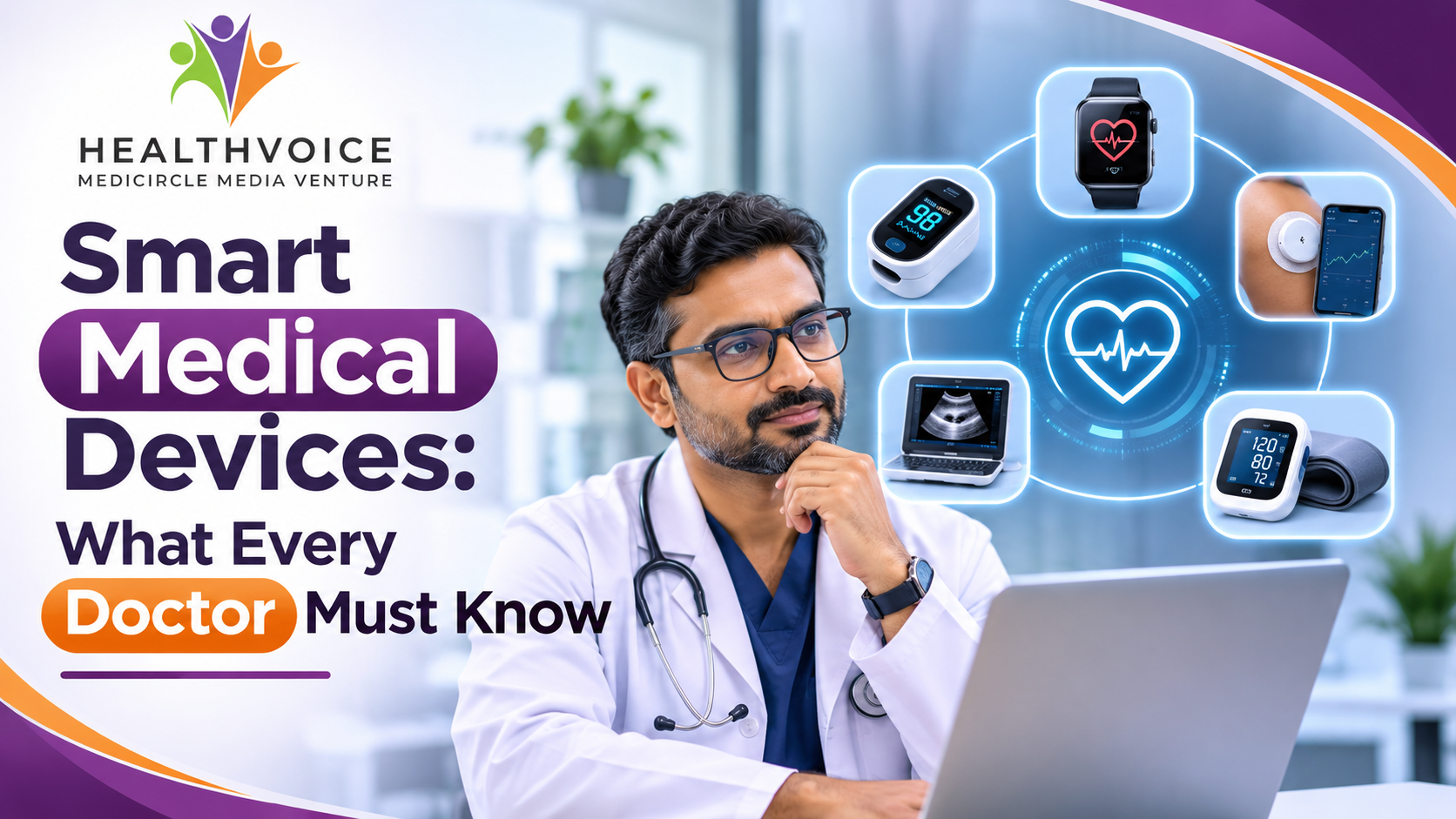
A smart blood pressure cuff does not just measure and display a reading. It records trends over time, flags abnormal patterns, syncs with a smartphone application, and can transmit data to a physician. Similarly, a continuous glucose monitor tracks interstitial glucose levels around the clock, generates predictive alerts before hypoglycaemic events, and feeds data into clinical dashboards.
The core components of most smart medical devices include:
- Biosensors that detect physiological parameters such as heart rate, oxygen saturation, blood glucose, temperature, or electrical signals from the heart
- Microprocessors that analyse the collected data, often using embedded algorithms or machine learning models
- Wireless connectivity modules such as Bluetooth, Wi-Fi, or cellular networks that transmit data to paired devices or cloud platforms
- Software interfaces including mobile applications or web-based dashboards that present data to both patients and clinicians
The ecosystem surrounding these devices also includes interoperability standards and integration with electronic health record systems, which is becoming increasingly relevant in India through frameworks like the Ayushman Bharat Digital Mission.
Key Categories of Smart Medical Devices in Clinical Practice
Indian doctors are encountering smart medical devices across multiple specialties and care settings. Understanding the major categories helps clinicians make informed decisions about which tools are relevant to their practice.
Wearable health monitors represent the fastest-growing segment. Devices like smartwatches with photoplethysmography sensors can detect atrial fibrillation, track sleep stages, monitor blood oxygen levels, and measure physical activity. For cardiologists and general practitioners managing patients with arrhythmia risk, these devices are generating a new category of patient-reported data that requires clinical interpretation.
Remote patient monitoring systems are particularly valuable in a country like India, where follow-up visits are often missed due to distance, cost, or time constraints. Connected blood pressure monitors, pulse oximeters, smart weighing scales for heart failure patients, and spirometers for respiratory conditions allow doctors to track chronic disease patients without requiring in-person attendance at every interval.
AI-powered diagnostic devices are entering radiology, pathology, ophthalmology, and dermatology. AI-driven fundus cameras, for instance, can screen for diabetic retinopathy at a primary care level, something that is transforming diabetes care in rural India. Similarly, handheld ECG devices with built-in AI interpretation are enabling primary care doctors to detect cardiac abnormalities that previously required specialist referral.
Smart implantables and ingestibles include cardiac implantable electronic devices with remote telemetry, smart insulin pumps, and capsule endoscopy tools with wireless imaging capabilities. These represent the more advanced end of the spectrum and are growing in adoption within tertiary care settings in India.
Point-of-care diagnostic devices using smart technology are addressing India's pathology access gap. Portable haematology analysers, rapid molecular diagnostic platforms, and connected glucometers are enabling faster, decentralised testing particularly in settings where laboratory infrastructure is limited.
Clinical Benefits and Practical Opportunities for Indian Doctors
The integration of smart medical devices into clinical practice offers tangible advantages that go beyond technology for its own sake.
One of the most significant opportunities is in chronic disease management. India carries one of the world's largest burdens of diabetes, hypertension, cardiovascular disease, and chronic kidney disease. The Indian Council of Medical Research and the Ministry of Health and Family Welfare have both highlighted the need for better disease surveillance and longitudinal monitoring. Smart devices that enable continuous data capture between clinic visits fill a critical gap in this regard.
Doctors using remote monitoring platforms for their diabetic or hypertensive patients report being able to intervene earlier during deteriorating trends, reducing emergency admissions and improving treatment adherence. The shift from episodic care to continuous care is one of the defining possibilities of this technology era.
Early and accurate diagnosis is another major benefit. AI-assisted imaging and diagnostics are helping doctors, particularly those working in under-resourced environments, to access a level of diagnostic support that was previously available only in large tertiary centres. A primary care physician in a Tier 2 city who can capture a fundus image and receive AI-generated analysis for diabetic retinopathy screening is now offering a standard of care that simply was not possible a decade ago.
For specialist doctors, smart devices are generating richer, longitudinal patient data that strengthens clinical decision-making. Seeing continuous glucose patterns rather than a single fasting value, or reviewing weeks of cardiac rhythm data rather than a ten-second ECG strip, provides a far more complete clinical picture.
What Indian Doctors Must Understand About Data, Integration, and ABDM
The clinical value of smart medical devices depends heavily on how their data is managed, interpreted, and integrated into the care workflow.
India's Ayushman Bharat Digital Mission has created a foundational framework through which health data, including data generated by smart devices, can be linked to individual health records via the Ayushman Bharat Health Account. Doctors who are registered on the Healthcare Professionals Registry and are working with ABDM-linked platforms will increasingly encounter patients whose smart device data forms part of a longitudinal digital health record.
Understanding the basics of ABDM-compliant data flow is therefore important for doctors who want to participate meaningfully in this ecosystem. Patients have the right to share or restrict access to their health data, and doctors must respect these consent norms as part of responsible digital health practice.
Data quality and reliability are also critical concerns. Not all consumer-grade smart devices meet the accuracy standards required for clinical decision-making. A smartwatch-generated ECG may serve as a useful screening tool, but it cannot replace a standard 12-lead ECG for definitive diagnosis. Doctors need to maintain clinical judgement when interpreting data from non-medical-grade devices and communicate clearly with patients about what this data can and cannot tell them.
Cybersecurity and patient data privacy are equally important dimensions. Devices that transmit health data must be evaluated for their data storage and security practices. Under India's Digital Personal Data Protection Act, healthcare providers have obligations regarding the handling of sensitive personal data, which includes health information.
Regulatory Framework: What Doctors Need to Know
In India, medical devices are regulated under the Medical Devices Rules, 2017, which are administered by the Central Drugs Standard Control Organisation. The regulatory classification of a device determines the scrutiny it undergoes before it reaches the market.
Smart medical devices that fall under Class B, C, or D categories require regulatory approval before they can be sold or used clinically. Doctors should verify whether a device being considered for clinical use carries the appropriate CDSCO registration or approval, particularly for devices intended to inform diagnosis or treatment decisions.
The Bureau of Indian Standards has also been working on standards relevant to connected health devices, and global standards from organisations like the International Electrotechnical Commission and the Institute of Electrical and Electronics Engineers have implications for device performance and interoperability in Indian healthcare settings.
For doctors who are approached by medical device companies to recommend, endorse, or use specific smart devices, it is advisable to review the device's clinical validation data, understand its regulatory status, and ensure that any formal association with the brand complies with the guidelines issued by the National Medical Commission and the Medical Council of India's code of ethics.
Challenges and Considerations for Indian Healthcare Settings
While the promise of smart medical devices is real, Indian doctors must approach adoption with a clear understanding of the challenges specific to this context.
Digital literacy among patients varies enormously. While urban, educated, younger patients may be comfortable managing connected devices and applications, elderly patients or those in rural areas may require significant support. Doctors and their teams need to factor in the time and resources required to onboard patients onto these technologies effectively.
Connectivity infrastructure remains uneven across India. Devices that rely on consistent internet connectivity may not function reliably in areas with poor network coverage. Choosing devices with offline data storage and batch synchronisation capabilities is important for settings where connectivity is intermittent.
Cost and affordability continue to be significant barriers. While the prices of wearable health monitors have fallen considerably, many advanced smart devices remain expensive for the majority of Indian patients. Doctors must be realistic about recommending technologies that patients can actually afford and sustain.
Health literacy and over-reliance on data are concerns on the other end of the spectrum. Some patients become anxious when devices generate alerts or unusual readings. Clear patient education about the meaning and limitations of device-generated data is an important part of responsible clinical practice when these tools are involved.
Frequently Asked Questions
Q1: Are smart medical devices approved for clinical use in India?
Smart medical devices in India are regulated by the Central Drugs Standard Control Organisation under the Medical Devices Rules, 2017. Devices classified under Class B, C, and D require regulatory approval before clinical use. Consumer wellness wearables occupy a different regulatory category and may not carry the same level of clinical validation. Doctors should verify a device's CDSCO status before using it to inform clinical decisions.
Q2: Can data from consumer wearables like smartwatches be used in clinical diagnosis?
Consumer wearables can serve as useful screening and monitoring tools, but they are generally not validated for definitive clinical diagnosis. A smartwatch ECG may help flag a potential arrhythmia for further investigation, but it cannot replace a standard 12-lead ECG. Doctors should use such data as a supplementary clinical input rather than a standalone diagnostic tool.
Q3: How does the Ayushman Bharat Digital Mission connect with smart medical devices?
The Ayushman Bharat Digital Mission provides a framework through which health data, including data from smart medical devices, can be linked to a patient's Ayushman Bharat Health Account with appropriate consent. ABDM-compliant platforms allow this data to be part of a patient's longitudinal digital health record, accessible to treating doctors across settings.
Q4: What should Indian doctors look for when evaluating a smart medical device for their practice?
Doctors should evaluate a device based on its clinical validation evidence, CDSCO regulatory status, data security practices, ease of integration with existing workflows, patient-friendliness, and long-term affordability for the target patient population. Peer-reviewed studies demonstrating clinical accuracy in populations similar to Indian patients are particularly valuable.
Q5: How should doctors handle patient anxiety related to alerts from smart health devices?
Patient education is essential. Doctors should proactively explain what alerts from smart devices mean, what thresholds trigger them, and how to respond appropriately. Establishing clear protocols for when patients should contact the clinic versus when they can wait for a scheduled review helps reduce unnecessary alarm and builds confidence in using these tools constructively.
Resources
- Central Drugs Standard Control Organisation (CDSCO): The official regulatory body for medical devices in India, including smart and connected health technologies
- Ayushman Bharat Digital Mission (ABDM): India's national digital health framework governing health data standards, patient consent, and health record interoperability
- Indian Council of Medical Research (ICMR): Leading medical research body providing evidence-based guidelines relevant to disease management and health technology in India
- World Health Organization (WHO) Digital Health Initiative: Global guidance and frameworks on digital health tools, remote monitoring, and health data governance
- National Medical Commission (NMC): Regulatory authority for medical education and professional conduct, including ethical guidelines relevant to doctors engaging with healthcare technology companies
Interlinking Keywords
Smart medical devices India, wearable health technology for doctors, AI diagnostics in healthcare, remote patient monitoring India, Ayushman Bharat Digital Mission health data, CDSCO medical device regulations, continuous glucose monitoring India, digital health for Indian doctors, connected health devices clinical use, smart ECG devices India
Last reviewed by:
Dr. Manthan Tripathi, HealthVoice Editorial and Medical Advisory Team, November 4, 2026.
Disclaimer
The information presented in this article is intended for educational and informational purposes only and is directed at qualified medical professionals. It does not constitute medical advice, clinical recommendations, or endorsement of any specific smart medical device, brand, or technology platform. Doctors are advised to exercise independent clinical judgement and consult current regulatory guidelines, peer-reviewed literature, and institutional protocols before adopting any medical technology in their practice. Device-specific clinical decisions should be made in accordance with the guidelines of the National Medical Commission, the Central Drugs Standard Control Organisation, and other relevant regulatory authorities. HealthVoice does not endorse or promote any commercial medical device or healthcare product.
 Dr. Manthan Tripathi
#SmartMedicalDevices #DigitalHealth