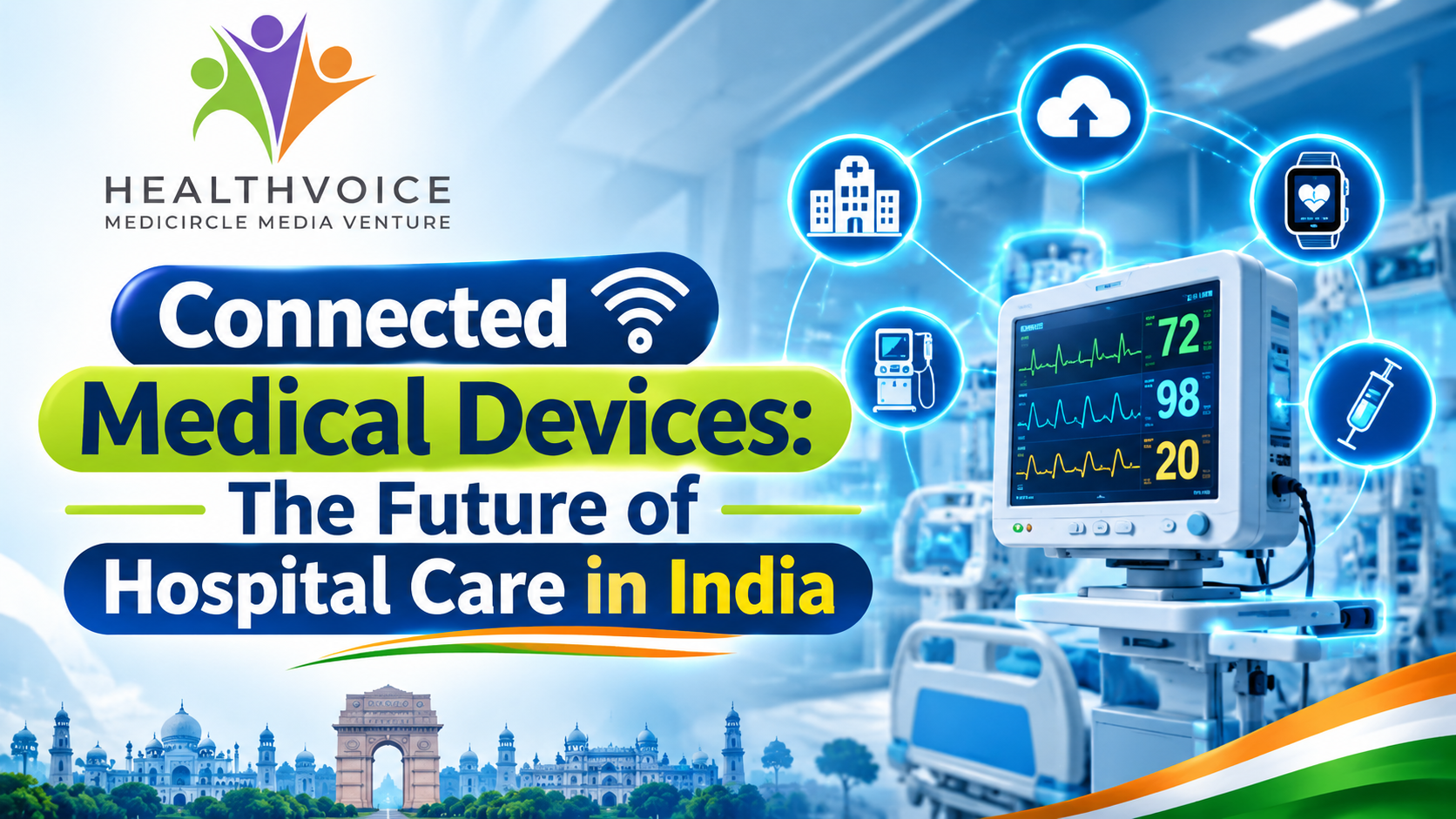
Connected Medical Devices: The Future of Hospital Care in India
Connected medical devices are transforming hospital care in India by enabling real-time monitoring, smarter clinical workflows, remote patient management, and AI-powered diagnostics across urban and rural healthcare settings.
Connected Medical Devices and the Future of Hospital Care in India
Introduction
The hospital of the future is no longer a distant concept. Across India, from large multi-specialty institutions in metro cities to district hospitals participating in national digital health programs, the integration of connected medical devices is quietly but decisively transforming how clinical care is delivered. These devices do not simply collect data. They communicate, alert, adapt, and support clinical decisions in real time, bringing a new level of precision and responsiveness to patient management.
India carries one of the world's largest burdens of chronic disease. According to the Indian Council of Medical Research, cardiovascular conditions, diabetes, chronic respiratory diseases, and kidney disorders collectively account for a significant share of hospital admissions across the country. Managing this burden requires more than infrastructure. It requires intelligence built into care delivery itself. Connected medical devices represent exactly this kind of intelligent infrastructure.
For doctors and healthcare leaders engaged with platforms like HealthVoice, understanding the trajectory of connected health technology is not merely an academic exercise. It is directly relevant to how clinical practice, hospital administration, and patient communication will evolve in the years ahead.
Understanding Connected Medical Devices and the Internet of Medical Things
Connected medical devices belong to a broader category known as the Internet of Medical Things, or IoMT. This refers to a network of medical equipment, software applications, and health systems that communicate with each other through the internet or secure private networks. The scope is wide and continues to expand rapidly.
At the basic level, connected devices include bedside patient monitors that transmit vital signs directly to nursing stations and physician dashboards. At a more advanced level, they include implantable cardiac rhythm monitors that send data to cardiologists without the patient needing to visit a clinic, smart infusion pumps that adjust drug delivery rates based on real-time parameters, and wearable biosensors that track continuous glucose levels, oxygen saturation, and cardiac activity.
The global IoMT market is projected to exceed several hundred billion dollars by the end of this decade. Within India, the health-tech sector has seen a surge of investment and innovation, particularly following the COVID-19 pandemic, which accelerated the adoption of remote monitoring tools, teleconsultation technologies, and home-based care devices across both urban and semi-urban populations.
How Connected Devices Are Changing Clinical Workflows in Indian Hospitals
The impact of connected medical devices on clinical workflows is substantial and multidimensional. In traditional hospital settings, clinical teams depend heavily on scheduled rounds and manual documentation to track patient status. Connected devices shift this model fundamentally.
Real-time continuous monitoring means that a deteriorating patient in a general ward can be identified and escalated to intensive care before a critical event occurs. Early warning systems integrated with connected monitors use algorithms to flag abnormal trends in blood pressure, respiratory rate, heart rhythm, and oxygen saturation. This reduces preventable adverse events, which remain a persistent challenge in Indian hospitals with high patient-to-nurse ratios.
Connected devices also reduce the documentation burden on clinical staff. When a patient's vitals are automatically recorded and uploaded to an electronic health record system, nurses and doctors spend less time on manual data entry and more time on direct patient care. In hospitals aligned with NABH accreditation standards, this integration supports compliance and clinical governance frameworks.
Operating theatres and intensive care units in leading Indian hospitals have already integrated connected anaesthesia machines, ventilators, and patient monitoring systems that form a closed data loop with hospital information systems. The result is a more coordinated, data-rich environment that supports sharper clinical decision-making.
Remote Patient Monitoring and Its Relevance to India
Remote patient monitoring is one of the most promising applications of connected medical devices in the Indian context. India's geographic reality includes millions of patients in Tier 2 cities, smaller towns, and rural areas who have limited access to specialist consultations and regular follow-up care.
Connected wearable devices capable of monitoring cardiac rhythms, blood glucose levels, and blood pressure allow patients in remote locations to remain under effective medical supervision without travelling to urban centres. Data from these devices can be reviewed by specialists in real time or on a scheduled basis through telemedicine platforms, many of which now operate under the regulatory framework established by the Ministry of Health and Family Welfare following the COVID-19 pandemic.
The Ayushman Bharat Digital Mission (ABDM), which aims to create a unified digital health ecosystem across India through Health IDs, healthcare professional registries, and interoperable health records, provides a natural institutional backbone for the integration of connected device data into longitudinal patient records. As ABDM infrastructure matures, the ability to link device-generated data to individual health records will become increasingly practical for both hospitals and community health programs.
For cardiologists managing post-myocardial infarction patients, for diabetologists overseeing HbA1c control, and for pulmonologists tracking COPD patients, remote monitoring through connected devices represents a meaningful extension of clinical care beyond the hospital boundary.
Smart Hospitals and the Role of AI-Driven Connected Devices
The convergence of artificial intelligence and connected medical devices is giving rise to what many healthcare leaders now call the smart hospital. In a smart hospital environment, connected devices do not merely transmit raw data. They feed into AI and machine learning systems that identify patterns, generate clinical alerts, predict complications, and support diagnostics.
AI-integrated radiology equipment, smart endoscopes, and connected pathology analysers are already being introduced in leading Indian hospitals. These tools augment the expertise of specialists by flagging anomalies, reducing diagnostic errors, and improving throughput in high-volume departments.
For Indian hospitals managing large outpatient and inpatient volumes, the efficiency gains from AI-connected devices are significant. A smart infusion pump that learns from patient response data and adjusts drug delivery protocols reduces the risk of medication errors. A connected pulse oximeter integrated with a central monitoring system that alerts nursing staff when saturation drops below a threshold prevents delayed interventions in busy wards.
The Manipal Hospitals group, Apollo Hospitals, and several other large Indian healthcare networks have already announced digital transformation strategies that include smart device integration, AI-assisted diagnostics, and IoMT-enabled ward management. These developments signal a broader shift in how leading Indian healthcare institutions are approaching clinical modernisation.
Regulatory Framework for Connected Medical Devices in India
The regulation of connected medical devices in India falls primarily under the Central Drugs Standard Control Organisation (CDSCO), which administers the Medical Devices Rules 2017. These rules classify medical devices by risk level, from Class A (lowest risk) to Class D (highest risk), and specify the requirements for manufacturing standards, clinical evaluation, and market authorisation.
Connected medical devices that incorporate software, particularly those that influence clinical decisions, are increasingly scrutinised as software as a medical device (SaMD) under evolving regulatory thinking. The CDSCO has been progressively updating its guidance in line with global frameworks developed by the International Medical Device Regulators Forum (IMDRF), which India participates in as an associate member.
Hospitals procuring connected devices need to verify:
- That devices are CDSCO-approved or exempt under applicable notifications
- That device manufacturers provide evidence of clinical validation
- That cybersecurity and data protection standards are addressed in procurement contracts
- That post-market surveillance obligations are understood and met
Healthcare leaders and clinical administrators who engage with the HealthVoice community have an important role in advocating for stronger device governance standards within their institutions and in contributing to national policy discussions around digital health infrastructure.
Challenges Facing Connected Device Adoption in India
Despite the considerable promise of connected medical devices, the path to widespread adoption in India faces real and practical challenges that need honest acknowledgement.
Interoperability remains one of the most significant barriers. Many connected devices from different manufacturers do not communicate seamlessly with each other or with existing hospital information systems. The absence of a universally adopted device communication standard creates fragmented data environments in hospitals that have procured equipment from multiple vendors over time. ABDM's Health Data Management Policy and the adoption of FHIR-based interoperability standards offer a possible solution, but full implementation across the healthcare ecosystem will take time.
Connectivity infrastructure in many parts of India remains uneven. Rural and semi-urban hospitals may lack the reliable broadband or 4G connectivity that many connected devices require to function optimally. The National Digital Health Blueprint has outlined strategies for improving health system connectivity, but infrastructure gaps persist and need continued policy attention.
Data security and patient privacy are growing concerns. As more patient data flows through connected device networks, hospitals become targets for cyberattacks. The Digital Personal Data Protection Act 2023 establishes a legal framework for data handling in India, but hospitals need to build internal capabilities in cybersecurity and privacy governance to meet their obligations under this law.
Cost remains a barrier for smaller hospitals and clinics. High-quality connected devices from established manufacturers carry significant price tags. The domestic medical device manufacturing sector, supported by government incentives under Production Linked Incentive schemes, is expanding, and competitive pricing from Indian manufacturers may gradually ease this constraint.
Prevention, Preparedness, and the Long-Term Value of Connected Care
One of the most compelling arguments for connected medical devices is their role in preventive and anticipatory care. Rather than responding to disease after it has progressed, connected monitoring systems allow clinicians to intervene at the earliest signs of clinical deterioration.
For India's growing elderly population, which is projected to reach nearly 350 million by 2050 according to data from the United Nations Population Fund, the ability to monitor chronic conditions remotely and continuously is a significant public health advantage. Connected devices that track cardiac arrhythmias, detect falls, monitor blood glucose trends, and assess respiratory function can support active aging and reduce the frequency of emergency hospitalisations.
For hospital administrators and healthcare planners, investing in connected device infrastructure today is an investment in long-term cost efficiency. Preventing a single serious adverse event in an ICU, avoiding a preventable readmission, or reducing the length of a hospital stay through early clinical intervention each carries measurable economic value that justifies the upfront cost of connected device implementation.
Conclusion
Connected medical devices are not a supplementary feature of modern hospital care. They are becoming a foundational element of how hospitals monitor patients, support clinical decisions, manage workflows, and extend care beyond their physical walls. For India, with its scale, its geographic diversity, its growing disease burden, and its accelerating digital health ambitions, the strategic adoption of connected medical devices represents both a clinical imperative and a public health opportunity.
The doctor community, hospital leadership, medical device industry, and policy ecosystem all have roles to play in shaping how this transformation unfolds responsibly. Platforms like HealthVoice, which bring together doctors, associations, and healthcare stakeholders in meaningful professional dialogue, have an important part to play in ensuring that the clinical voice remains central to decisions about the technology that will define the hospitals of tomorrow.
Frequently Asked Questions
Q1: What are connected medical devices in hospitals?
Connected medical devices are diagnostic, monitoring, and therapeutic tools that use internet connectivity to share real-time patient data with healthcare providers, enabling faster clinical decisions and remote care.
Q2: How is India adopting connected medical devices?
India is adopting connected medical devices through government initiatives like ABDM, rising smartphone penetration, growing health-tech investment, and increasing deployment in both urban hospitals and rural telehealth programs.
Q3: Are connected medical devices regulated in India?
Yes. The Central Drugs Standard Control Organisation (CDSCO) regulates medical devices in India under the Medical Devices Rules 2017, which cover connected and software-driven devices classified by risk category.
Q4: What are the data privacy risks of connected medical devices?
Connected devices collect sensitive patient data, which makes them vulnerable to cyberattacks and unauthorised access. Hospitals must follow data encryption standards, access control protocols, and comply with India's Digital Personal Data Protection Act 2023.
Q5: Can connected medical devices improve patient outcomes in India?
Yes. Real-time monitoring, early alert systems, and data-driven clinical decisions enabled by connected devices significantly reduce hospital-acquired complications, readmission rates, and mortality in critical care settings.
Resources
- Central Drugs Standard Control Organisation (CDSCO): Official regulatory body for medical devices in India, providing guidance on device classification, licensing, and compliance under the Medical Devices Rules 2017.
- Ayushman Bharat Digital Mission (ABDM): Government of India initiative establishing a national digital health infrastructure including health IDs, interoperable records, and frameworks relevant to connected device data integration.
- Indian Council of Medical Research (ICMR): Apex body for biomedical and health research in India, publishing epidemiological data and clinical guidance relevant to chronic disease burden and digital health interventions.
- World Health Organization (WHO) India Country Office: Provides global and regional guidance on digital health strategies, connected care standards, and health technology assessment frameworks applicable to India.
- International Medical Device Regulators Forum (IMDRF): International regulatory collaboration body whose frameworks on software as a medical device and cybersecurity standards inform India's evolving connected device regulatory approach.
Interlinking Keywords
Internet of Medical Things India, remote patient monitoring, smart hospital technology, ABDM digital health, IoMT wearable devices, CDSCO medical device regulation, hospital IoT integration, AI in healthcare India, digital health ecosystem India, connected care chronic disease management
Last reviewed by:
Dr. Manthan Tripathi, HealthVoice Editorial and Medical Advisory Team, November 5, 2026.
Disclaimer
The content published in this article is for informational and professional awareness purposes only. It does not constitute medical advice, clinical guidance, or a recommendation to adopt any specific technology, device, or clinical protocol. Healthcare professionals and hospital administrators should conduct independent evaluation and consult qualified experts before making clinical or procurement decisions. HealthVoice does not endorse any specific medical device manufacturer, technology vendor, or commercial product. Regulatory information referenced in this article is accurate as of the date of publication and may be subject to change. Readers are advised to verify current regulatory requirements with the Central Drugs Standard Control Organisation (CDSCO) and other relevant authorities.
 Dr. Manthan Tripathi
#ConnectedMedicalDevices #HealthTechIndia