Cracks in the Ivory Tower: Why AIIMS is Struggling to Keep Its Best Doctors
If India is to fulfil its vision of equitable, world-class medical access, the people who make that vision possible must feel valued, supported, and inspired to stay.
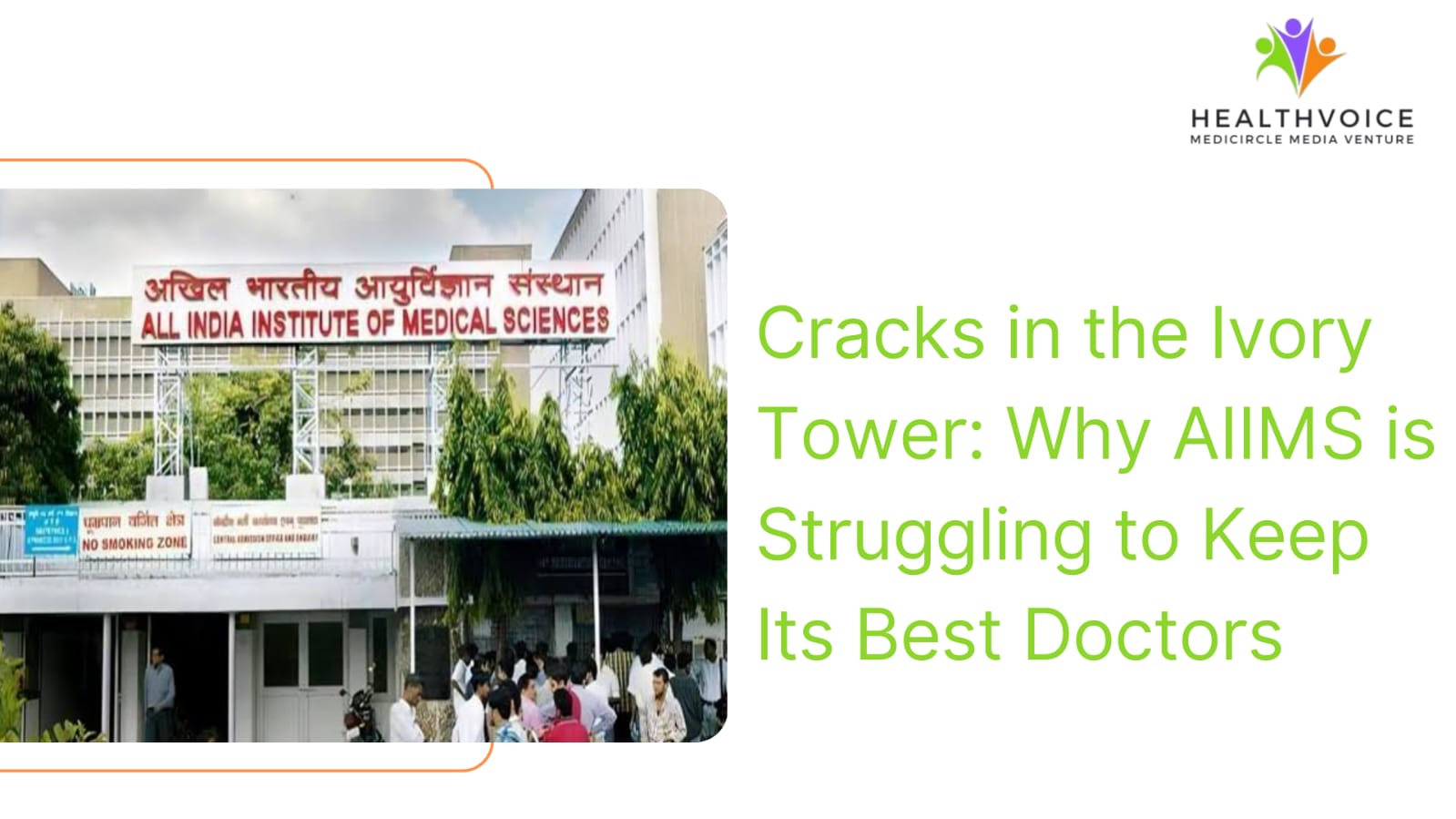
In India’s most prestigious medical institutions, a slow but significant change has been unfolding that doesn’t make daily headlines but could have a profound effect on the nation’s healthcare future. Over the past three years, 429 faculty members have chosen to step away from their roles at various All India Institutes of Medical Sciences (AIIMS). Behind these numbers lies a story that reaches beyond statistics into the heart of what it means to serve as a doctor in today’s India.
The data, recently presented in the Rajya Sabha by Union Minister of State for Health Shri Prataprao Jadhav, has triggered an uncomfortable conversation. Among the resignations, 52 came from AIIMS New Delhi, the flagship campus often regarded as the pinnacle of medical education and research in the country. This is not a random trend. From AIIMS Rishikesh, 38 faculty members have moved on. AIIMS Raipur lost 35, Bilaspur saw 32 departures, and several other campuses reported double-digit resignations in just a short span of time. Even the relatively newer institutes, which were established to reduce the burden on older campuses, have not been immune.
When numbers like these surface, the reflex reaction is to seek an easy answer, better pay in the private sector, more comfortable lifestyles abroad, or personal circumstances pulling doctors away from government service. The truth is far more layered. While both personal and professional factors play a role, the resignation wave speaks to deeper, systemic realities. For doctors who have spent years in service, often working through punishing schedules with limited resources, the promise of a sustainable career within AIIMS can start to feel uncertain.
One cannot ignore the pressure these institutions face. As of earlier this year, more than 40 percent of faculty positions across AIIMS campuses remain vacant. That means the workload on those who stay has intensified. In some centres, the absence of nearly a third of non-faculty staff compounds the challenge, forcing doctors to take on responsibilities outside their primary clinical or academic duties. The result is a daily grind that tests resilience and patience, especially when administrative bottlenecks slow down hiring or resource allocation.
Yet, AIIMS has never been just a workplace. For generations of medical professionals, it has been a calling. These are the hospitals that have trained some of the world’s best surgeons, physicians, and researchers. They are centres where breakthroughs in treatment have saved countless lives and where young doctors are inspired to pursue public service despite more lucrative opportunities elsewhere. So when seasoned faculty members walk away, the loss is not merely of headcount it is the loss of mentorship, experience, and the institutional memory that sustains excellence.
The reasons for departure are rarely dramatic. They are often a slow accumulation of frustrations. Delays in promotions, bureaucratic hurdles in research approvals, inadequate infrastructure in some of the newer campuses, and the perception that professional growth is faster in the private sector all weigh on faculty morale. Add to this the lure of better international opportunities, where research funding is easier to access and work-life balance is more achievable, and the decision to resign starts to make pragmatic sense.
What makes the current trend particularly concerning is the backdrop against which it is happening. India is already grappling with a shortage of doctors relative to its population. While the creation of multiple AIIMS campuses across the country was meant to bridge this gap, the plan falters when those very institutions cannot retain their faculty. It takes years to build a team of specialists who can teach, conduct research, and manage complex clinical cases. Losing them in quick succession creates a vacuum that is not easily filled.
This is not to say that AIIMS is in decline. Far from it. The commitment of those who remain is extraordinary. Across the country, faculty members continue to pioneer new treatments, train the next generation of doctors, and serve communities with limited healthcare access. But there is an undeniable strain. In cities like Jodhpur, Bhopal, and Patna, where AIIMS has brought advanced care closer to underserved populations, vacancies and resignations can mean longer waiting times for patients and reduced course offerings for students.
Some argue that the very expansion of AIIMS has diluted its resources. The rapid establishment of new campuses may have outpaced the ability to staff them adequately, leading to a cycle where faculty are stretched too thin. Others point to differences in facilities between older and newer campuses, with the latter still catching up in terms of infrastructure and research opportunities. In such an environment, younger faculty members often at a stage in life where career stability is crucial may be tempted to move to places that can offer immediate professional rewards.
For the healthcare community, these resignations are more than a staffing issue; they are a signal. They point to the urgent need for retention strategies that go beyond salary adjustments. Doctors are motivated by purpose as much as by pay. They seek environments where their expertise is respected, their research ambitions are supported, and their working conditions allow for quality patient care without constant burnout.
There is also the question of leadership within these institutions. Strong mentorship and transparent administrative processes can make a significant difference in faculty satisfaction. When decision-making feels opaque, or when academic contributions are not adequately recognised, disillusionment sets in. Conversely, when faculty members feel involved in shaping the future of their institution, loyalty deepens.
The challenge is not insurmountable. AIIMS has the advantage of brand prestige, a legacy of excellence, and the trust of millions of patients. Leveraging these strengths to build a culture that retains talent will require both policy-level changes and on-the-ground improvements. This could mean faster recruitment processes to fill existing vacancies, clearer career progression pathways, better facilities for research and innovation, and support systems that acknowledge the mental and physical toll of medical service.
For doctors reading these figures, the question is not whether AIIMS will survive, it will. The question is whether it will thrive in a way that keeps attracting and retaining the brightest minds in Indian medicine. For policymakers, the resignations are a wake-up call to examine whether current systems adequately reward the dedication of government medical faculty. For the public, this is a reminder that the strength of our healthcare system is as much about the doctors we keep as it is about the doctors we produce.
In the coming years, India’s healthcare demands will only grow. Non-communicable diseases are rising, the threat of future pandemics remains, and rural healthcare gaps persist. Institutions like AIIMS are vital to meeting these challenges, but they cannot do so at full strength if they are continually losing experienced faculty. Every resignation represents not just a career move for an individual but a shift in the delicate balance of service delivery, teaching, and research.
As the nation debates infrastructure budgets, medical education reforms, and public health policies, the conversation must include the lived realities of the doctors at the heart of these systems. Retention is not a side issue, it is central to sustaining excellence in healthcare. If India is to fulfil its vision of equitable, world-class medical access, the people who make that vision possible must feel valued, supported, and inspired to stay.
The numbers from the past three years are a stark indicator. Whether they become a trend or a turning point will depend on the actions taken now. For AIIMS, the choice is clear: address the underlying causes of faculty attrition or risk a slow erosion of the very qualities that have made it a symbol of medical excellence for decades. The doctors who have left carry with them years of service, research, and teaching. The ones who remain carry the future. Ensuring they do not feel compelled to follow the same path is not just an administrative priority, it is a national imperative.
 Sunny Parayan
#AIIMS #AIIMSFaculty #MedicalExodus #HealthcareCrisis #IndiaHealthcare #PublicHealthChallenge #HealthcarePolicy #MedicalEducation #DoctorRetention #DoctorsSpeak #VoiceOfDoctors #HealthcareHeroes #MedicalFuture #HealthEquity #healthvoice