Infrastructure or Illusion: The Reality of Burn Units in Public Hospitals
When a burn patient arrives at a hospital, there is no room for gaps or delays. The system must be ready, not in theory, but in practice
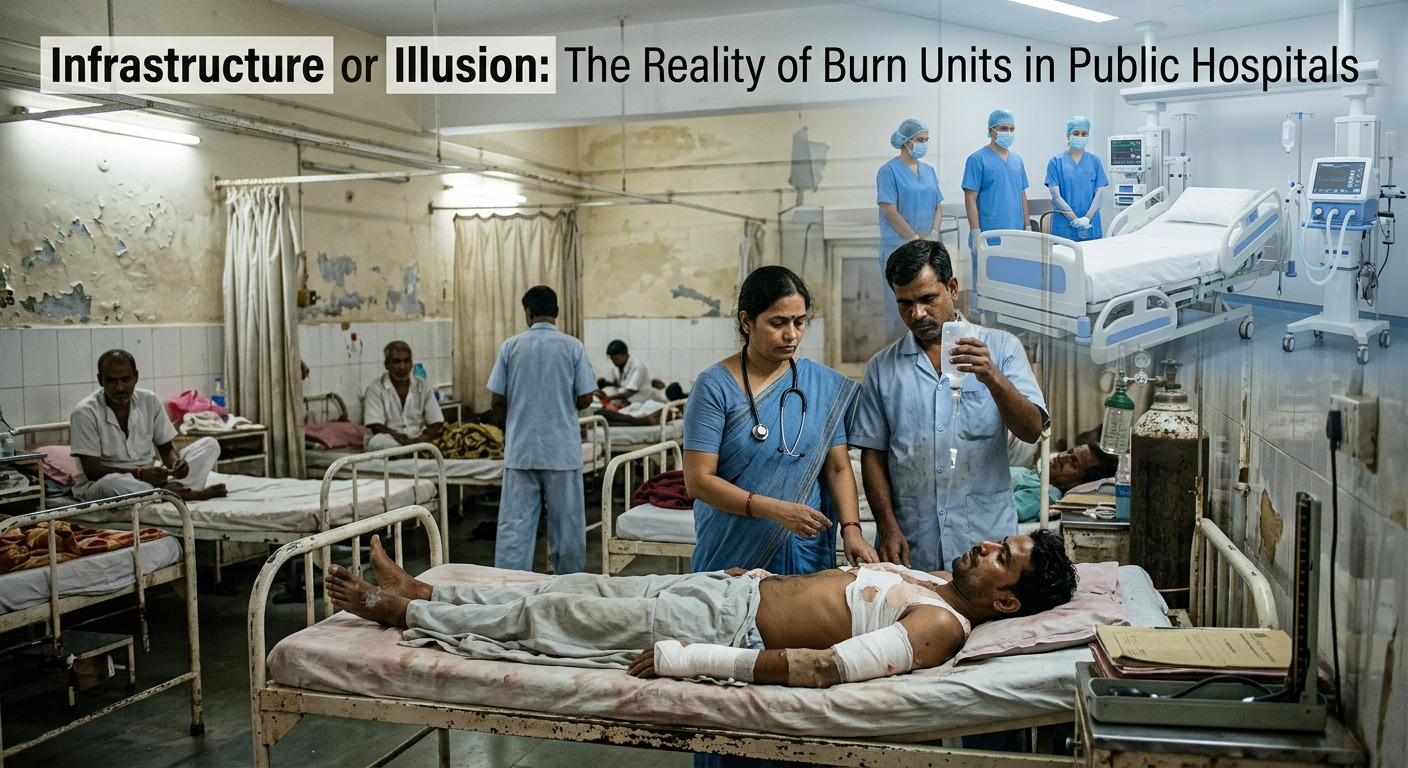
In corridors of public healthcare, there are certain truths that rarely make headlines unless pushed into the spotlight. Burn care is one such uncomfortable reality. It exists in policy files, budget allocations, and official presentations, yet for many patients, it remains distant when needed the most. A recent development in Jharkhand has once again forced this gap between claim and reality into public view, raising questions that go far beyond one state or one courtroom.
The Jharkhand High Court’s recent direction to the director-in-chief of health services to submit a detailed affidavit on the condition of burn wards across government hospitals is not merely a procedural step. It reflects a deeper concern that has been echoing across India’s healthcare system for years, the difference between infrastructure that is declared and infrastructure that truly functions. For doctors, hospital administrators, and policymakers, this moment is a reminder that healthcare cannot be measured by announcements alone; it must be evaluated through patient outcomes and ground-level readiness.
Burn injuries in India continue to be a major public health challenge. From domestic accidents involving open flames and cooking gas to industrial mishaps and electrical injuries, the causes are varied and often preventable. Once such an injury occurs, survival depends heavily on the availability of timely and specialised care. This is where burn units play a critical role. These are not just hospital wards with beds; they are complex care environments requiring sterile conditions, trained specialists, advanced equipment, and a coordinated multidisciplinary approach.
The public interest litigation that led to the High Court’s intervention was filed with a powerful demand of establishment of burn wards in all district hospitals. On paper, the state government responded with confidence, stating that such units have already been set up across government hospitals and medical colleges, equipped with necessary infrastructure and staffed with adequate medical personnel. It further assured the court that these facilities are under regular monitoring.
At first glance, this appears reassuring. However, healthcare professionals understand that the presence of infrastructure does not automatically translate into effective care delivery. A burn unit is not defined by its physical existence alone. It demands continuous availability of skilled plastic surgeons, anaesthetists, trained nursing staff, infection control systems, and access to critical care support. Even a small gap in this chain can significantly impact patient outcomes.
During the court proceedings, the amicus curiae raised concerns that challenge the government’s claims. It was pointed out that several hospitals continue to struggle with a shortage of specialists. More importantly, reference was made to earlier government data suggesting that only a handful of districts had burn units equipped with both adequate staff and essential equipment. This contradiction between official statements and previous records has now placed the burden of proof on the state machinery.
The High Court’s directive to file a comprehensive affidavit is therefore crucial. It seeks clarity, accountability, and transparency. For the medical community, this is an important step because it brings attention to a neglected area of hospital infrastructure that often operates under the radar. Burn care does not attract the same level of attention as cardiology or oncology, yet its importance is undeniable. Severe burn injuries require immediate intervention, prolonged hospitalisation, and intensive rehabilitation. Without proper facilities, the chances of survival drop significantly, and even those who survive may face lifelong complications.
Across India, the issue of burn care infrastructure reflects a larger systemic challenge. Many district hospitals claim to have specialised units, but these often function with limited capacity. Equipment may be outdated or underutilised. Staff may be present on paper but unavailable in practice due to transfers, vacancies, or administrative duties. Infection control, which is critical in burn management, is frequently compromised due to overcrowding and resource constraints.
Doctors working in government hospitals are well aware of these challenges. They often operate under difficult conditions, balancing high patient loads with limited support. In such settings, the existence of a burn ward without adequate staffing or equipment becomes a symbolic gesture rather than a functional service. It creates an illusion of preparedness while leaving patients vulnerable.
The Jharkhand case also highlights the importance of data transparency in healthcare governance. When different records present conflicting information, it becomes difficult to assess the true state of services. Reliable data is essential for planning, resource allocation, and policy decisions. Without it, even well-intentioned initiatives may fail to deliver meaningful results.
Establishing a burn unit should not be treated as a one-time achievement. It requires continuous investment, regular audits, and strict adherence to clinical protocols. Training programs for medical and nursing staff must be strengthened to ensure that skills are updated and standards are maintained. Monitoring mechanisms should go beyond paperwork and include on-site inspections and patient feedback.
The focus must shift from quantity to quality. Instead of counting the number of burn wards established, attention should be given to their functionality and outcomes. Are patients receiving timely care? Are infection rates under control? Is there access to reconstructive surgery and rehabilitation? These are the questions that truly define the success of a burn care system.
The Jharkhand High Court’s intervention has therefore opened a window for introspection. It is an opportunity to examine how healthcare services are planned, implemented, and evaluated. It calls for honest reporting, where shortcomings are acknowledged rather than concealed. Only then can meaningful improvements be made.
This case also brings attention to the need for a national perspective on burn care. While healthcare is largely a state subject in India, certain issues require coordinated efforts at the central level. Standardised guidelines, dedicated funding, and nationwide monitoring systems can help bridge the gaps that exist across different states. Collaboration between government institutions, private hospitals, and non-governmental organisations can further strengthen the burn care ecosystem.
In conclusion, the true measure of a healthcare system is not how it performs in reports or court affidavits, but how it responds in moments of crisis. When a burn patient arrives at a hospital, there is no room for gaps or delays. The system must be ready, not in theory, but in practice.
And perhaps, as this case unfolds, it will inspire a broader shift in how healthcare infrastructure is viewed across the country, not as a checklist to be completed, but as a responsibility to be fulfilled with integrity and purpose.
 Team Healthvoice
#PublicHealthcare #BurnCareCrisis #healthvoice