A Nation of Untold Minds: Can Data Repository Bring Clarity to India’s Mental Health Crisis
Expanding the dataset, ensuring ethical governance, translating research into practice, and improving access to care are all challenges that lie ahead.
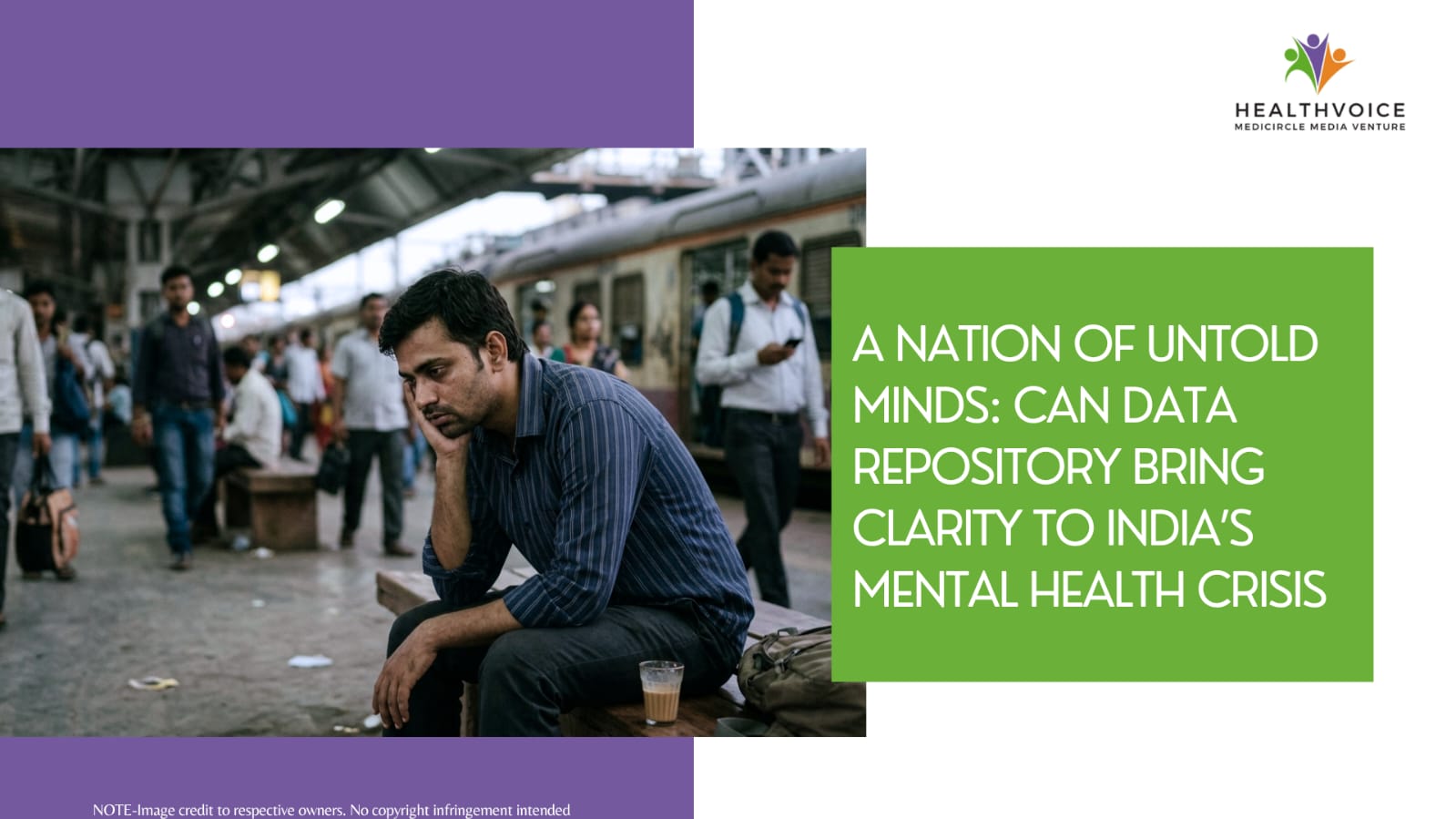
Mental illness in India has lived in two parallel worlds. One is visible yet misunderstood where patients moving from clinic to clinic, often diagnosed late, treated inconsistently, and judged harshly by society. The other is invisible is hidden within families, buried under stigma, or dismissed as weakness rather than disease. Between these two worlds lies a deep gap in understanding that even experienced doctors have struggled to bridge. It is in this space that a new development steps in, carrying the weight of both scientific ambition and public hope.
India’s first structured repository of brain data focused on major psychiatric disorders marks a turning point that may not immediately make headlines but could reshape how mental health is studied, diagnosed, and treated in the country. Built over years of patient data collection and research collaboration, this initiative attempts something that Indian psychiatry has long lacked i.e. a comprehensive, data-driven foundation that reflects the diversity, complexity, and lived realities of Indian patients.
Mental health in India has always presented a unique challenge. Unlike many physical illnesses, psychiatric disorders rarely offer clear biological markers that can guide diagnosis with certainty. A clinician often relies on behavioural patterns, patient history, and symptom clusters. While this approach has served psychiatry for decades, it also leaves room for ambiguity, delayed intervention, and, at times, misdiagnosis. For doctors on the frontlines, this uncertainty directly impacts patient outcomes.
The initiative reflects a joint effort by researchers at the Rohini Nilekani Centre for Brain and Mind, a collaboration between the National Institute of Mental Health and Neurosciences and the National Centre for Biological Sciences. Recently launched in Bengaluru, CALM-Brain marks an important step in India’s attempt to systematically collect and organise clinical and biological data related to major mental health conditions. Designed by neuroscientists, the platform serves as a digital repository that captures detailed information on brain structure and function across a wide spectrum of psychiatric disorders, creating a foundation for deeper research and more informed clinical understanding.
The introduction of a large-scale brain data repository begins to address this challenge in a structured way. By collecting and analysing data across multiple dimensions including clinical observations, neuroimaging, genetic inputs, and behavioural patterns, it offers a more layered understanding of psychiatric disorders. This is particularly relevant in conditions like schizophrenia, bipolar disorder, obsessive compulsive disorder, dementia, and addiction, where symptoms can overlap, evolve over time, and vary widely across individuals.
What makes this initiative stand apart is not just the scale of data but the way it has been designed. Instead of looking at isolated individuals, the repository includes family-based data, allowing researchers to explore patterns that run across generations. This approach opens new doors in understanding hereditary risk, early indicators, and potential preventive strategies. For clinicians, such insights could eventually translate into earlier diagnosis and more tailored treatment plans.
At present, psychiatric practice in India often follows a trial-and-error model when it comes to medication and therapy. A patient may be prescribed a drug, monitored for response, and then shifted to another if improvement is limited. While this method is widely accepted, it can be time-consuming and emotionally exhausting for patients and their families. The promise of a data-backed system lies in reducing this uncertainty. If patterns in brain structure or genetic markers can predict how a patient might respond to a particular treatment, the entire approach to mental healthcare could become more precise.
Still it would be overly simplistic to view this development as a quick solution to India’s mental health crisis. The reality is far more layered. While data repositories can accelerate research and improve clinical insights, their impact depends heavily on how effectively the findings are translated into everyday medical practice. In a country where access to mental healthcare remains uneven, especially outside urban centres, the benefits of advanced research often take time to reach those who need them most.
There is also the question of scale. India’s population is vast, and mental health disorders are far more widespread than reported. Even a repository with thousands of participants represents only a fraction of the larger picture. For this initiative to truly influence national mental health outcomes, it will need sustained expansion, continuous funding, and active participation from multiple institutions across the country.
Despite these limitations, the significance of this development cannot be understated. One of the persistent criticisms of global psychiatric research has been its heavy reliance on data from Western populations. Cultural, genetic, and environmental differences mean that findings from Europe or North America do not always translate seamlessly to Indian patients. This gap has long been acknowledged but rarely addressed at scale. By focusing on Indian data, this repository begins to correct that imbalance, offering insights that are more relevant to local clinical practice.
A psychiatrist in India often deals with patients whose social contexts differ significantly from those described in global textbooks. Family structures, societal pressures, and cultural beliefs all influence how mental illness presents and how patients respond to treatment. A data system rooted in the Indian context can help bridge this disconnect, making diagnosis and treatment more aligned with real-world scenarios.
The inclusion of biological samples, including stem cell data, adds another layer of depth to this initiative. It allows researchers to move beyond observation and into the realm of understanding disease mechanisms at a cellular level. This could eventually lead to breakthroughs in identifying the origins of severe mental illnesses, something that has remained elusive despite decades of research. For clinicians, such advancements may seem distant, but they form the foundation of future therapies that could be more targeted and effective.
However, alongside optimism, there are valid concerns that need careful consideration. Data privacy remains a critical issue, especially when dealing with sensitive health information. Psychiatric data carries an additional layer of vulnerability, as it can impact not just medical records but also social and professional identity. Ensuring that this information is stored, accessed, and used responsibly is essential to maintaining patient trust.
There is also the challenge of interpretation. Large datasets can reveal patterns, but patterns do not always translate into clear clinical decisions. The risk lies in over-reliance on data without adequate clinical judgement. Psychiatry, by its very nature, requires a human touch, an understanding of patient narratives that cannot be fully captured through numbers and scans. The future of mental healthcare will depend on how well these two approaches i.e. data-driven insights and clinical experience are integrated.
Another dimension worth reflecting on is the broader narrative around mental health in India. Initiatives like this signal a shift from reactive care to proactive understanding. Instead of focusing solely on treatment after symptoms appear, there is a growing emphasis on identifying risk factors, predicting disease progression, and exploring preventive strategies. This aligns with global trends in healthcare but carries particular significance in a country where mental illness often goes undiagnosed for years.
The economic significance are equally important. Mental health disorders contribute significantly to loss of productivity, increased healthcare costs, and long-term disability. Investing in research that improves early diagnosis and effective treatment is not just a medical priority but also an economic necessity. A more efficient mental healthcare system can reduce the burden on families, workplaces, and the healthcare infrastructure as a whole.
For doctors and healthcare professionals, this development raises important questions about the future of their practice. Will data-driven psychiatry change how diagnoses are made? Will treatment protocols become more standardised or more personalised? How will medical education adapt to incorporate these new tools and insights? These are not immediate concerns, but they are inevitable ones.
At the same time, it is important to recognise that technology and data, while powerful, cannot replace the foundational aspects of care. Empathy, communication, and patient trust remain central to effective treatment. A repository can provide insights, but it cannot sit across from a patient and understand their fears, their struggles, and their lived experiences. The role of the clinician, therefore, becomes even more critical in interpreting data within the context of individual patient journeys.
What this initiative ultimately represents is a shift in mindset. It reflects a willingness to invest in long-term solutions rather than short-term fixes. It acknowledges that mental health is complex, requiring collaboration across disciplines from neuroscience and genetics to clinical psychiatry and public health. It also signals a move towards recognising mental illness as a biological condition that deserves the same level of scientific attention as any other disease.
For a country like India, where mental health has often been sidelined, this is a meaningful step forward. It may not immediately change how patients are treated in every clinic, but it sets the stage for a future where mental healthcare is more informed, more precise, and more compassionate.
The road ahead will require sustained effort. Expanding the dataset, ensuring ethical governance, translating research into practice, and improving access to care are all challenges that lie ahead. But progress in healthcare has always been incremental, built on initiatives that may seem modest at first but grow in impact over time.
The success of this initiative will not be measured solely by the data it collects but by the difference it makes in the lives of those who have long remained unheard. If it can bring clarity where there was confusion, offer direction where there was uncertainty, and restore dignity where there was stigma, it will have achieved far more than its creators may have initially imagined.
 Team Healthvoice
#MentalHealthIndia #BrainResearch #healthvoice