Cyber Recovery Plans in Healthcare: Why They Matter
Cyber recovery plans are as critical as prevention in Indian healthcare. Hospitals must build resilient frameworks to restore operations, protect patient data, and ensure uninterrupted care after cyberattacks.
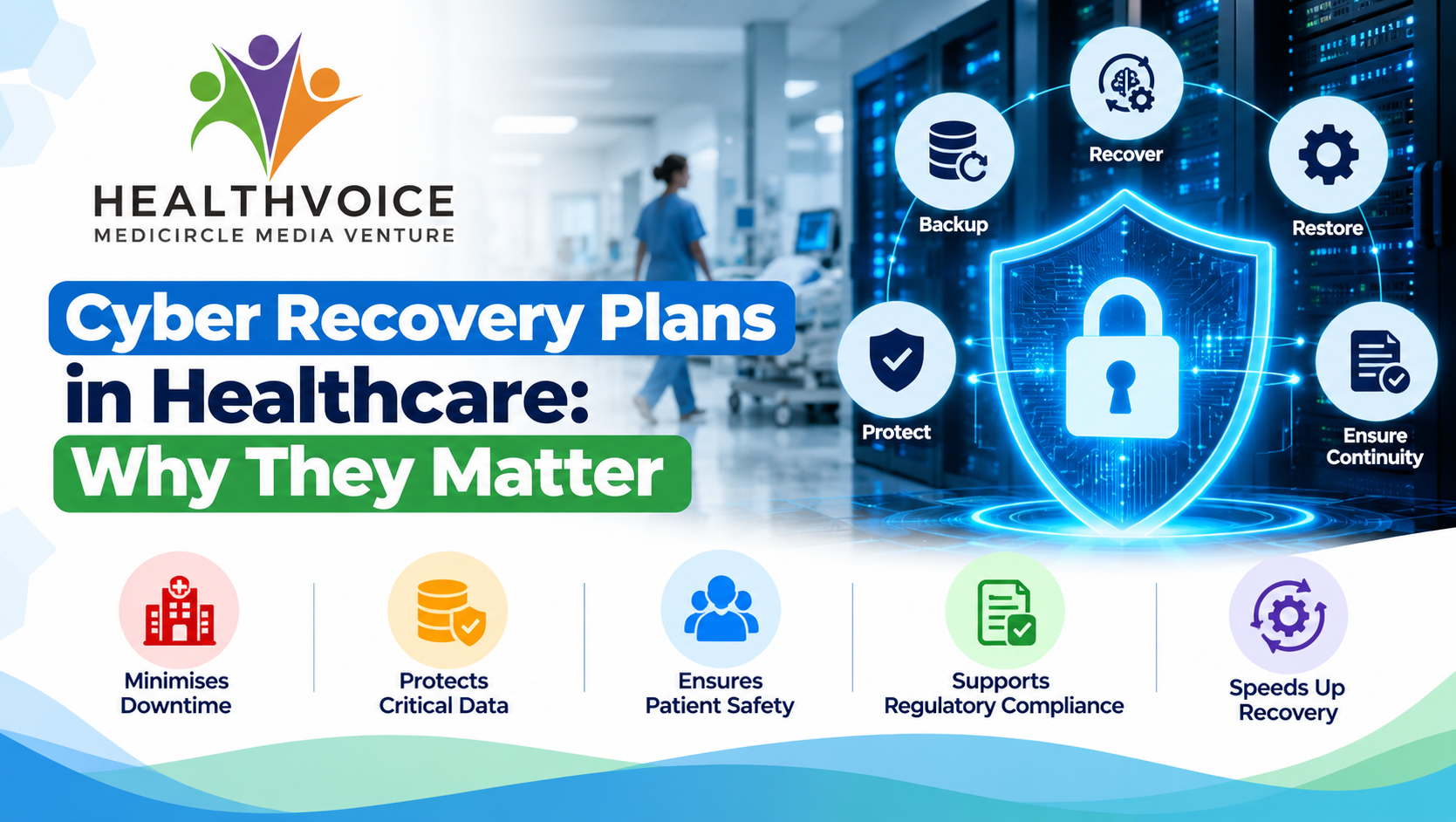
Why Cyber Recovery Plans Matter as Much as Cyber Prevention in Healthcare
Introduction
The healthcare sector in India is undergoing a rapid and transformative shift toward digital systems. Electronic health records, telemedicine platforms, hospital management software, diagnostic imaging systems, and patient portals have become core infrastructure for modern medical institutions. This digital expansion has brought enormous benefits, but it has also created serious vulnerabilities that bad actors are increasingly exploiting.
Cybersecurity conversations in healthcare tend to focus heavily on prevention: installing firewalls, deploying antivirus software, conducting staff training, and monitoring network traffic. Prevention is essential, and no responsible healthcare institution should ignore it. However, there is a critical dimension of cybersecurity that receives far less attention in India, and that is cyber recovery.
A cyber recovery plan answers one fundamental question: what happens after an attack gets through? For Indian hospitals, clinics, and medical institutions, the absence of a meaningful answer to that question is not just a technical oversight. It is a patient safety risk, a regulatory liability, and a threat to institutional credibility. The medical community needs to engage with cyber recovery with the same seriousness it brings to disease prevention.
Understanding Cyber Recovery and Why Prevention Alone Is Not Sufficient
Cyber prevention refers to the collection of technologies, policies, and practices designed to stop attacks before they breach a system. Firewalls, multi-factor authentication, encrypted communications, and employee awareness programs all serve this purpose. They are the first and most visible layer of any cybersecurity strategy.
Cyber recovery, by contrast, is what follows a successful breach. It encompasses the processes, tools, personnel, and protocols that allow an organization to restore its systems, recover its data, and resume normal operations after a cyberattack has occurred. The distinction matters enormously because no prevention strategy is perfect.
Globally, the healthcare sector is among the most targeted industries for cybercrime. In India, the situation is no different. According to reports from the Indian Computer Emergency Response Team (CERT-In), healthcare institutions have seen a consistent rise in ransomware attacks, phishing incidents, and data theft attempts. The 2022 cyberattack on the All India Institute of Medical Sciences (AIIMS) in New Delhi, which disrupted critical systems for weeks, demonstrated clearly that even prestigious and resource-rich institutions can be compromised.
When prevention fails and an attack succeeds, the real question becomes: how quickly and how completely can the institution recover? Without a structured cyber recovery plan, the answer is often: slowly, painfully, and with significant long-term damage.
The Real Costs of Poor Cyber Recovery in Healthcare
The consequences of a cyberattack on a healthcare institution are uniquely severe compared to other industries. When a retail company loses data, customers face inconvenience. When a hospital loses access to its systems, patients may face genuine harm.
Consider the operational impact. Electronic health records become inaccessible. Doctors cannot retrieve medication histories or allergy information. Laboratory reports are lost. Surgical schedules are disrupted. ICU monitoring systems may go offline. In a country where many hospitals now operate almost entirely on digital infrastructure, these are not hypothetical risks. They are documented consequences of real attacks.
Beyond the immediate clinical disruption, there are substantial financial and reputational costs. Recovering from a ransomware attack can cost hospitals millions of rupees in data restoration, system rebuilding, legal compliance, regulatory penalties, and public relations management. The Digital Personal Data Protection Act of 2023 in India imposes obligations on entities handling personal data, including health data. Institutions that cannot demonstrate adequate protective and recovery measures may face significant regulatory scrutiny.
The reputational damage is equally serious. Patients and healthcare communities place immense trust in medical institutions. A breach that exposes sensitive patient information, including diagnoses, prescriptions, billing records, and personal identifiers, can erode that trust permanently. For a platform like HealthVoice, which is committed to amplifying doctor credibility and institutional reputation, this is a topic that deserves consistent professional attention.
Key Components of a Healthcare Cyber Recovery Plan
A well-designed cyber recovery plan for a healthcare institution is not a single document stored on a server. It is a living operational framework that must be tested, updated, and embedded into institutional culture. The essential components include the following:
Data Backup Architecture
Healthcare institutions must maintain regular, encrypted, and geographically distributed backups of all critical data. These backups should be tested periodically to confirm that data can be restored accurately and within acceptable timeframes. Air-gapped backups, which are not connected to the main network, provide additional protection against ransomware that can otherwise encrypt backup files along with primary data.
Incident Response Protocols
Every institution needs a clear incident response plan that defines who does what the moment a breach is detected. This includes the roles of IT teams, clinical leadership, legal advisors, communications staff, and external cybersecurity experts. Time wasted during the initial hours of an attack often determines how severe the long-term damage becomes.
Recovery Time and Recovery Point Objectives
Healthcare institutions should define their Recovery Time Objective (RTO), meaning the maximum acceptable time for systems to be restored, and their Recovery Point Objective (RPO), meaning the maximum acceptable amount of data loss measured in time. For critical care environments, these thresholds must be extremely tight. For some systems, even a few hours of data loss is clinically unacceptable.
Staff Communication and Patient Continuity Plans
A cyberattack affects not just technology but people. Staff need to know how to continue providing care when digital systems are unavailable. Hospitals should have paper-based contingency protocols for essential clinical activities and clear internal communication channels that do not rely on compromised systems.
Post-Incident Review and Regulatory Reporting
After recovery, institutions must conduct thorough post-incident analyses to understand how the breach occurred, what was compromised, what was recovered, and how future incidents can be prevented or mitigated. In India, CERT-In mandates that certain cyber incidents be reported within six hours of detection. Healthcare institutions must be familiar with these requirements and prepared to comply promptly.
The Indian Healthcare Context and Unique Recovery Challenges
India's healthcare ecosystem presents specific challenges that make cyber recovery planning both more complex and more urgent.
The adoption of the Ayushman Bharat Digital Mission (ABDM) has accelerated the creation of digital health IDs, linked health records, and interconnected health data systems across the country. While ABDM represents a significant step toward an inclusive digital health infrastructure, it also means that a breach at one node of the system can potentially have cascading consequences for patients across multiple institutions and states.
Public hospitals in Tier 2 and Tier 3 cities frequently operate with limited IT budgets, minimal dedicated cybersecurity staff, and aging hardware and software. These institutions are often more vulnerable to attack and less prepared for recovery than their counterparts in metropolitan areas. The contrast between the cybersecurity posture of a large private hospital in Mumbai or Bengaluru and a district government hospital in a smaller town can be stark.
Private healthcare chains and corporate hospitals in India are investing more heavily in cybersecurity infrastructure, but recovery planning still tends to lag behind prevention investment. Many institutions have firewalls and monitoring systems in place but have never conducted a full recovery simulation, also known as a tabletop exercise or disaster recovery drill, to test whether their recovery procedures actually work under realistic conditions.
The shortage of trained cybersecurity professionals with healthcare-specific expertise compounds the problem. Building cyber recovery capacity in Indian healthcare will require investment in training, certification, and institutional knowledge building, not just technology procurement.
Prevention and Recovery as a Unified Security Strategy
The most effective healthcare cybersecurity frameworks treat prevention and recovery not as separate concerns but as two complementary pillars of a single integrated strategy. This approach, sometimes called cyber resilience, reflects a mature understanding of the threat landscape.
Cyber resilience acknowledges that determined and sophisticated attackers will eventually find a way in. It does not accept this passively but insists that organizations prepare equally for both outcomes: stopping attacks and recovering from them. The goal is not to achieve perfect prevention, which is impossible, but to ensure that any breach results in the minimum possible harm to patients, staff, and institutional operations.
For Indian healthcare leaders, doctors, hospital administrators, and medical associations, adopting a cyber resilience mindset means broadening the conversation. When budget discussions arise, recovery infrastructure deserves the same priority as prevention tools. When policies are written, recovery protocols deserve the same attention as access controls. When staff are trained, recovery procedures deserve the same emphasis as phishing awareness.
Platforms and communities like HealthVoice have an important role to play in elevating this conversation within the medical community. When doctors and healthcare leaders understand why cyber recovery matters, they are better positioned to advocate for institutional investment, support regulatory compliance, and champion responsible data stewardship.
Conclusion
Cyber prevention is not negotiable. Indian healthcare institutions must invest in strong protective measures and continue to educate their staff about cybersecurity risks. But prevention alone will never be enough. Attackers are sophisticated, persistent, and well-resourced. Breaches will happen.
The institutions that navigate cyberattacks successfully are those that have prepared not just for the fight but for the recovery. A robust cyber recovery plan protects patients, preserves institutional integrity, satisfies regulatory obligations, and restores operations with minimal disruption. For India's growing digital health ecosystem, making cyber recovery as central to institutional planning as cyber prevention is not optional. It is a professional and ethical obligation.
Frequently Asked Questions
Q1: What is a cyber recovery plan in healthcare?
A cyber recovery plan in healthcare is a structured framework that outlines how a hospital or medical institution will restore its operations, data, and services after a cyberattack or digital disruption has taken place. It defines roles, timelines, backup procedures, and communication protocols.
Q2: Why is cyber recovery important for Indian hospitals?
Indian hospitals manage increasingly large volumes of sensitive patient data on digital platforms. As cyberattacks grow more frequent and sophisticated, the absence of a recovery plan can result in prolonged disruption of patient care, significant financial losses, regulatory penalties under India's data protection laws, and lasting damage to institutional reputation.
Q3: How is cyber recovery different from cyber prevention?
Cyber prevention focuses on stopping attacks before they breach a system, using tools such as firewalls, multi-factor authentication, and staff training. Cyber recovery focuses on restoring systems, data, and operations after an attack has already occurred. Both are essential and should be treated as equally important components of a unified cybersecurity strategy.
Q4: What are the key components of a healthcare cyber recovery plan?
The key components include encrypted and regularly tested data backups, a clearly defined incident response protocol, designated recovery teams, recovery time and recovery point objectives, staff continuity procedures for when digital systems are unavailable, and a post-incident review process aligned with regulatory reporting requirements such as those set by CERT-In.
Q5: Which Indian regulatory frameworks guide healthcare cybersecurity?
The Digital Personal Data Protection Act of 2023 establishes obligations for entities handling personal data including health information. CERT-In mandates timely incident reporting. The Ayushman Bharat Digital Mission (ABDM) provides cybersecurity guidelines for participants in India's digital health ecosystem. Healthcare institutions should ensure their recovery plans are fully aligned with all applicable frameworks.
Resources
- Indian Computer Emergency Response Team (CERT-In): Official national agency for cybersecurity guidance, incident reporting, and security advisories in India.
- Ministry of Health and Family Welfare, Government of India: Policy documentation, digital health initiatives, and regulatory guidance relevant to healthcare institutions.
- Ayushman Bharat Digital Mission (ABDM): Framework documentation on data governance, cybersecurity standards, and digital health infrastructure for Indian healthcare participants.
- Digital Personal Data Protection Act 2023, Government of India: Legislative framework governing personal data protection and obligations for healthcare data handlers across India.
- All India Institute of Medical Sciences (AIIMS): Institutional resource for understanding the documented impact of cyberattacks on large Indian public healthcare institutions.
Interlinking Keywords
cyber recovery plan healthcare India, cybersecurity in Indian hospitals, medical data protection, healthcare data breach response, ABDM digital health security, hospital IT security, patient data privacy India, digital health infrastructure risks, CERT-In healthcare compliance, cyber resilience in healthcare
Last reviewed by:
Dr. Manthan Tripathi, HealthVoice Editorial and Medical Advisory Team, October 27, 2026.
Disclaimer
This article is intended for informational and educational purposes only. It does not constitute legal, regulatory, or technical cybersecurity advice. Healthcare institutions are advised to consult qualified cybersecurity professionals, legal advisors, and regulatory compliance experts before implementing any cybersecurity or data protection strategy. The information provided reflects general best practices and publicly available regulatory frameworks applicable to Indian healthcare institutions at the time of publication.
 Dr. Manthan Tripathi
#HealthcareCyberRecovery #HospitalCybersecurity