Medical Student Leadership: Why It Matters Beyond the Resume
Medical student leadership in India shapes not just careers but communities. Beyond resumes, it builds empathy, professional networks, and healthcare leaders that India's evolving system genuinely needs.
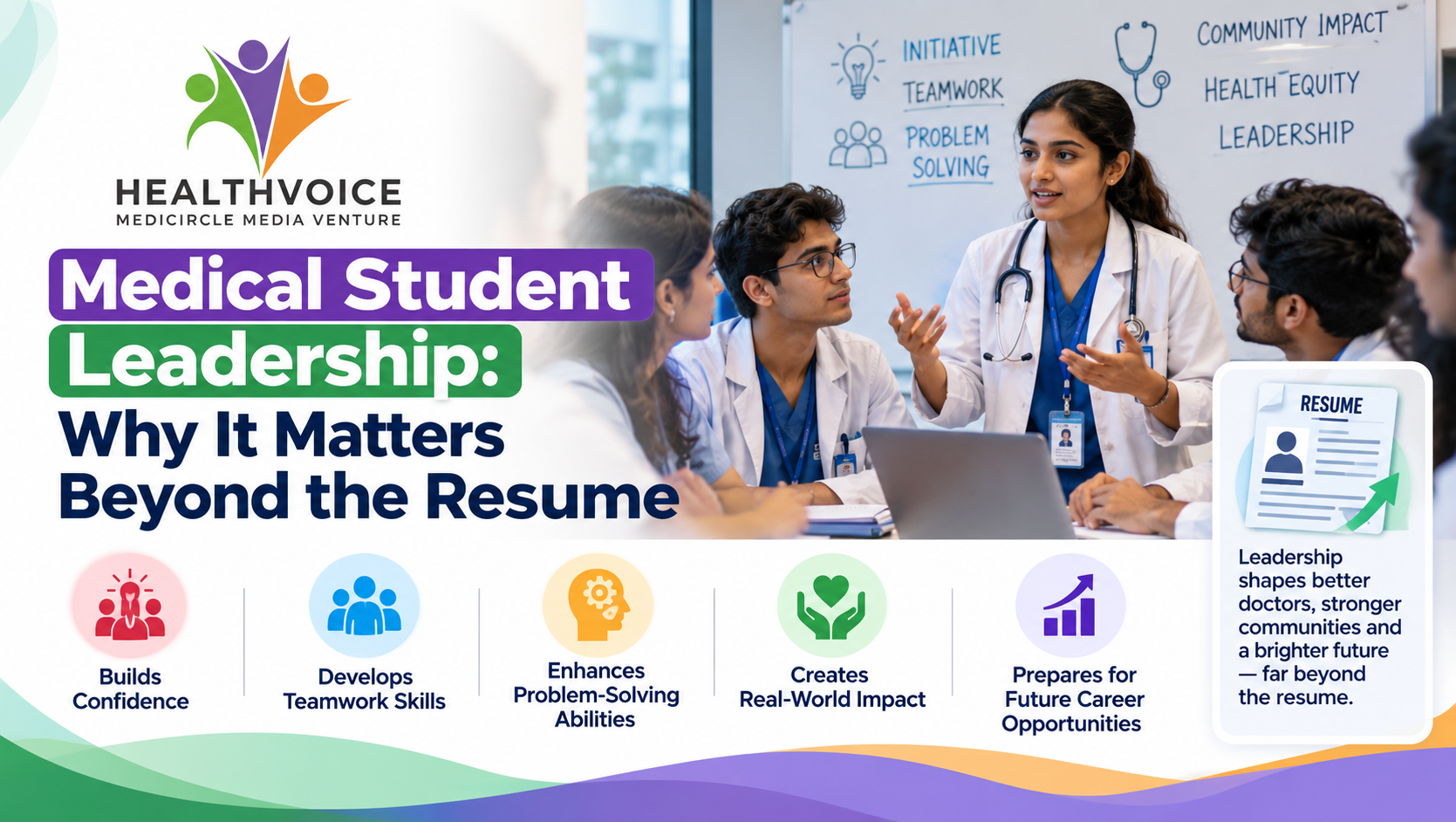
Medical Student Leadership: Why It Matters Beyond the Resume
Introduction
Medical education in India is one of the most demanding academic journeys a young person can undertake. The path from the first year of MBBS to residency and beyond is marked by long hours, intense study, clinical rotations, and an enormous volume of knowledge to absorb. Within this demanding environment, the concept of student leadership often gets reduced to a line on a curriculum vitae, an office held in a college committee, or a certificate received at an annual function.
That understanding is far too narrow. Medical student leadership, when practiced with genuine intent, becomes a formative experience that shapes the kind of doctor a person becomes. It influences how a physician communicates with patients, how a senior resident guides junior colleagues, how a consultant navigates institutional politics, and how a healthcare professional eventually contributes to the larger medical community.
India's healthcare landscape needs doctors who are not only clinically skilled but also capable of leading, communicating, collaborating, and advocating. The nearly 1.5 million registered doctors in India, as recorded by the National Medical Commission, serve a population of over 1.4 billion people with vastly different healthcare needs, languages, cultural contexts, and resource levels. This reality demands that medical education go beyond producing technically proficient graduates and begin cultivating leaders who can drive meaningful change across communities, institutions, and systems.
What Medical Student Leadership Actually Means
Leadership in a medical college context is frequently misunderstood. Many students associate it exclusively with formal positions such as student union president, hostel representative, or cultural committee head. While these roles carry value, true medical student leadership extends into every space where a student chooses to take ownership, initiative, and responsibility.
A student who organizes a health camp in a rural village near their college is exercising leadership. A student who advocates for better mental health support within their institution is exercising leadership. A student who mentors a struggling batchmate through a difficult posting is exercising leadership. The thread connecting all of these acts is not position or authority but rather a sense of ownership over outcomes that extend beyond personal academic performance.
In the Indian medical education system, which is regulated by the National Medical Commission and spans government medical colleges, deemed universities, and private institutions, student leadership takes many forms. Medical associations at the national and state level, such as the Indian Medical Association Juniors and the Medical Students Association of India, provide structured platforms for young doctors to connect, contribute, and develop professionally. These associations expose students to advocacy, peer learning, conference organization, public health campaigns, and inter-institutional collaboration.
Why Leadership Skills Are Essential for Future Doctors
Clinical excellence will always remain the foundation of good medical practice. However, the ability to lead becomes critical as a doctor progresses through their career. Leadership is not a destination that arrives with a senior position. It is a capacity that develops over years of practiced behavior, beginning ideally in medical college itself.
Several specific reasons explain why leadership during medical education matters deeply:
- Doctors who develop communication and team-building skills early become more effective collaborators in multidisciplinary clinical settings.
- Students who engage in community outreach programs during college carry a stronger orientation toward preventive medicine and public health into their careers.
- Young doctors who participate in institutional governance understand how healthcare systems function from the inside, making them better equipped to advocate for change later.
- Medical students involved in research leadership during college are significantly more likely to contribute to academic medicine and evidence-based practice as professionals.
India's healthcare system faces a serious shortage of healthcare leaders. The country needs not just more doctors but doctors who are willing to step into administrative, public health, policy, and community health roles. The foundation for that willingness is built during medical education through early exposure to leadership experiences.
Leadership and the Indian Medical Education System
The National Medical Commission's revised competency-based medical education curriculum, introduced progressively across Indian medical colleges, acknowledges the importance of non-clinical competencies. Attitude, ethics, communication, and professionalism form a dedicated module within the current MBBS curriculum. This recognition is significant because it formally validates that qualities beyond knowledge and clinical skill are integral to becoming a complete doctor.
However, the implementation of these values varies considerably across institutions. In government medical colleges in states like Tamil Nadu, Maharashtra, Kerala, and West Bengal, student bodies and alumni networks often maintain strong traditions of community engagement. In newer private institutions, these structures are sometimes less developed.
This is where medical associations, alumni networks, inter-college networks, and platforms focused on the medical community play a genuinely important role. Platforms such as HealthVoice, designed specifically to amplify the voices of doctors, associations, and healthcare communities, create spaces where young medical professionals can connect with senior physicians, participate in meaningful conversations, and begin building a professional identity rooted in more than their examination results.
How Leadership Experience Shapes Career Trajectories
The impact of leadership experience during medical college on long-term career outcomes is considerable. Research in medical education consistently shows that students who participate in leadership programs, community service, and association activities during their training demonstrate higher levels of empathy, resilience, and professional satisfaction later in their careers.
In India, where the gap between urban and rural healthcare access remains a persistent challenge, doctors who developed an orientation toward service and community health early in their training are more likely to practice in underserved areas, contribute to national health programs such as Ayushman Bharat and the Ayushman Arogya Mandir initiative, and take on roles in public health administration.
Leadership during medical college also builds professional networks that carry lifelong value. A student who served as the organizing secretary for an inter-college conference in Pune or Chennai does not only gain event management skills. They build relationships with faculty, clinicians, association leaders, and peers across institutions that may influence mentorship, research collaboration, fellowship opportunities, and career guidance for years ahead.
The Indian medical ecosystem depends heavily on trust networks, and those networks begin forming long before a doctor receives their degree. Medical student leadership accelerates the process of becoming a known, trusted, and contributing member of the professional community.
The Role of Associations and Platforms in Nurturing Young Leaders
Medical associations in India have historically been one of the most important structures for professional development outside the formal curriculum. National bodies like the Indian Medical Association, specialty-specific bodies, state-level associations, and student wings collectively provide platforms for advocacy, continuing medical education, professional networking, and community engagement.
What has changed significantly in recent years is the digital dimension of these associations and communities. Social media, digital platforms, and online professional communities now allow a medical student in Patna or Bhopal to connect with a senior oncologist in Mumbai or a public health expert at AIIMS Delhi. This connectivity has opened leadership opportunities to students who may not attend elite institutions or live in major metropolitan areas.
Platforms dedicated to the healthcare professional community, such as HealthVoice, contribute to this democratization of leadership visibility. When a medical student publishes a well-researched opinion piece, shares a community health initiative, or participates in a professional discussion on such platforms, they are not just gaining digital visibility. They are building a professional voice that begins to establish credibility and expertise long before formal career milestones create those opportunities organically.
Developing Leadership Skills During MBBS: Practical Approaches
Medical students across India who wish to develop genuine leadership capacity do not need to wait for a formal opportunity or a prestigious committee position. Leadership can be cultivated through deliberate daily choices:
- Volunteering actively with National Service Scheme units in medical colleges, which organize health camps, blood donation drives, and community awareness programs.
- Participating in the Indian chapter of global medical student associations such as the International Federation of Medical Students Associations.
- Contributing to college medical journals, newsletters, or online platforms as a writer, editor, or content contributor.
- Mentoring junior batchmates, particularly those who are struggling with clinical postings or examination pressure.
- Engaging with public health campaigns organized by state governments or non-governmental organizations focused on malnutrition, tuberculosis, maternal health, or non-communicable disease prevention.
Each of these activities develops a different facet of leadership. Communication, empathy, organizational skill, public speaking, strategic thinking, and resilience are all cultivated through these experiences. They also generate real and meaningful contributions to communities and institutions, which is precisely what distinguishes authentic leadership from leadership pursued purely for the value of a line on a resume.
Leadership, Mental Health, and Professional Identity in Young Doctors
One dimension of medical student leadership that deserves greater attention in the Indian context is the relationship between leadership engagement and student well-being. Studies on medical student mental health in India and globally have consistently highlighted alarming rates of burnout, depression, anxiety, and academic stress among MBBS and postgraduate students.
Students who feel a sense of purpose and community belonging are significantly more resilient in the face of academic and professional stress. Leadership engagement, when it is genuinely meaningful and not simply an added burden, contributes to that sense of purpose. A student who feels that their work in a health camp genuinely helped a community, or that their efforts in organizing a peer support group made a difference to a batchmate, develops a professional identity grounded in contribution and impact.
This professional identity is foundational to long-term physician well-being. Doctors who enter practice with a clear sense of their values, their community, and their role beyond the clinical room are better equipped to navigate the ethical, institutional, and personal challenges that every medical career inevitably presents.
Conclusion
Medical student leadership in India is not about acquiring titles or building an impressive academic portfolio. At its core, it is about developing the human, professional, and civic qualities that allow a doctor to serve not just individual patients but the larger healthcare ecosystem that those patients depend on. Leadership experience during medical education shapes communication, builds community, fosters empathy, and creates professional networks that sustain a physician throughout their career.
As India continues to expand its healthcare infrastructure, implement ambitious programs like Ayushman Bharat, and work toward universal health coverage, the country needs a generation of doctors who are ready to lead. Those doctors are not formed overnight. They are shaped through years of deliberate engagement, mentorship, community service, and professional participation that begins during medical college.
Communities, associations, and platforms that support and amplify the voices of young medical leaders play a critical role in this process. Every article published, every discussion hosted, and every student recognized for community contribution becomes a small but meaningful step toward building the healthcare leadership India needs.
Frequently Asked Questions
Q1: Why is leadership important for medical students in India?
Leadership helps medical students develop communication, empathy, and teamwork skills that are essential in clinical practice. It also prepares them for roles in public health, medical administration, and community healthcare, which India urgently needs more professionals to fill.
Q2: How can an MBBS student develop leadership skills in India?
MBBS students can develop leadership skills by volunteering with NSS units, joining medical student associations, participating in community health camps, writing for medical publications, mentoring junior batchmates, and engaging with healthcare platforms that support professional development.
Q3: Do Indian medical colleges formally support student leadership?
The National Medical Commission's competency-based medical education curriculum includes modules on attitude, ethics, communication, and professionalism, which formally recognize the importance of non-clinical skills. However, the extent of practical support varies significantly across institutions.
Q4: How do medical associations in India help young doctors build leadership skills?
Medical associations such as the Indian Medical Association and its junior wings, specialty bodies, and state-level associations provide structured platforms for advocacy, conference participation, peer learning, community outreach, and professional networking, all of which contribute to leadership development.
Q5: Is medical student leadership only relevant for those who want to go into administration?
Medical student leadership is relevant for every doctor, regardless of their eventual specialty or career path. The skills developed through leadership experiences, including communication, collaboration, resilience, and community orientation, strengthen clinical practice, research, teaching, and every other dimension of a medical career.
Resources
- National Medical Commission (NMC): The official regulatory body for medical education in India, providing guidelines on competency-based medical education and professional standards for MBBS programs.
- Indian Medical Association (IMA): India's largest voluntary organization of medical practitioners, offering platforms for professional development, advocacy, and community engagement for doctors and medical students.
- World Health Organization (WHO) India Country Office: Provides research, data, and policy guidance on healthcare workforce development, medical education reform, and leadership in health systems across India.
- International Federation of Medical Students Associations (IFMSA): A global network connecting medical students across countries, offering leadership programs, exchange opportunities, and platforms for student advocacy in health policy.
- PubMed (National Library of Medicine): A trusted database of peer-reviewed medical research, including studies on medical student leadership, physician burnout, competency-based education, and healthcare workforce development.
Interlinking Keywords
medical student leadership India, young doctors professional development, leadership in MBBS education, medical associations India, doctor community platform India, competency-based medical education NMC, healthcare leadership development, MBBS student skills beyond academics, Indian medical associations for students, doctor professional identity
Last reviewed by:
Dr. Manthan Tripathi, HealthVoice Editorial and Medical Advisory Team, October 27, 2026.
Disclaimer
This article is intended for informational and educational purposes only. It does not constitute medical advice, clinical guidance, or a substitute for professional medical consultation. Readers seeking medical guidance should consult a qualified and registered medical professional. HealthVoice publishes content to support professional awareness, medical education, and healthcare community engagement and does not endorse any specific institution, program, or organization mentioned in this article.
 Dr. Manthan Tripathi
#MedicalStudentLeadership #FutureHealthcareLeaders