Degrees Delayed, Careers on Hold: The Crisis Facing Thousands of CPS-Trained Doctors in India
As discussions continue among regulatory authorities, courts, and government agencies, the hope within the medical community is that a balanced solution will emerge that respects the principles of quality and accountability.
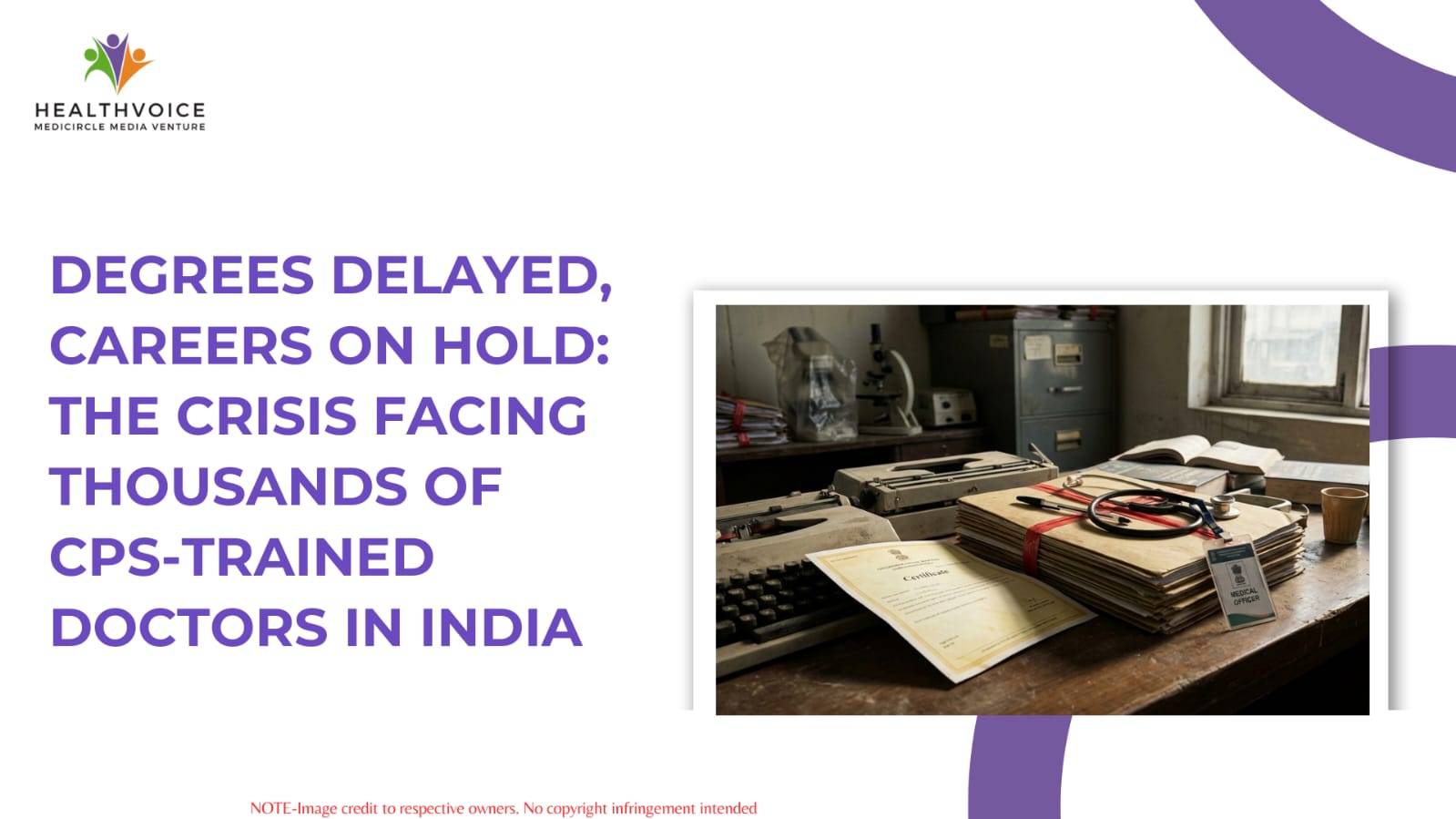
Across Maharashtra and several other parts of India, more than two thousand postgraduate medical doctors who completed their training through the College of Physicians and Surgeons in Mumbai find themselves trapped in a prolonged state of uncertainty. Their training is finished, their hospital duties completed, their academic journey almost over yet the one milestone that formally allows them to step into the role of specialists remains out of reach. The reason is a long delay in the conduct of final examinations that would grant them the qualifications they have worked for over several years.
Earlier this month, a large number of these doctors gathered at Azad Maidan in Mumbai to express their concerns in a peaceful manner. For many observers within the medical fraternity, the scene was unusual and unsettling. Doctors, who usually dedicate their time to wards, clinics, and operating rooms, were standing in a public square holding placards and requesting that authorities resolve an administrative and regulatory stalemate. Their message was simple. They have completed their postgraduate medical training and hospital postings, still they remain unable to receive their specialist certification because the final examinations have not been held for over a year.
The story behind this crisis is complex and reflects the changing regulatory environment in India’s medical education system. The programmes in question were conducted under the College of Physicians and Surgeons, an institution that for decades has offered postgraduate diplomas in several medical specialties. Many doctors who were unable to secure seats in traditional MD or MS programmes had chosen CPS diplomas as a practical pathway to advanced medical training. These courses were especially popular among young doctors seeking specialisation in fields such as obstetrics, paediatrics, anaesthesia, and orthopaedics.
However, the regulatory landscape changed dramatically when the recognition of these programmes came under scrutiny. In recent years, the authorities responsible for maintaining standards in medical education began examining whether certain courses complied with national regulations. Eventually, decisions were taken that resulted in the withdrawal of recognition for several postgraduate diploma programmes offered through CPS.
Despite this regulatory shift, there was an important assurance made to students who had already been admitted before these decisions were implemented. Many of them had secured their seats through the national postgraduate entrance examination and had begun their training with the understanding that they would be allowed to complete their courses. That assurance provided a sense of stability at the time. Young doctors continued their studies, worked in hospitals, attended clinical rounds, and prepared for the final stage of their academic journey.
Today, however, that expectation remains unfulfilled for many. A large group of these doctors completed their two-year training programmes and are now waiting for the final examination that would formally certify their specialist skills. Months have turned into more than a year, and the delay has created serious professional and emotional stress.
For doctors in training, time carries enormous significance. Each year spent waiting for a qualification can influence career decisions, financial stability, and personal life plans. Many of these doctors are already working in healthcare settings while waiting for the exam opportunity, contributing to patient care in hospitals and clinics. Yet without their formal postgraduate certification, their professional growth remains restricted.
Within India’s healthcare system, postgraduate medical education plays a critical role in strengthening specialised medical services. Fields such as emergency medicine, anaesthesia, paediatrics, and internal medicine rely heavily on trained specialists who can manage complex cases. Every delay in producing qualified specialists ultimately affects the broader healthcare delivery system.
The irony of the present situation is difficult to ignore. India frequently debates the shortage of specialist doctors, particularly in district hospitals and rural healthcare facilities. Medical associations and public health experts have repeatedly emphasised the need to increase the number of trained specialists who can serve communities across the country. At the same time, thousands of doctors who have already undergone specialist training are unable to receive their qualifications due to regulatory and legal complications.
The young doctors affected by this issue often describe their experience as living in a professional limbo. They have completed their academic obligations and clinical duties, yet they remain neither students nor recognised specialists. Their training years continue to extend far beyond the originally planned duration.
Several of these doctors had entered their programmes during a period when the COVID-19 pandemic had already disrupted medical education across India. Entrance examinations were postponed, academic schedules were altered, and clinical training often occurred under extraordinary conditions. Many doctors spent their postgraduate years working on the front lines of pandemic response in hospitals, caring for patients during one of the most challenging periods in modern healthcare.
For them, the prolonged delay in completing their qualification adds another layer of frustration to an already demanding professional journey.
The regulatory concerns that triggered this situation are rooted in the responsibility of authorities to maintain high standards in medical education. In recent years, India has made significant reforms in its medical regulatory framework. New policies and oversight mechanisms aim to ensure that medical training programmes meet strict academic and clinical standards. These reforms are intended to protect patients, strengthen medical education, and align Indian medical qualifications with global expectations.
From the perspective of regulators, ensuring uniform quality in postgraduate medical training is essential. Institutions that offer medical degrees or diplomas must comply with clearly defined standards regarding faculty strength, hospital infrastructure, patient load, and academic curriculum. When institutions fail to meet these requirements, regulatory bodies may take steps to withdraw recognition.
Supporters of the regulatory action argue that maintaining strict oversight is necessary to protect the credibility of India’s medical education system. Medical qualifications carry enormous responsibility because they represent the skills and competence of doctors who will treat patients. Any compromise in educational standards could have serious consequences for patient safety.
Yet critics point out that regulatory reforms must be implemented with sensitivity towards students who have already invested years of study and training. Young doctors who joined these programmes did so based on the rules that existed at the time of their admission. Many of them had cleared national entrance examinations and followed the official counselling process conducted by government authorities.
When regulatory decisions are made after students have already begun their training, the consequences can be deeply disruptive. Doctors may find themselves caught between legal judgments, policy changes, and administrative procedures that are beyond their control.
The legal dimension of the issue has added further complexity. Court decisions regarding recognition of programmes and regulatory compliance have influenced how authorities respond to the situation. In some instances, courts have upheld the importance of maintaining strict academic standards. At the same time, they have acknowledged that the future of students already enrolled in these programmes must be considered carefully.
As the matter reached higher judicial forums, the central government and regulatory authorities were asked to explore possible solutions that would protect the interests of students while maintaining educational standards. Discussions have revolved around allowing affected doctors limited opportunities to complete their final examinations and obtain certification if they meet the required criteria.
These proposals have offered a ray of hope to many doctors waiting for clarity. However, the pace of implementation has remained slow, leaving thousands of professionals uncertain about their future.
The issue has also sparked broader discussions within the Indian medical community about the structure of postgraduate medical education. Over the years, alternative pathways such as diploma programmes have played an important role in producing specialists who serve in smaller towns and semi-urban regions. Many doctors trained through such programmes have gone on to build successful careers and provide valuable healthcare services to underserved populations.
At the same time, the healthcare sector is increasingly moving towards uniform postgraduate degrees such as MD, MS, and DNB, which follow nationally standardised training frameworks. Policymakers believe that strengthening these pathways will improve consistency in medical education and enhance the credibility of Indian medical qualifications internationally.
Balancing these two objectives of ensuring high academic standards while preserving opportunities for aspiring specialists, remains one of the most challenging aspects of medical education reform in India.
For the doctors currently affected by the CPS examination delay, the issue is far more personal than policy debates. Each of them represents a story of dedication, hard work, and years of medical training. Many have spent long nights in hospital wards, managed emergency cases, and supported senior consultants during surgeries and complex treatments.
Their expectation is not extraordinary. They simply wish to complete the final step of the educational journey they began several years ago.
The protests organised by these doctors have been peaceful and focused on constructive dialogue. Their primary demand is that the authorities conduct the pending examinations so that students who have completed their training can be assessed fairly. Once the examination process is completed, those who meet the academic requirements would be able to receive their qualifications and continue their medical careers as specialists.
Resolving this issue quickly could bring several benefits. Allowing trained doctors to complete their certification would immediately add hundreds of specialists to the healthcare workforce. Hospitals across the country, especially in smaller cities, are constantly searching for trained professionals in fields such as anaesthesia, paediatrics, and obstetrics.
The delay also raises broader questions about how regulatory transitions should be managed in the future. When new standards are introduced, there must be clear transition plans that protect students who are already enrolled in existing programmes. Transparent communication between regulators, educational institutions, and students can help prevent confusion and anxiety.
Medical education is one of the most demanding academic journeys a person can undertake. From undergraduate training to postgraduate specialisation, doctors spend nearly a decade preparing themselves for professional practice. Interruptions at the final stage of this journey can have long-lasting consequences for both individuals and the healthcare system.
As discussions continue among regulatory authorities, courts, and government agencies, the hope within the medical community is that a balanced solution will emerge that respects the principles of quality and accountability while also recognising the legitimate expectations of young doctors.
For the thousands of CPS-trained doctors waiting today, the issue represents more than an administrative delay. It is a defining moment in their professional lives. Their future careers, financial stability, and ability to serve patients depend on how this situation is resolved.
The voices from Azad Maidan reflect a simple yet powerful appeal to policymakers and regulators: allow trained doctors to complete their journey and contribute to the healthcare system they have prepared themselves to serve.
If the issue is resolved with foresight and fairness, it may eventually be remembered as a turning point that led to stronger policies for medical education and more transparent regulatory processes. Until then, thousands of young doctors continue to wait, holding on to the hope that the qualifications they worked so hard to achieve will finally become a reality.
 Team Healthvoice
#HealthcareCrisis #MedicalStudents #MedicalCommunity #HealthcareWorkers #FutureDoctors #FutureDoctors #MedicalTraining #HealthcareReform #DoctorsLife #HealthcareIndia #MedicalCareers #healthvoice