Navigating the Transition to Independent Medical Practice
Young Indian doctors can build clinical confidence by moving from passive observation to active reasoning, simplifying communication, and utilizing peer networks, and maintaining resilience through the daily challenges of independent practice.
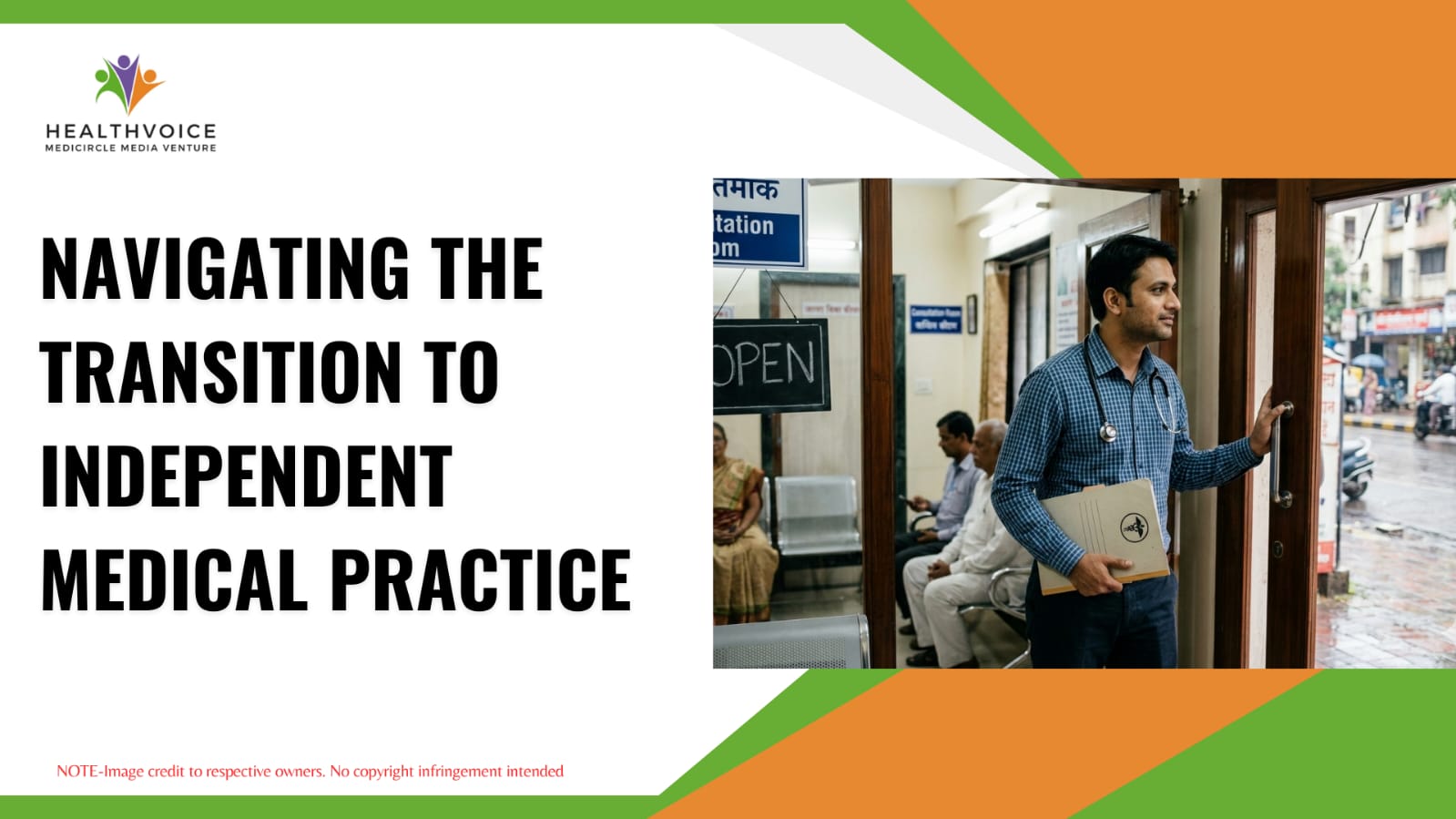
The transition from a supervised medical intern to an independent practitioner represents one of the most significant milestones in a healthcare career. Within the Indian healthcare landscape, this transformation frequently occurs overnight. A young doctor might move from being a supported team member to the primary decision maker in a crowded outpatient department or a high pressure emergency ward. This shift often generates a combination of professional pride and a persistent sense of uncertainty regarding one's own abilities.
Building clinical confidence in these demanding environments is not about memorizing every rare condition found in a thick textbook. It is instead about cultivating a mental framework that can manage the unpredictable nature of daily medical practice. For new doctors in India, where patient volumes are high and diagnostic resources can vary, finding a professional rhythm requires a combination of clinical precision and strong emotional intelligence.
Redefining Expert Mindsets:
Many young residents believe they must provide an immediate answer for every patient concern to appear competent to their peers. However, genuine clinical confidence is actually rooted in professional honesty and thoroughness. In Indian culture, families often view their doctor as a source of absolute certainty and hope. While this cultural "Vishwas" or trust is a beautiful aspect of the profession, it can place an immense psychological burden on a newly minted clinician.
Accepting that medical science is a field of calculated probabilities rather than absolute certainties is the primary step toward true self-assurance. You do not need to function as a human encyclopedia to be effective. You must instead strive to be a reliable and methodical problem solver for your patients. Confidence grows when you realize that taking a moment to verify a specific detail actually strengthens the bond of trust with a patient.
Active Clinical Reasoning:
During your years of formal training, you likely focused on identifying a diagnosis and selecting the appropriate medication. To foster independence now, you must shift your focus toward understanding the underlying logic of every clinical choice. A powerful method to accelerate your professional growth is the consistent practice of pre-emptive decision making.
Before you present a complex case to a senior consultant or check a reference manual, take a moment to commit to a specific plan in your own mind. You should ask yourself what your primary differential diagnosis is and what intervention is most critical at this exact moment. By comparing your internal plan with the final course of treatment, you create a rapid and effective learning loop. This habit helps you adapt global guidelines to the practical realities of the Indian healthcare system, such as patient affordability and local resource availability.
Effective Clinical Communication:
In the context of Indian clinics, the ability of a doctor to communicate clearly is often valued as much as their diagnostic skill. A significant portion of early career anxiety stems from the fear of a breakdown in communication with a patient or their relatives.
The secret to overcoming this hurdle is the deliberate simplification of your language. You should use metaphors that resonate with the daily life of an Indian household. If you can explain a neurological issue by comparing it to the electrical wiring in a home, you ensure the family remains an active partner in the treatment process. When a family understands the rationale behind a plan, the external pressure on the doctor decreases significantly. Clear communication serves as a vital safety net that prevents misunderstandings and potential social friction.
Utilizing Peer Networks:
Medicine in the modern era is no longer a solo endeavor. The most self-assured doctors are those who understand exactly where to look for verified information when they face a challenge. In a professional landscape that evolves as rapidly as ours, staying updated through evidence based digital platforms is absolutely essential.
Resources such as HealthVoice.in provide a necessary bridge by translating complex international research into practical insights for the Indian practitioner. Engaging with peer discussions and simplified clinical updates allows you to practice what many call community backed medicine. Knowing that you have access to a reliable network of information prevents the feeling of professional isolation that often leads to burnout.
Building Professional Resilience:
Every medical professional will eventually encounter a clinical outcome that does not go according to the original plan. For a junior doctor, such an experience can feel like a devastating blow to their professional identity. However, resilience is the true backbone of long term clinical confidence.
Instead of retreating into a cycle of self-doubt, you should use these difficult moments for structured reflection. You must learn to distinguish between a system error, such as a lab delay, and a cognitive error, such as a missed symptom. Addressing mistakes with transparency and a focus on future improvement is what separates an excellent doctor from an average one. Your medical career is a long journey, and one difficult day does not define your total capability as a healer.
Protecting Mental Energy:
Clinical confidence requires a clear and focused mind, which is impossible to maintain if you are perpetually exhausted. In this digital age, Indian doctors are often expected to be available at all times through messaging apps or personal phone calls.
Setting professional boundaries is not a sign of weakness but is instead a clinical necessity for safe practice. By establishing clear hours and dedicated channels for follow up queries, you preserve the mental energy required for life saving decisions. A doctor who respects their own time is much better equipped to respect the complexity of the lives of their patients.
The Path Forward:
Your unique clinical voice will emerge naturally as you balance academic knowledge with the reality of the people you treat every day. Every successful consultation and every accurately managed emergency serves as a brick in the foundation of your professional identity.
You should remain curious, stay empathetic, and remember that you are not just treating a disease but are caring for a human being. By utilizing modern clinical resources and trusting the steady process of your own growth, you will move beyond initial uncertainty. You are on a path toward a career defined by steady and quiet confidence.
 Team Healthvoice
#MedicalCareer #HealthcareProfessionals #FutureDoctors #MedicalTraining #ClinicalPractice #HealthcareEducation #DoctorSupport #EvidenceBasedMedicine #HealthcareLeadership #MedicalLearning #HealthcareJourney #healthvoice