Stethoscopes in a War Zone: The Crisis Facing Indian Medical Students in Iran
The hope across the medical fraternity is that diplomacy prevails, safe corridors remain open, and families are reunited soon.
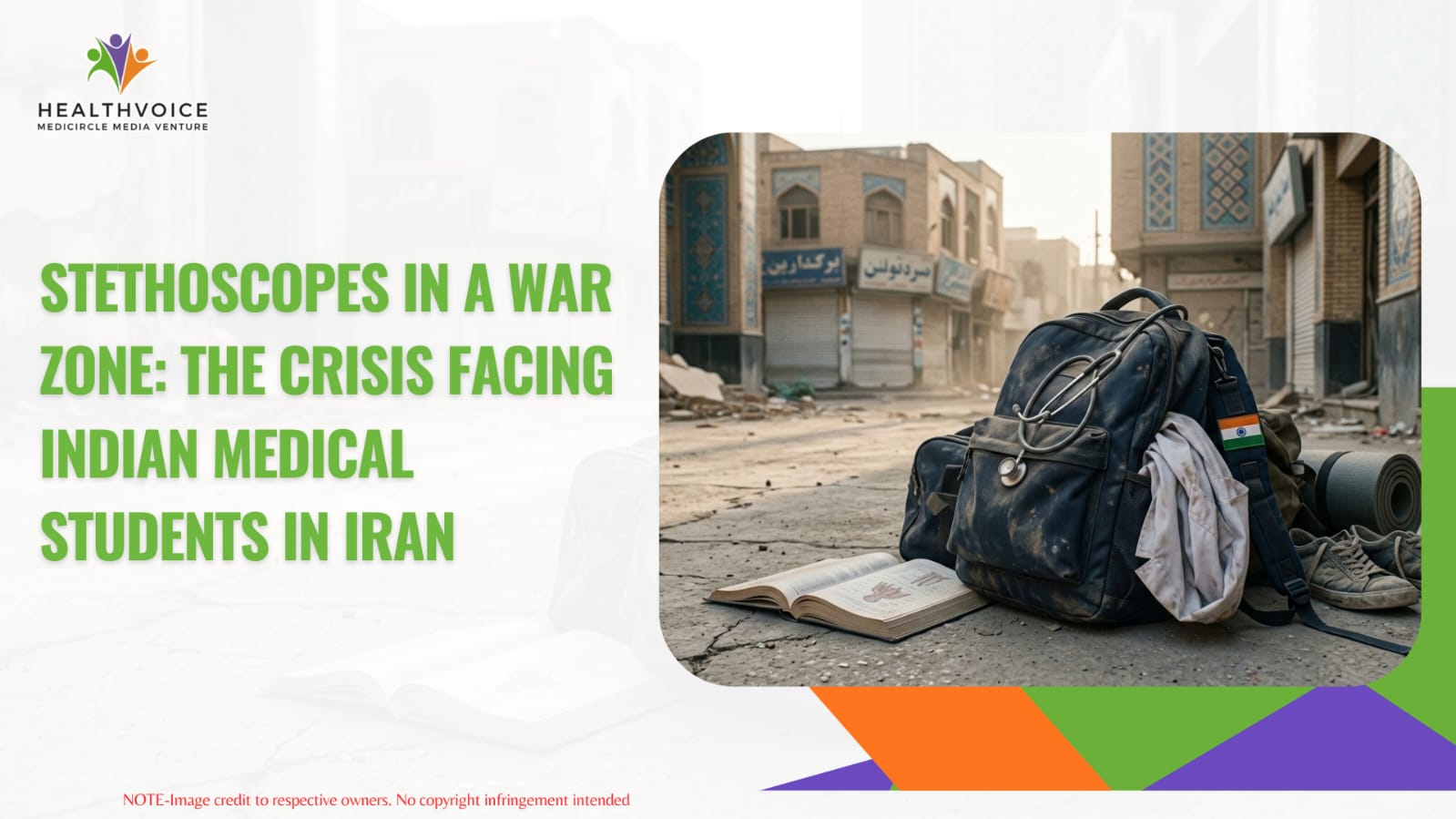
For thousands of Indian families, the dream of seeing their child wear a white coat has always carried sacrifice. Many mortgage land, dip into lifelong savings, or take educational loans so their sons and daughters can pursue MBBS degrees abroad. Over the past decade, countries across Eastern Europe, Central Asia, and the Middle East have emerged as popular destinations for Indian medical students seeking affordable medical education and globally recognised training. Today, however, that aspiration stands overshadowed by anxiety as tensions in Iran intensify and Indian medical students find themselves caught in a volatile geopolitical storm.
Reports from Tehran and other regions of Iran speak of explosions, smoke rising in parts of the capital, and a growing atmosphere of uncertainty amid escalating hostilities between Israel and Iran. While diplomats weigh strategy and governments assess risk, young medical students are listening to distant blasts from dormitory windows, refreshing news feeds, and struggling to reassure worried parents thousands of kilometres away. For the Indian medical community, this unfolding crisis is more than an international headline. It is a reminder of how global politics can abruptly intrude into the lives of future doctors.
Iran has long been a destination for Indian students pursuing medical education. Universities such as Tehran University of Medical Sciences and Isfahan University of Medical Sciences attract foreign students with structured MBBS programs, English-medium instruction in select courses, and comparatively moderate tuition fees. Many Indian students choose these institutions after failing to secure limited government seats at home or seeking alternatives to expensive private medical colleges in India. Over time, a modest but steady Indian student presence has developed across Iranian medical campuses.
Now, as military tensions in the Middle East escalate, that community is facing unprecedented fear. Student associations have raised urgent appeals to the Government of India, seeking evacuation or at least relocation to safer regions within the country. The All India Medical Students Association (AIMSA) has been vocal in expressing concern over the safety of Indian nationals enrolled in professional courses in Iran. Its leadership has called for swift intervention, continuous monitoring, and clear advisories to prevent panic.
In response to initial appeals, the Embassy of India in Tehran coordinated precautionary relocation efforts for students residing in high-risk areas of the capital. Several groups were transported to Qom under supervised arrangements. According to student representatives, the movement was organised with logistical support and communication from embassy officials. For many families back home, this relocation brought temporary relief. Social media platforms filled with messages of gratitude directed at diplomatic authorities who facilitated the transfers.
But relocation within a conflict-prone country is not the same as evacuation. Students remaining in cities such as Isfahan describe an atmosphere of constant tension. Some report hearing explosions in the distance, though the exact locations remain unclear. Shops have reportedly closed in certain areas. Internet disruptions have made communication unpredictable. Those without stable connectivity rely on occasional international calls, often at significant cost. Parents in India, glued to television screens and digital updates, experience a different kind of helplessness.
The situation is further complicated by academic obligations. First and second year students at some universities have been informed that upcoming semesters may be conducted online, allowing them the option to return to India temporarily. Final-year students, however, are often required to continue clinical postings and hospital shifts. For a medical student nearing graduation, leaving midway carries academic risk. Clinical exposure, internships, and licensing requirements cannot always be paused without consequence.
This dilemma highlights a broader issue in global medical education. Thousands of Indian students pursue MBBS degrees abroad each year. While countries such as Russia, Ukraine, China, the Philippines, and Iran offer structured programs, geopolitical instability remains an unpredictable variable. The Russia-Ukraine conflict previously exposed similar vulnerabilities, forcing emergency evacuation operations and academic disruptions. That experience should have served as a wake-up call for policymakers and families alike.
The Ministry of External Affairs has indicated that the situation in the region remains fluid and challenging. Government representatives have acknowledged the volatile security environment and stated that efforts are ongoing to ensure the safety of Indian citizens. They have also cautioned that aviation routes and airspace conditions in conflict zones pose operational risks, making large-scale evacuation a complex undertaking.
These students represent the next generation of doctors who will eventually seek registration with the National Medical Commission and serve in Indian hospitals, clinics, and rural health centres. Interruptions in their education not only delay individual careers but also affect the broader pipeline of qualified medical professionals. India’s healthcare system, already struggling with uneven doctor distribution and rural shortages, cannot afford repeated disruptions in the training of its future workforce.
At the same time, the immediate concern is human safety. Medical education, licensing exams, and clinical rotations become secondary when physical security is uncertain. Students describe living indoors, sharing limited food supplies, and avoiding outdoor movement. For young adults far from home, the psychological burden can be immense. Anxiety, sleep disturbances, and fear are common responses in conflict settings. Mental health support for stranded students should form part of any official response.
The role of student associations in crises like this deserves recognition. Organisations such as AIMSA have functioned as bridges between students and authorities, amplifying concerns and coordinating information flow. In times of uncertainty, credible communication becomes as important as physical relocation. Rumours can spread quickly, worsening panic. Structured advisories, verified updates, and accessible helplines are essential tools in crisis management.
The Iranian universities themselves face difficult choices. Balancing academic continuity with student safety is no small task. Offering online classes to junior batches provides flexibility, yet final-year students engaged in hospital-based training face limited alternatives. Healthcare facilities in conflict-prone regions often operate under strain. Students rotating through such institutions may encounter additional emotional and professional stress.
This episode may prompt renewed evaluation of overseas medical education trends. The demand for MBBS seats in India consistently outstrips supply. Competitive entrance examinations, limited government seats, and high private college fees push thousands to look abroad. While foreign universities provide opportunities, they also expose students to geopolitical and regulatory risks beyond their control.
The National Medical Commission has already introduced measures such as the Foreign Medical Graduate Examination (FMGE) and the National Exit Test (NEXT) to standardise competency among foreign-trained doctors seeking practice in India. Yet safety considerations during global crises require separate strategic planning. Establishing comprehensive databases of Indian students abroad, strengthening embassy outreach, and creating emergency response protocols for educational evacuations could enhance preparedness.
Parents, too, face difficult reflections. Many chose Iran for its academic reputation and relative affordability. Few would have anticipated a sudden escalation of regional hostilities. In hindsight, geopolitical stability becomes an important factor in educational decisions. Prospective students may now reassess destination countries, weighing academic quality against security indicators.
The Government of India has, in past conflicts, conducted successful evacuation missions for its citizens. Operations in war-affected regions have demonstrated logistical capability and diplomatic negotiation skills. Whether a similar large-scale effort becomes necessary in Iran will depend on how the situation evolves. For now, authorities appear to be balancing caution with readiness.
Meanwhile, communication remains key. Clear advisories regarding travel, shelter-in-place guidelines, and contingency planning can prevent chaos. Students need transparent timelines and honest assessments rather than speculation. Parents require reliable channels for updates. Media coverage must remain responsible, avoiding sensationalism that could amplify fear.
The larger question extends beyond immediate evacuation. How should India approach the phenomenon of outbound medical education in an era of unpredictable geopolitical shifts? Expanding domestic MBBS seats is one solution already underway, yet demand continues to rise. Strengthening bilateral agreements with host countries regarding student safety protocols could offer another layer of protection. Insurance frameworks and emergency evacuation funds tailored for overseas students may also merit consideration.
For now, the priority is to ensure that every Indian medical student in Iran remains safe until stability returns or safe passage home becomes feasible. Their textbooks may be closed for the moment, their clinical notes paused, but their journey towards becoming doctors continues in a different, unintended classroom i.e. the classroom of resilience.
As tensions in the Middle East fluctuate, the fate of these students hangs in delicate balance. The healthcare community in India watches with concern, aware that today’s stranded student is tomorrow’s colleague in a district hospital or urban ICU. Global events have drawn them into a narrative far removed from anatomy lectures and ward rounds.
The white coat has always symbolised service in times of crisis. Now, ironically, the students who aspire to wear it find themselves in need of protection. The hope across the medical fraternity is that diplomacy prevails, safe corridors remain open, and families are reunited soon. Until then, the story of Indian medical students in Iran stands as a powerful reminder that medical education does not exist in isolation from world affairs. It is woven into the fabric of geopolitics, public policy, and human vulnerability
 Team Healthvoice
#IndianStudentsAbroad #MedicalStudents #MBBSAbroad #IranCrisis #MiddleEastTensions #StudentSafety #MedicalEducation #FutureDoctors #HealthcareCommunity #GlobalEducation #StudyAbroad #EducationCrisis #HealthcareIndia #InternationalStudents #Geopolitics #EducationPolicy #StudentVoices #healthvoice
