Degrees That Divide: Why Indian Medicos from Pakistan May Never Practice Back Home
For those involved in medical training, advisement, or policymaking, this is a moment to recalibrate. Not just to protect national interests but to ensure that deserving minds are not left in limbo.
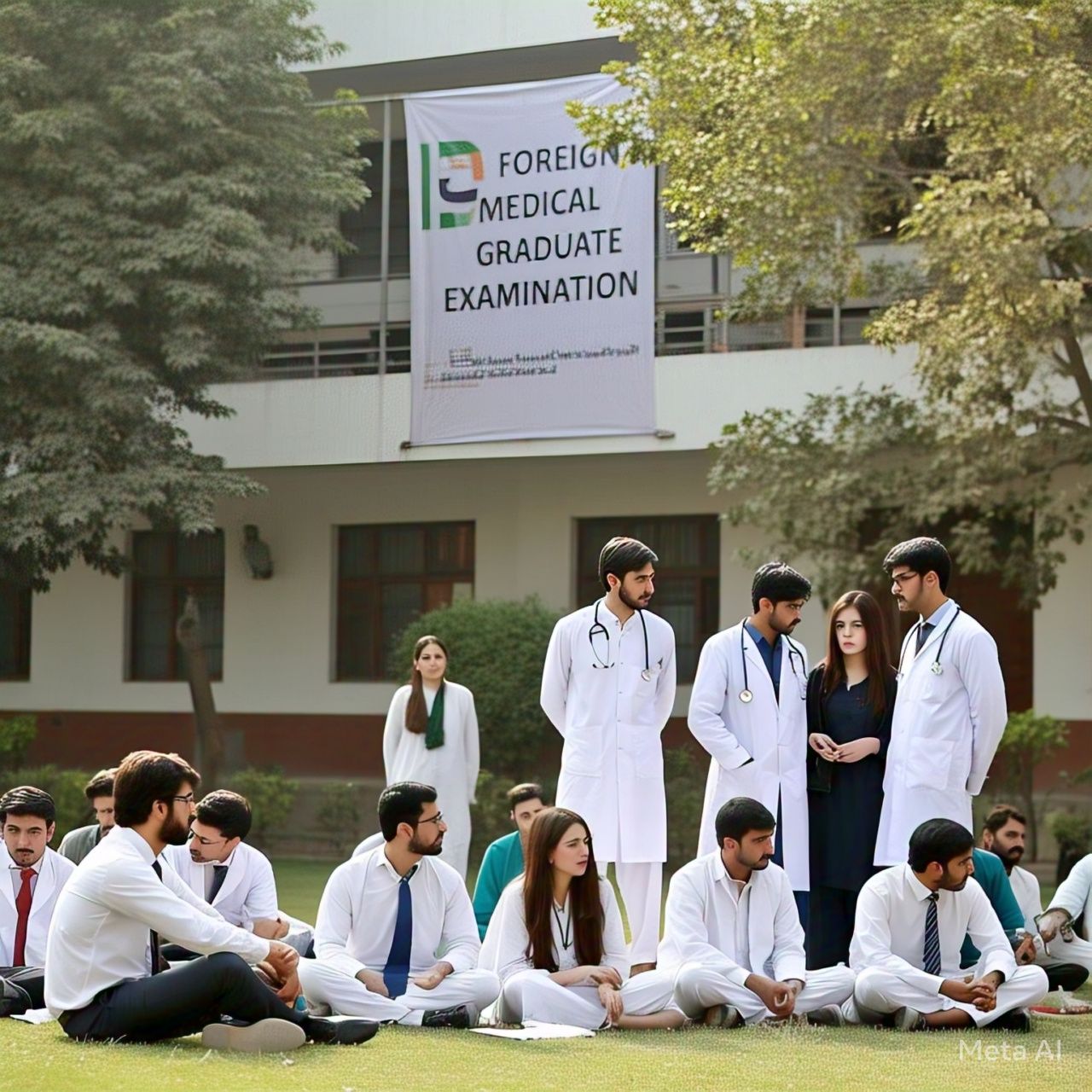
In the world of medicine, where science transcends borders, a policy decision has reminded aspiring medical professionals of the hard lines drawn by geopolitics. A recent announcement by the Centre has created a new ripple in the already sensitive domain of foreign medical education. Indian citizens and Overseas Citizens of India (OCIs) who pursue medical education in Pakistan are now barred from appearing in the Foreign Medical Graduate Examination (FMGE) or applying for medical employment in India. This firm stance comes not as a sudden reaction but as a reinforcement of existing directives and national security concerns.
For professionals in the medical fraternity, this decision demands attention not just as a matter of regulation, but as a wider conversation around legitimacy, security, and career strategy. Understanding the impact, exceptions, and long-term implications is essential not only for aspirants but also for those involved in academic advisement, policy interpretation, and institutional governance.
On paper, the directive appears simple. The Ministry of Health and Family Welfare has declared that anyone choosing to enroll in a Pakistani medical college henceforth or who did so after December 2018 without security clearance will be considered ineligible to appear in India’s FMGE or seek work in the Indian healthcare ecosystem. This effectively means that the degrees obtained in Pakistan by Indian nationals or OCIs, in such cases, would hold no professional value on Indian soil.
But beneath the surface, this decision is multilayered. It sits at the intersection of foreign policy, domestic healthcare standards, and national security protocols. While medical education is ideally a global pursuit driven by merit and discipline, this advisory puts forth a pragmatic reminder: the origin of a degree matters just as much as its academic content particularly when it emerges from a nation viewed through the lens of sensitive bilateral relations.
For foreign medical graduates, FMGE is the mandatory licensure exam that bridges their overseas education with domestic practice rights. Conducted by the National Board of Examinations (NBE), the exam evaluates whether a candidate trained abroad meets the baseline competence for practicing medicine in India.
By declaring medical degrees from Pakistan invalid for FMGE eligibility, the Centre has effectively closed a door. The act is not just academic it impacts real lives, professional plans, and perhaps even the healthcare pipeline, especially considering the growing number of Indian students looking overseas due to limited medical seats and high fees at home.
While the policy appears rigid, the government has created windows of exception to ensure fairness for those who had already committed to their academic paths under previous norms.
Here's how the exception list shapes up:
1. Students Who Enrolled Before December 2018: If a student joined a medical college in Pakistan prior to this cutoff date, they remain eligible for FMGE and employment opportunities, preserving their career trajectory.
2. Those with Prior Security Clearance: Students who joined Pakistani institutions after December 2018 but acquired necessary clearance from India’s Ministry of Home Affairs (MHA) continue to enjoy eligibility rights.
3. Migrants and Their Children with Indian Citizenship: Migrants from Pakistan who have legally acquired Indian citizenship, and their children, are not barred. They must, however, secure MHA clearance before applying for FMGE or seeking a job.
These exclusions are crucial not only for ethical reasons but also to protect students from retrospective penalization. They also reflect a pattern in India’s policymaking where security considerations override individual merit but do not discount it when evaluated within proper frameworks.
Why has this policy been enforced? The underlying reasoning seems twofold:
National Security Considerations: Given the long-standing tense relations between India and Pakistan, and the possibility of unmonitored influence or radicalization, the Centre is likely taking a preventive stance. A foreign-trained doctor is not just a practitioner but often a trusted figure in sensitive public health roles. Vetting their training sources becomes part of the national security apparatus.
Quality Control and Regulatory Integrity: There is also the argument of educational equivalence. Ensuring that overseas degrees meet Indian benchmarks is a standard practice. With increased cases of degree fraud, questionable teaching standards, and regulatory mismatch, this move may serve to maintain the academic integrity of the Indian medical system.
However, critics might argue that such blanket bans especially based on country of education could potentially undermine the spirit of international medical training and individual merit. Still, in the current policy climate, the state seems to be leaning toward caution over leniency.
This development should prompt a reassessment among Indian institutions, medical education consultants, and career counselors who guide students toward foreign universities. The advisory acts as a warning sign: not all international degrees hold equal weight back home, and recommendations must come with disclaimers.
Moreover, this is a time for institutional vigilance. With increasing globalization of education, due diligence is vital. Institutions must now be cautious in how they validate or promote foreign degrees in student prospectuses or tie-ups. Regulatory alignment with the National Medical Commission (NMC) is no longer optional it’s essential.
For those currently studying in Pakistan without clearance or planning to enroll the road ahead is unclear. They face a painful reality: even after completing rigorous medical education, they may not be allowed to contribute professionally in their own country. It is a scenario fraught with emotional and economic consequences.
Medical education abroad is no small investment, both financially and mentally. To find one’s degree disqualified on political or bureaucratic grounds, especially after the fact, can derail entire career aspirations. Though this policy is forward-looking and spares those who joined earlier, the risk of similar policies arising in other geographies can no longer be ignored by students planning international study.
This move may indirectly spotlight India’s own challenges in the medical education sector. Year after year, thousands of capable students are forced to look abroad due to the limited number of MBBS seats and prohibitively high tuition in private medical colleges. If India wishes to reduce the exodus to foreign universities some of which are in geopolitically complex regions expanding domestic capacity and improving affordability must become central objectives.
Perhaps this advisory is a starting point. A moment not just to shut doors but to open new ones within India’s own academic and clinical systems. State medical universities, the NMC, and policymakers must collectively address why so many Indian students still feel the need to cross borders to chase a dream that could be nurtured at home.
The question now arises will other countries be placed under similar advisories in the future? If geopolitical friction becomes a standard basis for academic disqualification, students and advisors alike will have to navigate more than just curriculum and fees they will need to read the diplomatic climate too.
This is where professional bodies and regulatory institutions must step up to provide updated, transparent, and regularly reviewed guidelines. The medical community should never be left guessing about what qualifies as acceptable education. Timely advisories and open communication channels will be key.
This directive is more than just a policy it’s a reflection of how medicine, while universal in intent, often gets caught in the crossfire of sovereignty and security. For those involved in medical training, advisement, or policymaking, this is a moment to recalibrate. Not just to protect national interests but to ensure that deserving minds are not left in limbo.
For now, one message rings clear: where a student learns medicine matters not only for how they treat patients, but whether they are allowed to treat them at all.
 Sunny Parayan
#MedicalPolicy #FMGEEligibility #MedicalEducation #MBBSAbroad #MedicalCareer #PolicyMatters #healthvoice
