From Social Media Fame to Police Custody: The Viral Doctor Surgery Scandal
Behind every medical intervention lies a complex system of training, regulation, and accountability designed to protect human lives. Without that system, even the smallest surgery can become a gamble.
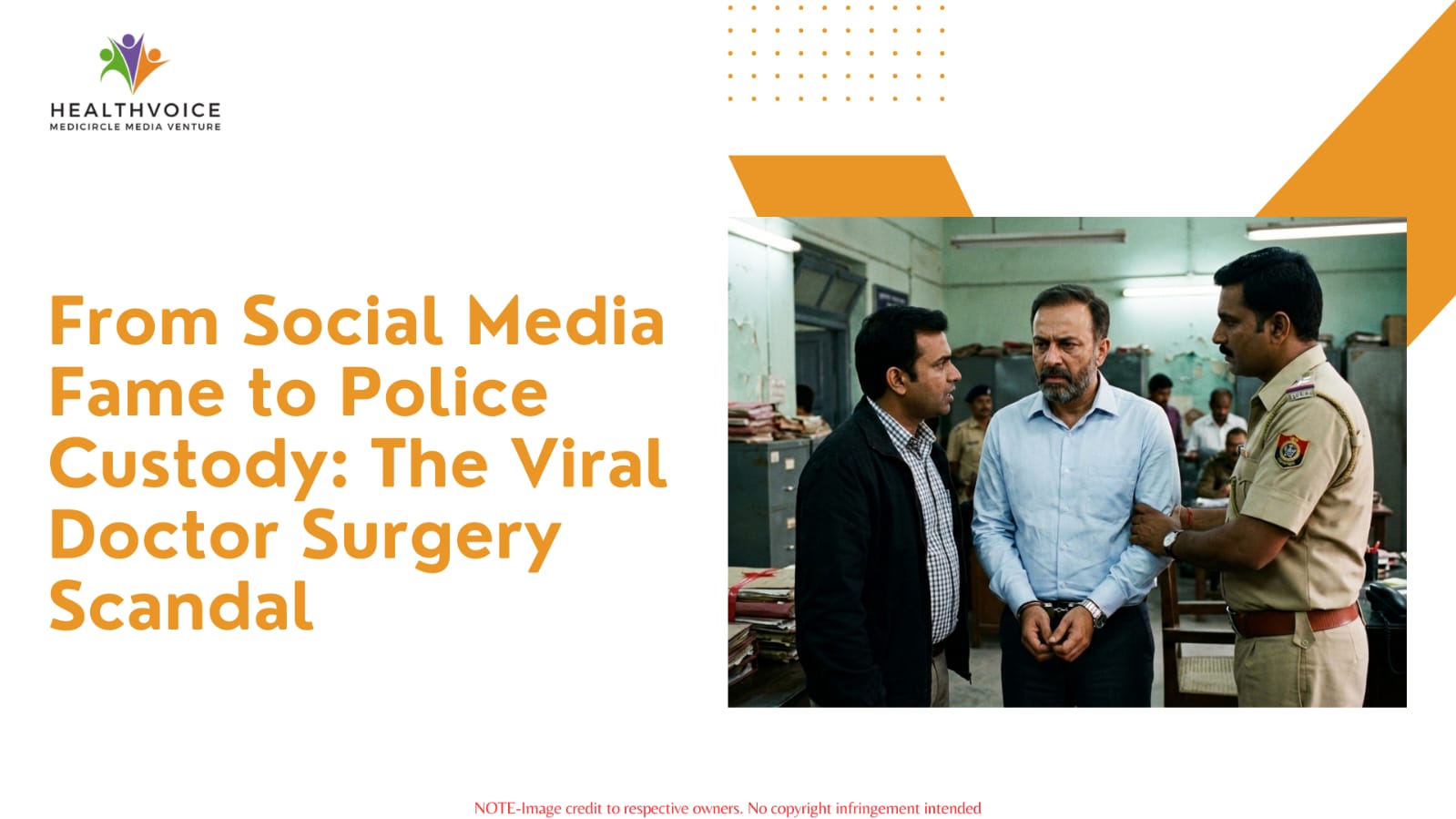
In an era where medical advice travels faster through social media than through hospital corridors, a troubling question has begun to haunt India’s healthcare system: who decides who is qualified to perform medical procedures? The recent arrest of a social media famous practitioner in Chennai has once again exposed the fragile boundary between online popularity and legitimate medical practice. What began as an investigation into a temporary clinic operating inside a hotel room has now opened a wider conversation about unauthorised surgeries, patient safety, and the growing influence of social media medicine in India.
The incident unfolded when authorities in Chennai detained a practitioner trained in homoeopathy along with her assistant for allegedly conducting ear-related surgical procedures in a makeshift setup within a hotel. According to officials involved in the investigation, the temporary clinic lacked the essential infrastructure expected for any medical procedure, even one considered minor. The case has drawn sharp reactions from medical associations and healthcare regulators, who say it reflects a dangerous trend in which medical procedures are being offered outside regulated environments.
At the centre of the controversy is a procedure commonly referred to as earlobe repair surgery, medically known as auroplasty. This minor surgical intervention is usually performed for individuals whose earlobes have been torn or stretched, often because of heavy earrings or accidental injuries. While it may appear to be a small cosmetic procedure, it still involves surgical precision, sterile instruments, and trained medical expertise. Specialists trained in dermatology, plastic surgery, or cosmetic surgery typically perform such treatments in clinics equipped with proper surgical facilities.
What alarmed authorities was the discovery that the procedures were being carried out in a hotel room converted into a temporary clinic. Investigators found no evidence of a properly licensed medical facility or approved surgical environment. The situation raised immediate concerns about infection control, sterilisation standards, and emergency preparedness.
Medical professionals say that even seemingly simple cosmetic procedures require strict adherence to clinical safety protocols. Sterile conditions, medical supervision, and access to emergency care are considered basic requirements. When procedures take place outside recognised medical establishments, the risk to patients increases significantly.
The case first came to light after several medical associations raised concerns with government authorities. A formal complaint was submitted to the state health department, drawing attention to social media promotions that appeared to advertise surgical procedures being offered during temporary visits to various cities. The complaint alleged that procedures requiring specialised training were being carried out without the required qualifications or regulatory approval.
Healthcare regulators in Tamil Nadu took the complaint seriously. Officials from the Directorate of Medical and Rural Welfare Services conducted a surprise inspection at the hotel where the temporary clinic had reportedly been set up. During the raid, authorities found the practitioner and her assistant inside the premises and detained them for questioning before handing the case over to the police.
Police subsequently registered charges under several provisions of the law, including those relating to unauthorised medical practice and potential public health violations. Both individuals were later presented before a magistrate and remanded to judicial custody while the investigation continued.
The story, however, goes beyond the events of a single raid. Investigators discovered that the practitioner had built a large following on social media platforms where she frequently shared videos demonstrating ear-related procedures. According to officials, hundreds of videos had been uploaded over time, portraying treatments such as ear piercing and earlobe repair. These posts attracted significant attention from viewers seeking quick cosmetic solutions.
Authorities say the practitioner had claimed to have treated thousands of individuals across multiple cities in India. Patients reportedly contacted her through mobile messaging platforms to schedule appointments. Investigators revealed that those seeking treatment were often asked to transfer a booking fee before the procedure was confirmed.
This method of operation reflects a broader transformation in the way healthcare services are marketed in the digital age. Social media platforms have become powerful tools for self-promotion. Doctors, clinics, and healthcare influencers increasingly rely on online visibility to reach potential patients. In many cases, this digital outreach has helped improve public awareness about medical conditions and treatment options.
Yet the same platforms have also created opportunities for misinformation and unverified medical claims. Experts warn that the line between legitimate healthcare communication and promotional exaggeration has grown increasingly blurred.
Patients browsing social media may encounter videos that appear convincing and educational. Surgical demonstrations, before-and-after photographs, and confident explanations can easily create the impression of professional credibility. However, viewers rarely have the means to verify whether the person performing the procedure possesses the necessary qualifications or operates within a regulated clinical environment.
Medical associations say that this gap between perception and reality is becoming a serious challenge for healthcare regulators. When medical procedures are advertised online without oversight, patients may unknowingly expose themselves to significant risks.
The Chennai case has also revived an ongoing debate about cross-practice in India’s healthcare system. Cross-practice refers to situations where practitioners trained in one system of medicine perform treatments typically associated with another medical discipline. India’s healthcare landscape includes several recognised systems such as allopathy, Ayurveda, homoeopathy, and Unani medicine. Each system has its own regulatory framework and training standards.
Conflicts sometimes arise when practitioners move beyond the scope of their training. Medical experts argue that performing surgical procedures requires specialised education, hands-on clinical training, and regulatory licensing. Without these safeguards, patient safety may be compromised.
The complaint that triggered the investigation pointed to a government directive issued earlier this year, which clarified that cosmetic and skin-related surgical procedures should only be carried out by appropriately qualified specialists in authorised facilities. Health officials say such directives are designed to ensure that patients receive treatment in environments equipped to handle complications.
Even minor surgeries carry potential risks. Infection, bleeding, allergic reactions to anaesthesia, and scarring are possible complications. In professional clinics, trained staff are prepared to respond quickly if something goes wrong. Emergency equipment, sterile instruments, and clinical supervision provide an additional layer of safety.
In contrast, a temporary setup inside a hotel room rarely meets these medical standards. The absence of proper sterilisation systems or trained assistants can increase the likelihood of infection. Lack of emergency care facilities can turn a routine procedure into a dangerous situation if complications arise.
Social media platforms have transformed how patients discover doctors and clinics. Online testimonials, viral videos, and influencer marketing now play a powerful role in shaping healthcare decisions. While digital outreach can help patients find reliable information, it can also create misleading impressions. Some practitioners present themselves as experts through carefully edited videos or testimonials that emphasise success stories while ignoring risks or limitations.
Healthcare regulators now face the challenge of monitoring an expanding digital marketplace where medical claims circulate widely. Unlike traditional hospital advertising, social media promotions often operate outside clear regulatory oversight.
Experts suggest that stronger monitoring of medical advertising on digital platforms may become necessary in the coming years. Authorities may also need to work closely with professional medical councils to ensure that practitioners operate within their recognised scope of practice.
Medical associations have repeatedly urged patients to avoid treatments offered in unverified locations such as hotel rooms or temporary clinics. While convenience and lower costs may appear attractive, the absence of proper medical supervision can lead to complications that require far more expensive and complex treatment later.
The rapid spread of social media medicine has also placed pressure on traditional healthcare systems. Doctors who spend years training in surgical disciplines often express frustration when unqualified individuals gain popularity through viral content. They argue that medical expertise cannot be measured through video views or online followers.
Training in surgery involves years of education, supervised practice, and regulatory evaluation. The process is designed to ensure that doctors possess the knowledge and technical skill required to handle complications and provide safe patient care.
The Chennai case illustrates how quickly online visibility can translate into real-world medical demand. Investigators believe that many patients who sought the procedure did so after watching videos online and believing they were receiving treatment from an experienced specialist.
Healthcare experts believe that public awareness campaigns may be necessary to address this emerging challenge. Patients must understand that medical decisions should be based on verified qualifications and safe clinical environments rather than social media popularity.
At the same time, the incident highlights the need for clear communication from healthcare authorities about the boundaries of medical practice. Regulations governing cosmetic procedures, minor surgeries, and clinical facilities must be widely understood by both practitioners and the public.
India’s healthcare system continues to evolve as technology reshapes how medical information is shared. Digital platforms have the potential to strengthen health education and connect patients with reliable professionals. However, when unregulated medical promotion enters the picture, the consequences can become serious.
The events in Chennai have therefore triggered a larger conversation about the future of healthcare regulation in the digital age. Authorities, medical councils, and patient advocacy groups now face the challenge of ensuring that medical innovation and communication do not come at the cost of patient safety.
As investigations continue, the case stands as a cautionary tale about the intersection of social media influence, cosmetic medical procedures, and healthcare regulation in India. It reveals how easily medical authority can be constructed online and how quickly it can attract vulnerable patients seeking affordable treatments.
In a country where healthcare access remains uneven and cosmetic procedures are increasingly popular, the temptation to seek quick solutions will likely persist. The responsibility therefore lies with both regulators and the public to ensure that medical care remains grounded in professional standards.
Medicine has always been built on trust. Patients trust that the person holding a surgical instrument has the training, knowledge, and ethical responsibility to use it safely. When that trust is replaced by viral videos and temporary clinics, the risks extend far beyond a single procedure.
The Chennai incident has reminded the nation that healthcare cannot be reduced to an online performance. Behind every medical intervention lies a complex system of training, regulation, and accountability designed to protect human lives. Without that system, even the smallest surgery can become a gamble.
 Team Healthvoice
#PatientSafety #MedicalEthics #PublicHealth #HealthAwareness #CosmeticSurgery #PlasticSurgery #Dermatology #AestheticMedicine #CosmeticProcedure #DigitalHealth #HealthTech #healthvoice