Healthcare Cyberattacks: What Every Indian Doctor Must Know
Healthcare cyberattacks in India are rising sharply, threatening patient data, clinical operations, and legal compliance. Doctors must understand ransomware, phishing, and their obligations under the DPDP Act.
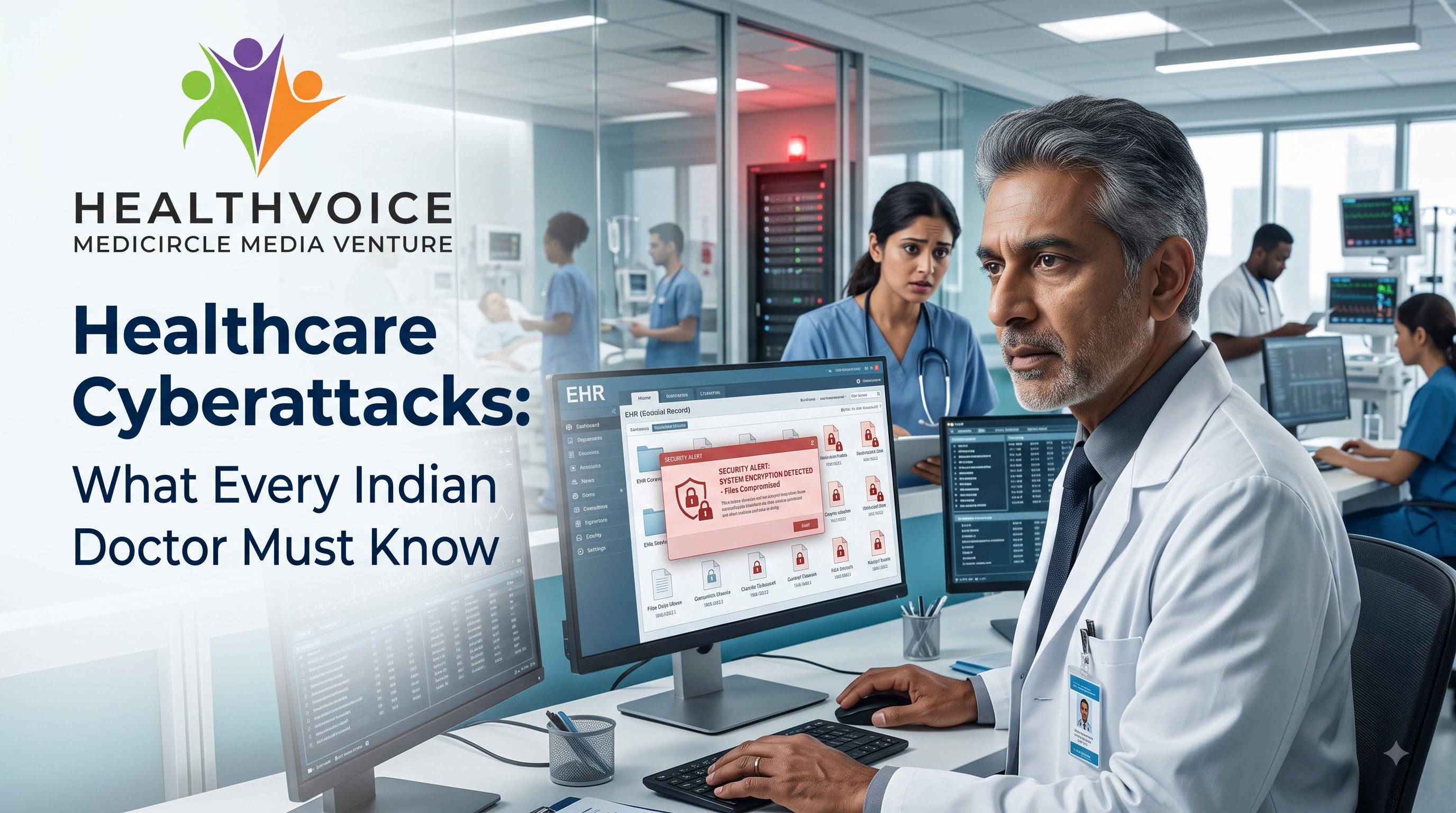
Introduction
The digitization of Indian healthcare has brought undeniable benefits. Electronic health records, telemedicine platforms, diagnostic imaging systems, and hospital management software have transformed the way doctors deliver care. Ayushman Bharat Digital Mission (ABDM) has accelerated this transformation further, placing millions of patient health IDs and clinical records within interconnected digital systems. However, this same digital progress has created a vast and increasingly exploited attack surface for cybercriminals.
Indian healthcare institutions now face an average of 8,614 cyberattacks every week, a figure that is more than four times the global average and more than double the rate faced by any other industry within India. These are not abstract statistics. They represent real disruptions to real patients, real clinical operations, and real professional reputations.
For most doctors practicing in India today, cybersecurity has not been part of their medical training. Yet the responsibility of protecting patient data increasingly falls on every member of the clinical team, not just the hospital's IT department. Understanding the nature of these threats, the specific vulnerabilities of Indian healthcare, and the practical steps every doctor can take is no longer optional. It is a professional and legal necessity.
The Scale of the Threat to Indian Healthcare
The India Cyber Threat Report 2026, prepared by Seqrite Labs from telemetry across more than 8 million endpoints, highlights how India's healthcare and pharmaceuticals sector has emerged as one of the most relentlessly attacked verticals in the country. Healthcare and pharmaceuticals alone recorded 3.79 million detections, accounting for a 14.24 percent share of all cyber threats detected across industries.
Globally, cyberattacks on the healthcare sector jumped 14 percent in the first half of 2026, slightly outpacing the overall 11 percent increase across all industries. The FBI's Internet Crime Complaint Center confirmed that the healthcare industry was the most attacked critical infrastructure sector throughout 2025.
The motivations behind these attacks are clear. Healthcare again ranked first for the most expensive data breaches globally, averaging $10.93 million per incident. Attackers have shifted from simply locking hospital systems to first stealing massive volumes of patient and financial data, then extorting providers with the combined threat of operational downtime and public data exposure.
Patient medical records are particularly valuable because they contain permanent personal information that cannot be changed the way a bank password or credit card number can. A health record includes diagnosis history, prescriptions, personal identification, insurance details, and in some cases, biometric data. Patient data is worth a significant amount on the dark web, and healthcare was the costliest industry for data breaches for twelve consecutive years, with healthcare breach costs surpassing those in financial services by 1.3 times according to IBM's 2025 report.
How the AIIMS Attack Changed the Conversation in India
No event has shaped Indian medical awareness of cybersecurity more sharply than the ransomware attack on All India Institute of Medical Sciences (AIIMS) Delhi in November 2022. The ransomware attack targeted the institution's sensitive data, including patient records, research data, and administrative information. The attackers allegedly demanded approximately Rs 200 crore in cryptocurrency.
The attack knocked close to 5,000 computers offline, forcing all operations to be managed on paper for seven days. Patient appointments, billing, diagnostics, and record retrieval were entirely disrupted at India's foremost government medical centre. Reports indicated that approximately 4 crore patient profiles, including sensitive data and medical records, may have been compromised. The database reportedly included personally identifiable information of patients and healthcare workers, administrative records for blood donors, ambulances, vaccination programs, caregivers, and employee login credentials.
What made this event particularly significant was not only its scale, but what it exposed. No single Indian law at the time specifically regulated health data processing, and existing Indian laws were considered inadequate to deal with the increasing risk of cyberattacks. Healthcare organisations risked compromise of patient data, regulatory sanctions, and fines.
The AIIMS attack served as an inflection point. It demonstrated that Indian healthcare institutions, regardless of their prestige or resources, remain profoundly vulnerable.
Common Attack Vectors Every Doctor Should Recognize
Doctors do not need to become cybersecurity specialists, but they do need to recognize the methods attackers use to enter clinical systems. Most successful attacks begin not with sophisticated hacking but with human error.
Phishing Attacks
Phishing remains the most common entry point for healthcare cyberattacks. A doctor or staff member receives an email that appears to come from a legitimate source, such as a hospital administrator, a pharmaceutical representative, a government health portal, or a lab system. The email contains a malicious link or attachment. Once clicked, the attacker gains access to the network. Many of the 2025 ransomware attacks in India leveraged phishing, cracked software, and exposed remote access points as their primary entry mechanisms.
Ransomware
Ransomware is the most operationally damaging form of attack against hospitals. Once deployed, it encrypts the hospital's files and systems, making them completely inaccessible. The dominant 2025 attack path followed a pattern of stolen credentials, remote access, data theft, followed by ransom demand combined with the threat to leak patient information. For small and mid-sized clinics, even a single such incident now routinely means weeks of lost revenue, claims backlogs, and patients unable to receive care.
Insider Threats and Credential Sharing
One of the most underappreciated vulnerabilities in Indian hospitals is the practice of sharing login credentials among clinical staff. When login processes create friction because of multiple authentication steps, complex passwords, or session timeouts, clinical staff often resort to workarounds such as shared credentials or leaving sessions logged in, allowing unauthenticated users to access the system. This is not a technology failure. It is a workflow and culture failure that doctors must take responsibility for addressing.
Outdated and Unpatched Systems
Many hospitals and clinics in India, particularly in Tier 2 and Tier 3 cities, continue to run software that has not been updated for years. Legacy hospital management systems, older Windows operating systems, and unpatched diagnostic device firmware create entry points that even moderately skilled attackers can exploit with minimal effort.
Connected Medical Devices
Modern diagnostic equipment, including imaging systems, cardiac monitors, and infusion pumps, often connects to hospital networks. These devices are not always designed with cybersecurity as a priority, and updates to their embedded software are infrequent. They can serve as silent entry points into a hospital's broader digital infrastructure.
The Legal Framework Every Indian Doctor Must Know
The legal landscape for patient data protection in India has changed substantially, and doctors must understand their obligations.
The Digital Personal Data Protection (DPDP) Act 2023 is India's first comprehensive digital privacy legislation and significantly alters how healthcare providers manage personal data. Under this Act, healthcare providers are designated as data fiduciaries and are legally required to implement structured data management protocols, privacy-by-design frameworks, comprehensive cybersecurity safeguards, encrypted electronic health record systems, secure patient portals, and automated consent processes.
Beyond the DPDP Act, doctors practicing within ABDM-enabled systems operate under the Ayushman Bharat Digital Mission's health data management policy, which governs patient consent, data access, and portability. The National Medical Commission (NMC) and NABH accreditation standards also contain provisions relating to the responsible handling of patient information.
Under these frameworks, protecting clinical information is no longer merely an ethical duty. Strict legal mandates exist, and digital data negligence carries serious consequences, including damage to a medical professional's license and institutional reputation.
Doctors who use personal devices to store patient data, share records via unencrypted messaging applications, or fail to maintain basic password hygiene are not just creating security risks. They are potentially creating legal exposure for themselves and their institutions.
What Doctors Can Do Immediately
Doctors cannot wait for their hospital's IT department to solve cybersecurity entirely. Individual clinical behavior is one of the most consequential factors in healthcare cyber resilience. The following practices represent the baseline standard every doctor should follow:
- Use strong, unique passwords for every clinical system and change them regularly. Do not use the same password across multiple platforms.
- Enable multi-factor authentication on hospital portals, email accounts, and clinical software wherever it is available.
- Never share login credentials with colleagues, even in emergency situations. Escalate the need for additional access permissions to the appropriate administrative authority.
- Do not open unexpected email attachments or links, even when the email appears to come from a trusted source. Verify through a direct phone call before proceeding.
- Avoid using personal smartphones or tablets to access patient records unless the device is enrolled in the hospital's formal mobile device management program.
- Log out completely from hospital systems when leaving a workstation, regardless of how brief the absence.
- Report any suspicious digital activity, unusual system behavior, or unexpected access notifications immediately to the institution's IT or cybersecurity team. Early reporting can contain an attack before it spreads.
Building a Culture of Cybersecurity in Clinical Teams
Individual actions matter, but lasting protection requires institutional culture change. Doctors, as clinical leaders, are positioned to drive this change within their departments and practices.
Medical associations play a vital role here. Organizations that bring together doctors across specialties and regions can advocate for regular cybersecurity training as part of continuing medical education (CME), standardized data handling protocols for member hospitals, and collaborative reporting frameworks when attacks occur.
Platforms like HealthVoice, which focus on connecting doctors, medical associations, and healthcare communities, represent an important channel through which cybersecurity awareness can be amplified across the profession. When credible voices in medicine speak consistently about digital safety, it shifts the culture from one of avoidance to one of active responsibility.
The ransomware attack on AIIMS Delhi highlighted the critical risks associated with cyber threats targeting healthcare institutions and reinforced the need for AI-driven cybersecurity solutions and structured digital health infrastructure protection frameworks. But technology solutions alone are insufficient. They must be supported by an informed clinical workforce.
Prevention and Proactive Measures for Clinics and Hospitals
Hospital and clinic management should treat cybersecurity with the same seriousness as infection control or fire safety. Proactive measures that healthcare administrators and clinical leaders should advocate for include:
- Regular cybersecurity risk assessments conducted by qualified professionals
- Investment in endpoint security solutions for all devices connected to hospital networks
- Encrypted backup systems that are isolated from the main network, ensuring data recovery without paying ransom
- Cyber incident response plans that are documented, tested, and communicated to all staff
- Regular staff training on recognizing phishing attempts and safe digital practices
- Network segmentation to limit the spread of an attack from one system to others
For smaller private clinics and individual practitioners, the starting point is simpler. Use a reputable cloud-based practice management system from a vendor with documented security certifications. Ensure the system uses encrypted data storage and transmission. Back up patient records regularly to a secure, offline location. Formalize a basic incident response procedure, even if it simply means knowing who to call when something goes wrong.
Conclusion
Healthcare cyberattacks are not a distant threat that affects only large government institutions. They are an immediate and growing risk for every doctor, every clinic, every hospital, and every patient in India. The Indian healthcare sector now faces more than eight thousand cyberattacks every week, a rate that significantly outpaces the global average and every other domestic industry. The financial, clinical, legal, and reputational consequences of a breach can be severe and lasting.
Doctors have always been guardians of patient welfare. In the digital age, that guardianship extends beyond the clinical encounter to the systems that store, transmit, and process patient information. Understanding the threat landscape, fulfilling legal obligations under frameworks such as the DPDP Act 2023 and ABDM data policies, and adopting basic cybersecurity practices in daily clinical work are all essential parts of modern medical professionalism.
The medical community in India has the collective knowledge, the institutional infrastructure through associations, and the platforms to build meaningful cyber resilience. What is needed now is the will to make cybersecurity a consistent part of how Indian doctors think about patient safety.
Frequently Asked Questions
Q1: Why are Indian hospitals targeted by cyberattacks so frequently?
Indian hospitals store large volumes of sensitive patient data, often use outdated software, and have limited cybersecurity budgets. Attackers know that healthcare institutions cannot afford operational downtime, making them more likely to pay ransoms quickly. The healthcare sector's rapid digitization under initiatives like ABDM has expanded the attack surface significantly.
Q2: What is ransomware and how does it affect a hospital?
Ransomware is malicious software that encrypts hospital systems and data, making them completely inaccessible until a ransom is paid. It can halt patient admissions, disrupt diagnostics, cancel surgeries, disable billing systems, and expose sensitive health records. Recovery can take days to weeks and costs can run into crores of rupees.
Q3: What are doctors legally required to do to protect patient data in India?
Under India's Digital Personal Data Protection (DPDP) Act 2023, doctors and healthcare providers are designated as data fiduciaries and are legally required to implement structured data management protocols, obtain informed patient consent for data processing, and maintain robust cybersecurity safeguards for electronic health records. Non-compliance can result in penalties and professional consequences.
Q4: What is phishing and how should doctors identify it?
Phishing is a form of cyberattack where criminals send deceptive emails or messages that appear to come from trusted sources, such as hospital administrators or government health portals, in order to steal login credentials or install malware. Doctors should be cautious of unexpected links, urgent requests for credentials, unfamiliar sender addresses, and attachments from unverified contacts.
Q5: How can individual doctors contribute to hospital cybersecurity?
Doctors can strengthen cybersecurity by using strong, unique passwords, enabling multi-factor authentication, never sharing login credentials, avoiding personal devices on hospital networks without authorization, always logging out of clinical systems when leaving a workstation, and promptly reporting any suspicious digital activity to the institution's IT team.
Resources
- Indian Computer Emergency Response Team (CERT-In): India's national cybersecurity authority, issuing guidelines and alerts relevant to healthcare organizations and digital infrastructure protection.
- Ministry of Health and Family Welfare, Government of India (mohfw.gov.in): Official source for healthcare digitization policies, ABDM implementation guidelines, and digital health frameworks.
- Seqrite India Cyber Threat Report 2026: Comprehensive industry-level threat intelligence on cyberattacks targeting Indian healthcare and pharmaceutical sectors.
- Digital Personal Data Protection Act 2023, Government of India: The foundational legal framework governing patient data protection and the responsibilities of data fiduciaries in Indian healthcare.
- National Health Authority, Ayushman Bharat Digital Mission (abdm.gov.in): Official resource for ABDM health data management policies, patient consent frameworks, and digital health ID security standards.
Interlinking Keywords
digital health India, patient data protection, DPDP Act healthcare, ABDM data policy, ransomware hospital, medical data breach, EHR security, healthcare cybersecurity India, doctor digital safety, AIIMS cyberattack
Last reviewed by:
HealthVoice Editorial and Medical Content Team on August 29, 2026.
Disclaimer:
This article is intended for informational and educational purposes only. It does not constitute legal or cybersecurity advice. Doctors and healthcare institutions are advised to consult qualified cybersecurity professionals and legal experts for guidance specific to their clinical environments and jurisdictional obligations. Cybersecurity regulations and threat landscapes evolve rapidly, and professionals should refer to the latest advisories from CERT-In, the Ministry of Health and Family Welfare, and the National Health Authority for the most current guidance.
 Team Healthvoice
#HealthcareCybersecurity #PatientDataProtection
