The Health Impact of Open Biomass Burning: Respiratory Illness Spikes in Agricultural Hubs
Open agricultural biomass burning is an interconnected environmental, agricultural, and medical challenge. Reducing its health impact requires replacing open combustion with sustainable residue-management practices while strengthening air-quality surveillance, community protection, and seasonal healthcare preparedness.
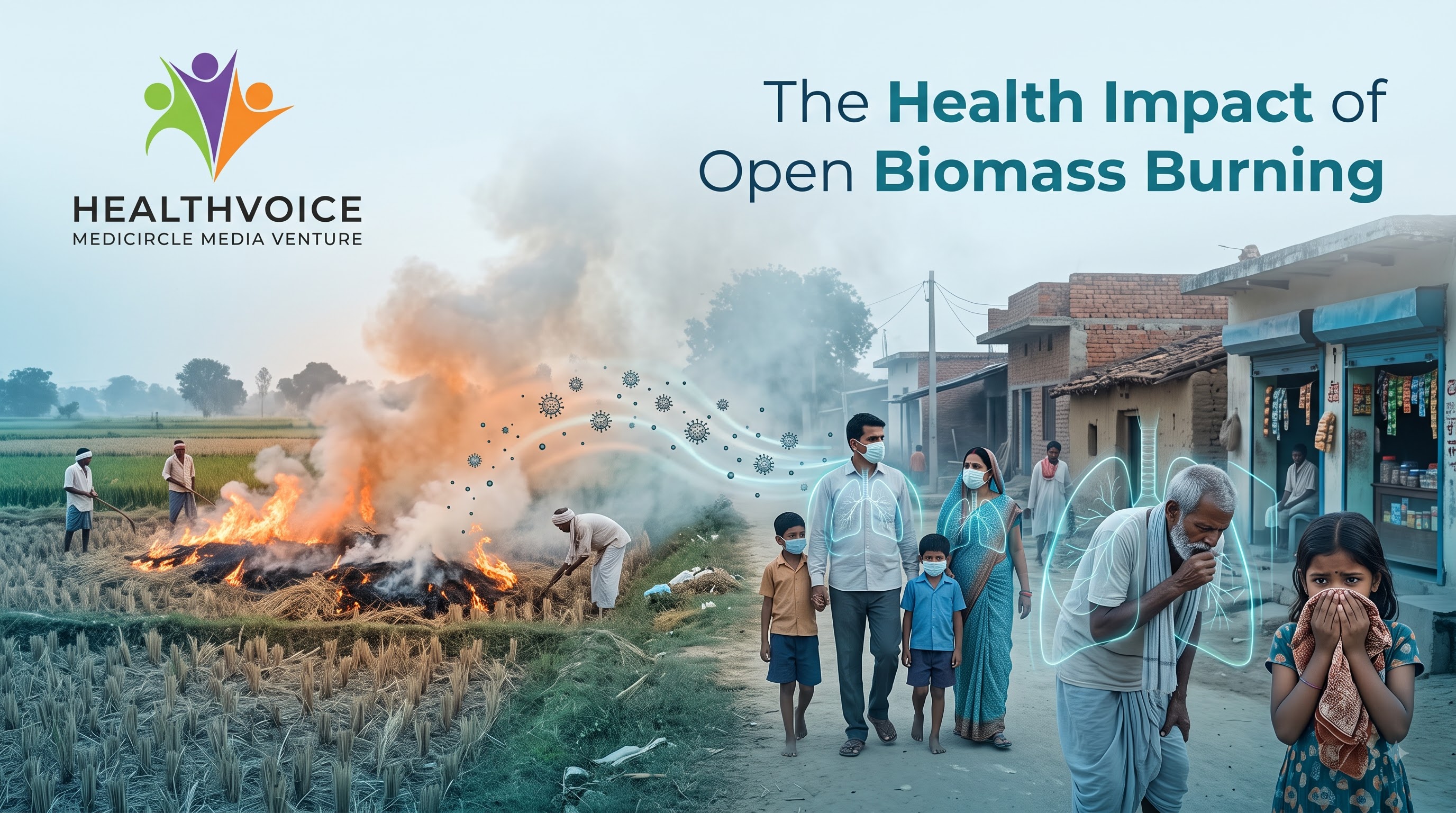
Agricultural open biomass burning—most notably post-harvest crop residue burning (stubble burning) across major agricultural belts—represents a massive, recurring environmental and public health crisis. Following the mechanized harvesting of crops such as paddy rice, wheat, and sugarcane, farmers face narrow time windows (often 10 to 15 days) to clear agricultural fields for the subsequent sowing cycle. Lacking affordable mechanization or bio-disposal infrastructure, open field incineration becomes the default operational method.
This seasonal open combustion releases dense, toxic plumes of air pollutants directly into the lower troposphere. Combined with autumn and winter meteorological phenomena—such as thermal inversions, low boundary layer heights, and stagnant wind speeds—these emissions form hazardous atmospheric smog blankets that settle over rural farm communities and drift hundreds of kilometers into neighboring densely populated urban metros.
The resulting exposure triggers severe spikes in acute respiratory illnesses, chronic obstructive pulmonary disease (COPD) exacerbations, pediatric asthma attacks, cardiovascular events, and systemic inflammatory cascades.
Mitigating this predictable annual health emergency requires an understanding of combustion aerosol toxicity, clinical respiratory pathophysiology, vulnerable population dynamics, and scalable agronomic and clinical interventions.
1. Emission Chemistry and Combustion Aerosols: The Toxic Plume
Open field burning represents an uncontrolled, low-temperature, incomplete combustion process. Unlike industrial incinerators equipped with scrubbers, agricultural field fires release an unfiltered cocktail of particulate and gaseous toxins:
- Fine and Ultrafine Particulate Matter (\text{PM}_{2.5} and \text{PM}_{1}):
- Particles with aerodynamic diameters \le 2.5\,\mu\text{m} penetrate past the nasopharyngeal filters and tracheobronchial ciliary escalators directly into the deep pulmonary alveoli.
- Ultrafine particles (\le 0.1\,\mu\text{m}) cross the alveolar-capillary barrier into the systemic circulation, inducing systemic endothelial dysfunction and microvascular inflammation.
- Carbonaceous Aerosols:
- Black Carbon (Soot): Strong absorber of solar radiation, high surface-area carrier for toxic chemical constituents.
- Organic Carbon (Brown Carbon): Formed from incomplete lignin and cellulose pyrosynthesis; contains potent cytotoxic compounds.
- Polycyclic Aromatic Hydrocarbons (PAHs): Highly lipophilic, mutagenic, and carcinogenic compounds (such as benzo[a]pyrene) that adsorb onto the surface of carbonaceous soot particles.
- Toxic Combustion Gases: High concentrations of Carbon Monoxide (\text{CO}), Nitrogen Oxides (\text{NO}_x), Sulfur Dioxide (\text{SO}_2), and Volatile Organic Compounds (VOCs such as benzene, formaldehyde, and 1,3-butadiene).
- Secondary Ozone Formation (\text{O}_3): In the presence of sunlight, emitted \text{NO}_x and VOC precursors generate ground-level tropospheric ozone, a powerful pulmonary irritant that drives severe airway hyper-reactivity.
2. Pathophysiological Mechanisms of Biomass Smoke Inhalation
The cellular response to inhaled biomass combustion aerosols involves three interconnected physiological pathways:
- 1. Generation of Reactive Oxygen Species (ROS): Free radicals present on the surface of biomass particles, combined with redox-active transition metals, overwhelm endogenous pulmonary antioxidant defenses (such as intracellular glutathione). This triggers lipid peroxidation, denatures cell membrane proteins, and damages nuclear DNA.
- 2. Pulmonary and Systemic Inflammatory Cascades: Alveolar macrophages phagocytose inhaled particles, initiating transcription factor activation (\text{NF-}\kappa\text{B}) and releasing pro-inflammatory cytokines—including Interleukin-6 (\text{IL-6}), Interleukin-8 (\text{IL-8}), and Tumor Necrosis Factor-alpha (\text{TNF-}\alpha). This localized airway inflammation spills over into the systemic circulation, driving acute-phase reactant synthesis (elevated C-reactive protein and fibrinogen).
- 3. Mucociliary Dysfunction and Epithelial Denudation: Inhaled biomass gases and particulates paralyze tracheal and bronchial ciliary motion, impairing mucosal clearance. Toxic aldehydes disrupt epithelial tight junctions (claudins and occludins), increasing mucosal permeability to bacterial and viral pathogens.
- 4. Autonomic Dysregulation and Vascular Spasm: Particulate-mediated stimulation of pulmonary vagal C-fibers alters autonomic tone, triggering bronchial constriction, acute reflex tachycardia, systemic vasoconstriction, and elevated platelet aggregation.
3. Clinical Manifestations and Acute Illness Spikes
During peak agricultural burning windows (typically October–November and April–May), primary healthcare centers, emergency departments, and pulmonology clinics across farming hubs record sharp rises in specific clinical syndromes:
- Acute Exacerbations of COPD (AECOPD):
- Inhalation of biomass aerosols triggers sudden bronchospasm, severe dynamic hyperinflation, and acute hypoxemic respiratory failure in patients with underlying chronic airway obstruction.
- Marked by worsening dyspnea, increased sputum volume, and purulence, frequently requiring systemic corticosteroids, nebulized bronchodilators, and non-invasive positive pressure ventilation (NIV).
- Pediatric Status Asthmaticus and Reactive Airway Disease:
- Children possess narrower airway calibers, higher minute ventilation rates per unit body weight, and immature immune defenses, making them exceptionally vulnerable to combustion aerosols.
- Clinical presentations include audible expiratory wheezing, tachypnea, subcostal retractions, and acute nocturnal coughing paroxysms.
- Upper and Lower Respiratory Tract Infections (URTI / Pneumonia):
- Disruption of the respiratory epithelial barrier and suppression of macrophage phagocytic capacity by biomass soot lower the host defense threshold against secondary bacterial (Streptococcus pneumoniae, Haemophilus influenzae) and viral (Influenza, RSV, SARS-CoV-2) invasions.
- Cardiovascular Morbidity (The Air-Heart Axis):
- Systemic vascular inflammation and autonomic nervous system imbalance elevate the incidence of acute ST-elevation myocardial infarctions (STEMI), unstable angina, hypertensive urgencies, and acute decompensated heart failure within 24 to 72 hours of peak \text{PM}_{2.5} exposure spikes.
- Ocular and Upper Airway Irritation:
- High ambient concentrations of volatile aldehydes and sulfur oxides induce acute chemical keratoconjunctivitis (red, watery, burning eyes), pharyngitis, acute rhinosinusitis, and persistent dry hacking coughs across entire community populations.
4. Structural Comparison: Biomass Combustion vs. Ambient Urban Traffic Pollution
- Combustion Source:
- Open Agricultural Biomass Burning: Uncontrolled, low-temperature open-air smoldering of agricultural stalks, cellulose, and lignin.
- Urban Traffic Emissions: High-temperature, high-pressure internal combustion engines (petrol and diesel fuel).
- Dominant Chemical Profile:
- Open Agricultural Biomass Burning: Organic carbon, black carbon, high levels of carbon monoxide, reactive oxygen species, volatile aldehydes, potassium tracer ions (\text{K}^+), and levoglucosan.
- Urban Traffic Emissions: Elemental carbon, nitrogen dioxide (\text{NO}_2), transition metals (zinc, copper from brake/tire wear), and ultrafine diesel soot.
- Temporal Pattern:
- Open Agricultural Biomass Burning: Acute, intense seasonal spikes (concentrated over 3 to 6 weeks post-harvest), generating massive localized particulate surges.
- Urban Traffic Emissions: Chronic, persistent daily baseline exposure with morning and evening rush-hour peaks throughout the year.
- Primary Toxicity Mechanism:
- Open Agricultural Biomass Burning: Intense oxidative stress, direct alveolar membrane irritation, high-burden free radical delivery, and suppression of pulmonary macrophage clearance.
- Urban Traffic Emissions: Deep-tissue ultrafine particle penetration, vascular plaque destabilization, systemic atherosclerosis, and endothelial nitric oxide uncoupling.
- Meteorological Vulnerability:
- Open Agricultural Biomass Burning: Trapped by seasonal autumn/winter temperature inversions and calm wind fields, creating dense regional smog layers.
- Urban Traffic Emissions: Disperses relatively faster, but forms localized "urban street canyon" toxicity traps in high-density downtown corridors.
5. Vulnerable Population Risk Matrix
The health burden of agricultural smoke is not distributed uniformly across populations; biological susceptibility and socio-economic realities dictate clinical outcomes:
- 1. Pediatric Groups (Infants & Children < 5\text{ Years}):
- Developing lungs have a smaller surface area for gas exchange and incomplete alveolarization.
- Early-life exposure to biomass smoke is strongly correlated with irreversible deficits in adult forced expiratory volume (\text{FEV}_1), recurrent childhood wheezing disorders, and increased susceptibility to severe lower respiratory infections.
- 2. Geriatric Populations (> 65\text{ Years}):
- Reduced baseline cardiopulmonary reserve, age-related pulmonary fibrosis, and pre-existing multi-morbidities (hypertension, coronary artery disease, diabetes) increase the risk of acute cardiopulmonary decompensation and all-cause mortality during burning episodes.
- 3. Agricultural Field Laborers and Rural Residents:
- Face direct, near-source occupational exposure without access to personal protective equipment (PPE) or indoor air filtration systems.
- Socioeconomic barriers (lack of rural tertiary healthcare, reliance on out-of-pocket medical expenditure) exacerbate disease severity and delay timely clinical intervention.
- 4. Pregnant Women and Fetal Outcomes:
- Inhaled carbon monoxide binds maternal hemoglobin, forming carboxyhemoglobin and reducing fetal oxygen delivery across the placenta.
- Transplacental transfer of combustion-derived polycyclic aromatic hydrocarbons (PAHs) is epidemiologically linked to elevated risks of intrauterine growth restriction (IUGR), low birth weight (< 2,500\text{ g}), preterm birth, and stillbirth.
6. Public Health, Clinical, and Agronomic Mitigation Strategies
Eliminating the public health impact of open biomass burning requires a multi-sectoral approach combining agricultural policy, municipal air quality management, and clinical preparedness:
- 1. Sustainable In-Situ and Ex-Situ Crop Residue Management:
- In-Situ Mechanization: Subsidized deployment of advanced agricultural machinery such as the Super-Straw Management System (Super-SMS) attached to combine harvesters, paired with the Happy Seeder / Smart Seeder, which sows wheat directly into standing paddy stubble, eliminating the need for burning while preserving soil moisture and nutrients.
- Microbial Bio-Decomposers: Application of enzymatic and fungal consortia (e.g., Pusa Bio-Decomposer) that accelerate the natural biological decomposition of tough lignocellulose straw directly in the field within 20 to 25 days.
- Ex-Situ Industrial Utilization: Aggregation of crop stubble for conversion into compressed bio-gas (CBG), bio-ethanol generation, biomass co-firing in thermal power plants, and industrial bio-packaging materials.
- 2. Primary Care Clinical Preparedness in Rural Hubs:
- Pre-Season Medication Stocking: Primary Health Centres (PHCs) and Community Health Centres (CHCs) in agricultural belts must stock essential respiratory supplies (metered-dose inhalers, spacer devices, nebulizer units, oral and intravenous corticosteroids, oxygen cylinders, and pulse oximeters) ahead of the post-harvest burning window.
- Action Plans for High-Risk Patients: Pulmonologists and primary care physicians should formulate proactive action plans for known asthma and COPD patients 4 weeks prior to harvest season, stepping up baseline maintenance inhaled corticosteroids (ICS) and long-acting bronchodilators (LABA/LAMA) to prevent acute catastrophic exacerbations.
- 3. Community-Level Personal Protection and Air Quality Warning Systems:
- Real-Time AQI Surveillance: Deploy dense, localized low-cost sensor networks linked to automated mobile SMS/WhatsApp public health advisories, alerting communities when ambient \text{PM}_{2.5} exceeds hazardous thresholds (> 300\text{--}500\,\mu\text{g/m}^3).
- Personal Protection: High-risk individuals should wear certified, properly fitted \text{N95} or \text{FFP2} respirators during outdoor activities. Cloth masks and standard surgical masks provide near-zero filtration against sub-micron biomass combustion aerosols.
- Indoor Air Safeguards: Seal doors and windows during peak evening and early morning inversion hours; deploy HEPA-filter indoor air purifiers in schools, hospital wards, and community centers where feasible.
10 Frequently Asked Questions (FAQs)
Q1. Why is agricultural biomass smoke more harmful than general dust in rural areas?
Rural soil dust consists primarily of coarse mineral particles (\text{PM}_{10}) that are largely trapped in the nose and upper throat. Biomass smoke consists of fine and ultrafine chemical aerosols (\text{PM}_{2.5} and \text{PM}_{1}) coated with toxic carcinogens, heavy metals, and free radicals that penetrate deep into the alveoli, enter the bloodstream, and provoke systemic inflammation.
Q2. Why does open stubble burning occur in such concentrated seasonal spikes?
In double-cropping systems (such as the rice-wheat rotation), farmers harvest paddy in late October and must prepare the soil and sow winter wheat by early-to-mid November. This extremely narrow 10-to-15-day window leaves little time for manual clearing, prompting rapid, large-scale open burning.
Q3. How does temperature inversion worsen the health effects of biomass burning in autumn and winter?
During warmer months, warm air rises, carrying smoke up into the atmosphere. In late autumn and winter, a layer of warm air traps cooler air near the ground (a temperature inversion). This functions as an atmospheric "lid," preventing smoke and pollutants from dispersing and holding toxic particulates at ground level where people breathe.
Q4. Can wearing a standard surgical mask protect against biomass smoke inhalation?
No. Standard surgical and cloth masks are designed to catch large droplets and have loose edges. They offer negligible filtration (< 10\text{--}20\%) against fine \text{PM}_{2.5} and combustion nanoparticles. Only properly fitted, NIOSH-certified \text{N95}, \text{KN95}, or \text{FFP2} particulate respirators effectively filter out fine combustion smoke.
Q5. What are the long-term health consequences of repeated seasonal biomass smoke exposure in children?
Repeated exposure to high-concentration biomass smoke during developmental windows stunts lung growth, leads to permanently lower baseline adult lung function (\text{FEV}_1), increases lifetime risks of adult-onset COPD (even in non-smokers), and elevates vulnerability to allergic rhinitis and chronic asthma.
Q6. How does biomass smoke trigger cardiovascular events like heart attacks?
When ultrafine smoke particles enter pulmonary capillaries, they trigger systemic oxidative stress, raise inflammatory markers (like IL-6 and CRP), stimulate the sympathetic nervous system to increase blood pressure, and elevate blood coagulability. In individuals with pre-existing coronary artery disease, this systemic stress can rupture atherosclerotic plaques, causing acute heart attacks.
Q7. What is a "Happy Seeder," and how does it prevent crop burning?
A Happy Seeder is a tractor-mounted agricultural implement that cuts and lifts standing crop residue (paddy straw), sows wheat seeds directly into the underlying bare soil, and deposits the cut straw back over the sown field as a protective mulch layer. This allows direct sowing without removing or burning the straw.
Q8. What is the role of microbial bio-decomposers in managing crop residue?
Microbial bio-decomposers are specialized enzyme-producing fungal and bacterial cocktails that, when sprayed onto crop residue in the field, break down complex cellulose, hemicellulose, and lignin fibers into organic matter within 20 to 25 days, converting waste straw into soil-enriching natural compost.
Q9. Why do patients with mild asthma often experience severe attacks during harvest season?
The massive influx of chemical irritants (sulfur dioxide, nitrogen dioxide, aldehydes) and fine particulates damages the protective airway epithelial lining and stimulates sensory C-fibers, triggering severe, sudden smooth muscle bronchospasms and airway hyper-responsiveness even in well-controlled asthmatic patients.
Q10. What clinical adjustments should chronic respiratory patients make prior to the burning season?
Patients with known COPD or asthma should consult their physicians 4 weeks prior to the burning season to optimize baseline controller medications (stepping up inhaled corticosteroid doses if indicated), secure adequate supplies of rescue bronchodilators, verify proper inhaler spacer technique, and obtain seasonal influenza and pneumococcal vaccinations.
 Team Healthvoice
#BiomassBurning #PublicHealth