How Associations Can Build Stronger Connections With Medical Colleges
Medical associations in India can build stronger connections with medical colleges through structured outreach, digital engagement, student chapters, academic partnerships, and consistent faculty involvement.
How Associations Can Build Stronger Connections With Medical Colleges
Introduction
Medical associations and medical colleges occupy two of the most important pillars of the Indian healthcare ecosystem. One produces the next generation of doctors. The other represents and supports the professional journey of those doctors once they enter practice. Yet, in many parts of India, the connection between these two institutions remains far weaker than it should be.
The gap is not about intent. Most associations genuinely want to reach medical students and young doctors. Most medical colleges genuinely want their students to understand what professional life looks like beyond the examination hall. The gap is structural. It is about the absence of organized, consistent, and meaningful communication between the two.
As India's healthcare workforce continues to grow, with over 100,000 MBBS graduates entering the system each year according to the National Medical Commission, the question of how associations can meaningfully engage with medical colleges has never been more urgent. This article explores practical, sustainable, and strategically sound approaches that medical associations can adopt to build stronger connections with medical colleges across India.
Why the Association and Medical College Relationship Matters
Before discussing how to strengthen this relationship, it is worth understanding why it matters so deeply.
Medical associations exist to represent, support, and elevate the medical profession. Their strength depends entirely on active, informed, and engaged members. When young doctors graduate without any real understanding of what an association does or why membership matters, associations lose the opportunity to bring passionate new voices into their communities.
Medical colleges, on the other hand, face a persistent challenge: preparing students not just for examinations, but for the professional realities of practicing medicine in India. That includes understanding medical ethics, navigating medico-legal situations, understanding healthcare policy, and building a professional network. These are areas where associations can contribute meaningfully, if the relationship is properly established.
When associations and medical colleges work in genuine partnership, the benefits flow in multiple directions. Students gain early exposure to professional communities. Associations gain access to a motivated, curious, and upcoming member base. Medical education becomes more holistic. And the broader healthcare ecosystem benefits from a generation of doctors who understand collaboration, advocacy, and professional responsibility from the very start of their careers.
Understanding the Current Gap Between Associations and Medical Colleges
The current disconnect between most medical associations and medical colleges in India can be traced to a few consistent patterns.
Many associations focus their engagement almost entirely on practicing doctors. Their events, communications, newsletters, and programs are designed for specialists and established clinicians. Medical students and interns often find little in an association's programming that feels relevant to their current stage.
Additionally, most associations do not have structured outreach programs directed at medical colleges. They may visit a college for a guest lecture or a CME session occasionally, but there is rarely a sustained engagement calendar or a dedicated association chapter within the college.
There is also a communication gap. Medical colleges receive large volumes of institutional communication. If association outreach is not targeted, relevant, and consistent, it simply does not register with either the faculty or the students.
Understanding this gap is the first step toward closing it. Associations that genuinely want to build stronger connections with medical colleges need to approach this as a long-term engagement strategy, not a one-time initiative.
Practical Strategies to Build Stronger Connections
Establishing Student Chapters Within Medical Colleges
One of the most effective long-term strategies is for associations to formally establish student chapters within medical colleges. A student chapter gives young doctors an official organizational identity even before they graduate. It creates a community within the college that is visibly connected to the larger professional body.
Student chapters can organize their own seminars, case discussions, awareness programs, and networking events under the umbrella of the parent association. They give students a sense of belonging to something larger than their own batch or college. And they serve as a natural pipeline for future association members.
For associations, the investment in establishing and supporting student chapters is relatively modest. What is needed most is a clear framework, some ongoing mentorship from senior members, and a willingness to treat students as genuine stakeholders in the profession's future.
Creating Structured College Outreach Programs
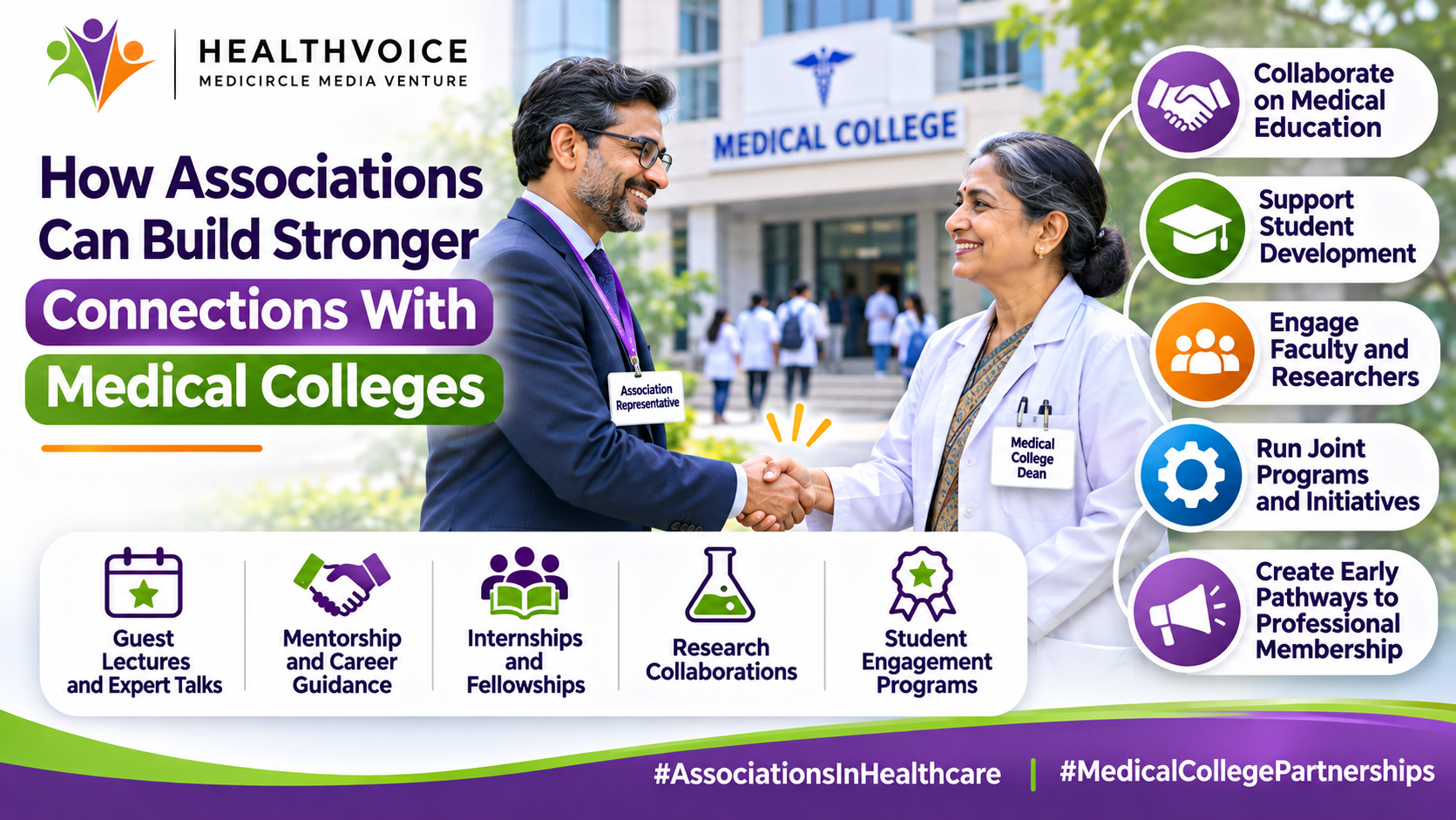
Beyond student chapters, associations need structured outreach programs that bring their leadership, expertise, and community into medical colleges on a regular basis. This can take several forms:
- Annual or bi-annual visits from association leaders to member colleges for open forums and Q and A sessions
- Guest lecture series featuring practicing specialists who are active association members
- Mentorship matching programs that connect final-year students or interns with practicing doctors through the association
- Career guidance workshops focused on specialty selection, postgraduate preparation, and professional development
The key word here is "structured." An occasional guest lecture is valuable, but it does not build a relationship. A calendar of consistent, purposeful touchpoints does.
Leveraging Digital Platforms for Continuous Engagement
Indian medical colleges now have students who are highly digitally active. WhatsApp groups, Instagram pages, and YouTube channels run by student bodies are genuinely influential spaces within college communities. Associations that want to build stronger connections must meet students where they are.
This means associations need a digital presence that is not just designed for practicing doctors. They need content formats, communication styles, and engagement strategies that also speak to medical students and young interns. Short-form educational videos, infographics explaining association activities, behind-the-scenes looks at how associations advocate for doctors, and student-specific newsletters are all formats that can bridge the digital communication gap.
Platforms like HealthVoice are built precisely for this kind of meaningful, credible, and community-driven communication. They offer medical associations a space to share their activities, engage their communities, and build a visible professional presence that can reach students and faculty alike through trusted digital channels.
Partnering on Research, Publications, and Academic Activities
Academic collaboration is one of the most credible forms of connection an association can build with a medical college. When an association co-organizes a research symposium, supports a college's journal club, contributes to a college's CME calendar, or recognizes outstanding student research at its annual conference, it signals that it values academic contribution, not just clinical credentials.
In India, where academic and research opportunities at the undergraduate level remain unevenly distributed, associations have a genuine opportunity to fill a gap. By partnering with colleges on research guidance, poster presentation workshops, and publication mentorship, associations can position themselves as genuine contributors to academic development, not just professional bodies collecting membership fees.
Advocating for and Supporting Faculty Engagement
Medical college faculty are a critical link in the association-college relationship. Faculty members who are active in professional associations naturally serve as ambassadors for those associations within their colleges. They speak about association activities in lectures, encourage students to attend events, and model the kind of professional engagement that associations want to cultivate.
Associations should actively recognize, celebrate, and support faculty who contribute to their activities. This includes inviting faculty to present at association conferences, publishing faculty perspectives through association channels, nominating faculty for awards and recognitions, and involving faculty in policy discussions where their academic insights are valuable.
When faculty members feel genuinely valued by an association, they become its most effective advocates within medical colleges.
Building a Long-Term Engagement Ecosystem
Strengthening the connection between associations and medical colleges is not a project with a defined endpoint. It is an ongoing commitment that needs to be built into the operational culture of the association.
This requires a few foundational elements. Associations need a dedicated team or working group responsible for college engagement. They need an annual calendar of outreach activities. They need a feedback mechanism to understand what is resonating with students and faculty. And they need a willingness to evolve their engagement approach based on what they learn.
Technology can support this ecosystem significantly. A well-managed digital community platform where students can follow association activities, interact with senior members, access educational content, and register for events creates a continuous touchpoint that goes far beyond any individual event or visit.
India's medical associations that are already leading in this space demonstrate that sustained engagement produces measurable results: higher youth membership, stronger representation of young doctor voices in association governance, and a more vibrant professional community overall.
Conclusion
The relationship between medical associations and medical colleges holds enormous untapped potential for the Indian healthcare ecosystem. When associations invest genuinely in reaching students and young doctors through structured outreach, digital engagement, academic partnerships, and faculty collaboration, they do more than grow their membership base. They contribute to the professional formation of a generation of doctors who will carry the values of collaboration, advocacy, and community into their entire careers.
For associations willing to take this seriously, the approach is clear: start with structured presence, build digital communication, invest in academic collaboration, and treat students as future leaders rather than future members. The difference in outcome is significant.
Frequently Asked Questions
Q1: Why should medical associations focus on connecting with medical colleges?
Medical colleges are where the next generation of doctors is shaped professionally. Early engagement helps associations introduce students to the value of professional communities, ethical practice, and collective advocacy before they enter the workforce. It also strengthens the long-term membership base and brings younger perspectives into association leadership.
Q2: What is a medical student chapter and how does it help associations?
A student chapter is a formal branch of a medical association established within a medical college. It allows students to participate in association activities, organize educational events, and build professional networks under the guidance of the parent association. For associations, student chapters create a continuous and organized connection with college communities.
Q3: How can small or regional medical associations with limited resources start building college connections?
Smaller associations can begin with low-cost, high-impact approaches such as digital outreach through social media, organizing virtual guest lectures, partnering with one or two local medical colleges for a pilot mentorship program, and creating student-focused content on their communication channels. Consistency matters more than scale at the beginning.
Q4: What role does digital communication play in association and medical college engagement?
Digital communication allows associations to reach students continuously between in-person events. Regular content on professional development, healthcare updates, association news, and student achievements keeps the association visible and relevant in the daily digital lives of medical students and young doctors. Platforms designed for professional healthcare communities enhance the credibility of this communication.
Q5: How can associations measure whether their college engagement efforts are working?
Key indicators include growth in student membership applications, attendance at student-focused events, number of active student chapters, faculty participation in association activities, and engagement metrics on digital platforms. Associations should also conduct periodic surveys with students and faculty to gather direct feedback on the quality and relevance of their outreach.
Resources
- National Medical Commission (NMC) : Official regulatory body for medical education in India, providing data on medical colleges and graduate output.
- Indian Medical Association (IMA) : India's largest national medical association, offering frameworks for professional engagement and community building.
- World Health Organization (WHO) India Country Office : Reports and guidance on healthcare workforce development and professional collaboration.
- Association of Indian Universities (AIU) : Reference for academic collaboration frameworks applicable to medical institutions across India.
- Ministry of Health and Family Welfare (MoHFW) : Government health policies, workforce data, and healthcare system updates relevant to medical education and association activities.
Interlinking Keywords
Medical associations India, medical college partnerships, doctor community building, association engagement, healthcare collaboration India, medical student professional development, NMC medical education, young doctor membership, association leadership India, healthcare community platform
Last reviewed by:
Dr. Manthan Tripathi, HealthVoice Editorial and Medical Advisory Team, November 12, 2026.
Disclaimer
The information provided in this article is intended for general informational and professional development purposes only. It does not constitute legal, regulatory, or institutional advice. Medical associations and educational institutions should consult relevant authorities and legal counsel before implementing any formal partnership or engagement program. HealthVoice does not endorse any specific association, institution, or program mentioned in this article.
 Dr. Manthan Tripathi
#MedicalCollegePartnerships #HealthcareAssociations