Why Doctors Are Central to Hospital Operations and Patient Experience
Doctors are the central force behind hospital operations and patient experience, shaping clinical quality, team coordination, digital health adoption, and institutional leadership across India's growing healthcare system.
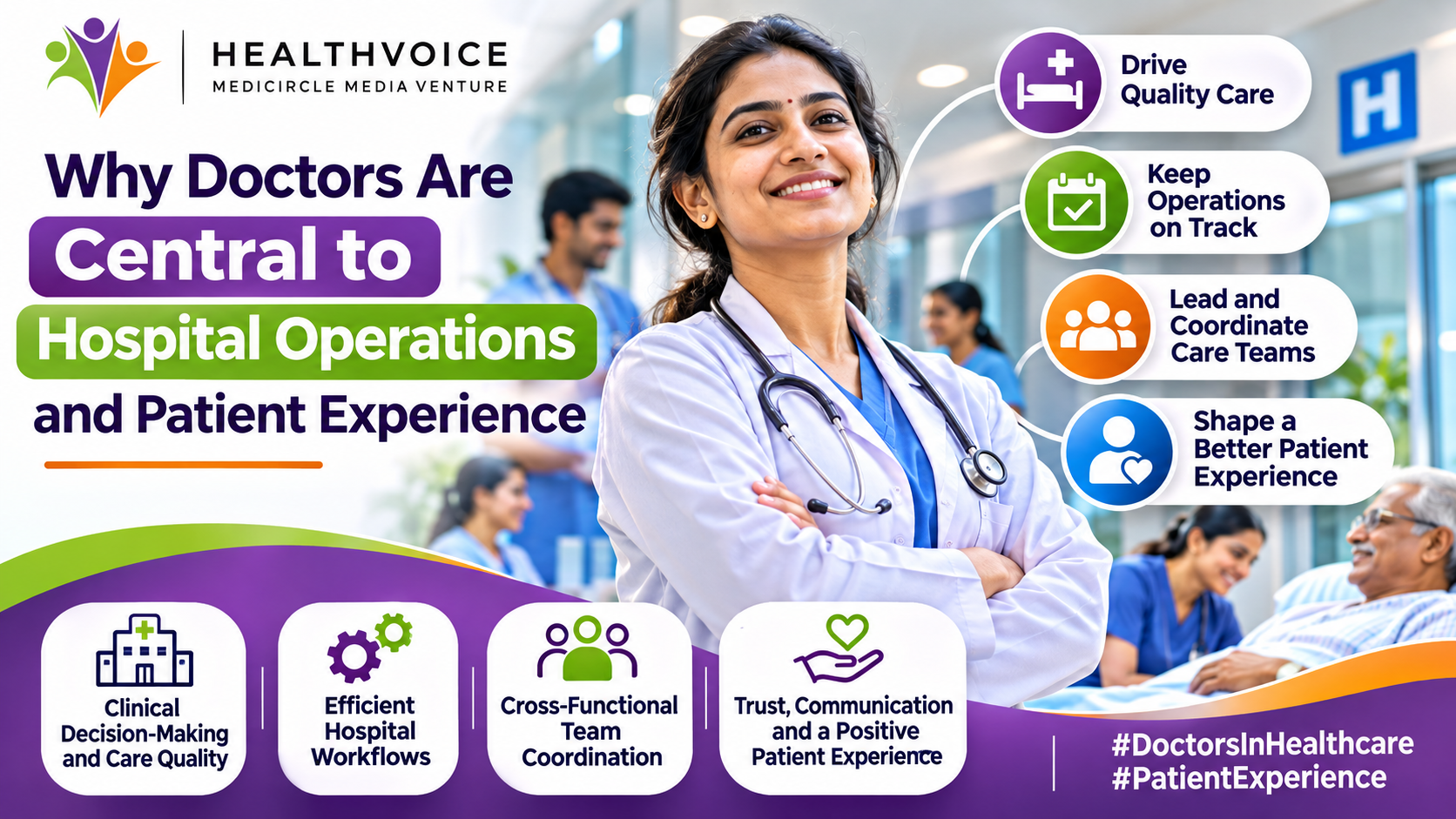
From Hospital Operations to Patient Experience: Why Doctors Matter
Introduction
Hospitals in India are complex, high-stakes environments where thousands of decisions are made every single day. Behind every admission, every diagnosis, every discharge, and every recovery, there is a doctor who is not simply treating a condition but actively shaping the experience of care. The role of doctors in modern hospitals extends well beyond the consultation room. They are clinical leaders, operational contributors, quality guardians, and the primary face of institutional trust for patients and their families.
As India's healthcare sector grows rapidly, with government initiatives like Ayushman Bharat expanding access to care and NABH accreditation driving quality standards, the question of how doctors influence hospital performance has become more important than ever. Understanding the depth of this influence helps healthcare institutions, medical associations, and healthcare leaders make better decisions about how hospitals are structured, governed, and improved.
Understanding the Doctor's Role in a Hospital Ecosystem
A hospital functions as a system. Administrative staff manage registrations, billing, and logistics. Nurses provide continuous bedside care. Technicians run diagnostic equipment. But the doctor sits at the center of this entire system, making decisions that set everything else in motion.
When a patient walks into a hospital, the first meaningful clinical decision belongs to the doctor. That decision determines which investigations are ordered, which ward the patient is admitted to, which treatment protocol is followed, and when the patient is ready to leave. Every department, every resource, and every process in the hospital ultimately responds to what the doctor decides.
This is not a small operational detail. It means that how well a hospital runs is inseparable from how well its doctors practice, communicate, and lead.
In Indian hospitals, particularly in secondary and tertiary care settings, doctors often carry additional responsibilities that go beyond clinical work. Senior physicians frequently chair departmental committees, participate in quality review meetings, mentor junior residents, and engage with institutional leadership on policy decisions. The doctor is simultaneously a practitioner, a teacher, a reviewer, and an influencer of institutional culture.
Doctors and Clinical Quality in Hospital Operations
Clinical quality is the foundation of a hospital's reputation and long-term sustainability. No amount of infrastructure investment or marketing effort can compensate for poor clinical outcomes. And clinical quality, at its core, is determined by the doctors who define and follow evidence-based protocols.
NABH, the National Accreditation Board for Hospitals and Healthcare Providers, sets rigorous standards for clinical care in India. Meeting these standards requires active physician involvement in developing standard operating procedures, participating in clinical audits, reviewing adverse events, and driving continuous quality improvement. Doctors who engage with these processes are not just complying with accreditation requirements. They are shaping the operational backbone of the institution.
Several dimensions of clinical quality are directly influenced by physician practice:
- Adherence to clinical protocols and treatment guidelines
- Rational prescribing and antimicrobial stewardship
- Timely documentation and accuracy of medical records
- Participation in mortality and morbidity reviews
- Infection control practices within clinical settings
When doctors treat these areas as professional responsibilities rather than administrative burdens, hospitals become measurably safer and more efficient.
How Doctors Shape Patient Experience
Patient experience in Indian hospitals is a topic that is gaining serious attention. The National Health Authority and various state health departments are increasingly looking at patient satisfaction as an indicator of healthcare quality, not just clinical outcomes. Patients are more informed, more vocal, and more likely to seek care at institutions where they feel respected, heard, and genuinely cared for.
Doctors are the most powerful determinant of patient experience. Research consistently shows that patients evaluate their hospital experience primarily through the lens of their interaction with the treating physician. How clearly the doctor explained the diagnosis, how much time was spent answering questions, how compassionately difficult news was communicated, and how confident the patient felt in the treatment plan are all factors that shape overall satisfaction.
This is especially relevant in India, where many patients are navigating complex medical situations for the first time, often in a healthcare system that can feel overwhelming. A doctor who takes the time to explain a diagnosis in simple language, acknowledge the family's anxiety, and involve the patient in decision-making creates an experience of care that goes far beyond the clinical outcome itself.
Effective doctor-patient communication also reduces treatment errors, improves medication adherence, and lowers rates of unplanned readmission. These are not soft benefits. They are measurable improvements in hospital performance that result directly from how doctors engage with patients.
Doctor Leadership and Hospital Management
Modern hospital management increasingly recognizes that doctors must have a meaningful seat at the table when institutional decisions are being made. The historical separation between clinical staff and hospital administration has gradually given way to a more integrated model, where physician leaders participate in strategy, policy, and resource allocation.
In India, this shift is visible in hospitals that have appointed Chief Medical Officers, Departmental Medical Directors, and Clinical Governance Committees with active physician membership. These roles allow doctors to bring clinical insight into decisions about staffing ratios, equipment procurement, patient flow design, and emergency preparedness.
Doctors who step into leadership roles bring a perspective that administrators alone cannot replicate. They understand the clinical consequences of operational choices. They can advocate for patient safety in budget discussions. They can identify bottlenecks in care delivery that are invisible to those who have never practiced clinically. This intersection of clinical expertise and institutional leadership is what defines the concept of physician-led hospital governance.
For medical associations in India, promoting doctor leadership in hospitals is not just a professional interest. It is a public health imperative. When doctors are empowered to lead, hospitals become more responsive, more ethical, and more accountable.
The Doctor's Influence on Interdisciplinary Care Teams
Contemporary hospital care is rarely delivered by a single doctor. It involves nurses, pharmacists, physiotherapists, dietitians, social workers, and multiple specialists working together around the same patient. This interdisciplinary model, which is now standard in well-functioning hospitals across India and globally, only works well when the physician plays an active coordinating role.
The treating doctor is typically the leader of the care team for each patient. This leadership involves not just issuing orders but actively communicating with other team members, integrating their inputs into the care plan, and ensuring that every member of the team understands the clinical goals for the patient. When this coordination happens well, care is safer, faster, and more holistic.
Nurses pick up early warning signs that doctors need to know about. Pharmacists identify drug interactions that can prevent serious adverse events. Physiotherapists assess functional recovery in ways that change discharge planning. When a doctor creates a team culture of open communication and mutual respect, all of these contributions translate into better patient outcomes.
Doctors, Digital Health, and the Future of Hospital Operations
India is investing heavily in digital health infrastructure. The Ayushman Bharat Digital Mission (ABDM) is creating a national health ID system, linking electronic health records across hospitals and clinics. The adoption of Hospital Information Systems, telemedicine platforms, and digital diagnostic tools is accelerating across both urban and rural healthcare settings.
In this environment, doctors are not passive recipients of technology. They are the primary users of clinical digital tools, and their engagement or resistance significantly determines whether digital health investments succeed. A doctor who actively uses an electronic health record system, documents accurately, and participates in telehealth consultations is contributing to a hospital's digital maturity and long-term operational efficiency.
Beyond individual adoption, doctors are increasingly contributing to the design and governance of digital health systems. Medical associations and clinical leaders are being consulted by policymakers, healthtech companies, and hospital administrators on how digital tools should function at the point of care. This role of the physician as a digital health stakeholder is emerging as a critical dimension of hospital leadership in India.
Why This Matters for India's Healthcare Goals
India's national healthcare goals, as outlined in the National Health Policy and reinforced through programs like PM-JAY and Ayushman Bharat, are ambitious. Universal health coverage, improved maternal and child health indicators, reduced burden of non-communicable diseases, and strengthened primary care are all priorities that depend heavily on physician performance and engagement.
Hospitals that recognize and invest in their doctors, that create environments where physicians can lead, communicate, teach, and practice with dignity and professional fulfillment, are more likely to achieve these goals. Conversely, hospitals that treat doctors primarily as service providers without agency or voice often struggle with quality gaps, staff attrition, and declining patient trust.
For healthcare leaders, hospital administrators, medical associations, and policymakers, the message is clear. The doctor is not one input among many in the hospital system. The doctor is the central force through which clinical quality, patient experience, operational efficiency, and institutional reputation are built or diminished.
Conclusion
The journey from hospital operations to patient experience passes through the doctor at every significant point. Doctors define clinical quality, lead care teams, shape institutional culture, guide digital adoption, and represent the most direct human connection a patient has with the healthcare system. In India's rapidly evolving healthcare landscape, where access is expanding and expectations are rising, the role of the physician has never been more consequential.
For healthcare institutions, investing in physician leadership, communication, and professional development is not an optional enhancement. It is a core strategic imperative. For medical associations and communities, advocating for environments where doctors can practice, lead, and contribute at their full potential is a service not just to the profession but to every patient who will ever walk through a hospital door.
Platforms like HealthVoice exist precisely to amplify this reality, giving doctors, associations, and healthcare communities the visibility, tools, and community they need to make their professional voice count.
Frequently Asked Questions
Q1: Why are doctors considered central to hospital operations and not just patient care?
Doctors initiate virtually every clinical and operational process within a hospital. From ordering investigations and directing treatment protocols to participating in quality reviews and leading care teams, their decisions drive resource use, patient flow, and institutional outcomes. Hospital operations cannot be meaningfully separated from the clinical decisions doctors make every day.
Q2: How do doctors directly affect patient experience in Indian hospitals?
Patient experience is shaped most powerfully by the doctor-patient interaction. When doctors communicate clearly, involve patients in decisions, and demonstrate genuine empathy, patients report higher satisfaction and show better treatment adherence. In India, where many patients navigate complex healthcare journeys for the first time, compassionate and clear physician communication makes a defining difference.
Q3: What is the connection between doctor leadership and hospital quality accreditation in India?
NABH accreditation requires active physician involvement in clinical governance, protocol development, and quality improvement processes. Hospitals that have strong physician leadership structures are better positioned to meet and sustain accreditation standards, which in turn improves care quality, institutional credibility, and patient outcomes.
Q4: How is the role of doctors changing with the expansion of digital health in India?
Doctors are increasingly becoming key stakeholders in digital health adoption. Through the Ayushman Bharat Digital Mission and the spread of Hospital Information Systems, physicians are expected to actively use electronic records, contribute to telehealth, and participate in the governance of clinical digital tools. Their engagement is critical to whether digital health investments achieve their intended impact.
Q5: How can medical associations support better doctor engagement in hospital leadership?
Medical associations can advocate for formal physician leadership roles within hospital governance structures, promote training in clinical leadership and healthcare management, and create platforms for peer learning and policy dialogue. By amplifying the professional voice of doctors in institutional and policy settings, associations help build a healthcare ecosystem where physician leadership becomes the norm rather than the exception.
Resources
- National Accreditation Board for Hospitals and Healthcare Providers (NABH): Standards and guidelines for clinical quality and hospital accreditation in India.
- Ayushman Bharat Digital Mission (ABDM): Official framework for India's national digital health infrastructure and health ID ecosystem.
- National Health Authority (NHA): Policy documents and performance data related to PM-JAY and universal health coverage programs.
- World Health Organization (WHO) India: Reports and frameworks on patient safety, quality of care, and physician workforce development.
- Indian Medical Association (IMA): Resources on medical professionalism, doctor rights, and healthcare policy advocacy in India.
Interlinking Keywords
Doctor leadership in hospitals, hospital operations India, patient experience healthcare, physician-led governance, NABH accreditation doctors, clinical quality improvement, digital health doctors India, interdisciplinary care teams, Ayushman Bharat Digital Mission, medical association engagement
Last reviewed by:
Dr. Manthan Tripathi, HealthVoice Editorial and Medical Advisory Team, November 12, 2026.
Disclaimer
The information presented in this article is intended for general awareness and educational purposes only. It does not constitute medical advice, clinical guidance, or a substitute for professional medical consultation. Readers are advised to consult qualified healthcare professionals for any medical or health-related decisions. HealthVoice and its contributors do not assume liability for decisions made based on the information provided in this article.
 Dr. Manthan Tripathi
#DoctorsInHealthcare #PatientExperience