How Medical Associations Can Educate Doctors on Cybersecurity
Medical associations hold the authority and reach to close the cybersecurity knowledge gap among Indian doctors, protecting patient data and strengthening digital health infrastructure nationwide.
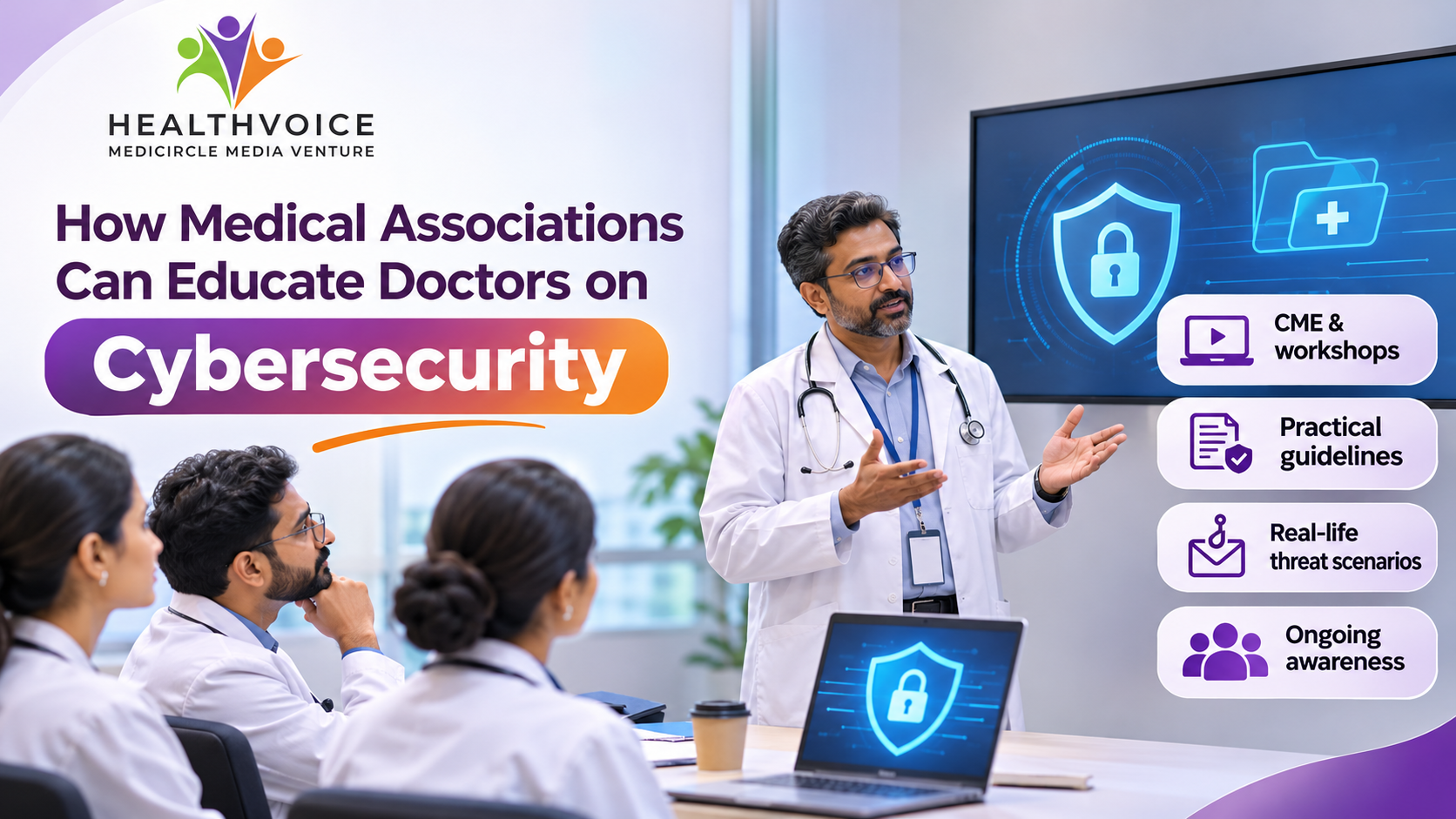
How Medical Associations Can Educate Doctors About Cybersecurity in Healthcare
Introduction
Healthcare is one of the most targeted sectors for cyberattacks globally, and India is no exception. As hospitals, clinics, and individual practitioners increasingly adopt electronic health records, telemedicine platforms, and digital billing systems, the volume of sensitive patient data stored online has grown at an unprecedented pace. Yet the medical community as a whole remains underprepared when it comes to cybersecurity awareness and digital hygiene.
Doctors spend years mastering clinical medicine. They are trained to diagnose, treat, and care for patients. What most medical curricula do not teach, however, is how to protect a patient's digital identity as carefully as their physical health. A leaked medical record can cause irreversible damage, from financial fraud to insurance denial, to stigma around sensitive diagnoses. This is a patient safety issue as much as it is a data protection issue.
Medical associations in India are uniquely positioned to close this gap. Organizations such as the Indian Medical Association (IMA), medical specialty boards, state medical councils, and hospital networks hold considerable trust and reach within the professional community. If these bodies take cybersecurity education seriously and build it into their regular programs, the impact on healthcare data security across the country can be transformative.
Why Cybersecurity Has Become a Critical Issue for Doctors
The Indian healthcare sector is undergoing rapid digitization. The Ayushman Bharat Digital Mission (ABDM) is building a nationwide digital health ecosystem that includes unique health IDs, linked health records, and interoperable health data exchange. While this is a landmark step in making healthcare more accessible and efficient, it also creates new vulnerabilities that bad actors are eager to exploit.
Ransomware attacks on hospitals have been reported in multiple Indian cities over the past few years. Phishing emails disguised as official communications from health ministries or pharmaceutical companies have targeted clinical staff. Weak passwords on hospital management systems and unencrypted patient databases have led to data breaches that exposed thousands of patient records.
For the individual doctor, the risks are immediate and personal. A compromised email account can expose patient correspondence. An unsecured telemedicine session can be intercepted. A doctor's digital signature, if stolen, can be misused to generate fraudulent prescriptions or insurance claims. These are not hypothetical risks. They are happening, and the medical community needs to treat them with the same urgency as a clinical emergency.
The Role Medical Associations Must Play
Medical associations are not regulatory bodies in the cybersecurity domain, but they carry the authority, trust, and professional reach needed to create lasting behavioral change among doctors. Here is how they can take meaningful action.
Integrating cybersecurity into continuing medical education (CME)
The most direct route is through continuing medical education. Most state medical councils and specialty associations already mandate a certain number of CME credits annually for license renewal. Adding cybersecurity modules to this framework would ensure that every practicing doctor receives foundational digital safety training on a regular basis. These sessions do not need to be highly technical. The focus should be on practical awareness: recognizing phishing attempts, using strong authentication methods, handling patient data responsibly, and understanding the basics of data breach protocol.
Developing India-specific cybersecurity guidelines for doctors
Currently, there is no single, easy-to-follow cybersecurity handbook designed specifically for Indian medical practitioners. Medical associations can develop such a resource in collaboration with cybersecurity experts, the Ministry of Health, and ABDM stakeholders. This document should cover:
- Safe use of telemedicine platforms
- Password management and two-factor authentication
- Secure handling of electronic health records
- Protocols for responding to a suspected cyberattack
- Legal responsibilities under the Information Technology Act, 2000 and the upcoming Digital Personal Data Protection Act
Creating dedicated cybersecurity cells within associations
Larger associations such as the IMA or specialty colleges can establish dedicated cybersecurity advisory committees. These cells would serve multiple functions: advising members on best practices, responding to member queries about data safety, issuing public advisories when new cyber threats emerge, and liaisoning with government bodies such as CERT-In (the Indian Computer Emergency Response Team) on behalf of the medical community.
Hosting workshops and simulation exercises
Passive learning through lectures or pamphlets has limited impact. Medical associations should invest in interactive, simulation-based training. Tabletop exercises where doctors work through a mock data breach scenario, phishing simulation tests sent to member email IDs, and live demonstrations of cybersecurity tools are far more effective at building lasting awareness. These sessions can be delivered both in-person at medical conferences and through digital platforms, making them accessible to doctors in Tier 2 and Tier 3 cities.
Partnering with healthtech companies and cybersecurity firms
Associations can forge strategic partnerships with trusted technology companies to provide members with vetted, affordable cybersecurity solutions. This includes discounted access to secure email services, virtual private networks (VPNs), encrypted storage platforms, and compliant telemedicine tools. Such partnerships, when handled transparently and ethically, can bridge the gap between awareness and action.
Understanding the Indian Regulatory Context
Any cybersecurity education program for doctors in India must be framed within the country's evolving regulatory landscape. The Information Technology Act, 2000 and the Information Technology (Reasonable Security Practices and Procedures and Sensitive Personal Data or Information) Rules, 2011 already impose obligations on entities handling sensitive personal data, which includes health information.
The Digital Personal Data Protection Act, 2023 goes further by laying down clear principles for data collection, storage, purpose limitation, and data subject rights. Healthcare providers who collect and process patient data are classified as data fiduciaries under this Act and must comply with its provisions. Non-compliance can attract significant penalties.
Medical associations can help doctors navigate this regulatory environment by translating complex legal language into clear, actionable guidance. Many doctors are unaware of their obligations under these laws. Associations have both the authority and the responsibility to change this.
ABDM's data privacy framework also sets specific standards for how health data must be stored, shared, and protected within the digital health ecosystem. As more practitioners join the ABDM network, they need to understand what data sharing consents mean, how to manage patient permissions, and what protections are built into the system.
Building a Culture of Digital Responsibility Among Doctors
Cybersecurity education is not a one-time event. It requires consistent reinforcement to become part of a doctor's professional culture, much like hand hygiene or infection control protocols. Medical associations can champion this cultural shift in several ways.
Associating cybersecurity awareness with professional identity is one important strategy. When associations frame digital responsibility as a marker of professionalism and patient care quality, rather than as a technical burden, doctors are more likely to engage with it seriously. Communications should consistently reinforce the message that protecting patient data is as important as protecting patient health.
Recognition programs can further motivate engagement. Associations can acknowledge clinics, hospitals, and individual practitioners who demonstrate exemplary data protection practices. Awards at annual conferences, certificates of recognition, and features in association publications can help set positive benchmarks across the community.
HealthVoice, as a platform dedicated to amplifying doctor voices and fostering professional engagement, is well placed to support this movement by giving visibility to associations running cybersecurity education programs, sharing practical guidance for doctors, and creating a space where healthcare communities can discuss digital challenges openly and constructively.
Challenges and How to Overcome Them
Several barriers stand in the way of effective cybersecurity education within the medical community.
Time constraints are significant. Doctors, particularly those in clinical practice, have very limited time for professional development activities outside patient care. Associations must design micro-learning modules that can be completed in short sessions, mobile-friendly formats that work during commute or break times, and recorded content that doctors can access on demand.
Low perceived relevance is another challenge. Many doctors believe that cyberattacks happen to large hospitals or IT companies, not to individual practitioners. Associations need to present real-world case studies from Indian healthcare settings that make the threat feel immediate and relevant. Anonymized breach reports, shared with member permission, can be particularly persuasive.
Digital literacy gaps cannot be ignored, especially among senior practitioners who completed their training before the digital era. Educational programs must be designed for a range of digital competencies and should never assume prior technical knowledge.
Conclusion
The intersection of healthcare and cybersecurity is no longer a niche concern for IT departments. It is a frontline professional responsibility for every doctor who handles patient data in any digital form. Medical associations in India are among the most trusted institutions in the healthcare ecosystem, and that trust comes with an opportunity to lead meaningful change.
By embedding cybersecurity education into CME frameworks, developing India-specific guidance, creating advisory committees, running simulation-based training, and partnering with vetted technology providers, medical associations can equip the medical community with the knowledge and tools needed to protect patients in the digital age.
The conversation about cybersecurity in Indian healthcare needs to happen within the medical community, not just in IT boardrooms. Medical associations have both the platform and the responsibility to start that conversation, sustain it, and translate it into lasting professional practice.
Frequently Asked Questions
Q1: Why do doctors need to learn about cybersecurity?
Doctors handle sensitive patient data every day through electronic health records, telemedicine platforms, and digital prescriptions. If this data is compromised due to cyberattacks, phishing, or poor digital hygiene, it can harm patients through identity theft, financial fraud, or exposure of confidential health information. Cybersecurity awareness is now a core professional responsibility for all healthcare providers.
Q2: What is the role of the Indian Medical Association in promoting cybersecurity?
The Indian Medical Association, as one of the largest and most trusted medical bodies in the country, can play a leading role by integrating cybersecurity modules into its CME programs, publishing digital safety guidelines for members, establishing advisory committees, and partnering with government agencies like CERT-In to respond to emerging cyber threats in healthcare.
Q3: Which Indian laws apply to doctors who handle patient data digitally?
Doctors who handle digital patient data are subject to the Information Technology Act, 2000, the IT (Sensitive Personal Data) Rules of 2011, and the Digital Personal Data Protection Act, 2023. These laws place obligations on healthcare providers as data fiduciaries to ensure that patient information is collected, stored, and shared responsibly and securely.
Q4: How can medical associations deliver cybersecurity training to doctors who have limited time?
Associations can design short, modular learning formats that can be completed in 15 to 20 minutes, accessed on mobile devices, or watched as recorded sessions. Simulation-based exercises during medical conferences and annual events, combined with digital resources distributed through association platforms, can ensure broad reach without placing additional time burden on busy practitioners.
Q5: What is ABDM's relevance to cybersecurity education for doctors?
The Ayushman Bharat Digital Mission (ABDM) is building a national digital health infrastructure that links patient health records across providers. Doctors participating in this ecosystem must understand data-sharing consents, patient rights under ABDM, and the security standards required to operate within the network. Medical associations can help translate ABDM's technical and regulatory expectations into practical guidance for their members.
Resources
- Indian Computer Emergency Response Team (CERT-In): The national agency under the Ministry of Electronics and Information Technology responsible for cybersecurity incident response in India, including sectors like healthcare.
- Ministry of Health and Family Welfare, Government of India: Official source for healthcare policy, digital health initiatives, and regulatory guidance relevant to medical practitioners across the country.
- Ayushman Bharat Digital Mission (ABDM): The government framework building India's national digital health ecosystem, with detailed documentation on data privacy standards and health data management protocols.
- Indian Medical Association (IMA): The largest professional body representing medical practitioners in India, with resources on CME, member guidelines, and professional development programs.
- World Health Organization: Digital Health and Health Informatics resources, including global frameworks for health data protection that inform national-level policy in India.
Interlinking Keywords
cybersecurity for doctors India, medical data protection, ABDM digital health, telemedicine data security, continuing medical education India, patient data privacy, healthcare cyberattacks India, digital health regulations, Information Technology Act healthcare, doctor digital safety, health data breach India, medical association CME programs
Last reviewed by:
Dr. Manthan Tripathi, HealthVoice Editorial and Medical Advisory Team, November 16, 2026.
Disclaimer
The information presented in this article is intended for general awareness and professional education purposes only. It does not constitute legal, regulatory, or clinical advice. Doctors and healthcare institutions should consult qualified cybersecurity professionals and legal advisors for guidance specific to their practice and jurisdiction. HealthVoice is not responsible for decisions made on the basis of information provided in this article.
 Dr. Manthan Tripathi
#HealthcareCybersecurity #MedicalEducation