The Human Factor in Healthcare Cybersecurity: India's Most Overlooked Vulnerability
Human behavior remains the most exploited vulnerability in Indian healthcare cybersecurity. Training, policy compliance under the DPDP Act, and a security-first culture are essential to protecting patient data.
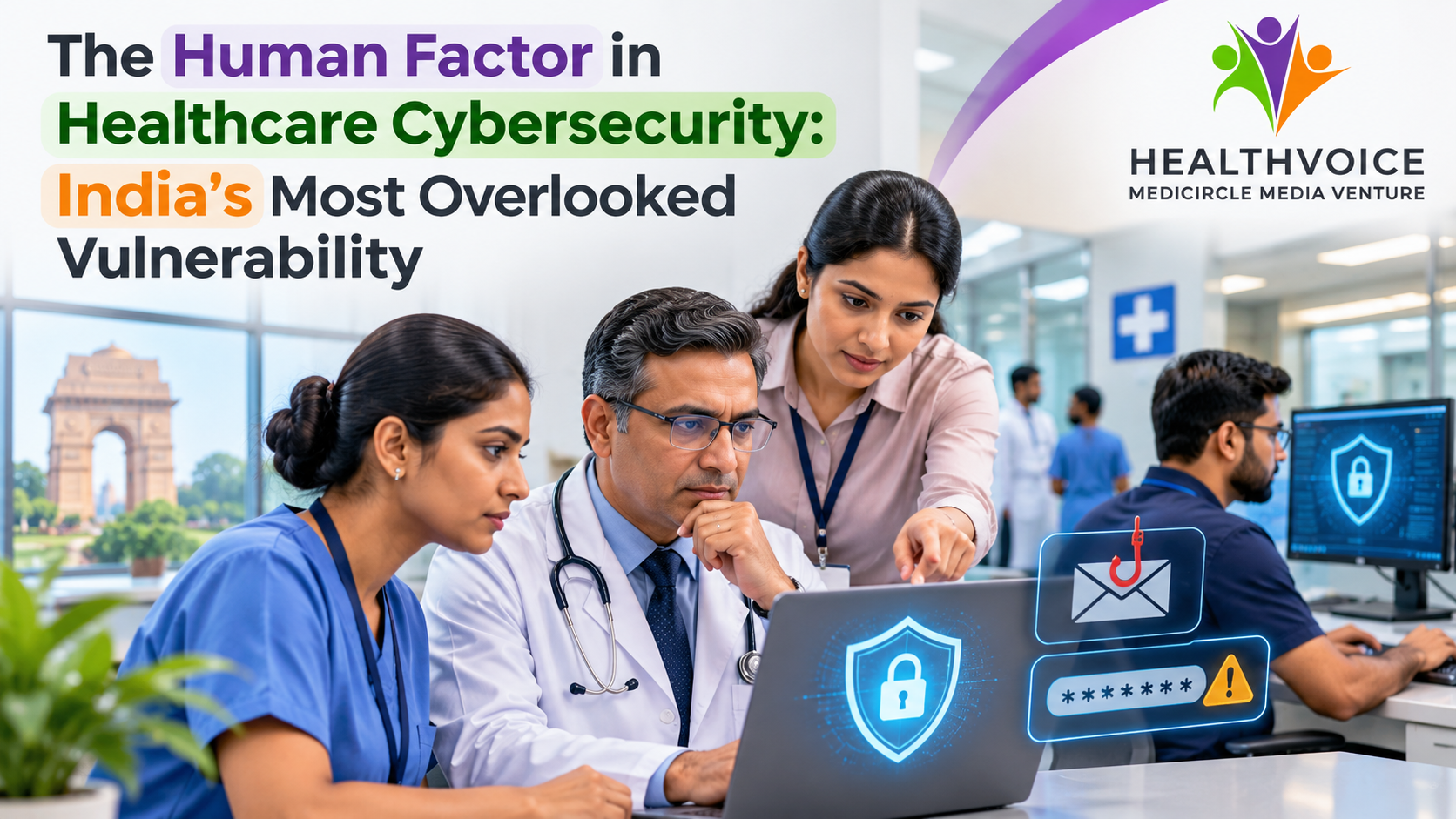
The Human Factor in Healthcare Cybersecurity: India's Most Overlooked Vulnerability
Introduction
India's healthcare sector is experiencing a digital revolution. Electronic health records, telemedicine platforms, hospital management software, connected diagnostic devices, and the nationwide Ayushman Bharat Digital Mission (ABDM) are collectively reshaping how care is delivered and how patient data moves across systems. This transformation carries enormous promise for a country with over 1.4 billion people and a healthcare infrastructure that is still reaching its potential.
But alongside this digital growth runs a parallel, deeply concerning story. India's healthcare and pharmaceuticals sector recorded 3.79 million cyber threat detections between October 2024 and September 2025, accounting for a 14.24 percent share of all detections across the country, making it one of the most relentlessly targeted sectors in India. These are not abstract numbers. Every detection represents a potential breach of a real patient's medical history, a disruption to a clinical workflow, or a moment where a hospital's trust with its community could unravel.
What drives this vulnerability? Technology alone does not explain it. The firewalls are there. The antivirus software is installed. The encryption protocols exist. Yet breaches keep happening. The reason, as cybersecurity professionals and medical administrators increasingly acknowledge, is the human factor. People, not just systems, are the front door through which attackers walk in.
Understanding the Human Factor in Healthcare Cybersecurity
The term "human factor" in cybersecurity refers to the role that human behavior, decision-making, and awareness play in enabling or preventing security incidents. In healthcare, this factor carries unusually high stakes because a breach does not just expose data. It can disrupt surgeries, delay diagnoses, compromise patient confidentiality, and in the most serious cases, cost lives.
Research from Proofpoint's Cyber Insecurity in Healthcare report confirms that people remain the primary vulnerability in healthcare cybersecurity, with insider risk, whether accidental or malicious, identified as a key driver of incidents. This holds true across geographies, including India, where the rapid digitization of hospitals has outpaced the sector's investment in building a security-aware workforce.
The human factor operates across three distinct pathways. The first is unintentional error, where a well-meaning staff member clicks on a malicious link, shares a password on a shared device, or fails to log out of a patient portal. The second is insufficient training, where healthcare workers simply do not know enough about cybersecurity threats to recognize and respond to them. The third is deliberate insider action, where a motivated individual misuses their legitimate access to systems for personal, financial, or malicious reasons.
Understanding these pathways is essential before any meaningful cybersecurity strategy can be built in a healthcare setting.
Why Indian Healthcare Staff Are Especially Vulnerable
India presents a distinctive context for this problem. The healthcare workforce is large, diverse, and spread across a wide spectrum of technical literacy. A specialist physician at a corporate hospital in Bengaluru and a data entry operator at a district hospital in Madhya Pradesh both interact with digital health systems, but their exposure to cybersecurity training is vastly unequal.
Phishing campaigns impersonating government health agencies and insurance providers compromised 37 percent of healthcare staff in India in 2024, according to Seqrite's India Cyber Threat Report 2025. This figure is striking because it reflects how effectively attackers have crafted their deception to exploit the specific institutional trust that healthcare workers place in bodies like the Ministry of Health and Family Welfare, insurance regulators, and state health departments.
Globally, 88 percent of healthcare employees opened phishing emails in 2024, and simulated phishing tests revealed that nearly one in seven fake phishing emails were clicked on by healthcare staff. Additionally, 31 percent of data loss incidents in healthcare in 2024 were attributed to employee negligence.
Several factors specific to the Indian healthcare environment compound this vulnerability:
- Overburdened clinical staff: Nurses, paramedics, and administrative personnel in government hospitals and busy private facilities often work under intense time pressure. This reduces the mental bandwidth available to scrutinize suspicious communications carefully.
- Shared device culture: In many Indian hospitals, particularly in Tier 2 and Tier 3 cities, multiple staff members share a single workstation, making secure credential management extremely difficult.
- Inconsistent onboarding: New employees in healthcare settings are frequently introduced to clinical protocols with thorough training, but cybersecurity awareness is often covered in a brief orientation module, if at all.
- Language and literacy gaps: Cybersecurity awareness materials in India are predominantly in English, limiting their effectiveness among staff who are more comfortable in regional languages.
The Most Common Human-Driven Threat Vectors
Phishing and Social Engineering
Phishing remains the entry point for a large proportion of healthcare data breaches. As of September 2025, email remains the most common initial access vector for healthcare data breaches, accounting for 16 percent of incidents, while voice phishing increasingly targets nursing stations and front desks, where staff are trained to respond quickly to callers verifying insurance or resolving IT issues.
Attackers targeting Indian hospitals have become increasingly sophisticated. Rather than sending generic spam, they now craft messages that reference real-sounding government schemes, Ayushman Bharat enrollment updates, or National Medical Commission (NMC) regulatory notices. A busy hospital administrator is far more likely to click on a link claiming to be from ABDM's helpdesk than on something obviously fraudulent.
Insider Threats
Insider threats in healthcare often arise because overworked staff and busy vendors juggle multiple tasks, leading to lapses in security hygiene. However, the insider threat landscape is broader than carelessness. Not all healthcare breaches originate from external attackers. Insider threats are among the hardest risks to detect because they operate entirely within trusted access boundaries, and whether malicious, negligent, or compromised, insider incidents leverage legitimate credentials and approved workflows.
India's healthcare sector has seen instances where patient data has been sold to pharmaceutical sales representatives, insurance agents, or medical billing intermediaries. The commercial value of patient data, particularly records tied to chronic conditions or surgical procedures, creates a persistent insider threat that cannot be addressed through technical controls alone.
Third-Party and Vendor Risk
Healthcare institutions rarely operate in isolation. Hospitals depend on a wide network of vendors, including laboratory information system providers, medical billing companies, telemedicine platforms, and equipment maintenance contractors. Vendors, contractors, and partners often operate inside healthcare networks without the same oversight applied to internal staff, creating unmanaged access to sensitive systems and patient data, and for attackers, these relationships offer a backdoor past internal defenses.
For Indian hospitals adopting ABDM-integrated systems, the number of third-party touchpoints has grown significantly. Each additional vendor represents a potential human link in the chain where a lapse in security practice can open the entire hospital network to compromise.
The Real-World Cost: India's Wake-Up Call
The 2022 AIIMS Delhi ransomware attack, which compromised over 40 million patient records and paralyzed hospital operations for weeks, exemplifies the operational and reputational catastrophe that inadequate data protection can trigger. The incident forced India's most prestigious medical institution to revert to paper-based records, disrupting patient care on an enormous scale. As one senior doctor observed at the time, it felt like the entire hospital was held hostage.
More recently, in June 2025, servers at Delhi's NKS Super Speciality Hospital and Sant Parmanand Hospital were reportedly compromised, affecting access to patient and administrative information and prompting a police investigation.
The India Cyber Threat Report 2025 highlights that the healthcare industry recorded the highest average of 37.29 detections per endpoint among all analysed sectors, with Telangana recording the highest detection rate at 55.90 detections per endpoint, followed by Tamil Nadu and Delhi.
These incidents share a common thread. In each case, human behavior, whether through susceptibility to phishing, weak access management, or inadequate vendor oversight, played a role in enabling the attack to succeed.
The Regulatory Imperative: DPDP Act and Healthcare
India's Digital Personal Data Protection Act was passed in August 2023, and its detailed operational rules, the DPDP Rules 2025, were notified by the Ministry of Electronics and Information Technology on 13th November 2025. This legislation has significant implications for how healthcare institutions must handle patient data and respond to breaches.
The Act entrusts Data Fiduciaries with the responsibility to protect personal data of Data Principals through adequate technical and organizational measures, and prescribes penalties amounting up to INR 250 crore for non-compliance.
For hospitals and healthcare providers, the DPDP Act introduces obligations that go directly to the human factor. Organizations must implement informed consent mechanisms, appoint Data Protection Officers, establish breach notification procedures, and ensure that all staff handling patient data are trained and accountable. Under the DPDP Act, vendors who process patient data are classified as Data Processors, and the hospital as the Data Fiduciary remains liable for what they do with that data.
This legal framework means that the human element in cybersecurity is no longer just a clinical risk. It is now a regulatory and financial liability.
Building a Human-Centered Cybersecurity Culture in Healthcare
Addressing the human factor requires a comprehensive, sustained approach that goes well beyond a one-time awareness session. The following strategies are essential for Indian healthcare organizations:
Regular and Role-Specific Training: Cybersecurity training must be designed for the actual roles of healthcare staff. A radiologist's threat exposure differs from that of a billing executive or a ward nurse. Training programs should use real-world scenarios, regional language support where needed, and frequent simulated phishing drills to build genuine recognition skills rather than theoretical awareness.
Zero Trust Access Principles: Healthcare institutions must move toward a zero trust model where no user or device is automatically trusted, even if they are inside the hospital network. Role-based access controls should ensure that staff can only access the data their work requires. Administrative privileges must be tightly monitored and periodically reviewed.
Strong Authentication Practices: Multi-factor authentication (MFA) should be mandatory for all staff accessing electronic health records, patient management systems, and telemedicine platforms. This single step significantly reduces the risk of credential-based attacks even when a password is compromised through phishing.
Incident Reporting Without Fear: One of the most underappreciated human factors is the culture of silence around mistakes. Staff who accidentally click a suspicious link or notice unusual system behavior often hesitate to report it for fear of disciplinary consequences. Healthcare institutions must cultivate a blameless reporting culture where early disclosure of potential incidents is rewarded, not punished.
Vendor Due Diligence: Every third-party vendor with access to hospital systems must be evaluated for their own cybersecurity practices. Contracts should specify security obligations, and regular audits should verify compliance. This is especially relevant as more Indian hospitals integrate with government digital health platforms under ABDM.
Leadership Commitment: Cybersecurity culture begins at the top. When hospital administrators and chief medical officers treat data security as a patient safety issue rather than an IT department responsibility, it changes how the entire institution prioritizes and responds to threats.
The Role of HealthVoice in This Conversation
The medical community in India needs platforms where these conversations happen openly, honestly, and at scale. HealthVoice, as a doctor-focused healthcare community platform, is uniquely positioned to amplify awareness among physicians, healthcare leaders, medical associations, and healthcare institutions about the growing cybersecurity challenge. When doctors and medical professionals discuss the human factor in cybersecurity as readily as they discuss clinical protocols, the entire ecosystem becomes more resilient. Professional visibility and credible communication, the core strengths of HealthVoice, are tools that can serve not just individual doctors but the broader mission of protecting patient trust in a digitizing India.
Conclusion
India's healthcare sector is at a defining moment. The digital transformation underway holds the potential to democratize access, improve outcomes, and strengthen the country's public health infrastructure. But this promise depends on a secure foundation. Technology alone cannot provide that security. The human factor, encompassing awareness, behavior, training, culture, and accountability, is the most critical and often the most neglected dimension of healthcare cybersecurity.
Every phishing email that goes unrecognized, every shared password, every vendor given unchecked access, and every unreported security incident is a potential turning point in a cyberattack. Addressing these vulnerabilities requires healthcare institutions, medical associations, policymakers, and medical professionals to work together with a shared understanding: patient safety in a digital age is inseparable from data security. The strongest firewall that any Indian hospital can build is a well-informed, alert, and security-conscious workforce.
Frequently Asked Questions
Q1: What is the human factor in healthcare cybersecurity?
The human factor in healthcare cybersecurity refers to the role that people play in creating or preventing security vulnerabilities. This includes unintentional mistakes such as clicking on phishing emails, using weak passwords, sharing login credentials, failing to follow data handling protocols, as well as deliberate insider actions. Because technology-based defenses cannot compensate for behavioral lapses, human behavior is often cited as the primary point of failure in healthcare data breaches.
Q2: Why is the Indian healthcare sector particularly vulnerable to cyberattacks?
Indian healthcare is undergoing rapid digital transformation through initiatives like ABDM, telemedicine expansion, and electronic health records adoption. However, this digitization has outpaced the sector's cybersecurity readiness. Many institutions lack structured cybersecurity training programs, rely on shared devices, employ large numbers of staff with varying levels of technical literacy, and work with multiple third-party vendors who may not meet adequate security standards. These factors, combined with the high value of patient data, make Indian hospitals attractive targets.
Q3: What is phishing and how does it affect healthcare staff in India?
Phishing is a cyberattack technique where criminals send fraudulent communications, typically via email or phone, that appear to come from trusted sources such as government health agencies, insurance providers, or hospital IT departments. Healthcare staff are manipulated into revealing passwords, clicking malicious links, or downloading harmful attachments. In India, phishing campaigns have specifically mimicked government health schemes and regulatory bodies, exploiting the institutional trust healthcare workers place in these entities.
Q4: What does the DPDP Act 2023 mean for hospitals and healthcare data security?
The Digital Personal Data Protection Act 2023 is India's first comprehensive data privacy law and places direct obligations on healthcare organizations as Data Fiduciaries. Hospitals must obtain informed consent before collecting patient data, implement adequate technical and organizational security measures, notify patients and the Data Protection Board in case of a breach, and ensure that third-party vendors who process patient data also comply with the law. Non-compliance can result in penalties of up to INR 250 crore. The DPDP Rules 2025 further specify these obligations for entities handling sensitive health data.
Q5: What practical steps can Indian hospitals take to reduce human-factor cybersecurity risks?
Indian hospitals can begin by implementing regular and role-specific cybersecurity training for all staff, including simulated phishing drills in regional languages. They should adopt multi-factor authentication for all system access, enforce role-based access controls, establish a blameless incident reporting culture, conduct thorough cybersecurity due diligence on all vendors, and ensure that leadership actively champions data security as a patient safety priority. Compliance with the DPDP Act framework provides an additional structural basis for building these practices systematically.
Resources
- India Cyber Threat Report 2026 by Seqrite and Quick Heal Technologies: Comprehensive annual analysis of cybersecurity threats across Indian sectors including healthcare and pharmaceuticals, covering detections, attack vectors, and sector-wise vulnerability data.
- Ministry of Electronics and Information Technology (MeitY), Government of India: Official source for the Digital Personal Data Protection Act 2023 and the DPDP Rules 2025, relevant to all healthcare organizations handling digital patient data.
- Indian Computer Emergency Response Team (CERT-In), Ministry of Electronics and Information Technology: India's national nodal agency for cybersecurity incident response, issuing guidelines, advisories, and protocols applicable to healthcare institutions.
- Ayushman Bharat Digital Mission (ABDM), National Health Authority: Official guidance on digital health infrastructure, interoperability standards, and data sharing frameworks applicable to hospitals and healthcare providers across India.
- World Health Organization (WHO) India Country Office: International guidelines and policy frameworks on digital health security, patient data protection, and strengthening health system resilience in low- and middle-income countries.
Interlinking Keywords
Healthcare cybersecurity India, human error data breach, phishing in hospitals, insider threat healthcare, DPDP Act hospitals, patient data protection, AIIMS cyberattack, hospital data security, digital health ABDM, medical data privacy India, ransomware healthcare, cybersecurity awareness training, telemedicine data security, healthcare data breach India
Last reviewed by:
Dr. Manthan Tripathi, HealthVoice Editorial and Medical Advisory Team, November 14, 2026.
Disclaimer
This article is intended for informational and educational purposes only. It does not constitute legal, clinical, or cybersecurity advice. Healthcare organizations and medical professionals should consult qualified cybersecurity experts and legal advisors when making decisions related to data security, regulatory compliance, and patient data protection. The information provided reflects publicly available data and research at the time of publication and may be subject to change as regulations and threat landscapes evolve.
 Dr. Manthan Tripathi
#HealthcareCybersecurity #HumanFactorSecurity