How Healthcare Leaders Can Prepare for AI-Driven Hospitals
Healthcare leaders in India must build strategic, ethical, and workforce-ready frameworks to successfully lead AI-driven hospital transformation and deliver better patient outcomes.
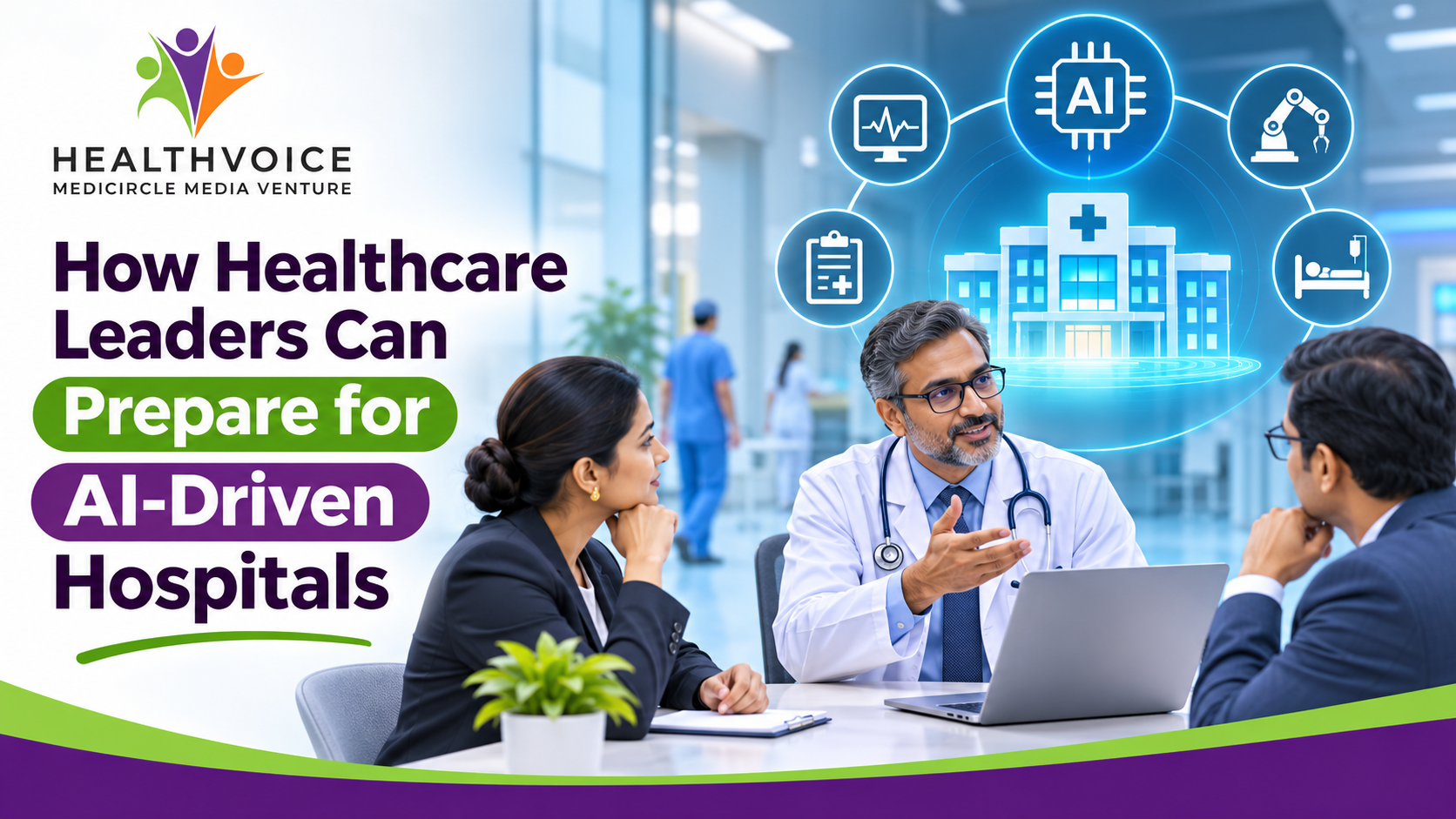
How Healthcare Leaders Can Prepare for AI-Driven Hospitals
Introduction
Artificial intelligence is no longer a future possibility for Indian healthcare. It is an active, expanding presence in diagnostics, clinical decision support, hospital operations, patient engagement, and medical research. From AI-powered radiology tools being adopted by large hospital chains in Mumbai and Bengaluru to predictive analytics platforms improving bed management in government facilities, the technology is already reshaping how care is delivered across the country.
Yet the gap between awareness and genuine organizational readiness remains significant. Many healthcare institutions in India recognize the importance of AI but have not yet built the leadership foundations, workforce capabilities, or governance frameworks required to adopt it responsibly and effectively.
For healthcare leaders, including hospital directors, medical superintendents, chief medical officers, and healthcare administrators, this is both a challenge and a defining opportunity. The question is not whether AI will transform Indian hospitals. The question is whether leaders are prepared to guide that transformation with clarity, responsibility, and a commitment to patient-centered outcomes.
This article is written to help healthcare leaders across India understand what AI-driven hospital readiness truly means and how to build it in a practical, sustainable way.
Understanding AI in the Hospital Context
Before preparing for AI-driven hospitals, healthcare leaders need a clear and accurate understanding of what AI actually does within a clinical and operational environment.
Artificial intelligence in hospitals refers broadly to the use of machine learning algorithms, natural language processing, computer vision, and predictive analytics to support medical and administrative functions. This is not about replacing doctors or clinical teams. It is about equipping them with faster, more accurate, and more comprehensive decision-support tools.
In the Indian hospital context, AI applications are currently being developed and deployed across several areas:
- Radiology and imaging analysis, where AI tools assist in detecting anomalies in X-rays, CT scans, and MRI images with high accuracy
- Clinical decision support systems that alert clinicians to potential drug interactions, early signs of sepsis, or deteriorating patient vitals
- Electronic health record optimization and documentation support, reducing the administrative burden on doctors
- Revenue cycle management and billing automation in private hospitals
- Patient flow prediction and bed management in large multi-specialty facilities
- Remote monitoring and telemedicine AI integrations, particularly relevant in Tier 2 and Tier 3 cities where specialist access remains limited
Understanding this landscape helps healthcare leaders move beyond vague enthusiasm for AI and engage with it as a set of specific, context-dependent tools that require deliberate integration.
Why Leadership Readiness Is the Most Critical Variable
Technology adoption in hospitals rarely fails because the technology itself is inadequate. It fails because leadership was not prepared to manage the complexity of organizational change that accompanies it.
Healthcare leaders in India face a distinctive set of challenges when navigating AI adoption. Public and private hospital systems operate under very different financial and regulatory pressures. Workforce readiness varies dramatically across institution types and geographies. Patient digital literacy, particularly in semi-urban and rural settings, shapes how AI-assisted care can realistically be delivered. And the regulatory environment around AI in healthcare in India is still evolving, with bodies like the Bureau of Indian Standards and the Ministry of Health and Family Welfare working toward clearer frameworks.
In this environment, the leader who approaches AI with both ambition and realism will outperform the one who approaches it with either fear or uncritical enthusiasm. Leadership readiness means being able to ask hard questions about which AI applications are genuinely appropriate for the institution's patient population, clinical priorities, and operational stage.
Building a Strategic AI Readiness Framework
Healthcare leaders who are serious about preparing their institutions for AI-driven care need a structured internal framework. This is not a checklist to be completed once. It is an ongoing organizational discipline.
Start with a data infrastructure audit. AI systems are only as capable as the data they are trained on and the data they receive in real time. Many Indian hospitals, including several mid-sized private facilities, still operate with fragmented information systems where patient records are split across departments, formats are inconsistent, and data quality is unreliable. Before investing in any AI tool, leaders must ensure their institutions have clean, interoperable, and securely managed health data. Adoption of Ayushman Bharat Digital Mission standards and integration with ABHA health ID infrastructure is an important step in this direction.
Define clear use-case priorities. No institution, regardless of its size or resources, should attempt to implement AI across all functions simultaneously. Leaders must identify two or three high-impact, high-feasibility use cases where AI can deliver measurable improvements in patient outcomes or operational efficiency within a defined timeframe. This focused approach builds institutional confidence, generates evidence of value, and creates a foundation for broader adoption.
Establish a cross-functional AI governance committee. AI adoption decisions should not be made by IT departments alone. Effective governance requires input from clinicians, nursing leadership, hospital administration, legal and compliance teams, and patient safety officers. This committee should be responsible for evaluating AI tools, overseeing implementation, monitoring performance, and reviewing ethical concerns. Involving senior clinicians in this process is especially important for building trust among medical staff.
Invest seriously in workforce capability building. The clinical and administrative teams who will work alongside AI tools need structured education and training, not just one-time orientation sessions. Leaders should work with medical education institutions, professional associations, and technology partners to develop ongoing AI literacy programs tailored to different roles within the hospital. The National Medical Commission has begun incorporating digital health competencies into medical education, and healthcare leaders can build on these national efforts within their own institutions.
Navigating the Ethics and Trust Dimension
One of the most important and frequently underestimated dimensions of AI readiness in hospitals is the question of ethics and trust. This is especially relevant in the Indian context, where patients come from diverse educational, linguistic, and socioeconomic backgrounds, and where the doctor-patient relationship carries significant cultural weight.
Healthcare leaders must actively engage with questions such as: How will the institution ensure that AI recommendations are always subject to clinician review? What safeguards will prevent algorithmic bias from affecting care quality for marginalized patient populations? How will patient data be protected and used transparently? What mechanisms will exist for patients and clinical staff to raise concerns about AI tools?
These questions are not obstacles to AI adoption. They are the conditions that make responsible AI adoption possible. Leaders who build strong internal ethics frameworks and communicate them clearly to both staff and patients will be better positioned to earn and sustain the trust that AI-driven care requires.
The emerging regulatory landscape in India also makes this preparation increasingly important. As guidelines around health data governance and AI tool certification develop under bodies such as the Central Drugs Standard Control Organisation and the Bureau of Indian Standards, institutions that have already built internal compliance frameworks will face far less disruption.
Engaging the Medical Community Through Platforms Like HealthVoice
One of the significant gaps in India's healthcare AI transition has been the limited involvement of practising doctors and specialist communities in shaping how AI tools are designed, evaluated, and deployed. Too often, adoption decisions have been driven by technology vendors and hospital management without adequate clinical input.
Healthcare leaders have both an opportunity and a responsibility to change this dynamic. Engaging doctors in honest, structured conversations about AI, its capabilities, its limitations, and its implications for clinical practice is essential for building the kind of professional consensus that sustains meaningful change.
Platforms like HealthVoice exist precisely to facilitate this kind of professional engagement at scale. By connecting doctors, hospital leaders, medical associations, and healthcare innovators through credible, community-driven communication, HealthVoice gives healthcare professionals a space to share perspectives, raise questions, and participate in the conversations that will shape the future of their profession. For hospital leaders working to build AI readiness, connecting with and contributing to such communities is a genuinely valuable step.
Practical Steps Healthcare Leaders Can Take Right Now
Hospital and healthcare leaders in India do not need to wait for perfect conditions before beginning to build AI readiness. Several foundational steps can and should begin immediately.
- Conduct an honest internal assessment of current digital infrastructure, data quality, and workforce readiness
- Identify and engage with two or three AI pilot projects at a manageable scale, with clear success metrics defined before implementation begins
- Build relationships with academic medical centers, national research institutions like ICMR, and professional associations to stay informed about emerging evidence on AI tools in clinical settings
- Develop clear internal communication strategies that address staff concerns about AI, particularly anxieties about job displacement, which research consistently shows to be a significant barrier to adoption
- Review and strengthen data governance and patient privacy policies in line with the Digital Personal Data Protection Act, 2023
- Contribute to and draw from credible platforms and professional communities where healthcare leaders share implementation learnings and policy perspectives
Conclusion
AI-driven hospitals are not a distant vision for India. They are an emerging reality, and the pace of change is accelerating. For healthcare leaders across the country, the period ahead will require not just technological awareness but genuine organizational transformation.
The leaders who will navigate this transition most effectively are those who combine strategic clarity with ethical grounding, who invest in their people as much as in their platforms, and who engage the medical community as partners in shaping a healthcare future that serves patients with both intelligence and humanity.
India has the clinical talent, the institutional diversity, and the national digital infrastructure vision to build a healthcare system that uses AI as a genuine force for health equity and quality improvement. What it needs most right now is healthcare leadership that is ready to lead.
Frequently Asked Questions
Q1: What is the first step for an Indian hospital to begin AI adoption?
The first and most foundational step is to conduct a thorough assessment of the hospital's existing data infrastructure. AI tools require clean, structured, and interoperable data to function effectively. Hospitals should evaluate whether their electronic health records, imaging systems, and administrative databases are integrated, standardized, and compliant with national digital health frameworks such as ABDM before investing in any AI platform.
Q2: Will AI replace doctors and nurses in Indian hospitals?
AI is not designed to replace clinical professionals and will not do so in any foreseeable scenario within the Indian healthcare context. AI tools function as decision-support systems that enhance the speed, accuracy, and efficiency of clinical work. Doctors and nurses remain essential for diagnosis, care planning, patient communication, procedural skills, and the irreplaceable human dimensions of medical care. The goal of AI in hospitals is to reduce administrative burden and cognitive overload so that clinicians can focus more fully on patient care.
Q3: How should healthcare leaders address staff resistance to AI adoption?
Resistance to AI among clinical and administrative staff most commonly stems from fear of job displacement, unfamiliarity with the technology, and concern about accountability when AI recommendations are involved. Leaders should address this through transparent communication about the institution's AI strategy, structured training programs, and by involving clinical staff meaningfully in governance and evaluation processes. Making doctors and nurses active participants in AI oversight rather than passive recipients of technology is one of the most effective ways to build institutional trust.
Q4: What regulatory frameworks govern AI in Indian hospitals?
The regulatory environment for AI in Indian healthcare is still developing. Currently, relevant frameworks include the Digital Personal Data Protection Act, 2023, which governs health data privacy; guidelines from the Ministry of Health and Family Welfare on digital health; standards being developed by the Bureau of Indian Standards for health AI tools; and the broader ABDM framework governing health data interoperability. Healthcare leaders should monitor these developments actively and build internal compliance readiness accordingly.
Q5: How can small and mid-sized hospitals in India benefit from AI without large technology budgets?
Small and mid-sized hospitals can begin AI adoption through targeted, cost-effective applications such as AI-assisted diagnostic tools available through cloud-based subscription models, telemedicine platforms with AI triage support, and administrative automation tools for billing and scheduling. Government initiatives under Ayushman Bharat Digital Mission also provide infrastructure support that reduces the entry cost for digital health adoption. Starting with one clearly defined use case and scaling gradually is a practical and financially sustainable approach for institutions with limited budgets.
Resources
- Ayushman Bharat Digital Mission (ABDM): National framework for health data interoperability and digital health infrastructure in India
- Indian Council of Medical Research (ICMR): Guidelines and evidence-based publications on health technology and digital health research in India
- World Health Organization (WHO) India: Reports and guidance on digital health strategy and AI in healthcare for the South-East Asia region
- Ministry of Health and Family Welfare (MoHFW): Policy documents and national health digital transformation initiatives
- National Health Authority (NHA): Resources on ABDM implementation, ABHA health ID, and digital health ecosystem development in India
Interlinking Keywords
AI in Indian hospitals, healthcare digital transformation India, hospital leadership and AI, AI readiness for hospital administrators, digital health India, ABDM integration hospitals, AI clinical decision support India, health data governance India, telemedicine AI India, healthcare workforce AI training
Last reviewed by:
Dr. Manthan Tripathi, HealthVoice Editorial and Medical Advisory Team, November 13, 2026.
Disclaimer
The information presented in this article is intended for healthcare professionals, hospital administrators, and healthcare decision-makers for educational and informational purposes only. It does not constitute clinical advice, legal guidance, or regulatory compliance counsel. Healthcare institutions and leaders should consult qualified legal, regulatory, and technology experts before implementing any AI tools or digital health strategies. HealthVoice does not endorse any specific AI platform, vendor, or technology product mentioned in a general context within this article.
 Dr. Manthan Tripathi
#HealthcareAI #HospitalLeadership