Engaging Doctors Beyond Cities: India's Rural Health Challenge
Engaging non-metropolitan doctors is essential for strengthening Indian healthcare. This article explores barriers, strategies, and technology-driven solutions to connect and empower doctors practicing outside major cities.
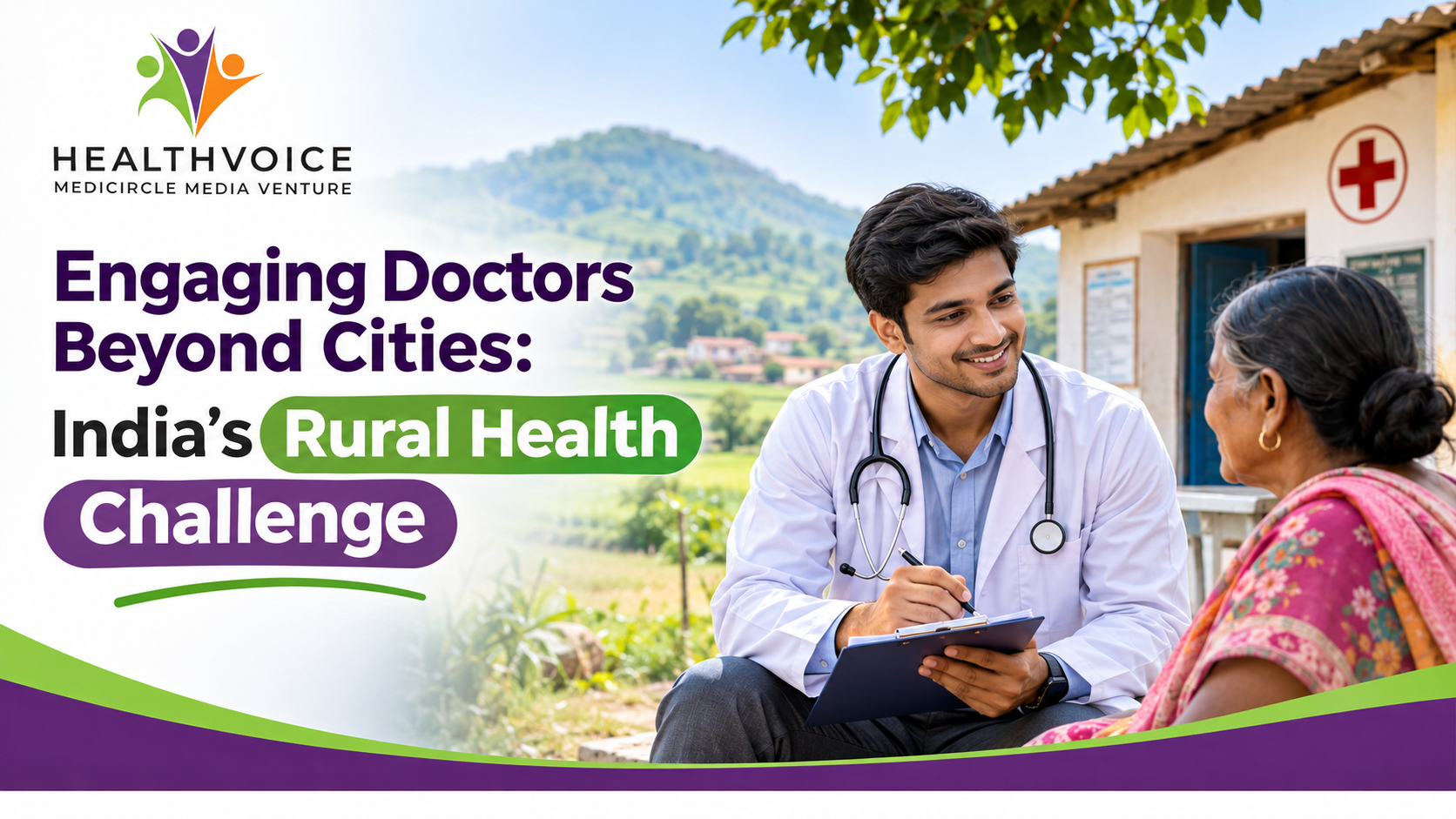
Engaging Doctors Who Work Outside Major Metropolitan Cities: Building Connections That Strengthen Indian Healthcare
Introduction
India's healthcare system rests on a foundation that extends far beyond the gleaming hospitals of Mumbai, Delhi, Bengaluru, and Chennai. Across small towns, district headquarters, tribal belts, and semi-urban communities, thousands of doctors provide essential medical care to populations that would otherwise have no meaningful access to healthcare. These are the practitioners working in Tier 2 and Tier 3 cities, in government district hospitals, in community health centres, and in private clinics tucked inside crowded market lanes.
Yet, when healthcare organizations, medical associations, pharmaceutical companies, and digital health platforms think about doctor engagement, they almost always default to metro-centric strategies. Conferences happen in major cities. Online communities are designed with high-bandwidth, urban users in mind. Recognition programs celebrate specialists in corporate hospitals. The doctor practicing in Muzaffarpur, Nandurbar, or Raichur rarely feels seen, heard, or included.
This is not just an engagement problem. It is a systemic blind spot with real consequences for the quality, continuity, and equity of healthcare delivery across India. Platforms like HealthVoice exist precisely to correct this imbalance by giving every doctor, regardless of location, a credible and organized professional voice.
Understanding Who These Doctors Are
Before any meaningful engagement strategy can be built, it is important to understand who non-metropolitan doctors actually are and what defines their professional reality.
A significant proportion of India's registered allopathic doctors, numbering over 13 lakh as per National Medical Commission data, practice outside the eight major metros. Many of them are general practitioners managing an extraordinary range of conditions with limited referral infrastructure. Others are government medical officers posted in primary health centres (PHCs) and community health centres (CHCs) under the National Health Mission. Some are specialists who have chosen to serve their home districts rather than migrate to larger cities.
Their professional profiles are diverse:
- General practitioners and family medicine physicians managing chronic and acute conditions with limited diagnostic support
- Government doctors under state health departments, often working in understaffed facilities
- Specialist doctors in district hospitals serving as the only referral point for entire geographic regions
- Young doctors posted in rural or semi-urban areas under compulsory rural service bonds
- Private practitioners building multi-generational trust within their local communities
What unites them is a shared experience of professional isolation. They rarely appear on speaker panels. Their clinical observations are seldom collected for research. Association memberships lapse because chapter meetings happen in distant cities. Continuing Medical Education (CME) opportunities are limited or inaccessible. Recognition of their contributions remains rare.
Why Engaging These Doctors Matters
Engaging doctors outside major cities is not a charitable gesture. It is a strategic and ethical imperative for every organization that claims to be invested in Indian healthcare.
From a public health perspective, these doctors are the first line of contact for the majority of Indians. India's rural population, which constitutes approximately 65 percent of the total, depends almost entirely on non-metro doctors for primary and secondary care. When these doctors are well-informed, professionally connected, and updated on clinical guidelines, the quality of care for hundreds of millions of people improves directly.
From a healthcare system perspective, non-metropolitan doctors are essential nodes in the Ayushman Bharat network, the ABDM digital health ecosystem, and the broader National Health Policy goals. Their participation in digital health adoption, telemedicine readiness, and evidence-based practice determines whether national health programs succeed at the last mile.
From a medical association and community perspective, associations that fail to include non-metro doctors are representing only a narrow slice of the profession. The Indian Medical Association and specialty bodies like the Association of Physicians of India have chapters across states precisely because geographic inclusion is foundational to representative leadership.
For healthtech platforms, digital health companies, and medical publishers, engaging non-metro doctors opens access to a massive, underserved, and highly influential audience that makes clinical decisions for a far larger patient population than their metro counterparts.
Barriers That Prevent Effective Engagement
Understanding why non-metropolitan doctors are so consistently underserved requires an honest look at the structural barriers that keep them disconnected from mainstream professional networks.
Connectivity and digital access remain uneven. While smartphone penetration has grown rapidly across India, reliable high-speed internet in many Tier 3 and rural areas is still inconsistent. Platforms designed for video-heavy CME or high-resolution conference streaming often fail to deliver a smooth experience to doctors in these regions.
Time constraints are severe. A solo general practitioner in a small town may see fifty to eighty patients daily with no administrative support. The time available for professional development, association participation, or digital engagement is extremely limited compared to a salaried hospital doctor in a metro.
Language and communication barriers also play a role. Much of the professional content, clinical updates, and community discussions available online are in English, which may not be the preferred professional language for doctors trained in regional medium colleges or practicing in linguistically distinct states.
Institutional isolation compounds the problem. Without colleagues from other specialties nearby, without access to multi-disciplinary team discussions, and without regular interaction with academic medical centers, non-metro doctors may feel that professional communities are simply not designed for them.
Effective Strategies for Meaningful Engagement
Reaching and meaningfully engaging doctors outside major cities requires deliberate strategy, genuine respect for their constraints, and a willingness to rethink the default metro-centric model.
Digital-First and Low-Bandwidth Platforms
Healthcare organizations must invest in digital engagement infrastructure that works reliably in low-bandwidth conditions. This means text-rich content formats, downloadable resources, asynchronous CME modules, and community features that do not require continuous high-speed connectivity. WhatsApp-based professional groups, SMS notifications, and mobile-optimized web experiences have proven far more effective in reaching non-metro doctors than sophisticated apps that require stable broadband.
Regional Language Content
Publishing clinical updates, association news, and professional resources in Hindi and major regional languages such as Tamil, Telugu, Marathi, Bengali, Kannada, and Gujarati dramatically increases relevance and engagement among doctors in non-metropolitan regions. This is not a compromise on quality. It is an acknowledgment that professional knowledge is more valuable when it is accessible.
Decentralized CME and Professional Development
Medical associations and healthcare organizations should invest in decentralized CME delivery. Virtual CME programs accessible from a smartphone, hybrid district-level chapter meetings, and offline CME certificate programs that do not require travel to major cities can remove the single biggest barrier to professional development for rural and small-town doctors.
Recognition and Visibility Platforms
Non-metropolitan doctors rarely receive recognition for the clinical excellence, community service, and public health contribution they deliver every day. Healthcare platforms that create structured visibility for these professionals, through interview features, case discussion forums, district-level achievement spotlights, and association member profiles, build lasting loyalty and genuine professional community.
HealthVoice, as a doctor-focused community platform, is designed specifically to give every doctor, regardless of their city or institution, an organized digital presence and a credible professional voice. This kind of inclusive architecture is what separates meaningful medical communities from metro-centric networks that claim national reach without delivering it.
Association Engagement at the Grassroots Level
National and state medical associations must strengthen their district and sub-district chapter structures. Regular local chapter meetings, digital membership management, local election processes, and representation of district chapters in national bodies can transform the relationship between non-metro doctors and professional associations. When a doctor in a Tier 3 city sees their local association chapter active, responsive, and connected to national leadership, their sense of professional belonging increases meaningfully.
Pharmaceutical and Healthtech Outreach Beyond Metro Territories
Pharmaceutical companies and medical device brands that rely exclusively on metro-based medical representatives miss the prescribing influence of thousands of non-metro practitioners. Field medical representatives dedicated to Tier 2 and Tier 3 territories, combined with digital medical education programs delivered through trusted platforms, can build lasting professional relationships with this segment.
The Role of Technology and ABDM in Bridging the Gap
India's Ayushman Bharat Digital Mission (ABDM) offers a significant structural opportunity to bring non-metropolitan doctors into a connected, digitally enabled healthcare ecosystem. By creating Health Provider IDs, linking facility registries, and enabling interoperable health records, ABDM provides the technical foundation for non-metro doctors to participate in a national digital health network.
Telemedicine, expanded under the Telemedicine Practice Guidelines issued by the Ministry of Health and Family Welfare in 2020, has already begun transforming how non-metro doctors connect with specialists, refer patients, and access second opinions. Platforms that integrate telemedicine consultation, CME delivery, and professional networking into a single, low-bandwidth mobile interface have the greatest potential to become the daily professional tool for non-metropolitan doctors.
Building Mutual Respect into Every Engagement Model
Perhaps the most important principle for engaging non-metropolitan doctors is respect. These professionals have often built remarkable clinical competence under conditions far more demanding than those faced by their metro counterparts. They manage complex cases without ready access to MRI suites, intensive care units, or multi-specialty consultation. They often serve as physician, surgeon, and counselor simultaneously.
Any engagement model that treats non-metro doctors as a secondary audience, as a rural market segment to be penetrated, or as an underperforming subset of a metro-centric community will fail. The most successful engagement strategies treat non-metropolitan doctors as leaders, as experts, and as the backbone of India's healthcare delivery system.
Platforms, associations, and organizations that internalize this respect into their content, their communication, their recognition systems, and their governance structures will build the most loyal and impactful professional communities in Indian healthcare.
Conclusion
Engaging doctors who work outside major metropolitan cities is one of the most important and least addressed challenges in Indian healthcare. The clinical, public health, and systemic consequences of professional isolation among non-metro doctors are significant and largely preventable.
The path forward requires digital infrastructure that actually works in low-bandwidth environments, regional language content that respects linguistic diversity, decentralized CME and professional development, genuine recognition of non-metro clinical contribution, and association governance that gives district-level doctors a real voice.
Healthcare platforms, medical associations, pharmaceutical companies, and healthtech organizations that commit to this path are not just improving their own reach. They are strengthening the professional backbone of Indian healthcare and ensuring that the doctors serving the majority of India's population are informed, connected, recognized, and empowered.
Frequently Asked Questions
Q1: Why is engaging doctors outside metropolitan cities important for Indian healthcare?
Doctors practicing in Tier 2 and Tier 3 cities and rural areas serve the majority of India's population. When they are professionally connected, updated, and supported, the quality of healthcare delivery improves for hundreds of millions of patients who have no alternative access to care.
Q2: What are the most common barriers preventing non-metropolitan doctors from participating in professional communities?
The most common barriers include unreliable internet connectivity, severe time constraints due to high patient loads, limited access to in-person CME events in distant cities, language barriers with predominantly English content, and a general sense of institutional isolation from mainstream medical networks.
Q3: How can medical associations better include doctors from smaller towns and rural areas?
Medical associations can strengthen district and sub-district chapter structures, hold virtual chapter meetings accessible by smartphone, deliver CME through asynchronous digital formats, create recognition programs specifically for non-metro clinical contribution, and ensure that district-level members have real representation in national governance structures.
Q4: What role does technology play in connecting non-metropolitan doctors with professional networks?
Technology is the primary enabler of engagement for non-metro doctors. Mobile-optimized platforms, low-bandwidth CME modules, regional language content, telemedicine integration, and ABDM-linked digital health tools collectively allow doctors in any location to access education, community, and professional visibility without being physically present in a major city.
Q5: How can platforms like HealthVoice support doctors practicing in non-metropolitan areas?
HealthVoice offers a structured digital presence and community platform designed for every doctor regardless of geography. It enables non-metro doctors to publish their professional voice, engage with associations, access relevant medical community updates, and gain visibility within the larger healthcare ecosystem without needing institutional support from a major urban hospital.
Resources
- National Medical Commission (NMC): Official regulatory body overseeing medical education and practice standards for doctors across India, including rural and non-metropolitan practitioners.
- Ayushman Bharat Digital Mission (ABDM): India's national digital health infrastructure initiative enabling interoperable health records and digital provider registration for doctors across all geographies.
- Ministry of Health and Family Welfare (MoHFW): Central government body governing national health policy, rural health programs, and telemedicine guidelines relevant to non-metro healthcare delivery.
- National Health Mission (NHM): Government initiative managing primary and secondary healthcare infrastructure, including PHCs and CHCs staffed by doctors in rural and semi-urban India.
- Indian Medical Association (IMA): India's largest voluntary association of doctors with national and district chapter structures relevant to non-metropolitan doctor engagement and representation.
Interlinking Keywords
Rural doctor engagement India, non-metropolitan healthcare professionals, medical association membership India, CME for rural doctors, doctor visibility platform India, Tier 2 city healthcare, ABDM doctor registration, telemedicine rural India, HealthVoice doctor community, healthcare professional networking India
Last reviewed by:
Dr. Manthan Tripathi, HealthVoice Editorial and Medical Advisory Team, November 13, 2026.
Disclaimer
This article is intended for informational and professional engagement purposes only. It does not constitute medical advice, clinical guidance, or formal policy recommendation. Doctors and healthcare professionals should refer to their respective regulatory bodies and institutional guidelines for all clinical and professional decisions. HealthVoice does not endorse any specific organization, product, or engagement platform beyond providing editorial information about the Indian healthcare community landscape.
 Dr. Manthan Tripathi
#RuralHealthcare #DoctorEngagement