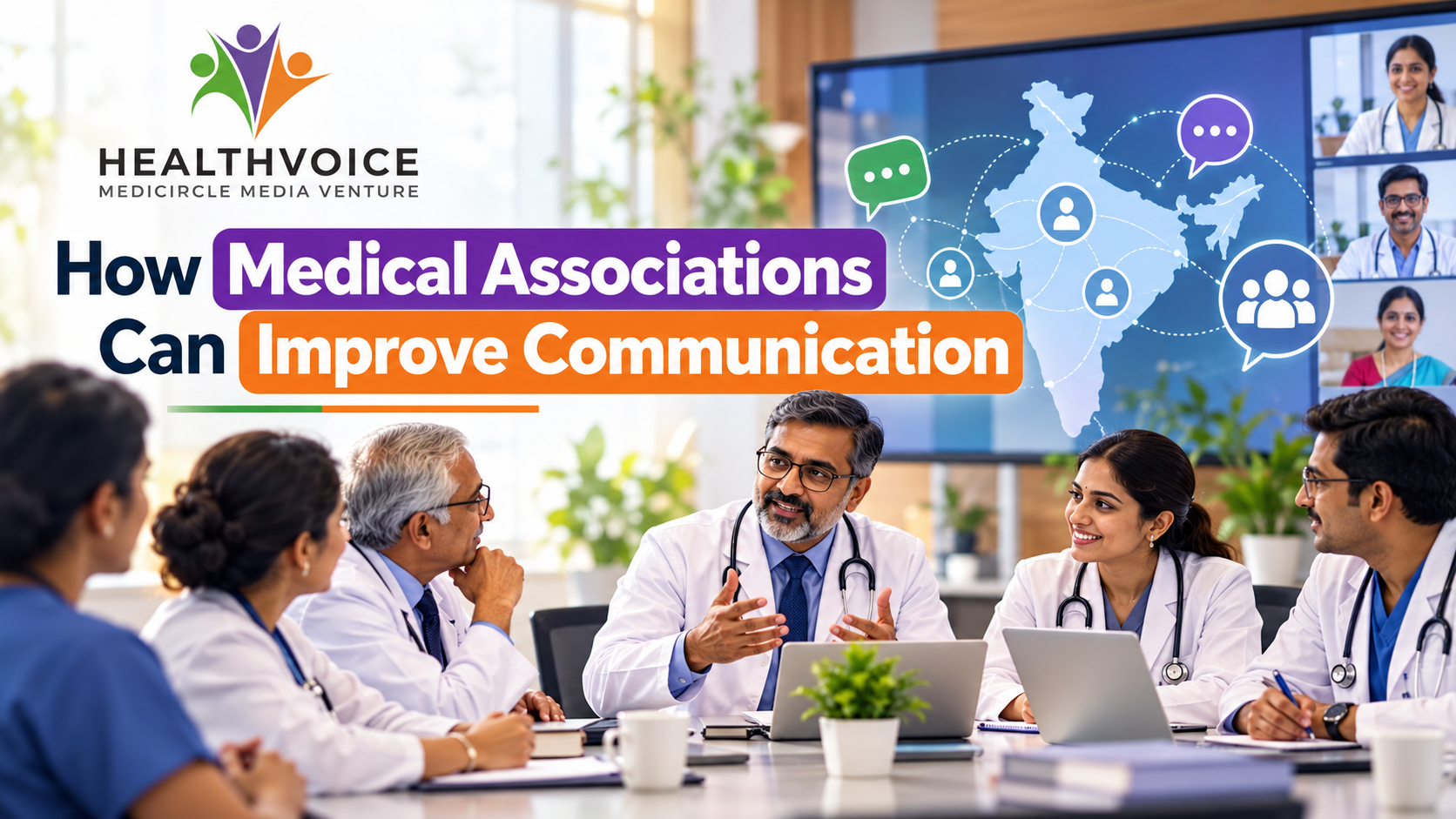
How Medical Associations Can Improve Communication
Medical associations in India must modernize their communication through member-first strategies, relevant content, digital channels, and two-way dialogue to stay meaningfully connected with doctors.
How Medical Associations Can Make Their Communication More Relevant
Introduction
Medical associations in India have long served as the backbone of organized medicine. From the Indian Medical Association at the national level to dozens of specialty bodies, state chapters, and regional societies, these organizations represent the collective voice of the medical profession. They advocate for doctors, set professional standards, organize continuing medical education, and serve as a bridge between the healthcare fraternity and policymakers.
Yet, despite their critical importance, many medical associations struggle with a persistent and growing challenge: their communication is not reaching doctors in a meaningful way. Members receive circulars that go unread. Event announcements fail to generate attendance. Policy updates get buried under the noise of daily clinical work. And younger doctors, especially those in the 25 to 40 age group, feel increasingly disconnected from the associations that are supposed to represent them.
This is not a crisis of relevance for medical associations as institutions. Their relevance is beyond question. It is a crisis of communication. And the good news is that communication can be fixed, modernized, and made significantly more impactful with the right strategies.
Why Medical Association Communication Often Falls Short
To understand how to improve communication, it is important to first understand why current approaches frequently fall short of their potential.
The most common issue is a one-way communication model. Many associations still rely heavily on broadcasting information rather than creating genuine two-way dialogue. Newsletters are sent out. Meeting notices are circulated. Annual reports are published. But very little effort goes into listening to members, understanding their evolving concerns, or inviting their active participation in association activities.
A second issue is format fatigue. Long PDF circulars, dense text emails, and printed bulletins simply do not compete with the fast, visual, and engaging content that doctors now consume on their phones throughout the day. When the communication format does not match the media habits of the audience, the message gets ignored regardless of how important it actually is.
A third challenge is the lack of segmentation. A cardiologist in Mumbai, a general practitioner in a Tier 2 city in Madhya Pradesh, and a medical student preparing for postgraduate entrance exams all have very different professional concerns. When associations send the same generic communication to all of them, it resonates with none of them.
Finally, there is an underinvestment in communication infrastructure. Many associations operate with lean administrative teams where communication is often handled as a secondary responsibility rather than a dedicated function. Without proper tools, platforms, and expertise, even well-intentioned communication efforts fail to deliver consistent quality.
Building a Member-First Communication Strategy
The foundation of more relevant communication is a genuine shift in perspective: from association-first messaging to member-first messaging. This means starting every communication decision with a single question: What does the doctor reading this actually need right now?
A member-first approach requires associations to invest in understanding their membership. Regular surveys, pulse checks, and structured feedback mechanisms can reveal what doctors want to know, what professional challenges they are currently facing, and what kind of support they expect from their association. In India, where healthcare challenges vary dramatically across states, collecting this data at a regional level is especially important.
Once member needs are clearly understood, associations can develop a communication calendar that balances different content types:
- Clinical updates and evidence-based practice guidance relevant to members' specialties
- Policy and regulatory updates from bodies such as the National Medical Commission, the Ministry of Health and Family Welfare, and state health departments
- Member achievement spotlights and professional recognition features
- Association activity updates including events, elections, and governance decisions
- Continuing Medical Education announcements and learning opportunities
- Advocacy updates on issues that directly affect doctors in practice
This kind of structured, intentional content planning replaces ad hoc communication with a consistent and trustworthy information stream that doctors can rely on.
Modernizing Channels and Formats
Channel strategy is perhaps the most visible area where medical associations need to modernize. The question is not simply about moving from print to digital. It is about choosing the right digital channels for the right content types and then using those channels skillfully.
WhatsApp has become one of the most important communication channels in Indian medicine. Doctors across all specialties and geographies are active on WhatsApp, and association chapters that use well-managed WhatsApp groups or broadcast lists for timely updates are consistently more successful at reaching members than those that rely solely on email or printed materials. However, WhatsApp communication must be curated carefully. Overloading members with forwarded content or irrelevant messages leads to muting and disengagement.
Email newsletters remain highly valuable when they are well-designed, well-written, and sent at a consistent and reasonable frequency. A monthly or fortnightly email that curates the most important updates, highlights member achievements, and covers one or two clinically relevant topics in accessible language can build a loyal readership over time.
Social media platforms, particularly LinkedIn, Instagram, and YouTube, offer medical associations an opportunity to build broader visibility and engage both their existing members and the wider medical community. Short videos featuring association leaders discussing pressing healthcare policy issues, expert member interviews, and event highlights can significantly increase the association's profile and attract younger doctors who might otherwise have low awareness of association activities.
A dedicated association website or digital portal that serves as the central information hub remains essential. Doctors should be able to find membership information, upcoming events, past publications, and official statements in one organized, easily navigable location.
Making Content More Engaging and Clinically Relevant
Communication relevance is ultimately about content quality. Even if associations use all the right channels, the message will not land if the content itself is not genuinely useful to the doctor receiving it.
Clinical relevance is the most powerful driver of engagement for a medical audience. When an association shares a well-summarized update on a new clinical guideline, a drug safety alert, a change in standard treatment protocols, or an emerging area of medical practice, doctors pay attention because the information directly affects their daily work and their patients.
Association communication should also reflect the real professional challenges that Indian doctors face. Issues such as increasing patient volumes, medicolegal risks, doctor safety, burnout, the challenges of rural healthcare delivery, and the regulatory environment created by recent NMC guidelines are all topics that resonate deeply with the medical community. When associations communicate about these topics with clarity, empathy, and a genuine commitment to advocacy, they build the trust and loyalty that drives long-term member engagement.
Human interest content also plays an important role. Celebrating the achievements of member doctors, sharing the stories of associations doing impactful community health work, and recognizing contributions to medical education or research creates a sense of pride and community that purely informational content cannot replicate.
Embracing Two-Way Dialogue and Member Participation
One of the most underutilized opportunities in medical association communication is structured member participation. When members feel that their voices matter and that their concerns are heard and acted upon, engagement increases significantly.
Associations can create this sense of dialogue through several practical approaches. Dedicated feedback mechanisms after every major communication or event help associations understand what is working and what needs improvement. Online polls and rapid surveys on clinically or professionally relevant topics generate both valuable data and a sense of member involvement. Town halls, either in person or conducted through video conferencing platforms, allow leadership to directly address member concerns and share updates in a transparent and accessible format.
In India, where the medical community is extraordinarily diverse across language, region, specialty, and career stage, building inclusive communication systems that accommodate this diversity is a significant competitive advantage for forward-looking associations. Producing key communications in regional languages alongside English, for example, can dramatically extend reach in states where Hindi or other regional languages are the primary professional communication medium.
Leveraging Platforms Built for Medical Communities
The emergence of dedicated platforms built specifically for the medical community has created new opportunities for associations that are ready to invest in more sophisticated digital communication. These platforms bring together features that generic social media and email tools cannot offer: verified doctor networks, specialty-specific content channels, association member directories, event management tools, and professional visibility features that align with how doctors want to engage online.
Platforms such as HealthVoice are designed precisely to address the communication gap that many medical associations experience. By providing associations with a credible, doctor-focused digital presence and a structured communication infrastructure, such platforms allow even smaller or resource-limited associations to communicate with the professionalism and consistency that their members deserve. Rather than managing fragmented communication across multiple tools, associations can consolidate their digital presence, engage their membership meaningfully, and extend their voice to the broader Indian healthcare community.
Measuring What Works and Continuously Improving
Effective communication is not a one-time effort. It requires ongoing measurement, reflection, and refinement. Associations that track open rates for their email newsletters, monitor engagement on social media posts, analyze event attendance data, and regularly survey member satisfaction are far better positioned to improve over time than those that communicate without measuring outcomes.
Setting clear communication goals at the beginning of each year and reviewing progress against those goals quarterly creates accountability and drives continuous improvement. Goals might include increasing the percentage of members who open monthly newsletters, growing social media following among doctors under 40, improving event attendance rates, or increasing the number of members who actively participate in association activities.
Conclusion
The communication challenge facing Indian medical associations is real, but it is entirely solvable. With a member-first mindset, modernized channels, genuinely relevant content, structured two-way dialogue, and a commitment to continuous improvement, associations can transform their communication from an afterthought into one of their greatest strengths.
The medical community in India is looking for strong, trustworthy, and vocal associations that speak up for doctors, keep them informed, and bring them together around shared professional goals. The associations that communicate this mission clearly and consistently will earn the deep loyalty and active participation that is the foundation of a truly impactful professional community.
Frequently Asked Questions
Q1: Why is communication so important for medical associations in India?
Communication is the primary mechanism through which associations deliver value to their members. Without effective communication, doctors remain unaware of advocacy efforts, educational opportunities, policy developments, and member benefits. In India's diverse and geographically dispersed medical community, strong communication is what holds the association together as a meaningful professional body.
Q2: Which communication channels work best for reaching doctors in India?
A combination of WhatsApp for timely updates, email newsletters for structured monthly communication, social media platforms such as LinkedIn and Instagram for broader visibility, and a well-maintained website for official information tends to work best. The right mix depends on the specific membership profile and regional demographics of the association.
Q3: How can smaller medical associations with limited resources improve their communication?
Smaller associations can achieve significant improvement by focusing on consistency over volume, choosing two or three channels and doing them well, leveraging dedicated medical community platforms that provide ready-made infrastructure, and training a designated communication officer or committee to take ownership of outreach activities.
Q4: What kind of content engages doctors the most?
Doctors respond most strongly to clinically relevant updates, clear policy and regulatory information, professional recognition features, and content that directly addresses the real challenges of medical practice. Content that respects their expertise, respects their time, and offers genuine value consistently outperforms generic or purely promotional material.
Q5: How can medical associations engage younger doctors more effectively?
Younger doctors in India respond well to short-form video content, social media engagement, accessible digital platforms, and association activities that speak to their specific career stage concerns such as postgraduate education, early practice challenges, research opportunities, and medicolegal awareness. Giving young members visible roles and opportunities within the association also significantly increases their sense of belonging and long-term engagement.
Resources
- Indian Medical Association (IMA): The national body representing registered medical practitioners in India, offering governance, advocacy, and professional development resources.
- National Medical Commission (NMC): The statutory body regulating medical education and practice in India, with official guidelines relevant to all practicing doctors and associations.
- World Health Organization (WHO) India Office: WHO India provides data, reports, and frameworks on healthcare system strengthening and professional community engagement relevant to Indian medical bodies.
- Ministry of Health and Family Welfare, Government of India: The central government authority on health policy, national health programs, and regulatory updates that medical associations need to communicate to members.
- HealthVoice (healthvoice.in): A dedicated digital platform for doctors, medical associations, and healthcare communities in India, designed to support credible communication, member visibility, and professional engagement.
Interlinking Keywords
medical association communication strategy, doctor engagement India, member communication for medical societies, healthcare association digital presence, NMC guidelines for doctors, continuing medical education India, medical community platform India, doctor professional visibility, healthcare association membership, WhatsApp communication for doctors
Last reviewed by:
Dr. Manthan Tripathi, HealthVoice Editorial and Medical Advisory Team, October 5, 2026.
Disclaimer
This article is intended for informational and professional development purposes only. It addresses communication strategy and organizational management within the context of medical associations and is not a substitute for formal professional advice. The views expressed reflect general best practices in association communication and may not apply to every organizational context. Readers are encouraged to consult qualified communication professionals or association management experts before implementing significant changes to their communication strategy. HealthVoice does not endorse any specific platform, tool, or service provider beyond what is disclosed in the article.
 Dr. Manthan Tripathi
#MedicalAssociations #HealthcareCommunication #DoctorCollaboration #HealthcareLeadership