What Makes Doctors Stay in a Hospital? Key Retention Factors
Physician retention in Indian hospitals depends on workplace culture, fair compensation, professional growth, strong leadership, work-life balance, and genuine respect for clinical autonomy and doctor dignity.

What Makes Doctors Stay in a Hospital? Understanding Physician Retention in India
Introduction
Physician retention is one of the most pressing challenges facing hospitals and healthcare institutions across India today. While a great deal of attention is given to recruiting talented doctors, far less focus is placed on understanding why they leave and what genuinely compels them to stay. Hospitals that fail to understand this distinction often find themselves trapped in a cycle of continuous recruitment, high training costs, disrupted patient care, and declining institutional reputation.
India's healthcare system is under significant pressure. With a doctor-to-population ratio that the World Health Organization considers inadequate, especially in rural and semi-urban regions, retaining trained and experienced physicians is not just an administrative priority. It is a patient safety and public health imperative. When a skilled specialist or a dependable general physician leaves a hospital, the consequences are felt not only within the institution but also by the communities it serves.
Understanding what makes doctors stay requires looking beyond salary increments and designation changes. The answer lies in a complex combination of professional, psychological, institutional, and social factors that together shape a doctor's experience of belonging, purpose, and growth.
The Role of Workplace Culture and Collegial Environment
One of the most consistent findings across healthcare workforce research is that doctors stay where they feel respected. Workplace culture is not a vague concept. It manifests in the day-to-day interactions between doctors and hospital administration, between senior consultants and junior residents, and between clinical teams and support staff.
A hospital that fosters open communication, values clinical opinion, and treats doctors as partners in institutional growth rather than as service providers tends to see significantly lower attrition. When doctors feel heard in decision-making processes, when their clinical judgment is respected, and when disagreements are handled professionally rather than hierarchically, the emotional investment in the institution deepens.
Collegial relationships also play a major role. Peer networks, mentorship from senior physicians, and a sense of shared professional identity within a department can be powerful anchors. Many doctors across Tier 1 and Tier 2 cities in India report that the quality of their working relationships with colleagues matters as much as, if not more than, the financial package offered.
Fair Compensation and Financial Transparency
It would be unrealistic to discuss physician retention without acknowledging the significance of compensation. Doctors, particularly specialists who have invested a decade or more in their education and training, have legitimate financial expectations. Hospitals that offer competitive salaries aligned with market standards, structured incentive models, and transparent revenue-sharing policies create an environment of financial trust.
The challenge in many Indian hospitals, especially mid-sized private institutions and charitable trusts, is that compensation structures are often opaque. Doctors may agree to a gross package and later discover deductions, performance thresholds, or administrative conditions that were not clearly communicated. This erosion of financial trust is one of the leading triggers for early resignation.
Transparent compensation frameworks, clearly communicated at the time of joining and reviewed periodically, help doctors plan their personal and professional lives with confidence. Hospitals that invest in this clarity tend to retain physicians who might otherwise leave for better-paying opportunities elsewhere.
Opportunities for Professional Growth and Learning
A doctor who stops growing professionally will eventually leave in search of growth elsewhere. Hospitals that provide structured pathways for continuing medical education, research participation, conference attendance, and subspecialty development become institutions where doctors choose to build long careers.
In India, the National Medical Commission and various medical councils have increasingly emphasized continuous professional development for practicing physicians. Hospitals that align with this expectation and actively facilitate learning through:
- Regular grand rounds and clinical case discussions
- Access to international medical journals and CME platforms
- Support for presenting research at national and international conferences
- Opportunities to teach medical students and postgraduate trainees
Create an environment where clinical curiosity is nurtured rather than suppressed. For younger doctors in particular, the promise of professional development is often as compelling as financial remuneration.
Leadership Quality and Administrative Support
Doctors frequently cite poor leadership and unsupportive administration as primary reasons for leaving a hospital. The quality of hospital leadership has a direct and measurable impact on physician satisfaction. Administrators who understand clinical realities, who advocate for doctors during resource allocation decisions, and who maintain institutional standards with integrity earn the professional loyalty of their medical staff.
In contrast, hospitals where administrative decisions are made without clinical input, where doctors are burdened with excessive documentation and non-clinical duties, and where grievances are dismissed rather than addressed tend to experience high turnover regardless of salary levels.
Good leadership also means protecting doctors from undue patient complaints, supporting them through medico-legal challenges, and ensuring that occupational safety and mental health are prioritized. With increasing reports of workplace violence against doctors in Indian hospitals, particularly in government facilities, a hospital's response to staff safety concerns sends a powerful message about how much it values its medical workforce.
Work-Life Balance and Scheduling Practices
The medical profession is inherently demanding, and most doctors accept a degree of personal sacrifice as part of the vocation. However, chronic overwork, unpredictable scheduling, absence of adequate leave policies, and the expectation of being perpetually available without relief are conditions that no professional can sustain indefinitely without serious psychological consequences.
Burnout among Indian doctors has received growing attention in recent years. Studies conducted in major Indian cities have found significant levels of emotional exhaustion, depersonalization, and reduced sense of personal accomplishment among hospital-based physicians across multiple specialties. Hospitals that recognize burnout not as an individual weakness but as an institutional failure are better positioned to address it structurally.
Practical measures that help include:
- Reasonable duty hour limits enforced consistently across departments
- Adequate locum or on-call coverage so no single doctor bears disproportionate load
- Protected leave without guilt or professional penalty
- Access to counselling or employee wellness programs
When doctors can maintain a sustainable professional life, they are far more likely to remain loyal to the institutions that make that sustainability possible.
Institutional Reputation and Patient Volume
Doctors, particularly those building or consolidating their clinical reputations, are drawn to hospitals with strong institutional standing. A hospital known for high clinical standards, ethical practices, and patient outcomes becomes a professionally aspirational workplace. Conversely, an institution associated with poor infrastructure, unethical billing, or compromised clinical protocols makes retention extremely difficult regardless of other incentives.
NABH accreditation, for instance, signals a commitment to quality standards that resonates with quality-conscious physicians. Hospitals that invest in clinical infrastructure, maintain up-to-date equipment, and provide adequate nursing and paramedical support allow doctors to practice at their best and take professional pride in their work.
Adequate patient volume also matters. A specialist who joined a hospital hoping to develop expertise in a particular domain will not stay long if the case mix is insufficient for professional fulfillment. Matching the hospital's patient profile with the physician's clinical interests is an underappreciated but important retention factor.
Alignment of Values and Organizational Mission
Increasingly, doctors are choosing workplaces that align with their personal values and sense of professional purpose. A physician who is deeply committed to community health may find greater fulfillment in a hospital that has a strong outreach program, a charitable ward, or a focus on underserved populations. A researcher who entered clinical practice to advance medical knowledge will not stay long in a purely commercial setup that discourages academic engagement.
When hospitals articulate a clear organizational mission and actively involve doctors in realizing that mission, a sense of shared purpose develops. This is especially true for doctors early in their careers who are forming their professional identity and looking for institutions that reflect their values.
Platforms like HealthVoice, which bring together doctors, healthcare communities, and medical associations, reflect the importance of this value alignment in the broader healthcare ecosystem. When doctors feel connected to a professional community that recognizes their contributions and amplifies their voice, both within their hospitals and in the wider medical world, the sense of professional rootedness becomes stronger.
Recognition, Respect, and Professional Dignity
No amount of financial compensation fully compensates for the erosion of professional dignity. Doctors who feel unappreciated, micromanaged, or treated as interchangeable units within a hospital system will leave. Recognition does not always have to take the form of formal awards. It can be as simple as a hospital leadership team that publicly acknowledges clinical excellence, a system that credits doctors for their contributions to institutional growth, or a culture where feedback is mutual rather than one-directional.
Respect for professional autonomy is equally important. Clinical decision-making must remain in the hands of clinicians. Hospitals that override clinical judgment for commercial reasons or that pressure doctors into over-investigation or unnecessary procedures create environments that are ethically uncomfortable for conscientious physicians, and those physicians will leave.
Conclusion
Doctor retention is not a human resources problem with a standard solution. It is a reflection of an institution's values, leadership quality, clinical culture, and long-term vision. Hospitals that invest genuinely in their doctors as professionals and as people rather than merely as revenue-generating resources will find that retention follows naturally.
For Indian healthcare to meet the growing demands of a 1.4 billion population, institutions must move beyond tokenistic perks and short-term incentives. The doctors who stay are those who feel safe, respected, well-supported, professionally stimulated, and genuinely valued. Building that environment is both the ethical responsibility and the strategic imperative of every hospital that aspires to deliver lasting, high-quality care.
Frequently Asked Questions
Q1: What are the most common reasons doctors leave a hospital in India?
Doctors in India most commonly leave due to poor workplace culture, lack of professional growth opportunities, inadequate or opaque compensation, burnout from excessive workload, and absence of administrative support. Disrespect for clinical autonomy and concerns about personal safety are also significant contributing factors.
Q2: How does hospital leadership affect doctor retention?
Hospital leadership directly shapes the professional environment in which doctors work. Leaders who involve physicians in decision-making, advocate for their needs, maintain ethical institutional standards, and address grievances constructively tend to build loyal and stable medical teams. Poor leadership is consistently cited as one of the top reasons doctors resign.
Q3: Is salary the most important factor in physician retention?
Salary is an important factor, but research and clinical experience both suggest it is rarely the sole determinant. Doctors weigh compensation alongside workplace culture, professional development opportunities, work-life balance, peer relationships, and institutional reputation. Competitive and transparent pay reduces dissatisfaction, but it alone does not guarantee long-term retention.
Q4: How does burnout affect doctor retention in Indian hospitals?
Burnout significantly increases the likelihood of doctors leaving their current hospital or even the profession entirely. Chronic overwork, emotional exhaustion, and lack of institutional support for mental health create conditions where talented physicians disengage. Hospitals that proactively address workload distribution and provide wellness support see better retention outcomes.
Q5: What role does professional recognition play in keeping doctors in a hospital?
Professional recognition reinforces a doctor's sense of purpose and belonging within an institution. When hospitals acknowledge clinical excellence, support academic contributions, and treat doctors with dignity in day-to-day interactions, it builds an emotional connection to the institution. Doctors who feel genuinely valued are far less likely to seek opportunities elsewhere.
Resources
- National Medical Commission (NMC): Official regulatory body for medical education and practice standards in India
- National Accreditation Board for Hospitals and Healthcare Providers (NABH): Standards and accreditation information relevant to hospital quality and clinical environment
- World Health Organization (WHO) India: Data and reports on healthcare workforce challenges and physician well-being
- Indian Council of Medical Research (ICMR): Research publications on healthcare workforce trends and occupational health in India
- Ministry of Health and Family Welfare, Government of India: Policy documents and reports on doctor distribution, retention, and healthcare workforce planning
Interlinking Keywords
Doctor retention in hospitals, physician job satisfaction India, hospital work culture, medical workforce India, doctor burnout prevention, NABH accreditation benefits, continuing medical education India, healthcare leadership India, doctor well-being, medical professional development
Last reviewed by:
Dr. Manthan Tripathi, HealthVoice Editorial and Medical Advisory Team, October 3, 2026.
Disclaimer
The information presented in this article is intended for general informational and educational purposes only. It does not constitute professional medical, legal, or human resources advice. Readers are encouraged to consult qualified professionals and refer to current guidelines from the National Medical Commission, Ministry of Health and Family Welfare, and other relevant regulatory bodies before making any institutional or professional decisions. HealthVoice is committed to responsible, credible, and doctor-first communication.
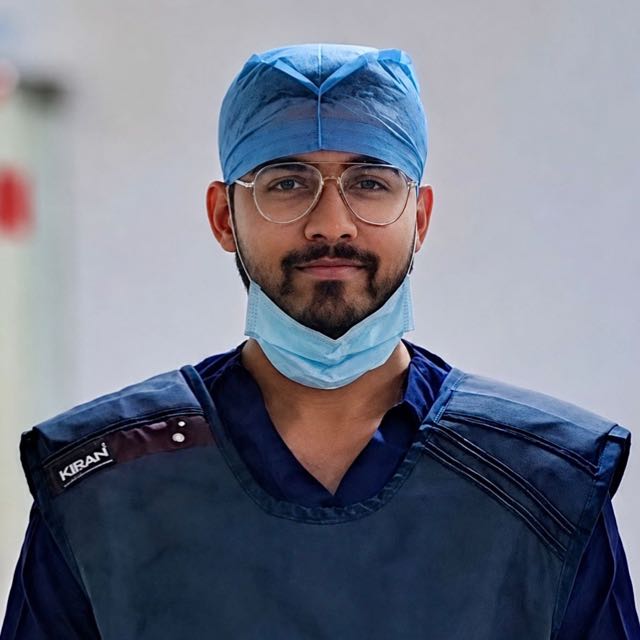 Dr. Manthan Tripathi
#DoctorRetention #HospitalLeadership #HealthcareWorkforce #MedicalCareers