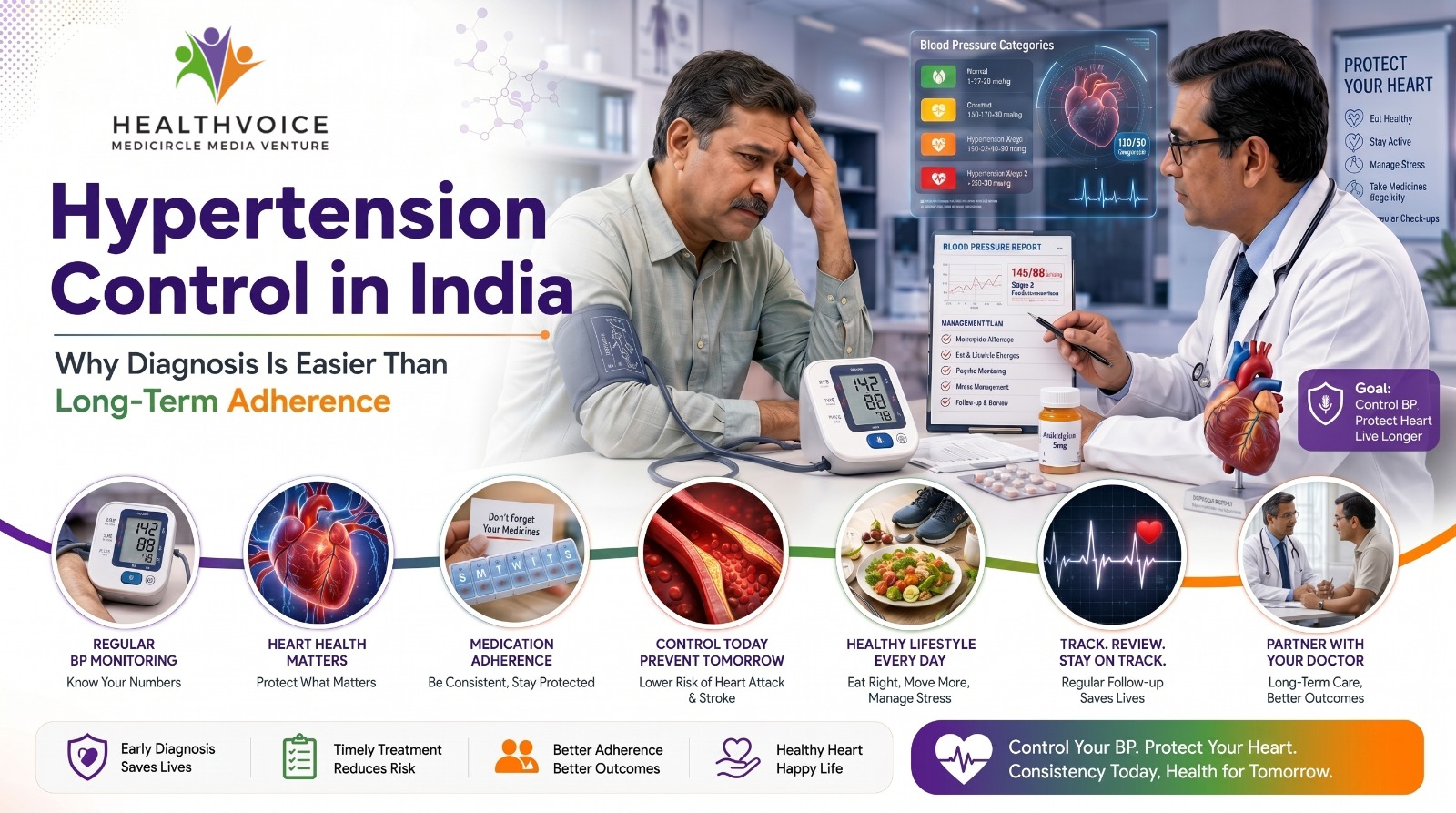
Hypertension Control in India: Why Diagnosis Is Easier Than Long-Term Adherence
Transforming high blood pressure management from a clinical requirement into a stress-free daily habit allows families across India to maintain lifelong health control and prevent severe complications.
Indian Hypertension Adherence
Finding out your blood pressure numbers in India is incredibly simple today. You can get a quick reading at your local corner chemist, drop by a free neighborhood health camp, or simply press a button on a digital BP machine at home. The medical tools needed to detect hypertension are right at our fingertips. Yet, a troubling pattern is emerging across the nation: while millions of citizens learn they have high blood pressure every single year, only a tiny percentage manage to keep those numbers in a normal BP range over time.
Leaving high blood pressure unmanaged is highly risky, as it acts as a primary trigger for severe strokes, cardiovascular arrest, myocardial infarction, heart failure symptoms, and permanent kidney damage. A consulting cardiologist knows exactly how to treat the condition, and effective, budget-friendly options like an amlodipine tablet or telmisartan 40 mg are widely available. So, where is the disconnect? The real issue is not finding the illness; it is keeping up with the high BP medication every single day. Shifting our focus from the initial diagnosis to supporting real families with their daily routine is the only way to tackle these Indian hypertension adherence challenges.
Absent Warning Signs
The biggest reason people drop the ball with hypertension care is that the condition rarely knocks on your door with obvious symptoms. It does not cause a sudden, uncomfortable fever like an infection, nor does it make your joints throb like an injury. For most individuals, high blood pressure is completely quiet.
When someone feels perfectly energetic but hears a high number at a routine doctor visit, a wave of skepticism is completely natural. Without physical pain to remind them, the motivation to take action slips away. A patient might dutifully swallow their pills for the first couple of weeks, but when they feel no different with the medicine than without it, a false sense of security settles in. They assume that feeling fine means their body is fine. This complete lack of physical feedback makes it incredibly easy to skip doses or let a prescription lapse entirely.
Rethinking Lifelong Health
In many Indian households, medical treatment is traditionally viewed as a quick fix for a temporary problem. If you come down with a seasonal cough or a stomach bug, you take a short course of pills, get better, and throw the empty strip away. Trying to apply this short-term mindset to a permanent, metabolic issue like high blood pressure simply does not work.
- The Acute Ailment Mindset: Means that an illness occurs, a person takes pills for a week, the problem is solved, and then they stop taking the medicine.
- The Chronic Care Reality: Means that hypertension exists, a person must take pills daily, their numbers stabilize, and they must continue taking the pills to maintain safety.
Accepting a lifelong prescription can feel like a heavy emotional burden, often triggering worries about physical weakness or chemical dependency. Because of this, patients frequently decide on their own to stop taking their pills the moment a follow-up test shows a normal range for systolic and diastolic blood pressure. The missing piece of information here is straightforward: those numbers look excellent because the daily pill is doing its job behind the scenes, not because the condition has miraculously disappeared.
Navigating Treatment Myths
Another major factor pulling people away from consistent care is the deep cultural trust in home remedies and alternative wellness pathways. While natural ways to lower blood pressure are fantastic for overall well-being and prevention, they can become deeply hazardous when used to completely replace proven medical prescriptions for severe hypertension.
The thought of taking a pill every morning for decades drives many individuals to look for an easier way out. It is incredibly common for well-meaning relatives or viral social media forwards to suggest specific herbs, specialized juices, or stress-relief exercises as total cures for high blood pressure. Eager to avoid standard pharmaceuticals, patients often cut off their medical treatment without informing their physician. Unfortunately, many only realize the mistake when a sudden, dangerous spike in blood pressure lands them in an emergency room.
Hidden Care Costs
Even when a patient is fully committed to their health, the realities of daily life can get in the way. A single medical test might be cheap, but managing an ongoing health condition introduces continuous expenses that can strain a modest family budget.
What Patients Face
Everyday Reality
Impact on Health
Ongoing Costs
Monthly refills and doctor fees add up.
People stretch out pills to save money.
Travel and Time
Overwhelming crowds and long travel times.
Patients miss follow-up visits.
Fragmented Care
Changing doctors frequently without tracking.
Health tracking becomes messy.
The physical effort required to see a doctor complicates things further. For anyone living outside major metropolitan cities, a visit to a specialist often means sacrificing a full day of wages, traveling long distances, and sitting out hours in packed waiting rooms. When getting a simple checkup requires this much logistical effort, it is only natural for patients to postpone their appointments, creating dangerous gaps in their treatment.
Long-Term Success Strategies
Closing the gap between a doctor diagnosis and a patient daily routine requires moving away from rigid medical lectures and moving toward small, achievable habits that fit into normal Indian lives.
Open Clinic Conversations
True consistency starts with a better relationship inside the clinic. Medical visits should not feel like a rushed transaction. Doctors and health advocates need to take a few minutes to explain how blood pressure works in plain language. Think of your daily medication as a protective umbrella; you do not close it the moment it stops raining, but you keep it open to stay dry. Discussing potential side effects or learning about amlodipine tablet uses early on also prevents patients from quitting their treatment out of fear when their body undergoes minor initial adjustments.
Linking Daily Rituals
Since life gets busy and forgetting a dose is the most common mistake, anchoring your medication to an unshakeable daily habit can make a massive difference. Placed near your morning tea container or toothbrush holder, your pillbox will become hard to miss. Taking your high BP medication alongside breakfast or dinner links it directly to an automatic mealtime routine. You can also leverage smartphone alarms or assign a reliable family accountability partner to keep your tracking perfect throughout the week.
Realistic Home Adjustments
Managing your health should never feel like a punishment, and it does not require a radical lifestyle overhaul? Changes work best when they respect your family traditions and culinary preferences. Instead of demanding an absolute ban on your favorite foods, focus on small, intentional modifications. Gradually reduce the extra salt tossed into daily curries, enjoy pickles and papads as occasional treats rather than daily staples, and use heart-healthy cooking oils in moderate amounts. For exercise, a steady, brisk 30-minute walk around your local residential colony is an excellent, sustainable way to support cardiovascular health.
Frequently Asked Questions
Can I Stop My Pills?
No, you should never alter your dosage or stop your medication without speaking directly to your doctor. Your numbers look normal right now precisely because the medication is doing its job. If you stop taking it, your blood pressure will likely climb back up, quietly increasing your risk of sudden health emergencies.
Do Home Remedies Cure?
As of right now, there is no conclusive scientific evidence that alternative therapies can permanently cure chronic hypertension on their own. While a balanced diet, stress reduction, and traditional wellness habits are excellent for your body, they should always be used alongside the medical treatment plan your doctor has created for you.
Why Take Pills Daily?
Hypertension is widely known as a silent condition because it damages your blood vessels and vital organs without making you feel sick on a day-to-day basis. Waiting until you feel dizzy or unwell to take action is highly dangerous, as the very first noticeable symptom of unmanaged high blood pressure can be a major medical crisis like a stroke or a heart attack.
 Team Healthvoice
#IndianHealth #HypertensionAwareness