Preventing Medication Errors, What Doctors, Nurses and Pharmacists Must Align On
Securing medication safety requires consistent dedication and active partnership across all medical specialties. When doctors, nurses, and pharmacists communicate openly and follow standardized protocols, they create a strong safety network that protects every patient.
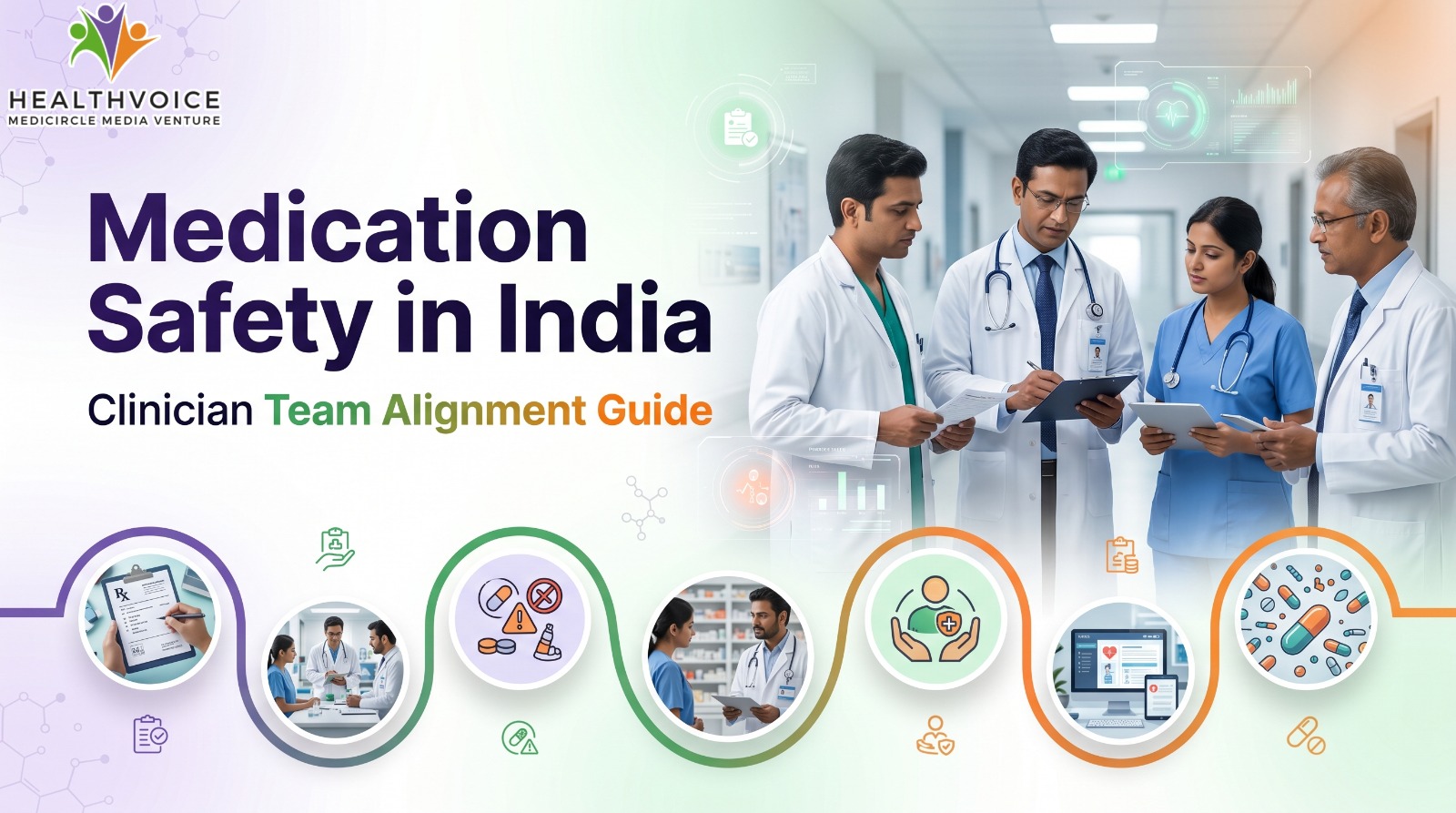
Medication Safety in India
The core purpose of healthcare is to heal, yet maintaining patient safety requires constant vigilance. In the rapidly moving world of Indian hospitals and clinics, giving a patient the right medicine at the right time depends on a reliable chain of human choices. This process relies entirely on a close partnership between three key professionals: doctors, pharmacists, and nurses.
Even with the best intentions, heavy daily patient loads and quick verbal exchanges can create unexpected gaps in care. When a medication mistake happens, it affects more than just the individual patient; it also puts additional pressure on families and hospital resources. To build a safer healthcare environment, clinical teams must understand where these communication gaps occur and work together to prevent errors.
Identifying Hidden Risks
Medical teams across India routinely manage packed outpatient clinics while simultaneously overseeing critical care wards. This high-pressure environment can naturally create situations where subtle oversights occur. It is helpful to view medication mistakes not as the failure of a single stressed professional, but rather as a sign that the structural safety checks have broken down.
For example, when an emergency room is flooded with urgent cases, a spoken instruction can easily be misheard, or a bottle of medicine can be confused with another that looks identical on a crowded shelf. When a hospital unit is short-staffed, the traditional multi-step verification process faces severe strain. By identifying these specific, high-stress moments, and medical centers can build better team defenses instead of just asking individuals to try harder. Hospital systems seeking formal validation often pursue NABH accreditation to ensure these operational safety workflows meet standardized international benchmarks.
Importance of Teamwork
A drug journey from a pharmacy cabinet to a patient bedside involves multiple handoffs, and each one is a vital opportunity to double-check accuracy. If a general physician near me writes down a perfectly calculated dose but the handwriting is difficult to read, the safety of the patient rests entirely on whether the clinical pharmacist stops to question it. Similarly, if a pharmacy professional dispenses the correct pill but the instructions on how often to take it are confusing, the nursing staff faces a difficult challenge during administration.
The clinical pathway forms a continuous care loop where the prescribing doctor, the hospital pharmacist, and the bedside nurse remain interconnected through shared team alignment.
When medical professionals work in isolated silos without regular communication, the chance of a therapeutic mix-up rises. True clinical alignment happens when a hospital pharmacist feels completely comfortable messaging a senior specialist to verify a confusing order, and a nurse feels fully supported in delaying a dose if something about the medication feels incorrect. True patient safety thrives on mutual trust and shared responsibility.
High-Risk Areas
To create a highly reliable system, medical teams must focus on the specific transition points where errors are most likely to drop through the cracks. Standardizing these specific clinical moments builds a dependable safety net across an entire facility. This is especially true when handling complicated drugs prescribed by specialists, such as a local cardiologist, a pediatrician near me, an ent near me, or a skin specialist near me, where improper dosing can drastically change clinical outcomes.
Writing Clear Prescriptions
The safety process begins the moment a treatment plan is recorded by health care professionals. Using non-standard abbreviations, leaving out the specific form of the drug, or failing to note if a pill should be taken before or after meals can cause confusion later. Writing out drug names fully and using standard metric measurements removes the guesswork for both pharmacists and nurses.
Checking High-Alert Medications
Some groups of therapies, such as insulin, blood thinners, chemotherapy drugs, and concentrated intravenous fluids, require exact precision. Because even a tiny variance can cause serious health complications, these high-alert drugs need an independent double-check system. This system means two separate professionals must independently verify the identity of the patient, the drug name, and the exact dose before the medication is given.
Creating Transfer Protocols
Moving a patient from one hospital area to another, like transferring someone from the intensive care unit to a general medical ward, is a common place for information to get lost. If the active medication list of the patient is not carefully reviewed and reconciled during the move, important long-term treatments might be forgotten or accidentally doubled. Formalizing the transfer process ensures the medication history remains accurate throughout the hospital stay.
Improving Communication
Fixing these issues does not require expensive new technology; instead, it relies on building simple, consistent habits that bring teams together every day.
- Run Collaborative Ward Rounds: Bringing a clinical pharmacist and a floor nurse along on morning patient reviews allows the team to check for drug interactions and adjust doses based on fresh lab results right at the bedside.
- Use Repeat-Back Rules: In urgent situations where a doctor must give a verbal instruction, the person receiving the order should write it down and read it back aloud to confirm they heard it correctly before preparing the dose.
- Organize Stock Wisely: Keeping high-alert medications in bright, distinctly labeled bins in both the central pharmacy and ward storage rooms helps staff avoid accidentally grabbing look-alike packaging.
Balancing Technology
Modern healthcare technology offers valuable support for infection prevention and eliminating clinical errors. Electronic health records that feature built-in clinical decision software can check prescriptions instantly, flagging potential allergic reactions, problematic drug combinations, or unusual dosage levels based on the weight of a patient.
At the same time, medical teams must use these digital tools wisely. If a system triggers too many minor warnings, busy clinicians can experience alert fatigue and start clicking past important safety reminders without reading them. Digital alerts are excellent for catching hidden problems, but they work best as a backup to, not a replacement for, the real-world judgment and direct conversations of the medical staff.
Building Support Cultures
In the past, the standard response to a medical error was to find and blame the person who made it. This old approach rarely works well because it scares staff into hiding near-misses, which prevents the hospital from learning how to fix the underlying issue. To make real progress, healthcare facilities need to build a Just Culture.
A Just Culture draws a clear line between honest human mistakes caused by flawed systems and genuinely reckless behavior. When nurses, pharmacists, and doctors know they can report a close call without facing unfair blame, they can openly discuss what went wrong. Learning from these near-misses allows a hospital to correct weak protocols before any actual harm reaches a patient. This open feedback system forms the core foundation of strong hospital-wide infection control and overall quality management.
Systemic Safety Solutions
To completely safeguard patient care, institutions must establish multi-layered clinical protocols that look beyond individual human performance. When a hospital implements a dedicated system for tracking medication paths, the clinical environment becomes inherently resilient. This involves mapping out every storage shelf, administration trolley, and patient file to find where structural gaps exist.
By creating an environment where checking data is standard practice, hospitals protect their personnel from the physical limits of fatigue during extended night shifts. Furthermore, incorporating continuing education programs ensures that everyone stays informed about newly released pharmaceutical formulations. When healthcare networks prioritize systemic defense over individual pressure, the overall safety index of the community naturally rises.
Common Questions
Why Do Errors Happen?
The majority of mix-ups stem from everyday communication issues. These include hard-to-read handwriting, confusing abbreviations, missing details during patient handovers between shifts, or simply mistaking two drugs that have very similar names or packaging during a busy shift.
Role of Pharmacists?
Clinical pharmacists are experts in how drugs interact and how dosages need to change for patients with reduced kidney or liver function. Having them directly on the floor helps catch potential prescription issues before the medication ever leaves the pharmacy doors.
Unclear Order Actions?
If an order is unclear or difficult to read, the nurse should hold off on giving the medication and contact the prescribing physician directly to verify it. It is always safer to take a moment to double-check than to guess what a prescription means.
Emergency Protocol Importance?
Emergency rooms can be loud and stressful, making it easy to mishear a spoken drug name or dosage. Repeating the order back to the doctor confirms that everyone is on the exact same page before the medicine is prepared and given.
Sharing Responsibility
Achieving total medication safety is a continuous journey that relies on everyday partnerships across every medical department. When physicians, pharmacists, and nursing staff talk clearly with one another and follow clear, shared routines, they form a reliable safety network around their patients.
True clinical excellence is not just about individual skill; it is about creating a cooperative environment where everyone looks out for the well-being of the patient. By standardizing high-risk steps, using digital tools wisely, and encouraging open communication about near-misses, Indian healthcare institutions can protect their patients and deliver consistently safer care.
 Team Healthvoice
#MedicationSafety #PatientSafetyIndia