Role Of Blockchain In Medical Data Security
Blockchain is not just an added layer of security. It is a structural shift in how healthcare data is managed and protected. By distributing control, improving transparency, and ensuring data integrity, it addresses long-standing challenges in medical data security. As adoption grows, its role in shaping secure and efficient healthcare systems will become more defined.
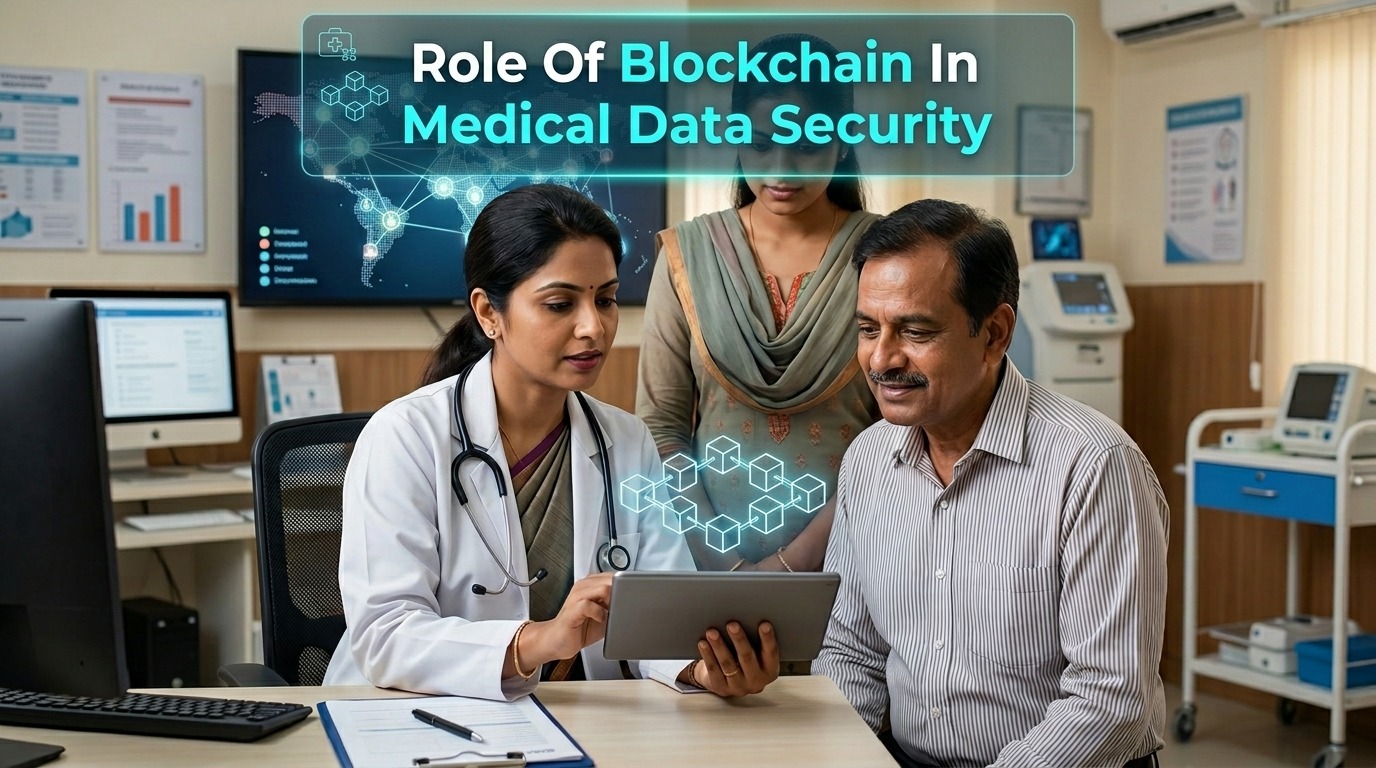
Medical data moves through multiple hands, systems, and departments before it reaches the point where it is actually used. In that movement, gaps appear. Records get duplicated, access becomes fragmented, and security depends heavily on centralized control. This is where blockchain begins to change the structure itself, not just the tools used within it.
Instead of relying on a single authority to manage data, blockchain distributes control across a network. That shift directly impacts how medical data is stored, accessed, and protected, especially in environments where trust, accuracy, and privacy are critical.
What Blockchain Means In A Healthcare Context
Blockchain is often associated with finance, but its structure fits healthcare in a different way. It creates a system where records are stored in linked blocks, each verified and time-stamped, making them difficult to alter once added.
Understanding blockchain technology in healthcare requires looking beyond the technical definition. In practical terms, it means that patient data is no longer dependent on a single database. Instead, it is shared across a secure network where every update is recorded transparently.
The growing adoption of blockchains in healthcare reflects a need for systems that can handle sensitive information without compromising security or accessibility.
Why Medical Data Security Needs A Structural Shift
Healthcare data is among the most sensitive forms of information. It includes personal identity, medical history, diagnostic records, and treatment plans. Any breach does not just affect privacy. It can impact patient safety and clinical decisions.
Traditional systems often rely on centralized storage, which creates a single point of vulnerability. Once compromised, large volumes of data can be exposed. This is where blockchain solutions for healthcare offer a different approach by decentralizing control.
The blockchain impact on healthcare becomes visible in how data integrity is maintained. Once recorded, entries cannot be modified without network validation. This reduces the risk of tampering and unauthorized changes.
Benefits Of Blockchain In Healthcare Systems
The adoption of blockchain is not about replacing existing systems entirely. It is about strengthening them where they are most vulnerable.
Some of the key benefits of blockchain in healthcare include:
- Enhanced data securityPatient records are encrypted and distributed, reducing the risk of centralized breaches
- Improved data integrityOnce information is recorded, it cannot be altered without validation
- Better interoperabilityDifferent systems can access consistent data without duplication
- Transparent access trackingEvery interaction with data is recorded, creating accountability
- Reduced administrative overheadAutomated verification reduces the need for repeated manual checks
These benefits show how blockchain supports both security and efficiency at the same time.
How Blockchain Is Actually Used In Healthcare
The real value of blockchain becomes clear when we look at how is blockchain used in healthcare across practical scenarios. These are not theoretical ideas but working models that are gradually being adopted.
Key healthcare blockchain use cases include:
- Secure patient recordsPatients can control who accesses their data while maintaining a complete history
- Drug supply chain trackingBlockchain helps verify the authenticity of medicines, reducing counterfeit risks
- Clinical data sharingHospitals and labs can exchange verified data without compromising privacy
- Insurance and billing processesClaims can be processed faster with transparent and tamper-proof records
- Research data managementClinical trial data can be stored securely, ensuring accuracy and traceability
These applications of blockchain in health highlight how the technology fits into multiple layers of the healthcare system.
From Data Entry To Secure Access: How Blockchain Works
The process behind blockchain in healthcare follows a structured flow that ensures both security and transparency.
- Data is recorded as a transactionEvery medical update, test result, or record entry is logged
- Information is encrypted and added to a blockThis ensures that sensitive data remains protected
- Blocks are linked in sequenceEach block connects to the previous one, forming a chain
- Network validation confirms authenticityMultiple nodes verify the data before it becomes permanent
- Access is controlled through permissionsOnly authorized users can view or interact with specific data
This structure explains how can blockchain be used in healthcare without compromising patient confidentiality.
Case Studies: Where Blockchain Is Already Making A Difference
Case Study 1: Securing Patient Records Across Hospitals
A multi-hospital network faced challenges in maintaining consistent patient records across locations. Data duplication and access delays were common, especially when patients moved between facilities.
By implementing blockchain technology in healthcare, the network created a shared system where patient records were updated in real time. Each entry was verified and securely stored, reducing duplication and improving access speed.
Doctors no longer depended on fragmented systems. They could access accurate patient histories without waiting for manual transfers.
Case Study 2: Tracking Pharmaceutical Supply Chains
A healthcare organization dealing with counterfeit medication risks introduced blockchain for supply chain tracking. Every stage, from manufacturing to distribution, was recorded on a blockchain network.
This use of blockchain in medicine allowed verification of drug authenticity at every step. Pharmacies could confirm whether a product was genuine before dispensing it, reducing safety risks for patients.
The system created transparency without adding complexity to daily operations.
Case Study 3: Improving Public Health Data Transparency
During a regional health initiative, authorities struggled to maintain accurate data for disease tracking. Reporting delays and inconsistencies affected decision-making.
Using blockchain public health models, data from multiple sources was recorded in a unified system. Updates became more consistent, and information could be verified quickly.
This improved how health authorities responded to emerging patterns, making data-driven decisions more reliable.
Challenges And Considerations
While promising, blockchain adoption is not without challenges. The discussion around the future of blockchain in healthcare often includes practical limitations.
Some of the key concerns include:
- Integration with existing healthcare systems
- High implementation costs in early stages
- Need for regulatory clarity
- Scalability issues with large data volumes
At the same time, ongoing development in blockchain solutions for healthcare is gradually addressing these barriers.
FAQs
1. What is blockchain technology in healthcare?
Blockchain technology in healthcare is a decentralized system used to securely store and share medical data across networks.
2. How is blockchain used in healthcare?
How is blockchain used in healthcare includes secure patient records, supply chain tracking, and data sharing between providers.
3. What are the benefits of blockchain in healthcare?
The benefits of blockchain in healthcare include improved security, data integrity, and transparency.
4. What are healthcare blockchain use cases?
Healthcare blockchain use cases include medical record management, insurance processing, and clinical research data tracking.
5. How can blockchain be used in healthcare for patients?
How can blockchain be used in healthcare allows patients to control access to their medical records securely.
6. What is blockchain in medicine?
Blockchain in medicine refers to using blockchain systems to manage medical data, research, and drug tracking.
7. What are applications of blockchain in health systems?
The applications of blockchain in health include secure data exchange, fraud prevention, and operational efficiency.
8. Is crypto in healthcare related to blockchain?
Crypto in healthcare is related but focuses more on transactions, while blockchain supports data management and security.
9. What is blockchain public health?
Blockchain public health involves using blockchain to manage and verify large-scale health data for populations.
10. What is the future of blockchain in healthcare?
The future of blockchain in healthcare includes better integration, improved security, and wider adoption across systems.
 Team Healthvoice
#Blockchain #HealthTech
