Why continuous medical education (CME) is essential
Continuing Medical Education (CME) keeps doctors at the forefront of evolving medical science. It bridges classroom learning and real-world care, ensuring every patient benefits from up-to date, evidence-based treatment.
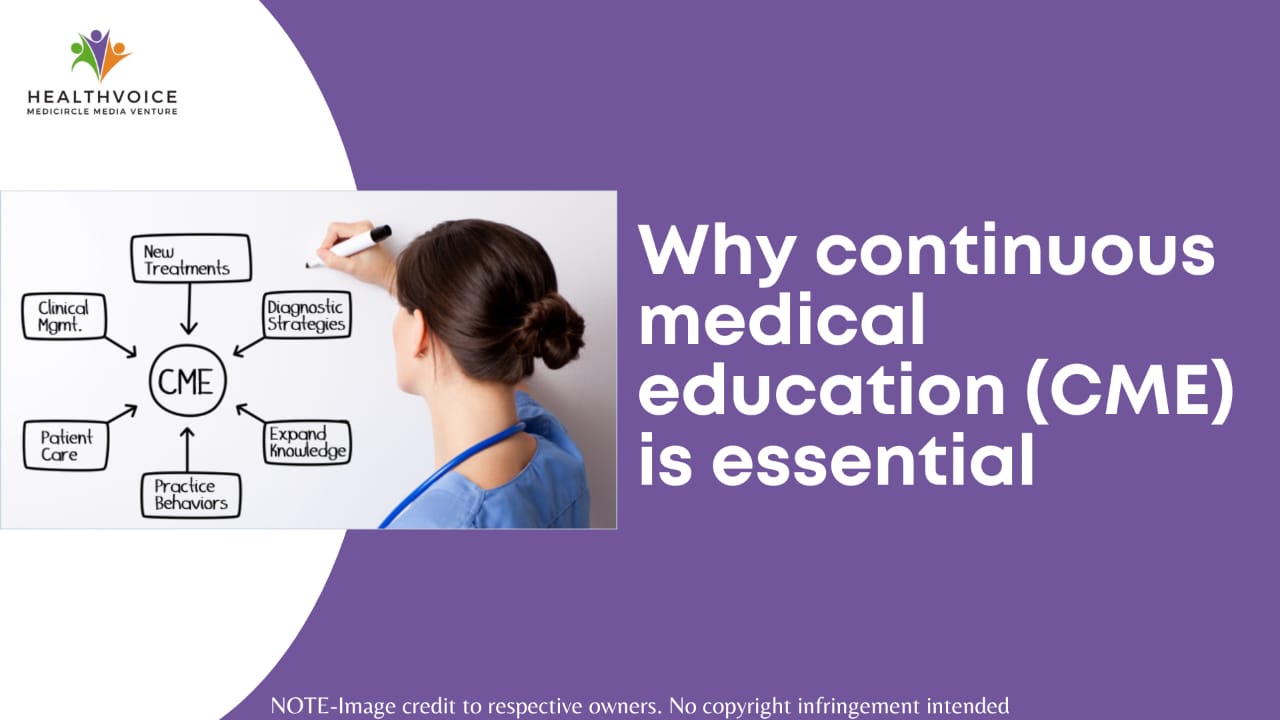
Think about the mobile phone you used ten years ago compared to the one in your hand today. The core purpose is the same, but the technology, capabilities and efficiency have transformed entirely. In many ways, the field of medicine evolves at an even faster pace. What was considered gold-standard treatment a few years ago might be outdated today? For doctors in India, this reality is at the heart of Continuing Medical Education (CME). It is not just about collecting credit hours; it is about keeping the very art and science of healing current and effective.
The National Medical Commission (NMC) requires doctors to earn a certain number of CME credits to renew their license. This rule sets a basic standard, a floor for professional development. But the doctors who truly stand out see CME as the ceiling, a continuous opportunity to grow. It is a personal pledge to lifelong learning in a profession where standing still means falling behind.
CME in India:
India’s health challenges are unique and complex. A doctor in a metropolitan hospital might be grappling with the latest advancements in robotic surgery, while a practitioner in a rural clinic is managing a high caseload of both infectious diseases and lifestyle disorders like diabetes. CME acts as a vital link, connecting the foundational knowledge from medical college with the practical, on the ground needs of today’s patients.
The recent pandemic was a stark, global lesson in this. When a novel virus emerged, the entire medical community had to learn, adapt and implement new protocols almost overnight. CME sessions, whether online or in person, became lifelines, delivering critical updates that directly impacted patient survival and safety. This event underscored that continuous learning is not an academic luxury; it is a core component of clinical responsibility.
Beyond the certificate:
While meeting regulatory requirements is one outcome, the personal and professional rewards of CME run much deeper.
Sharpening the saw: Medicine is a craft. CME programs, workshops and seminars are where doctors sharpen their skills. They learn about new drug formulations, refined surgical techniques and updated diagnostic criteria. This process ensures their clinical knowledge remains a sharp, reliable tool.
Building a richer career: Actively engaging in CME signals something powerful to colleagues and institutions: this is a doctor committed to their craft. It can open doors to specializations, academic roles or leadership positions within hospitals. It is an investment that often pays dividends in career satisfaction and growth.
Power of a professional circle: CME events are natural meeting points. They are where a general physician from a small town can connect with a specialist from a metro, where ideas are exchanged and professional bonds are formed. These networks become invaluable resources for case discussions, referrals and collaborative learning long after the event is over.
Impact on patient care:
Let us not forget who this ultimately benefits, the patient. When a doctor is up to date, the quality of care is transformed.
Everyone wants accurate diagnoses and treatments that work. A doctor fresh from a CME course on cardiology is better equipped to interpret a tricky ECG or prescribe the most current, evidence-based medication. This directly leads to safer care, fewer complications and better health outcomes for the community.
Furthermore, today's patients are informed. They research their symptoms online. When they encounter a doctor who is conversant with the latest studies and techniques, it builds a powerful foundation of trust. This confidence makes the patient more likely to follow medical advice, leading to a more successful therapeutic relationship.
Changing face of CME:
Gone are the days when learning was confined to a lecture hall. The world of CME has expanded, offering flexibility and variety.
Doctors can now choose from:
Traditional paths: Hospital seminars, conferences and workshops.
Modern solutions: Live webinars, self-paced online courses and short learning modules designed for smartphones.
The shift to digital learning has been a game-changer, especially for doctors in smaller towns. It puts world-class expertise from institutions across India and the globe right at their fingertips, making geographical location less of a barrier to knowledge.
Learning on the go:
“But where is the time?” is a valid question for any busy medical professional. The key is integration, not addition.
A practical approach is to focus on learning that directly addresses the cases you see every day. A pediatrician might focus on new asthma management guidelines, while a dermatologist could explore recent research on psoriasis. This makes the learning immediately relevant and applicable.
The new formats of CME are designed for busy schedules. Listening to a medical podcast during a commute or completing a 15 minute micro-module between patient appointments makes continuous learning a seamless part of the day, not a burdensome task.
The final step is the most crucial: application. After a learning session, a doctor might ask, “Can I adjust my prescription protocol? Can I improve how I explain this condition to my patients?” When learning translates into action that is when CME delivers its true value.
The final word:
Continuing Medical Education is far more than a line on a renewal form. It is a professional commitment with a very human goal: to offer every patient the best possible care, informed by the latest and most reliable knowledge.
In the end, a doctor’s education is never really finished. It is a journey. And CME is the steady, reliable bridge that connects the doctor they were yesterday to the healer they are capable of becoming tomorrow.
 Team Healthvoice
#ContinuingMedicalEducation #MedicalLearning #LifelongLearning #ClinicalExcellence #ModernMedicine #HealthcareEducation #MedicalProfessionals #PatientCentricCare #MedicalWorkshop #DoctorTraining #MedicalAdvancement #healthvoice
