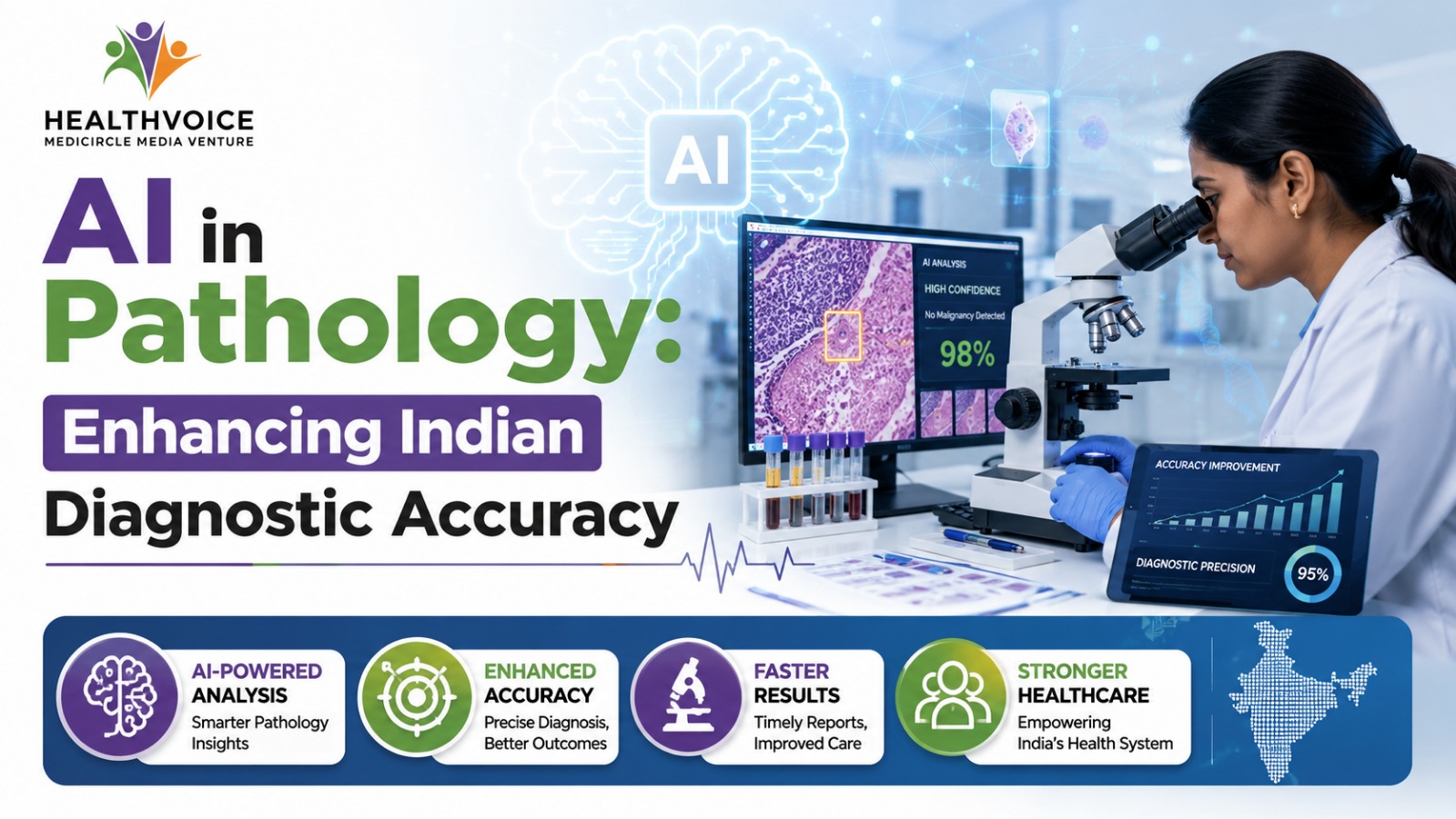
AI in Pathology: Enhancing Indian Diagnostic Accuracy
By transforming physical glass slides into high-resolution digital files and applying advanced algorithms, technology is stepping in as a powerful second set of eyes for medical professionals across India.
AI in Pathology: Diagnostic Accuracy
Medical testing is quietly going through a major technological upgrade, and the most impactful changes are happening inside a modern pathology lab. For over a century, the core of medical diagnostics has remained exactly the same. A laboratory technician places a tiny tissue sample onto a thin piece of glass, treats it with colored dyes, and a doctor spends hours looking through a complex microscope lens to spot signs of illness. While this traditional method has saved countless lives, it relies entirely on human eyes. Long shifts, heavy workloads, and the tricky nature of identifying complex cellular structures can occasionally cause fatigue or subtle differences in medical opinions.
The arrival of artificial intelligence is giving this age-old profession a powerful boost. By scanning physical glass slides into ultra-sharp digital images and using smart computer programs, ai technology is acting as an ultra-reliable second opinion for laboratory teams. In a country like India, where top medical specialists usually live in big metropolitan cities, this shift is incredibly meaningful. Using digital workflows and advanced algorithms is no longer a distant dream, as it is actively changing how diseases are caught, understood, and treated today.
The Digital Shift
To understand how smart software helps in a medical laboratory, we first need to look at the shift toward digital workflows. In the past, physical glass slides had to be packed into boxes, stored in large filing rooms, and hand-delivered to doctors at a local diagnostic laboratory. If a family living in a smaller town needed a second opinion from a top oncologist in Mumbai or Bengaluru, they had to send the actual glass slide through a courier service. This process carried a constant risk of the fragile slide breaking, getting lost, or causing painful delays in starting treatment.
Digital workflows remove these risks entirely. Laboratories now use advanced, high-resolution scanners to turn physical tissue samples into highly detailed digital photographs. These files can be opened instantly on any computer screen, zoomed in to see the tiniest details, and emailed to specialists anywhere in the world within seconds. Beyond saving time, this change turns physical tissue into digital data, creating the perfect foundation for smart algorithms to step in and assist at any pathology laboratory.
How Software Works
Once a laboratory converts a sample into a digital file, specialized machine learning software goes to work. These programs are trained by analyzing millions of historical medical images that have already been thoroughly verified by senior doctors. Through this intensive training process, the software learns exactly what healthy tissue looks like and how to spot the earliest indicators of disease during a routine blood test or tissue evaluation.
When a fresh digital slide is loaded into the computer, the software scans every single pixel in just a few moments. It maps out the layout of the cells, highlights suspicious clusters, and flags abnormal patches that need a doctor immediate attention. This technology is not here to replace human expertise. Instead, it acts like an automated assistant that circles the most critical areas on a map, allowing the doctor to focus energy on verifying complex findings rather than hunting through thousands of perfectly healthy cells.
Impact on Accuracy
The biggest question patients and families have is whether this technology actually prevents mistakes and improves care. Real-world medical data shows that it does, specifically by focusing on three main areas, which are consistency, early detection, and precision.
Cutting Human Error
Analyzing tissue samples can sometimes be subjective. Two highly trained doctors might look at the exact same borderline cell group and have slightly differing opinions on the precise stage of a condition. Smart software introduces a completely objective baseline. Computers do not get tired at the end of a long night shift, and they do not have good or bad days. By providing exact measurements of cell shapes and sizes, the technology ensures that every single report from a pathology lab near me matches the highest global standards.
Catching Illness Early
When dealing with aggressive conditions like cancer, knowing if a disease has begun to spread to other parts of the body is vital for survival. These tiny, migrating cellular clusters can be so small that they easily hide from the human eye during a standard microscope review. Smart algorithms are built for this exact type of tedious, detailed searching. They inspect the image on a microscopic level, successfully pointing out tiny threats before they have a chance to grow or spread further.
Measuring Biological Markers
Modern medical treatments are becoming highly personalized, often targeting specific proteins or markers on the surface of cells. Historically, a pathologist had to look through the lens and visually estimate the percentage of these markers. Today software can count thousands of individual cells one by one to provide an absolute, pinpoint percentage. This level of precision helps doctors prescribe the exact dosage of specialized medicine a patient needs for their specific body chemistry.
Transforming Indian Healthcare
Bringing digital diagnostics and smart software into Indian laboratories directly solves some of our healthcare system biggest challenges, making high-quality medical testing accessible to more families.
Current Healthcare Challenge in India
The Digital and AI Solution
Specialist Shortages: Most senior pathologists work in major metro areas, making it hard for rural patients to access top care.
Instant Remote Consultation: Digital slides let rural clinics securely send images to India best experts for an immediate review.
Long Delays for Results: Waiting for manual slide reviews in crowded public hospitals can delay vital treatments.
Smart Triaging: Algorithms sort through incoming tests, automatically placing high-risk or urgent cases at the top of the pile.
Expensive Travel Costs: Patients often spend their savings traveling to medical hubs just to get a reliable second opinion.
Affordable Digital Sharing: Sharing files electronically completely removes the need for expensive travel and physical courier fees.
By closing the distance between remote towns and major medical hubs, this technology ensures that a patient visiting a local clinic can get the exact same level of diagnostic confidence as someone visiting a premier dr lal pathlabs center in a metropolitan hub.
Challenges and Limits
Despite the clear benefits, making this technology available everywhere in India comes with a few practical hurdles that laboratories must navigate.
High Setup Expenses
Switching to a digital workflow requires a major up-front financial investment. High-speed medical scanners, large data storage systems, and the computing power needed to run advanced software can be too expensive for small, independent neighborhood laboratories operating on tight budgets.
Creating Uniform Standards
For a computer program to give accurate feedback, the digital images it reads must be clear and uniform. Differences in how tissue is prepared, cut, or dyed across various laboratories can confuse the software. Because of this, establishing strict, nationwide rules for how samples are prepared is incredibly important for reliable results.
Mandatory Human Supervision
A computer program is only as smart as the data used to build it. It can occasionally get confused by a harmless speck of dust, a tiny air bubble, or a fold in the tissue sample, misinterpreting it as a medical issue. This is why human supervision is absolutely mandatory. A smart machine should never make a final medical call on its own, because that responsibility belongs entirely to a qualified doctor who looks at the software insights alongside the real symptoms and medical history of the patient.
The New Era
As technology continues to evolve, the partnership between medical professionals and smart software will become seamless. The laboratory of the future is one where machines handle the repetitive, exhausting tasks of counting and sorting cells, freeing up doctors to focus their time and energy on solving highly complex, unusual cases that require deep human judgment.
For India, this digital shift is a vital step toward making reliable healthcare fair and accessible for everyone. Portals like HealthVoice.in emphasize that staying informed about these medical updates helps both families and doctors make better care decisions. By welcoming secure digital health systems, supporting online records, and adopting validated technological tools in local clinics, our country is building a faster, safer, and much more accurate healthcare network for all its citizens.
Diagnostic FAQs
Will Software Replace Doctors?
No, the technology is built to be a helpful tool, not a replacement. It takes care of tedious tasks like counting cells and organizing files so that doctors can focus their energy on analyzing results and making the final diagnostic decisions.
Does It Save Time?
Instead of packing up physical glass slides and mailing them away for a second opinion, digital files can be sent over the internet instantly. This can cut down the wait time for a specialist review from weeks to just a few hours.
Are Reports Trustworthy?
Yes, provided the software has been thoroughly tested on large, diverse medical datasets and approved by regulatory bodies. To guarantee safety, these tools are always used under the watchful eye of a certified pathologist who double-checks and signs every final report.
 Team Healthvoice
#AIInPathology #DigitalDiagnostics