AI in Indian Hospitals: Preventing Patient Decline Early
Advanced algorithms track continuous hospital data to recognize subtle patterns of clinical decline before visible symptoms surface, helping medical teams intervene early and transforming traditional reactive treatment into efficient, life-saving predictive care.
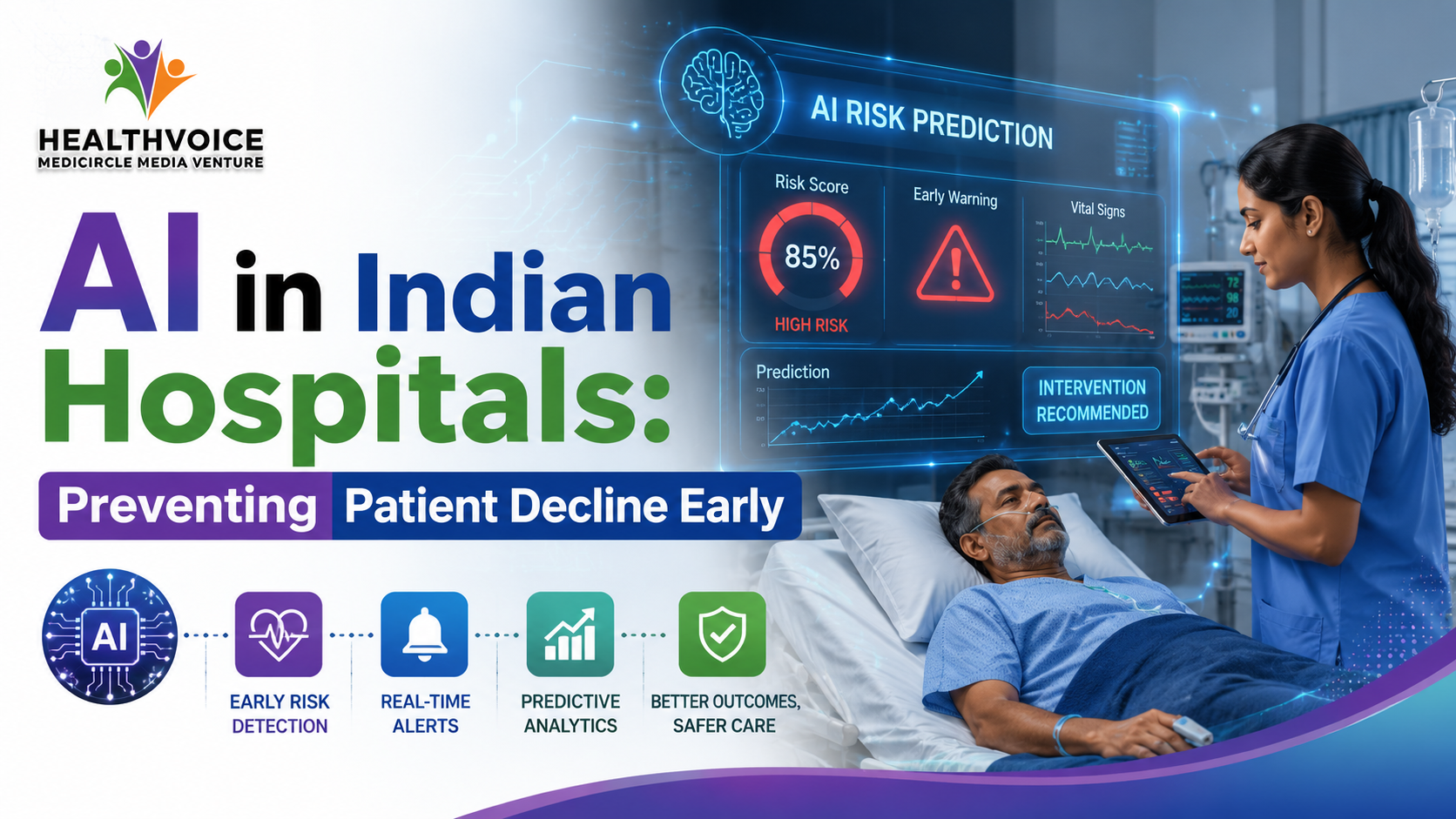
AI in Healthcare: Preventing Patient Decline Early
The way we approach hospital care in India is undergoing a massive, technology-driven evolution. Historically, medicine has operated on a defensive, step-by-step framework. A patient is admitted to a ward, their vitals are checked manually at specific intervals, and the medical team reacts whenever a problem becomes visible. While this system has been the standard for generations, it has a built-in vulnerability. By the time a patient health status visibly plummets, doctors are left playing catch-up. Clinical deterioration, which is the gradual worsening of a medical condition, rarely happens out of nowhere. It usually drops subtle clues hours before a major crisis hits.
This is where the implementation of artificial intelligence in healthcare introduces an entirely new strategy. Instead of waiting for an emergency to erupt, a smart predictive algorithm analyzes real-time, continuous health data to spot microscopic shifts that point to a future risk. For a busy medical system like India, where hospitals manage massive numbers of patients alongside a dedicated but heavily stretched workforce, this transition is a game-changer. Moving from defense to offense does not just improve hospital workflows. It saves lives by giving medical teams a head start.
Hidden Warning Signs
To understand why artificial intelligence ai in healthcare is so necessary, think about the daily rhythm of a typical hospital ward. Nurses balance a massive workload, moving from bed to bed to chart blood pressure, pulse rates, temperature, and oxygen levels every few hours. The challenge is that a patient stability can shift dramatically during the quiet windows between those check-ups. Furthermore, early decline is rarely loud. It does not usually look like a sudden, dramatic collapse.
Instead, it looks like a collection of tiny, seemingly unrelated shifts. A minor, steady acceleration in a patient breathing, paired with a tiny dip in blood pressure, might look perfectly manageable on separate charts. However, when viewed together, those two data points can be an early signature of a major complication like sepsis or internal fluid buildup. In a crowded environment, connecting these tiny dots across multiple patients is incredibly difficult for even the most experienced staff. Often, by the time the emergency becomes obvious to the naked eye, the patient requires an urgent transfer to intensive care. This increases both the danger and the financial strain on the family.
Shifting the Timeline
Predictive monitoring acts as a silent, digital safety net that never blinks. Rather than relying on sporadic, manual checks, these intelligent platforms link directly with bedside monitors and electronic medical records. They track healthcare data continuously, using patterns learned from millions of past clinical cases. Advanced models, drawing from foundational data concepts like a hidden markov model or time-series prediction, know exactly what a body looks like when it is beginning to struggle, long before the patient even feels a symptom.
The moment the predictive analytics engine spots an alarming trend, it sends an instant, precise notification to a nurse tablet or the duty doctor smartphone. This completely changes how care is delivered. Instead of hearing an emergency alarm and sprinting down a hallway with a crash cart, the medical team can walk over to the patient calmly. They have the time to run a precautionary blood test, adjust an intravenous line, or alter a medication dose hours ahead of schedule. The utilization of ai and healthcare effectively flips the script from managing emergencies to preventing them altogether.
Real-World Medical Impact
Bringing predictive artificial intelligence in health care tools into Indian facilities provides major practical benefits that ripple out to everyone involved, from the bedside to the front desk.
Supporting Healthcare Workers
Staffing shortages and high patient-to-nurse ratios are common challenges in many Indian hospital wards. Because nurses spend hours recording data manually, fatigue is an inevitable risk. Automated, continuous tracking acts as an extra set of eyes, reducing the pressure on human staff. This foundational healthcare update automatically highlights which individuals need the most immediate attention, helping teams organize their rounds based on actual medical urgency.
Reducing ICU Traffic
When medical teams can address health complications early, they can keep patients stable right in their original rooms. This significantly lowers the number of unexpected, chaotic transfers to the Intensive Care Unit. By managing risks early, hospitals can keep critical intensive care beds open for individuals who face sudden, severe trauma. This makes the entire facility run more smoothly.
Easing Financial Stress
Medical emergencies can place a massive financial burden on Indian households. Unexpected intensive care stays, emergency procedures, and extended recoveries cause hospital bills to climb rapidly. By intervening early, predictive technology helps individuals recover faster and return home sooner. This leads to shorter, much more manageable hospital stays and keeps medical costs predictable.
Balancing Technology Integration
For software to work effectively in a hospital, it cannot feel like a chore or an administrative headache for the staff. Early versions of medical systems often suffered from alarm fatigue, buzzing constantly over minor data glitches until frustrated medical workers simply muted the screens. Modern predictive engines solve this by ensuring their alerts are highly accurate, quiet, and paired with helpful context.
To achieve this accuracy, engineers use complex data processing techniques. They combine techniques from supervised learning and unsupervised learning to train systems on verified clinical crises while also mapping baseline patient behaviors. Data privacy is another crucial pillar. As Indian hospitals move toward digital records, keeping patient data locked down and secure is a non-negotiable priority. Successful technology integration requires focused training so that doctors understand the reasoning behind an algorithm alert. The goal is not to let a computer make medical decisions, but rather to give healthcare professionals the clearest possible foresight so they can do what they do best.
Building Connected Care
This progressive shift fits perfectly into India national health goals, especially with the growth of infrastructure like the Ayushman Bharat Digital Mission. As secure digital health identifiers and unified records become standard, data can move safely between labs, wards, and specialists. This clean, organized data stream is exactly what predictive engines need to function with maximum accuracy.
Public platforms play a vital role in this transformation. By translating complex technical upgrades into clear, honest, and accessible insights, they help everyday citizens understand how modern medicine is evolving. When families and individuals see how digital tools are actively being used to keep them safe, trust grows, and the entire healthcare journey becomes less intimidating.
Frequently Asked Questions
Will AI Replace Doctors?
Absolutely not. These tools are designed to assist, not replace. Think of the technology as an advanced monitoring assistant that looks for patterns in the background. Every diagnosis, prescription change, and final medical plan is entirely directed by human doctors.
Is Monitoring Painful?
Not at all. These systems are completely non-invasive. They do not interact with the patient directly or administer any treatment. They simply review the data already being gathered by standard hospital tools, like finger clips and blood pressure cuffs.
Is It Expensive?
While setup costs exist for the hospital, the technology actually saves families money in the long run. By preventing expensive emergencies, lowering the need for intensive care transfers, and accelerating recovery times, it reduces the overall bill.
Proactive Health Visions
Moving away from traditional, reactive care toward a predictive framework is a massive step forward for modern medicine. The real magic of automated systems in a clinical setting is their capacity to read between the lines, noticing the quiet, invisible shifts that signal a body is struggling. By delivering timely, early warnings, this technology gives medical professionals the freedom to act with strategy and confidence.
As these intelligent platforms become a natural part of Indian hospitals, patient safety will reach new heights. Embracing predictive care means fewer emergencies, smarter use of medical resources, and less anxiety for families waiting by a loved one bedside. The future of healing relies on this perfect partnership: advanced digital foresight combined with human empathy, ensuring no warning sign is ever missed.
 Team Healthvoice
#AIInHealthcare #PatientSafety
