The Business of Beauty vs The Science of Medicine: A Growing Conflict in India
What is needed is a balanced approach that combines strict standards with flexibility, ensuring that patient safety remains the central priorit.
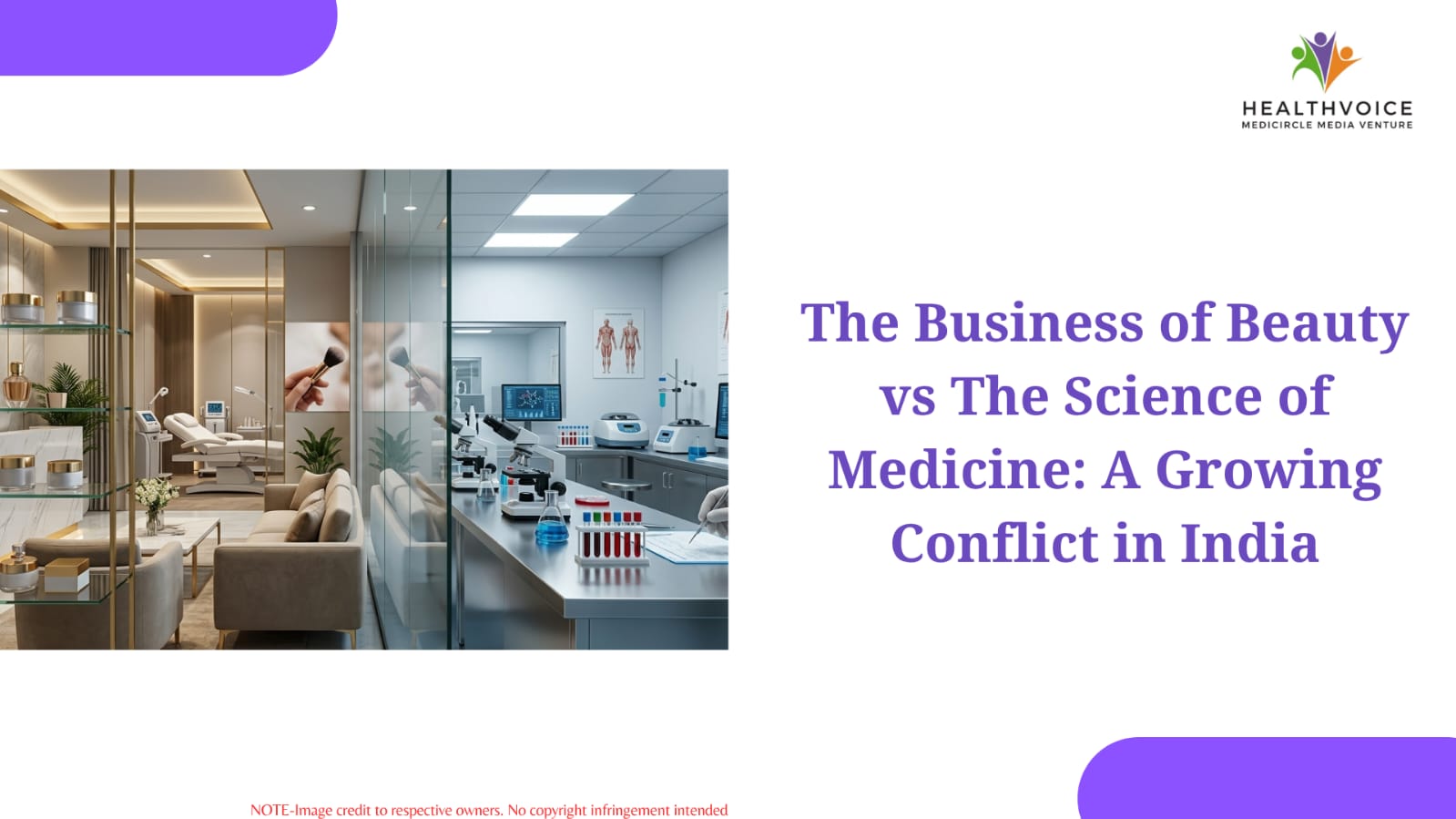
In recent years, aesthetic medicine in India has transformed from a niche speciality into a booming industry driven by rising aspirations, social media influence, and the promise of quick physical transformation. Clinics offering hair transplant procedures, laser treatments, and cosmetic enhancements have multiplied across cities and smaller towns alike. For many patients, these services represent confidence, identity, and a chance to correct long-standing concerns. Beneath this rapid expansion lies a growing unease within the medical community that questions whether patient safety is keeping pace with commercial growth.
Two of India’s leading medical bodies, the Indian Association of Dermatologists, Venereologists and Leprologists and the Association of Plastic Surgeons of India, have recently brought this concern into sharp focus. Their warnings are not abstract or theoretical. They are grounded in a pattern that doctors across the country are beginning to observe more frequently: aesthetic and hair transplant procedures being performed by individuals who may lack the depth of medical training required to handle complications, understand underlying pathology, or ensure patient safety.
The trigger for this renewed debate lies in regulatory decisions that have expanded the scope of certain dental professionals to include aesthetic procedures. Under provisions linked to the Dental Council of India, oral and maxillofacial surgeons with specific training have been permitted to undertake certain cosmetic treatments, including hair transplantation. While these permissions were framed with conditions related to training and infrastructure, they have sparked a wider question within the medical community, does such expansion dilute the standards of care in a field that is inherently complex?
To understand the depth of this issue, it is important to recognise that hair transplantation is far more than a cosmetic service. It is a surgical procedure that involves detailed knowledge of skin biology, hair growth cycles, vascular supply, infection control, and post-operative healing. Dermatologists and plastic surgeons spend years acquiring this expertise through structured postgraduate medical education under frameworks regulated by the National Medical Commission. Their training includes not just the technical aspects of procedures, but also the ability to manage complications, recognise contraindications, and ensure ethical patient selection.
The concern raised by specialists is not rooted in professional rivalry but in patient safety. Aesthetic procedures, though often marketed as simple or minimally invasive, carry real medical risks. Complications such as infections, scarring, graft failure, allergic reactions, and even systemic issues can arise if procedures are not performed correctly. Managing these complications requires a strong clinical foundation and the ability to respond swiftly to emergencies.
Recent incidents have intensified these concerns. Cases have been reported where patients undergoing hair transplant procedures suffered severe complications, including life-threatening conditions. In one widely discussed case, young individuals lost their lives following procedures that were allegedly conducted by professionals outside the traditional domain of medical specialisation. Such events have shaken public confidence and prompted calls for stricter oversight.
The Association of Plastic Surgeons of India and the Indian Association of Dermatologists, Venereologists and Leprologists have emphasised that aesthetic procedures should remain within the domain of registered medical practitioners who possess recognised qualifications and specialised training. Their position is supported by recent clarifications from state regulatory bodies such as the Tamil Nadu Medical Council, which has explicitly stated that only qualified medical practitioners with appropriate registration are authorised to perform procedures involving skin, hair, and laser-based treatments.
At the centre of this debate lies a fundamental question about the nature of modern healthcare. As medicine evolves, boundaries between specialities are increasingly being redefined. Interdisciplinary approaches are encouraged, and professionals from different backgrounds often collaborate to improve patient outcomes. In such a landscape, expanding the scope of practice for certain professionals may seem like a natural progression.
However, aesthetic medicine presents a unique challenge. Unlike many other fields, it operates at the intersection of healthcare and consumer-driven services. Patients often approach these procedures with expectations shaped by advertising, celebrity endorsements, and social media narratives. The emphasis on quick results and affordability can sometimes overshadow the importance of medical expertise and safety standards.
This commercial dimension creates an environment where unregulated practices can thrive. Clinics may prioritise volume over quality, and individuals without adequate training may be tempted to enter the field due to its profitability. For patients, distinguishing between qualified specialists and untrained practitioners becomes increasingly difficult.
The medical community’s call for stricter regulation is therefore not an attempt to restrict access but an effort to create clarity. Clear guidelines can help patients make informed decisions and ensure that practitioners meet defined standards of training and infrastructure. These guidelines would ideally address several key aspects, including eligibility criteria for performing procedures, minimum training requirements, facility standards, emergency preparedness, and mechanisms for accountability.
The role of regulatory bodies becomes crucial in this context. The National Medical Commission has been instrumental in standardising medical education and ensuring quality in clinical training. However, the rapid growth of aesthetic medicine demands a more focused regulatory approach that specifically addresses this field. Collaboration between different councils, including medical and dental regulatory authorities, may be necessary to establish uniform standards.
There is also a need to examine how training programmes are structured. If professionals from diverse backgrounds are to be involved in aesthetic procedures, their training must be rigorous, standardised, and aligned with patient safety requirements. Short-term courses or informal training programmes cannot substitute for the depth of knowledge required to handle surgical procedures and their complications.
At the same time, it would be overly simplistic to view this issue solely as a conflict between different professional groups. There are valid arguments on both sides. Supporters of expanded scope point out that oral and maxillofacial surgeons possess significant surgical training, particularly in areas related to facial anatomy. With appropriate additional training, they may be capable of performing certain procedures safely.
This perspective highlights the importance of defining clear boundaries rather than imposing blanket restrictions. Not all aesthetic procedures carry the same level of complexity or risk. Some may be safely performed by professionals with specific training, while others require advanced expertise that only certain specialists possess. Developing a tiered framework that categorises procedures based on complexity could be one way to address this challenge.
Another dimension of this issue involves patient awareness. In many cases, patients may not fully understand the qualifications of the person performing their procedure. Marketing strategies often focus on outcomes rather than credentials, creating a gap between perception and reality. Strengthening patient education can play a vital role in improving safety.
Healthcare professionals have a responsibility to communicate clearly with patients about the nature of procedures, potential risks, and the importance of choosing qualified practitioners. Public awareness campaigns, supported by medical associations and regulatory bodies, can help bridge this gap.
The rise of medical tourism in India adds another layer of complexity. The country has become a popular destination for affordable aesthetic procedures, attracting patients from across the world. While this presents economic opportunities, it also places greater responsibility on the healthcare system to maintain high standards. Any compromise in quality or safety can have far-reaching consequences for India’s reputation as a global healthcare destination.
For doctors, this issue carries professional as well as ethical implications. The medical profession is built on trust, and that trust is reinforced by consistent standards of training and practice. When patients experience complications due to unqualified practitioners, it affects not just individual outcomes but the credibility of the entire healthcare system.
The voices emerging from the Indian Association of Dermatologists, Venereologists and Leprologists and the Association of Plastic Surgeons of India reflect a collective concern that goes beyond professional boundaries. It is a call to safeguard patient safety in a field that is evolving rapidly and often unpredictably.
At the same time, the path forward requires careful consideration. Blanket restrictions may not address the root causes of the problem, and overly rigid regulations could limit innovation and interdisciplinary collaboration. What is needed is a balanced approach that combines strict standards with flexibility, ensuring that patient safety remains the central priority.
Technology is also likely to play a role in shaping the future of aesthetic medicine. Advances in robotics, artificial intelligence, and imaging technologies are already influencing how procedures are planned and performed. These innovations may reduce certain risks, but they cannot replace the need for clinical judgment and expertise.
Ultimately, the question facing India’s healthcare system is not whether aesthetic medicine should grow (it already is) but how that growth can be guided responsibly. The answer lies in creating a framework where innovation is encouraged, access is expanded, and safety is never compromised.
As the debate continues, one fact remains clear. Aesthetic procedures may promise beauty and confidence, but they must be grounded in science, skill, and responsibility. Without these foundations, the pursuit of appearance can quickly turn into a risk that patients never intended to take.
The real question is not who should perform these procedures, but how the healthcare system can ensure that every patient receives safe, competent, and ethical care. The answer to that question will shape the future of aesthetic medicine in India and determine whether it remains a field of healing or drifts into a zone of preventable harm.
 Team Healthvoice
#PatientSafety #MedicalEthics #healthvoice