Benefits of Peer-to-Peer Learning in Healthcare and Medical Education
Peer-to-peer learning enhances clinical knowledge, reasoning, and professional growth among healthcare professionals, making it a vital strategy for India's evolving medical education and community engagement landscape.
Introduction
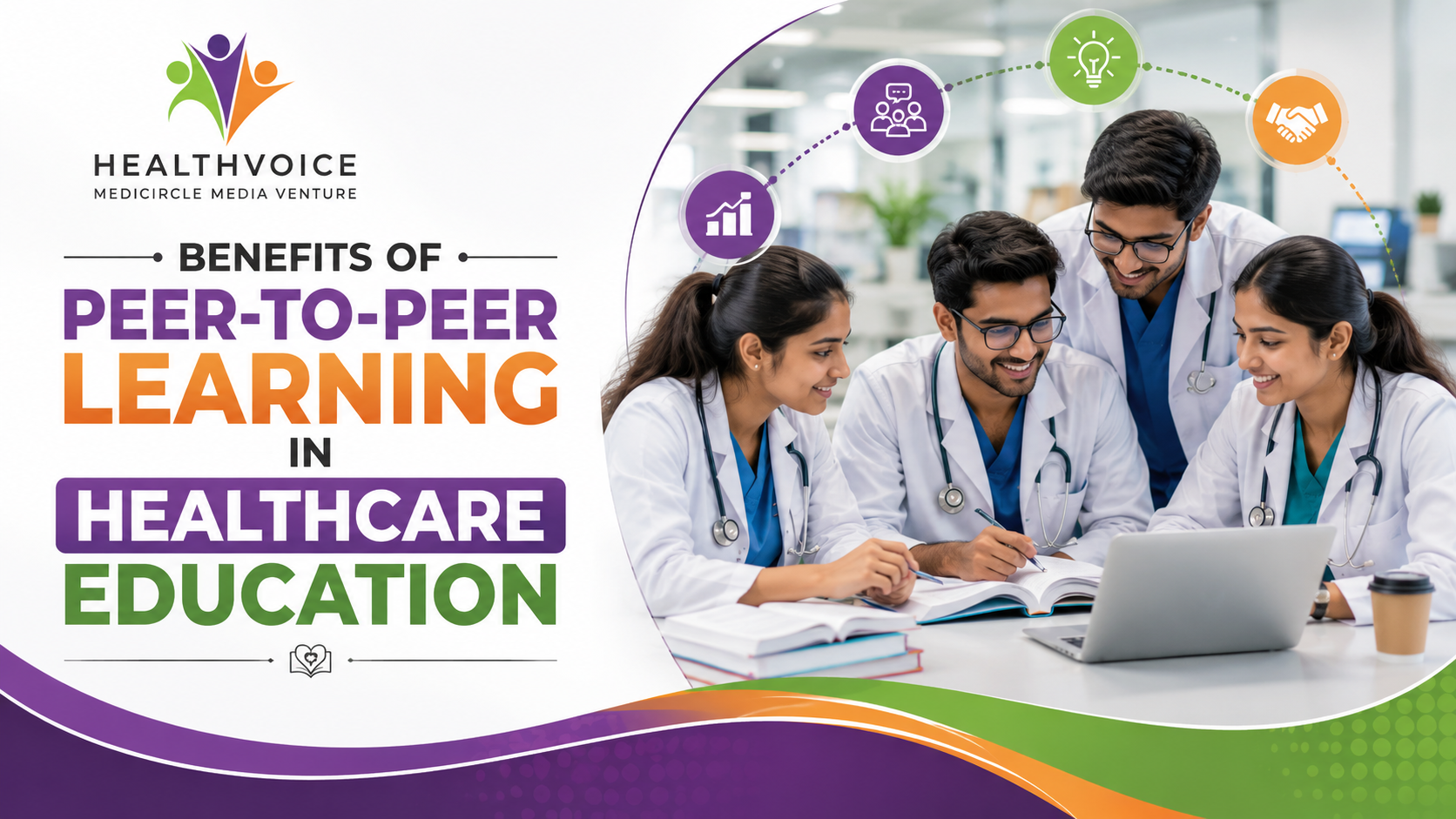
In every generation of medical practice, the most enduring knowledge has not always come from textbooks or lecture halls. It has come from conversations between colleagues at the end of a long shift, from a senior resident walking a junior doctor through a complex case, and from communities of practitioners who challenge, support, and elevate one another. This is peer-to-peer learning at its most essential, and its value in healthcare education today is more significant than ever before.
Peer-to-peer learning, broadly understood, is an educational approach in which individuals of similar standing learn from and with each other rather than relying entirely on a top-down instructor model. In the context of healthcare and medical education, this means doctors discussing clinical guidelines, nurses sharing patient management insights, and medical students working through diagnostic reasoning together. Research published in peer-reviewed journals, including studies indexed in PubMed, has consistently shown that learners who engage in structured peer discussion demonstrate measurably improved accuracy, greater knowledge retention, and stronger metacognitive skills compared to those who learn in isolation.
For the Indian healthcare community, where the doctor-to-patient ratio remains one of the most pressing challenges and where continuing medical education is rapidly evolving to include digital platforms, peer-to-peer learning is not a theoretical ideal. It is a practical necessity. This article explores the core benefits, the mechanisms behind its effectiveness, and why healthcare professionals and medical associations across India should actively invest in building peer learning cultures within their communities.
Understanding Peer-to-Peer Learning in a Healthcare Context
Peer-to-peer learning is not an informal or unstructured exchange. When implemented deliberately, it is a systematic educational strategy in which participants alternate between the roles of teacher and learner, with both roles producing meaningful outcomes. In healthcare settings, this can take several forms:
- Small group case discussions among residents or postgraduate students
- Journal clubs where clinicians critically evaluate recent research together
- Peer mentoring programs between senior and junior doctors
- Interdisciplinary team-based learning involving doctors, pharmacists, and allied health professionals
- Digital peer communities where healthcare professionals share clinical insights and discuss emerging evidence
What distinguishes peer learning from casual conversation is intentionality. When peers engage with a shared learning objective, they are compelled to articulate their understanding, identify gaps in their reasoning, and construct knowledge collaboratively rather than passively receiving it.
In India, medical colleges affiliated with universities governed by the National Medical Commission (NMC) have increasingly incorporated competency-based medical education frameworks that emphasize active learning methodologies. Within these frameworks, peer-to-peer engagement plays a central role in developing clinical reasoning, communication skills, and professional identity among medical graduates.
The Core Benefits of Peer-to-Peer Learning for Healthcare Professionals
Deeper Understanding Through the Act of Teaching
One of the most well-documented benefits of peer learning is what researchers refer to as the protege effect. When a learner is required to explain a concept to someone else, that learner must first organize the information coherently, anticipate questions, and identify areas where their own understanding is incomplete. In medical education, this translates directly into stronger clinical knowledge.
A study published in the journal Cognitive Research: Principles and Implications examined peer instruction across six university classes and found that students who engaged in structured peer discussion showed consistent improvements in accuracy and metacognitive alignment after discussion compared to before. In medicine, where metacognition, knowing what one knows and does not know, is a critical safety competency, this finding carries significant implications.
When a postgraduate medical student explains the mechanism of action of a drug to a peer, or when an experienced physician mentors a younger colleague through a rare diagnostic scenario, both parties benefit. The explainer deepens their own understanding and refines their clinical communication. The recipient gains access to reasoning that is often more relatable and practically framed than what a formal lecture might provide.
Improved Knowledge Retention and Long-Term Recall
Passive learning environments, where a student listens to a lecture without active engagement, are among the least effective methods for long-term knowledge retention. Active participation, including discussion, debate, and peer explanation, significantly enhances how well information is encoded and retrieved over time.
For practicing clinicians in India, who are required to remain updated on evolving treatment protocols, new drug approvals by the Central Drugs Standard Control Organisation (CDSCO), and updated clinical guidelines from bodies such as the Indian Council of Medical Research (ICMR), ongoing peer engagement provides a naturalistic and effective mechanism for continuing education. Medical associations that facilitate structured peer learning through regular case conferences, webinars, or digital discussion forums help their members stay current without the burden of formal examination-based learning alone.
Development of Critical Thinking and Clinical Reasoning
Healthcare decisions are rarely straightforward. A clinician must weigh evidence, consider patient-specific variables, account for resource limitations, and communicate complex decisions clearly. These are not skills that develop through memorization alone. They emerge through repeated engagement with challenging problems in the company of thoughtful peers.
Peer-to-peer learning environments create structured opportunities for this kind of reasoning practice. When a group of cardiologists debates the appropriate intervention strategy for a borderline case, or when a group of public health professionals evaluates the effectiveness of a district-level immunization campaign, they are exercising exactly the kind of multi-angle analytical thinking that defines excellent clinical and public health practice.
In medical colleges across Indian cities, from AIIMS campuses in metropolitan centers to regional government medical colleges in Tier 2 cities, faculty members who integrate peer discussion into bedside teaching and tutorial sessions report greater student engagement and more nuanced clinical reasoning in assessments.
Strengthening Communication and Collaboration Skills
Healthcare delivery in India, particularly within large hospital systems, multi-specialty centers, and primary care networks under schemes such as Ayushman Bharat, depends on effective team communication. A clinician who can explain a diagnosis clearly, hand over a patient concisely, or raise a concern respectfully within a team is an asset to any system.
Peer-to-peer learning is among the most effective environments for developing these communication skills because it places learners in a position where they must both speak and listen with purpose. The feedback that emerges during peer discussion is immediate, contextually relevant, and delivered without the hierarchy that can sometimes make formal feedback feel threatening.
Among junior doctors in particular, the psychological safety of learning alongside a peer, someone who is navigating similar challenges and has recent firsthand experience of the same learning curve, encourages more honest questions, more candid reflection, and more genuine professional dialogue.
Building Professional Identity and Confidence
Medicine is demanding, and the early years of clinical practice can be isolating. Peer learning communities address this by creating a sense of shared professional identity and mutual accountability. When doctors learn together regularly, they build trust, develop a common language, and reinforce the professional values that sustain ethical and compassionate practice.
Medical associations across India, including specialty societies in fields such as cardiology, oncology, and pediatrics, have long understood that their most valuable function is not merely credentialing but community-building. When these associations facilitate structured peer learning, they give members more than knowledge. They give members a professional home.
Platforms that bring healthcare communities together, offering spaces for peer engagement, knowledge exchange, and collegial recognition, serve this same purpose in the digital age. They create the infrastructure for a distributed but cohesive professional community in which every member's voice and expertise is valued.
Exposure to Diverse Clinical Perspectives
India is a country of extraordinary clinical diversity. A clinician practicing in rural Rajasthan will encounter disease presentations, comorbidities, and resource contexts that are very different from those faced by a colleague in a corporate hospital in Bengaluru or a public tertiary center in Kolkata. Peer learning across these contexts exposes healthcare professionals to the full spectrum of Indian clinical reality.
When doctors from different practice settings, specialties, and regions engage in peer learning, they develop what might be called clinical humility: the recognition that their own experience, however extensive, represents only one dimension of a much larger picture. This humility is both intellectually enriching and ethically important. It makes for better doctors, more thoughtful researchers, and more effective public health advocates.
Peer Learning in the Digital Age: Relevance for Indian Healthcare Communities
The proliferation of digital communication tools has transformed peer learning from a geographically constrained activity into a genuinely nationwide possibility. Online communities, digital journals, video-based case discussions, and professional networking platforms now allow a general practitioner in a small town in Uttar Pradesh to engage in peer learning with a specialist from a major city.
This democratization of peer learning is particularly significant for India, where the distribution of specialist expertise remains uneven. Digital peer communities do not replace formal medical education, but they extend its reach and deepen its impact. They allow knowledge to flow laterally across a professional community rather than only downward from institutions to individuals.
For medical associations, this means that member engagement is no longer limited to annual conferences or regional chapter meetings. Through digital channels, associations can facilitate year-round peer learning, enable mentoring relationships that cross geographic boundaries, and create a continuous dialogue among their membership on the issues that matter most to their specialty and their patients.
Challenges and How to Address Them
Peer-to-peer learning is not without its limitations, and healthcare educators must approach its implementation thoughtfully.
- The risk of misinformation: If a peer shares clinically incorrect information with confidence, other learners may accept it uncritically. This underscores the importance of facilitating peer learning within structured frameworks that include expert oversight, access to authoritative references, and a culture of questioning.
- Unequal participation: In peer groups, dominant voices can overshadow quieter contributors. Deliberate facilitation techniques, such as rotating discussion leadership or structured reflection exercises, help ensure that all participants contribute and benefit equally.
- Hierarchy and culture: In many Indian medical training environments, junior doctors may feel reluctant to challenge or openly question senior peers. Building genuinely collaborative peer cultures requires institutional commitment and leadership that models intellectual openness.
Addressing these challenges does not diminish the value of peer learning. It refines and strengthens the practice, ensuring that it delivers on its considerable potential.
Frequently Asked Questions
Q1: What is peer-to-peer learning and how does it apply to healthcare professionals?
Peer-to-peer learning is an educational approach in which individuals of similar professional standing learn from and with each other through discussion, collaboration, and mutual instruction. In healthcare, it includes practices such as journal clubs, case conferences, peer mentoring, and online professional communities where doctors and other clinicians share clinical knowledge, discuss challenging cases, and support each other's professional development.
Q2: How does peer-to-peer learning improve clinical knowledge retention among doctors?
When healthcare professionals actively engage in explaining concepts, debating clinical scenarios, or discussing evidence with peers, they process information more deeply than passive recipients of a lecture. Research shows that active peer discussion improves both accuracy and the alignment between a learner's confidence and their actual knowledge, which are key markers of effective learning and long-term retention.
Q3: Is peer-to-peer learning recognized within the Indian medical education system?
Yes. The National Medical Commission's competency-based medical education curriculum emphasizes active learning methodologies, collaborative clinical training, and communication skill development, all of which are supported by peer learning approaches. Many Indian medical colleges now integrate peer discussion, group-based problem solving, and near-peer mentoring into their teaching frameworks.
Q4: What are the best formats for peer-to-peer learning among medical professionals in India?
Effective formats include small group case discussions, peer mentoring between senior and junior clinicians, specialty-specific journal clubs, interdisciplinary team learning sessions, and digital peer communities facilitated through professional association platforms. The most effective formats combine structure, expert facilitation, and regular participation to ensure quality and engagement.
Q5: How can medical associations in India promote peer-to-peer learning among their members?
Medical associations can promote peer learning by creating structured opportunities for member engagement, including online case discussion forums, mentoring programs that pair experienced practitioners with younger members, regular webinars featuring peer-led clinical discussions, and digital platforms that facilitate ongoing knowledge exchange. Associations that invest in peer learning infrastructure strengthen both member retention and the collective clinical competence of their specialty community.
Resources
- Indian Council of Medical Research (ICMR): Guidelines, publications, and evidence-based clinical recommendations relevant to Indian medical practice and continuing medical education.
- National Medical Commission (NMC): Regulatory authority governing medical education in India, including competency-based curriculum frameworks that support peer and collaborative learning approaches.
- PubMed, National Library of Medicine: Indexed peer-reviewed research on peer instruction, collaborative learning, and its impact on learner outcomes across medical and health sciences disciplines.
- World Health Organization (WHO), India Country Office: Resources on health workforce development, continuing professional education, and collaborative practice in low- and middle-income country healthcare settings.
- Consortium of Accredited Healthcare Organizations (CAHO): Indian body that supports quality improvement and professional development initiatives within healthcare institutions, including team-based and peer learning models.
Interlinking Keywords:
peer learning in medical education, continuing medical education India, healthcare professional development, medical associations India, collaborative clinical training, doctor community platform, NMC competency-based education, clinical knowledge sharing, healthcare networking India, peer mentoring for doctors
Last medically reviewed by:
HealthVoice Medical Editorial Team on August 14, 2026
Medical Disclaimer:
The information presented in this article is intended for general educational and informational purposes only. It is not a substitute for professional medical advice, clinical training, or formal continuing medical education. Healthcare professionals should refer to authoritative clinical guidelines and consult with qualified experts when making clinical decisions. HealthVoice does not endorse any specific educational institution, training program, or peer learning platform referenced or implied within this article.
 Team Healthvoice
#PeerLearning #MedicalEducation