Healthcare Cybersecurity Best Practices for Indian Hospitals and Healthcare Organizations
This article examines healthcare cybersecurity challenges and best practices for Indian hospitals, covering risk assessment, staff training, regulatory compliance, and patient data protection strategies.
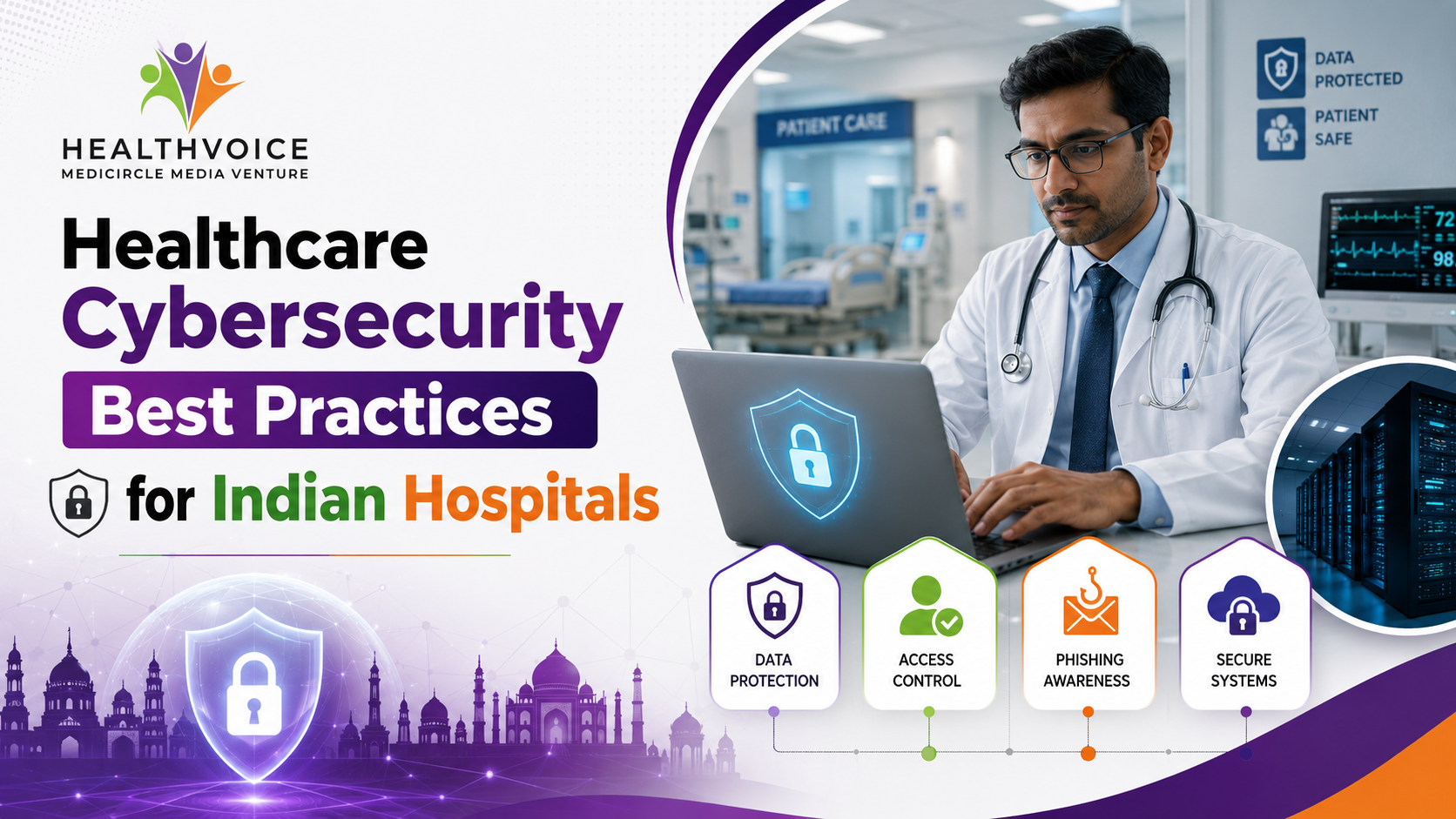
Introduction
The Indian healthcare sector is undergoing one of the most significant digital transformations in its history. From electronic health records and telemedicine platforms to connected medical devices and the Ayushman Bharat Digital Mission, health data is now being generated, stored, and transmitted at an unprecedented scale. This shift carries immense promise for patient care and clinical efficiency. However, it also exposes hospitals, clinics, diagnostic centres, and public health systems to serious and evolving cybersecurity risks.
Cyberattacks on healthcare institutions are not hypothetical events. In recent years, several major Indian hospitals have reported ransomware incidents and data breaches that disrupted clinical operations and compromised sensitive patient records. According to reports from CERT-In, the healthcare sector ranked among the top targeted industries in India, with incidents increasing sharply following the acceleration of digital health adoption during and after the pandemic period.
For doctors, hospital administrators, medical associations, and healthcare leaders, understanding cybersecurity is no longer optional. It is a foundational responsibility tied directly to patient safety, institutional credibility, and legal compliance. Platforms like HealthVoice, which serve as trusted knowledge spaces for the medical community, play a meaningful role in helping healthcare professionals stay informed about such critical systemic challenges.
This article presents a comprehensive overview of healthcare cybersecurity in the Indian context, covering why the sector is uniquely vulnerable, what the core challenges are, and what best practices can help organizations build a stronger, safer digital environment.
Understanding Healthcare Cybersecurity in the Indian Context
Healthcare cybersecurity refers to the set of practices, technologies, policies, and processes that protect digital systems, networks, medical devices, and patient data from unauthorized access, misuse, theft, or disruption. In simpler terms, it is the discipline of keeping hospital systems and health information safe from cybercriminals and technical failures.
In India, this field has gained urgency because of several overlapping developments. The rollout of the Ayushman Bharat Digital Mission (ABDM) aims to create a unified health identity for every Indian citizen through the Ayushman Bharat Health Account. As this infrastructure scales across states and union territories, the volume of digitally stored health records is growing rapidly. The adoption of Hospital Management Information Systems (HMIS) in both private hospitals and government facilities has further expanded the digital surface that needs protection.
Telemedicine, which saw explosive adoption after the Government of India released its Telemedicine Practice Guidelines in 2020, has also introduced new digital touchpoints that require careful security oversight. Every consultation conducted digitally, every prescription sent electronically, and every diagnostic result shared over a network represents a potential point of vulnerability if not properly secured.
The legal framework around data protection in India has also evolved. The Digital Personal Data Protection Act 2023 (DPDP Act) now places clear obligations on organizations that handle personal data, including health data. Non-compliance can result in significant penalties. Healthcare providers across all tiers must understand and implement data governance practices that align with this regulation.
Why Indian Healthcare Organizations Are a High-Value Target
Cybercriminals target healthcare organizations because the data held within these systems is extraordinarily valuable. A single patient record can contain a person's full identity information, financial details, insurance records, clinical history, and contact information. On underground digital markets, health records fetch a significantly higher price than financial data alone. This makes hospitals and clinics lucrative targets for attackers seeking data to exploit or sell.
Beyond data theft, healthcare organizations are particularly vulnerable to ransomware attacks, in which malicious software encrypts hospital systems and demands payment for restoration. The consequences of such attacks in a healthcare setting are uniquely dangerous. When a hospital's systems go offline, clinical workflows break down, surgeries may need to be postponed, and access to critical patient histories becomes impossible. The pressure on hospital administrators to restore operations quickly makes them more likely to pay ransoms, which in turn incentivizes further attacks.
In India, the challenge is compounded by the diversity of the healthcare ecosystem. The sector spans large multi-specialty hospitals in metropolitan cities, district hospitals in Tier 2 and Tier 3 locations, standalone diagnostic centres, primary health centres, and a large network of private practitioners. Many of these entities operate with limited IT budgets and minimal dedicated cybersecurity staff, making them easier targets.
The increasing use of connected medical devices such as patient monitors, imaging systems, and infusion pumps adds another dimension. These devices often run on older operating systems that no longer receive security updates, creating persistent vulnerabilities within clinical environments.
Core Cybersecurity Challenges Facing Indian Healthcare
Budget and Resource Constraints
A significant majority of Indian healthcare providers, particularly those operating in non-metropolitan areas, allocate a very small fraction of their budgets to information technology and an even smaller fraction specifically to cybersecurity. Without dedicated resources, implementing comprehensive security infrastructure becomes extremely difficult. This gap is especially pronounced in public sector hospitals, which serve the majority of India's population but often operate under severe financial constraints.
Workforce Awareness and Training Gaps
Human error remains one of the leading causes of cybersecurity incidents globally, and Indian healthcare is no exception. Many clinical and administrative staff members are not trained to recognize phishing emails, suspicious links, or social engineering attempts. A single staff member clicking a malicious email attachment can initiate a chain of events that compromises an entire hospital network.
Outdated Legacy Systems
A considerable portion of Indian hospitals, particularly in the public sector and smaller private facilities, continue to operate on legacy software and hardware that is no longer supported by manufacturers. Running unsupported operating systems means that known security vulnerabilities are never patched, leaving these systems permanently exposed to exploitation.
Third-Party and Vendor Risks
Healthcare organizations in India work with a wide range of third-party vendors including software providers, cloud service companies, billing platforms, and medical equipment suppliers. Each of these partners represents a potential entry point for attackers if their own security practices are not adequately vetted and monitored.
Regulatory Complexity
Healthcare providers must navigate multiple regulatory frameworks simultaneously. These include the Information Technology Act 2000, the DPDP Act 2023, ABDM data governance norms, and sector-specific guidelines from the Ministry of Health and Family Welfare. Keeping up with these requirements while managing day-to-day clinical operations is a significant challenge for most organizations.
Healthcare Cybersecurity Best Practices for Indian Organizations
Conduct Regular Risk Assessments
Every healthcare organization, regardless of size, must periodically assess its digital environment to identify vulnerabilities, sensitive data flows, and potential attack vectors. A structured risk assessment helps prioritize security investments and ensures that the most critical gaps are addressed first. For Indian hospitals adopting ABDM-linked systems, this assessment must specifically evaluate how health IDs and patient records are being stored and accessed.
Establish Clear Cybersecurity Policies
Written policies form the backbone of any organization's security posture. Hospitals and clinics must establish clear guidelines covering password management, access control, data handling, acceptable use of hospital devices, and procedures for reporting suspicious activity. These policies must be reviewed and updated regularly to reflect evolving threats and regulatory changes.
Invest in Staff Training and Awareness Programs
Clinical and administrative teams must receive regular training on recognizing cyber threats. Key areas to cover include:
- Identifying phishing emails and suspicious links
- Safe handling of patient data on digital devices
- Proper use of hospital networks and avoiding unsecured connections
- Reporting protocols when a potential security incident is observed
Training should not be a one-time event. It must be a continuous process integrated into the hospital's operational culture.
Implement Strong Access Controls
Not every staff member needs access to all systems. Hospitals must implement role-based access controls that restrict system access to only what each employee requires for their specific function. Multi-factor authentication must be enabled for all systems that handle sensitive patient data. Administrative accounts must carry additional security layers and must be monitored for unusual activity.
Secure Medical Devices and Connected Infrastructure
All networked medical devices must be inventoried, assessed for firmware vulnerabilities, and placed on isolated network segments where possible. Devices that cannot receive security updates due to manufacturer limitations must be monitored with additional controls around them. Procurement policies must include cybersecurity requirements as a standard criterion when acquiring new medical technology.
Develop and Test an Incident Response Plan
Healthcare organizations must have a documented incident response plan that outlines exactly what steps will be taken in the event of a cyberattack or data breach. This plan must designate clear roles and responsibilities, establish communication protocols for notifying patients and regulators, and include a tested data recovery process. Under CERT-In regulations, certain cybersecurity incidents must be reported within six hours of detection, making a pre-established response plan operationally essential.
Maintain Encrypted and Tested Data Backups
All patient records and critical operational data must be backed up regularly using encrypted storage, with backup copies maintained in physically or logically separate environments from the primary systems. These backups must be tested periodically to confirm that data can be restored effectively in the event of a ransomware attack or system failure.
Manage Vendor and Third-Party Security
Before engaging any third-party technology vendor, healthcare organizations must evaluate the vendor's own security practices. Contracts must include data security clauses, and vendors must be required to comply with applicable Indian data protection regulations. Regular audits of vendor access and behaviour are essential components of a mature third-party risk management program.
Stay Current with CERT-In Guidelines and ABDM Security Norms
CERT-In issues regular advisories on emerging threats and mandated security practices. Healthcare organizations must subscribe to these advisories and act on them promptly. Organizations participating in the ABDM ecosystem must also align with the health data management policies issued under this framework, which govern how health records linked to Ayushman Bharat Health Accounts must be secured and shared.
The Role of AI and Emerging Technologies in Healthcare Cybersecurity
Artificial intelligence is beginning to play a meaningful role in strengthening cybersecurity within healthcare systems globally, and early adoption is visible in India's larger healthtech organizations. AI-driven tools can monitor network traffic continuously, detect anomalous patterns that may signal an intrusion attempt, and flag suspicious user behaviour in real time.
Automated vulnerability scanning powered by machine learning can identify weaknesses in hospital systems far more rapidly than manual assessments. These tools are particularly valuable for resource-constrained organizations that cannot afford large dedicated security teams. As India's digital health infrastructure matures, the integration of AI-based security monitoring into hospital IT systems will become an increasingly practical and necessary investment.
Conclusion
Healthcare cybersecurity is not a technology problem alone. It is a patient safety issue, a legal obligation, and a matter of institutional integrity. For Indian hospitals and healthcare organizations operating in an increasingly connected digital environment, the question is not whether a cybersecurity incident can happen, but whether the organization is prepared to prevent and respond to one.
Building a strong cybersecurity posture requires commitment from leadership, investment in staff awareness, robust technical safeguards, and alignment with India's evolving regulatory landscape, including the DPDP Act, CERT-In mandates, and ABDM data governance norms. The medical community in India deserves digital infrastructure that is as trustworthy and reliable as the clinical care delivered within it.
Healthcare leaders, medical associations, and doctors must treat cybersecurity as a shared professional responsibility. Platforms that connect and inform the medical community, including dedicated spaces for doctor-focused knowledge exchange, have a vital role in ensuring that cybersecurity awareness reaches every corner of the healthcare ecosystem.
Frequently Asked Questions
Q1: Why is cybersecurity important in Indian healthcare?
Indian healthcare organizations manage vast volumes of sensitive patient data across digital systems. Cyberattacks on hospitals can disrupt care delivery, expose confidential records, and damage institutional trust. With the rapid digitization of health services under ABDM, robust cybersecurity has become a national priority.
Q2: What are the most common cyber threats to Indian hospitals?
The most common threats include ransomware attacks, phishing emails targeting hospital staff, unauthorized access to electronic health records, vulnerabilities in connected medical devices, and third-party vendor security gaps.
Q3: What is the DPDP Act and how does it affect healthcare organizations in India?
The Digital Personal Data Protection Act 2023 governs how organizations in India collect, store, and process personal data, including health records. Healthcare providers must obtain informed consent, implement data protection measures, and report breaches to the Data Protection Board of India.
Q4: How can smaller clinics and hospitals in India improve cybersecurity without large budgets?
Smaller facilities can begin with foundational steps such as regular software updates, strong password policies, staff training on phishing awareness, encrypted data backups, and using government-supported frameworks like the CERT-In guidelines. Many of these measures require minimal financial investment.
Q5: What role does CERT-In play in healthcare cybersecurity in India?
CERT-In, the Indian Computer Emergency Response Team, functions as the national nodal agency for cybersecurity. It issues advisories, responds to cyber incidents, and mandates that organizations report certain cybersecurity incidents within a stipulated timeframe, which is directly applicable to healthcare entities.
Resources
- Indian Computer Emergency Response Team (CERT-In): Official advisories, incident reporting guidelines, and cybersecurity frameworks applicable to all Indian organizations including healthcare providers
- Ministry of Health and Family Welfare, Government of India: Policy documents, digital health strategy, and ABDM governance framework relevant to health data security
- Ayushman Bharat Digital Mission (ABDM): Health data management policy, health ID framework, and interoperability standards for digital health in India
- World Health Organization (WHO): Global Digital Health Strategy and guidance on health information system security applicable to member nations including India
- Ministry of Electronics and Information Technology (MeitY): Digital Personal Data Protection Act 2023 resources, implementation guidelines, and compliance support for data fiduciaries
Interlinking Keywords
healthcare data security India, ABDM digital health compliance, patient data protection, hospital ransomware prevention, DPDP Act healthcare, CERT-In cybersecurity guidelines, telemedicine security India, electronic health records safety
Last Reviewed By:
Editorial and Medical Affairs Team, HealthVoice on 12 August 2026
Medical Disclaimer:
The information provided in this article is intended for general educational and informational purposes only. It does not constitute medical, legal, or cybersecurity advice. Healthcare organizations and professionals should consult qualified cybersecurity experts, legal advisors, and relevant regulatory bodies for guidance specific to their institutional context and applicable Indian regulations. HealthVoice does not accept liability for decisions made on the basis of this content alone.
 Team Healthvoice
#HealthcareCybersecurity #DigitalHealthSecurity
