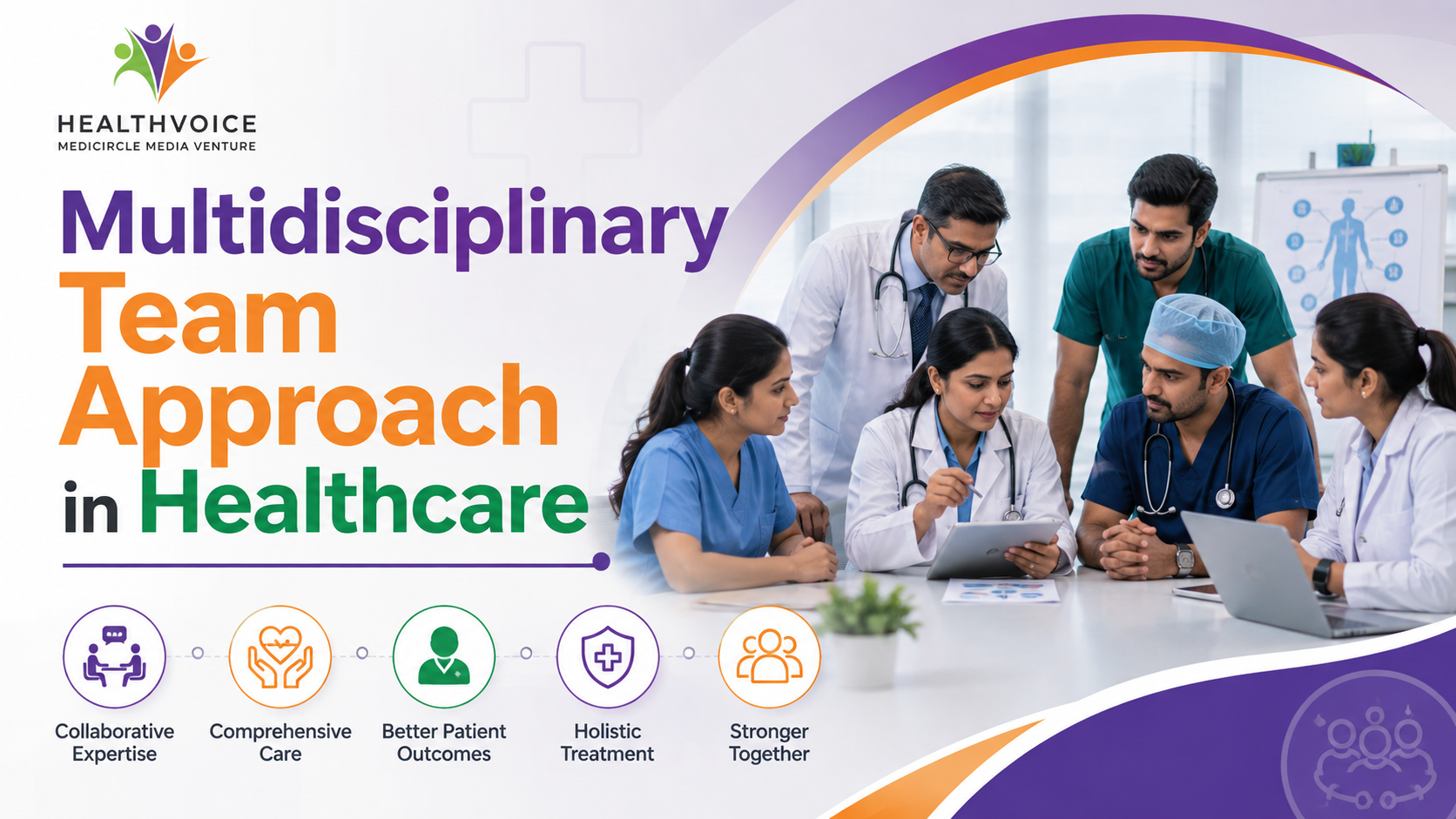
Multidisciplinary Team Approach in Healthcare: How Collaboration Transforms Patient Outcomes
The multidisciplinary team approach unites specialists across disciplines to improve patient outcomes, reduce errors, and deliver holistic, coordinated care, with growing relevance across India's evolving healthcare landscape.
Introduction
Modern medicine has moved decisively beyond the era of the single doctor managing every dimension of a patient's illness alone. Today, the most effective clinical outcomes are achieved not through individual brilliance in isolation, but through structured, coordinated teamwork across multiple specialties. The multidisciplinary team approach, widely known as the MDT approach, represents one of the most significant organisational advances in contemporary clinical practice.
At its core, the MDT approach brings together physicians, surgeons, nurses, pharmacists, physiotherapists, nutritionists, psychologists, and social workers, all working in concert toward a shared goal: delivering the most comprehensive care possible to the individual patient. This is not simply a matter of calling a second opinion. It is a structured, ongoing, collaborative model of clinical decision-making that has been shown across global research to reduce mortality, shorten hospital stays, minimise treatment errors, and improve patient satisfaction.
For India, where the healthcare system is simultaneously navigating a double burden of disease, expanding its specialist workforce, and rolling out landmark reforms such as Ayushman Bharat and the Ayushman Bharat Digital Mission (ABDM), the multidisciplinary team model carries enormous relevance and urgency. As the country builds more medical colleges, accredits more hospitals under NABH standards, and works toward universal health coverage, the MDT framework must become a standard pillar of clinical care, not an exceptional feature available only in premier urban institutions.
This article examines what the multidisciplinary team approach truly means in clinical practice, the specialties it involves, the conditions where it delivers the greatest impact, the challenges in implementation particularly within the Indian context, and the future direction of this model in transforming healthcare delivery across the country.
Understanding the Multidisciplinary Team Approach
The concept of a multidisciplinary team in medicine refers to a structured group of healthcare professionals from different clinical disciplines who collectively assess, plan, and deliver care for a patient. Unlike the traditional model where a single primary physician refers patients sequentially to different specialists, the MDT model brings those specialists together, often simultaneously, to create an integrated and unified care plan.
The composition of a multidisciplinary team varies depending on the clinical context. In an oncology setting, the team typically includes medical oncologists, surgical oncologists, radiation oncologists, radiologists, pathologists, palliative care specialists, nutritionists, and psycho-oncologists. In a cardiac care programme, it would involve cardiologists, cardiac surgeons, cardiac rehabilitation therapists, dietitians, and pharmacists. For a patient with complex diabetes, the team could include an endocrinologist, diabetes educator, podiatrist, ophthalmologist, nephrologist, and dietician.
It is equally important to understand the distinction between a multidisciplinary team and an interdisciplinary team, as the two are sometimes used interchangeably but carry distinct meanings. In the multidisciplinary model, each specialist contributes their expert assessment independently, and these inputs are compiled to form a treatment plan. In an interdisciplinary model, the integration is deeper: professionals actively collaborate in real time, their roles sometimes overlap, and decisions are made jointly rather than aggregated from separate inputs. Both models are valuable, and in practice, many high-functioning clinical teams operate on a hybrid basis.
The formal MDT meeting, sometimes called a tumour board in oncology or a case conference in other specialties, is the structured backbone of this approach. These meetings allow all relevant professionals to review patient data collectively, debate management options, and arrive at a consensus recommendation that reflects the totality of clinical evidence and expert judgment.
Why the Multidisciplinary Team Approach Matters: The Core Benefits
The evidence supporting the multidisciplinary team approach is both broad and compelling. Research published across disciplines including oncology, cardiology, geriatrics, and critical care consistently demonstrates that structured team-based care produces measurably better outcomes for patients compared to sequential or fragmented specialist care.
Improved Accuracy in Diagnosis and Treatment Planning
One of the most documented advantages of MDT-based care is the improvement in diagnostic accuracy and the quality of treatment planning. When a single clinician reviews a complex case, the interpretation of clinical data, imaging, and pathology is shaped by the boundaries of that individual's training. When the same case is reviewed by a team that includes a radiologist, a pathologist, and multiple clinical specialists simultaneously, the breadth of interpretation increases significantly.
In oncology, MDT review has been shown to lead to changes in diagnosis, staging, or treatment recommendation in a meaningful proportion of cases reviewed. For conditions such as head and neck cancers, where treatment planning must balance oncological control with the preservation of speech, swallowing, and breathing functions, the input of a team that includes surgeons, radiation oncologists, speech therapists, and psycho-oncologists is not optional: it is clinically essential.
Reduction in Medical Errors and Redundancy
The traditional sequential referral model carries inherent risks. A patient moving independently from one specialist to another may receive conflicting advice, undergo redundant investigations, or experience delays that affect outcomes. The MDT model reduces these risks by ensuring that all specialists access the same information at the same time, communicate directly with each other, and align on a single management plan.
Studies have consistently shown that:
- Medication errors decrease when pharmacists are embedded as active MDT members
- Duplicate investigations are reduced through shared access to clinical records during team meetings
- Communication failures between disciplines, a leading cause of adverse events, are significantly minimised through regular structured MDT interaction
Shorter Hospital Stays and Better Resource Utilisation
The coordinated planning enabled by MDT rounds has a direct impact on hospital efficiency. When rehabilitation needs, discharge planning, and nutritional requirements are addressed proactively by a unified team rather than piecemeal at different stages, patients are discharged sooner, with appropriate community support in place. Several studies in critical care settings have demonstrated meaningful reductions in length of stay attributable to structured multidisciplinary rounds.
Holistic, Patient-Centred Care
Perhaps the most humanistic benefit of the MDT approach is that it ensures the patient is treated as a whole person rather than as a collection of organ systems. A patient with advanced cancer, for example, carries not only a tumour but a constellation of psychological, nutritional, social, and existential burdens. A well-functioning MDT that includes oncologists, palliative care physicians, dieticians, psychologists, and social workers can address all these dimensions simultaneously, transforming what would otherwise be a fragmented patient journey into a coherent and compassionate care experience.
Where the MDT Approach Has the Greatest Impact: Key Clinical Areas
Oncology
Cancer care is the discipline most closely associated with the formal MDT model globally, and for good reason. The complexity of cancer management, spanning surgery, chemotherapy, radiation therapy, targeted agents, immunotherapy, and palliative care, makes unilateral decision-making both clinically insufficient and ethically questionable. In India, where cancer incidence is rising sharply and the burden of oral, cervical, breast, and colorectal cancers remains high, the establishment of functional tumour boards in every accredited cancer centre is a critical quality imperative.
The National Cancer Grid of India, a network of cancer centres supported by Tata Memorial Hospital, has been working to standardise MDT-based tumour boards across the country. This initiative reflects an acknowledgment at the highest institutional level that collaborative clinical decision-making is the standard of care, not an optional enhancement.
Cardiovascular Disease
India carries the largest absolute burden of cardiovascular disease of any country in the world, and managing conditions such as coronary artery disease, heart failure, valvular disease, and complex arrhythmias requires coordinated input from cardiologists, cardiac surgeons, cardiac anaesthesiologists, rehabilitation therapists, and dieticians. Heart failure programmes built around MDT models have demonstrated striking reductions in 30-day readmission rates and significant improvements in patient quality of life.
Diabetes and Endocrine Disorders
With over 100 million people living with diabetes in India, the management of this disease and its complications demands exactly the kind of coordinated multi-specialist care that the MDT model provides. A patient with poorly controlled diabetes complicated by nephropathy, peripheral neuropathy, retinopathy, and cardiovascular disease cannot be adequately managed by a single endocrinologist. A functional diabetes MDT that includes a diabetologist, nephrologist, cardiologist, ophthalmologist, podiatrist, dietician, and diabetes educator offers the comprehensive management that such patients need.
Stroke and Neurological Rehabilitation
Acute stroke management and post-stroke rehabilitation are textbook indications for the MDT approach. The acute stroke team includes neurologists, radiologists, neurosurgeons, and emergency physicians working in tight coordination during the time-critical acute phase. Post-stroke rehabilitation then transitions to a team comprising physiotherapists, occupational therapists, speech and language therapists, neuropsychologists, and social workers, all supporting the patient's recovery across multiple dimensions simultaneously.
Mental Health
Psychiatry and mental health represent an area where the MDT model is both highly effective and significantly underutilised in India. A patient with severe mental illness often has coexisting physical health problems, social vulnerabilities, and medication management challenges that no single clinician can address alone. Community mental health teams that include psychiatrists, psychologists, social workers, occupational therapists, and community nurses represent the gold standard in mental health service delivery globally, and this model is increasingly relevant to India's expanding mental health agenda under the National Mental Health Programme.
Challenges in Implementing the MDT Approach in India
The theoretical case for the multidisciplinary team approach is well established. The challenge lies in implementation, particularly in a country as vast and diverse as India.
Specialist Shortages in Tier 2 and Tier 3 Cities
While MDT care is available in premier institutions in cities such as Mumbai, Delhi, Chennai, Bengaluru, and Hyderabad, the model is largely absent in smaller cities, district hospitals, and rural healthcare facilities. India faces a significant specialist deficit, with the majority of trained subspecialists concentrated in urban centres. A cancer patient in a district town in Jharkhand or Odisha may have no access to a functional tumour board within a practical distance.
Infrastructure and Digital Connectivity Gaps
MDT meetings require shared access to clinical records, imaging, and pathology data. In hospitals without integrated electronic health record systems, coordinating this information for a team meeting is logistically difficult. The Ayushman Bharat Digital Mission is working to create a unified digital health infrastructure across India, and as ABHA-linked health records become more widespread, the logistical barriers to running effective MDT meetings should reduce over time.
Professional Hierarchy and Communication Culture
Indian medical culture has historically been hierarchical, with senior consultants holding significant authority over clinical decisions. This culture can sometimes create barriers to the open, egalitarian discussion that effective MDT meetings require. Junior team members, including nurses, pharmacists, and allied health professionals, may not feel empowered to voice observations or raise concerns in the presence of senior physicians. Building a genuinely collaborative MDT culture requires deliberate effort, leadership modelling, and in many cases, formal training in team communication.
Reimbursement and Time Constraints
The time invested in MDT meetings is not currently recognised or reimbursed as a distinct clinical activity under most insurance frameworks in India, including government schemes such as Ayushman Bharat Pradhan Mantri Jan Arogya Yojana (AB-PMJAY). Clinicians participating in MDT case reviews are giving their time without corresponding financial recognition. This creates a structural disincentive that health policy must address if the MDT model is to become widespread.
Building a Culture of Collaborative Practice: The Way Forward
Strengthening the multidisciplinary team approach in India requires action on several simultaneous fronts.
Medical education must evolve to train doctors not just as individual clinicians but as collaborative team members. The National Medical Commission has introduced competency-based medical education reforms, and embedding interprofessional education and team-based clinical training within these reforms would be a significant step forward.
Digital health infrastructure, particularly through the ABDM framework, must be used to enable virtual MDT meetings that allow specialists across cities to participate in case reviews for patients in smaller centres. Telemedicine-enabled MDT consultations are already being piloted in oncology and should be scaled across specialties.
Hospital accreditation bodies such as NABH should consider making functional MDT protocols a mandatory requirement for accreditation in specialties such as oncology, cardiology, and neurology, not just a recommended best practice.
Medical associations, conference platforms, and communities such as HealthVoice play an essential role in this transformation. By creating spaces where doctors from different specialties discuss complex cases, share evidence, and build collegial relationships across disciplines, such platforms lay the cultural and intellectual groundwork for better MDT practice in clinical settings. When a cardiologist knows and trusts a nephrologist because they have discussed cases in a professional community, their MDT collaboration becomes more natural and more effective.
Conclusion
The multidisciplinary team approach is not a luxury feature of advanced healthcare systems. It is a fundamental requirement of high-quality, evidence-based clinical practice for any condition of meaningful complexity. The evidence is clear: patients cared for by coordinated, collaborative teams experience better outcomes, fewer errors, shorter hospital stays, and a more holistic experience of care.
For India, the MDT model is both a clinical imperative and a healthcare policy priority. The country's enormous burden of chronic disease, cancer, cardiovascular illness, and neurological conditions cannot be adequately managed through fragmented, specialist-silo care. Building genuine multidisciplinary care capacity across the country, from premier academic medical centres to district hospitals, requires investment in specialist training, digital infrastructure, interprofessional education, and the professional culture that makes true collaboration possible.
The medical community itself, through continued engagement, peer learning, and a commitment to placing the patient at the centre of every clinical decision, will be the most powerful driver of this transformation.
Frequently Asked Questions
Q1: What is a multidisciplinary team in healthcare?
A multidisciplinary team (MDT) in healthcare is a structured group of professionals from different clinical specialties such as physicians, nurses, pharmacists, physiotherapists, and social workers who work together to assess and manage a patient's care comprehensively. The goal is to ensure that all dimensions of a patient's condition are addressed through collective expertise rather than fragmented individual consultations.
Q2: How does the multidisciplinary team approach improve patient outcomes?
The MDT approach improves patient outcomes by enabling more accurate diagnosis, reducing treatment errors, preventing redundant investigations, shortening hospital stays, and ensuring coordinated care across all aspects of a patient's condition. Research across oncology, cardiology, and critical care consistently shows lower complication rates and higher patient satisfaction in settings that use structured multidisciplinary teams.
Q3: Which medical conditions benefit most from a multidisciplinary team?
Conditions such as cancer, cardiovascular disease, diabetes, stroke, chronic kidney disease, mental health disorders, and complex neurological conditions benefit most significantly from the MDT approach. These illnesses affect multiple organ systems and require the coordinated expertise of various specialists simultaneously rather than sequentially.
Q4: What are the challenges of implementing a multidisciplinary team in India?
The key challenges include specialist shortages outside major metropolitan cities, limited digital infrastructure for shared clinical record access, deeply ingrained professional hierarchies that can inhibit open team discussion, lack of reimbursement recognition for time spent in MDT meetings, and inconsistent standards of specialist availability across states. Addressing these challenges requires coordinated effort from medical institutions, government health bodies, and policymakers.
Q5: How is the multidisciplinary team approach different from interdisciplinary care?
In the multidisciplinary approach, each professional contributes their expert assessment independently within their own domain, and these inputs are combined to form a treatment plan. In interdisciplinary care, integration is deeper: professionals actively collaborate in real time, their roles may overlap, and decisions are co-created jointly. Both models aim to improve patient care, and high-functioning clinical teams often combine elements of both approaches.
Resources
- Indian Council of Medical Research (ICMR): Clinical research guidelines and disease burden data for India
- National Cancer Grid of India: Standards and protocols for multidisciplinary tumour boards in cancer care
- World Health Organization (WHO): Global framework documents on integrated people-centred health services
- National Health Authority, Government of India: Information on Ayushman Bharat PM-JAY and digital health initiatives under ABDM
- National Board of Accreditation for Hospitals and Healthcare Providers (NABH): Accreditation standards relevant to team-based clinical care
Interlinking Keywords:
multidisciplinary team approach, patient-centred care, cancer MDT India, integrated healthcare delivery, Ayushman Bharat Digital Mission, clinical decision-making, interprofessional collaboration, NABH accreditation, tumour board India, healthcare team communication
Last medically reviewed by:
Editorial and Medical Affairs Team, HealthVoice on 13 August 2026
Medical Disclaimer:
The information provided in this article is intended for general educational and informational purposes only. It does not constitute medical advice and should not be used as a substitute for professional medical diagnosis, consultation, or treatment. Patients and caregivers are strongly advised to consult a qualified and registered medical practitioner before making any healthcare decisions. HealthVoice does not endorse any specific treatment, institution, or healthcare provider mentioned in this article.
 Team Healthvoice
#MultidisciplinaryCare #HealthcareTeamwork