Internet of Medical Things (IoMT): Transforming Healthcare Delivery in India
IoMT connects medical devices and clinical systems through internet-enabled networks, enabling remote monitoring, smarter diagnosis, and more accessible healthcare delivery across India's diverse patient population.
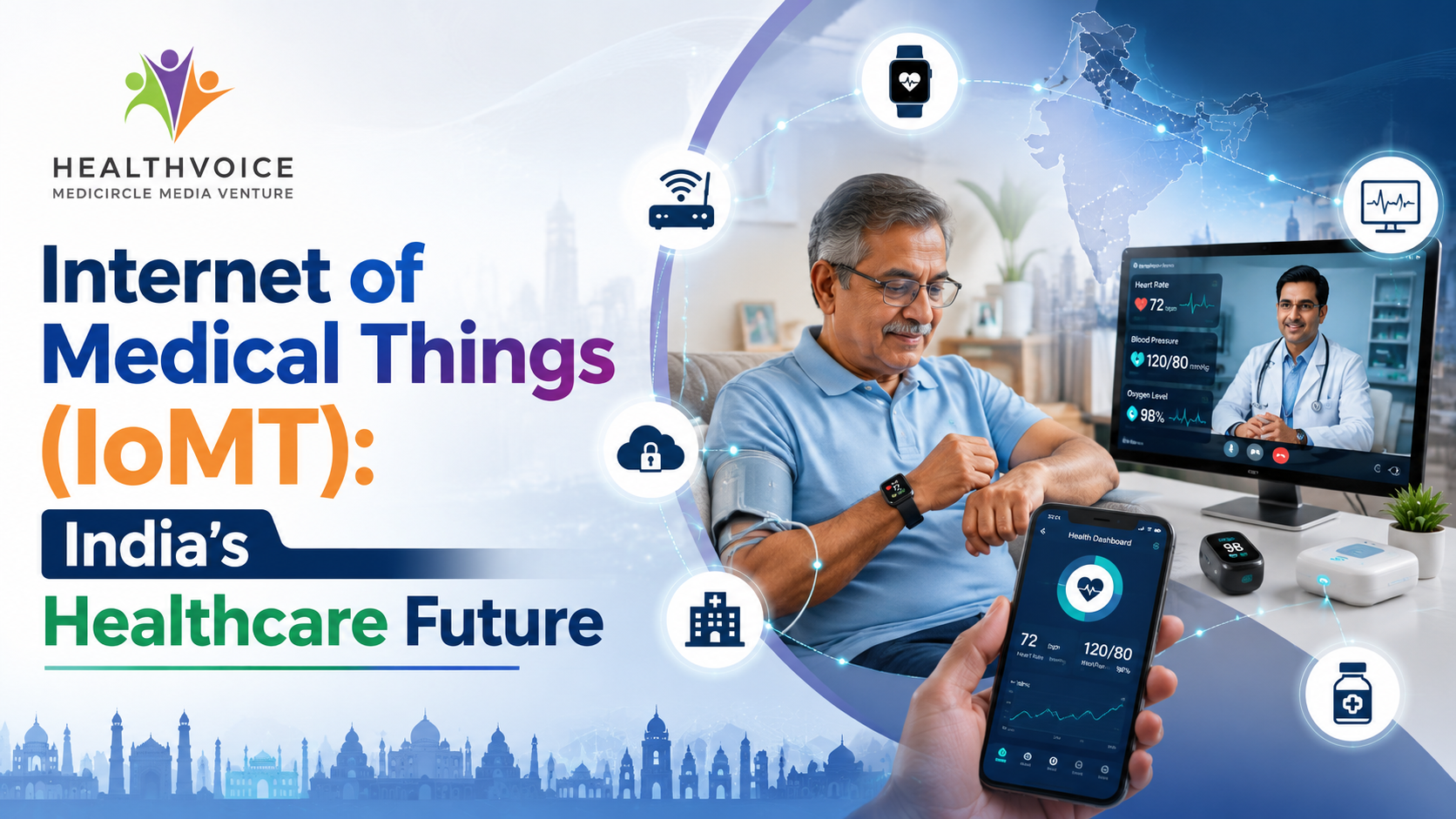
Introduction
Healthcare in India is undergoing a quiet but profound transformation. Millions of patients across the country now have their vital signs monitored from home. Doctors in urban hospitals are reviewing real-time data from patients in remote villages. Ambulances are transmitting patient information to emergency rooms before arrival. Behind all of these developments is a rapidly maturing technology ecosystem known as the Internet of Medical Things, or IoMT.
The Internet of Medical Things refers to a connected network of medical devices, sensors, clinical software, and health applications that communicate with each other and with healthcare providers through internet-enabled systems. These devices collect health data, transmit it securely to care teams, and enable faster, more informed medical decisions without requiring patients to be physically present at a facility.
For a country like India, where the doctor-to-patient ratio remains far below the WHO recommendation of 1 doctor per 1,000 people, and where large sections of the population live hours away from quality medical infrastructure, IoMT is not just a technological novelty. It is a practical necessity. The ability to monitor a diabetic patient in a rural district of Odisha or flag a cardiac irregularity in an elderly resident of a Tier 3 town before it becomes a crisis represents a genuine shift in how Indian healthcare can and should function.
This article explores what IoMT is, how it works, where it is being applied, and what it means for doctors, hospitals, and patients across India.
Understanding the Internet of Medical Things: Core Architecture and Function
At its foundation, IoMT functions through a layered system in which devices, networks, cloud infrastructure, and applications work in coordination to move health data from the point of collection to the point of clinical decision-making.
The first layer consists of the devices themselves: wearable sensors that track heart rate, blood pressure, oxygen saturation, and glucose levels; diagnostic instruments such as portable ECG machines and smart infusion pumps; cameras used for patient observation; RFID tags for tracking medicines and equipment; and personal emergency response systems worn by elderly or high-risk patients. These are the frontline nodes of any IoMT system, responsible for sensing and recording what is happening with the patient in real time.
The second layer involves the communication networks that transmit data from these devices to central processing platforms. Short-range technologies such as Bluetooth, ZigBee, and NFC connect devices to a local gateway, which is often a smartphone or a dedicated hub. From there, longer-range communication technologies including 4G, 5G, Wi-Fi, and in remote regions, satellite connectivity, carry the data to cloud servers.
The third layer is cloud-based storage and computing, where vast volumes of health data from multiple patients and multiple devices are aggregated, stored securely, and made accessible for processing.
The fourth and topmost layer is the application and intelligence layer, where the data is transformed into clinically useful information. This is where artificial intelligence and machine learning algorithms analyze patterns, generate alerts, support diagnostic decisions, and present information to physicians through dashboards and clinical interfaces.
Each layer is essential. A wearable glucose monitor without a reliable network connection is of limited use. A cloud server full of health data without intelligent analytics cannot guide treatment. IoMT derives its clinical value from the seamless functioning of all four layers together.
Key Domains and Types of IoMT Deployment
IoMT devices and systems are not confined to hospitals. They operate across four primary domains, each with its own characteristics and purpose.
On-body or wearable IoMT includes devices worn directly on the patient, ranging from consumer-grade fitness trackers and smartwatches to medical-grade wearables such as cardiac patches, continuous glucose monitors, and neuromodulation devices. In India, the consumer wearable market has seen significant growth, with brands offering affordable devices capable of tracking steps, oxygen saturation, sleep quality, and heart rate. Medical-grade wearables are increasingly being incorporated into chronic disease management programs for conditions such as diabetes, hypertension, and cardiovascular disease.
In-hospital IoMT represents the most complex domain, covering connected diagnostic equipment, smart infusion pumps, RFID-tagged medicine bottles and surgical instruments, electronic health record systems, and patient flow management tools. Leading hospitals in cities such as Mumbai, Chennai, Bengaluru, and Delhi have begun integrating these systems as part of their smart hospital initiatives. The goal is not just efficiency but also safety, reducing medication errors, preventing mix-ups, and enabling faster clinical responses.
In-home IoMT focuses on monitoring patients with chronic conditions in their own homes, reducing unnecessary hospitalizations and enabling clinicians to track recovery or disease progression remotely. For patients managing heart failure, chronic obstructive pulmonary disease, or post-surgical recovery, in-home monitoring systems can detect early warning signs and alert healthcare teams before a crisis develops.
Community and outdoor IoMT covers public health applications such as environmental sensors monitoring air quality and temperature, mobile diagnostic kiosks in rural areas, and connected ambulance systems. Given India's challenge of delivering healthcare to remote populations, community IoMT holds particular promise for primary care outreach and epidemic surveillance.
The Clinical and Operational Benefits of IoMT for Indian Healthcare
The advantages that IoMT brings to the healthcare system are substantial, and for India specifically, they address long-standing structural gaps.
One of the most significant benefits is continuous and accurate patient monitoring. A single blood pressure reading during a clinic visit tells a doctor very little about a patient's true cardiovascular status. A week's worth of readings transmitted from a home monitoring device tells a much richer and more accurate story, allowing for better-calibrated diagnoses and more personalized treatment plans.
IoMT also makes healthcare more accessible. India's Ayushman Bharat Digital Mission (ABDM) has laid an important foundation for digital health records and interoperability. When IoMT devices are integrated into this framework, it becomes possible for a specialist in a city hospital to review a rural patient's real-time clinical data and provide meaningful guidance without either party travelling. This is particularly relevant for managing conditions such as tuberculosis, diabetes, and hypertension, which carry a disproportionately high burden in India's population.
From an operational perspective, hospitals benefit from reduced medication errors, better asset utilization, and more efficient workflows when IoMT is thoughtfully implemented. Smart tracking of medical equipment using RFID technology reduces the time nurses and technicians spend searching for devices and ensures that critical supplies are always accounted for.
Cost reduction is another important outcome. Remote patient monitoring reduces unnecessary hospital admissions and emergency room visits. For patients in economically vulnerable groups, this reduction in out-of-pocket expenditure is directly meaningful. For the healthcare system as a whole, preventing complications through early detection reduces the overall cost burden of chronic disease management.
Challenges in IoMT Adoption: What India Must Navigate
Despite its enormous potential, IoMT adoption in India faces real and significant challenges that the healthcare community must confront honestly.
Connectivity remains a foundational barrier. IoMT depends on reliable, high-speed internet to function effectively. While India has made impressive strides in 4G penetration and is expanding 5G infrastructure in urban centres, large sections of rural India still experience inconsistent connectivity. Without dependable networks, even the most sophisticated IoMT device cannot deliver its intended value.
Data privacy and security represent the most critical concern in IoMT deployment. Medical data is among the most sensitive categories of personal information. India's Digital Personal Data Protection Act, passed in 2023, establishes a framework for data governance, but compliance capacity and implementation across diverse healthcare providers remains uneven. Cyberattacks on healthcare systems have been documented in India, and the growing volume of patient data moving through IoMT networks makes robust cybersecurity an urgent priority.
Interoperability continues to challenge IoMT ecosystems globally, including in India. Devices from different manufacturers often do not communicate seamlessly with each other or with hospital information systems. The ABDM has begun creating standards to address this, but uniform interoperability across the Indian healthcare ecosystem remains a work in progress.
High initial costs, a shortage of trained technical personnel in smaller facilities, and limited patient digital literacy in rural and semi-urban populations are additional factors that slow adoption. Regulatory clarity from bodies such as the Central Drugs Standard Control Organisation (CDSCO) regarding the approval and oversight of connected medical devices is still evolving, creating uncertainty for manufacturers and healthcare providers alike.
These challenges are solvable, but they require coordinated action from policymakers, technology developers, healthcare institutions, and the medical community.
The Role of Artificial Intelligence and Emerging Technologies in IoMT
IoMT and artificial intelligence are not separate phenomena. They are deeply and necessarily interconnected.
The volume of health data generated by connected devices far exceeds what any clinical team could meaningfully review manually. AI and machine learning algorithms make sense of this data at scale, identifying patterns that signal early disease onset, predicting deterioration in chronic conditions, and flagging anomalies for physician review. In cardiology, AI-powered IoMT systems can detect arrhythmias from continuous ECG data with accuracy that rivals experienced clinicians. In diabetes management, predictive algorithms integrated with continuous glucose monitors help patients and physicians anticipate and prevent hypoglycaemic episodes.
Blockchain technology is gaining attention as a means of securing IoMT data, creating tamper-proof audit trails of how patient information is accessed, shared, and used. This has direct relevance for India, where trust in digital health systems must be built carefully and transparently.
The rollout of 5G networks in Indian cities is expected to significantly enhance IoMT capabilities. The combination of ultra-low latency and high bandwidth that 5G offers will enable more complex and data-intensive applications, including high-definition remote surgical assistance, real-time video-based patient assessment, and large-scale population health monitoring.
Edge computing, in which data is processed closer to the point of collection rather than being sent entirely to distant cloud servers, is also improving the responsiveness and reliability of IoMT systems, particularly in settings where cloud connectivity may be intermittent.
IoMT and the Future of Doctor-Patient Engagement in India
For the medical community in India, IoMT represents both an opportunity and a responsibility. It offers doctors the ability to extend their clinical reach far beyond the walls of their consulting rooms. A cardiologist in Pune can monitor a post-discharge heart failure patient in Nashik. A pulmonologist can review overnight oxygen saturation data from a patient with sleep apnoea without the patient needing to undergo an in-hospital sleep study.
At the same time, this expanded reach comes with new expectations around data interpretation, patient communication, and clinical decision-making in a remote context. Medical associations and academic institutions across India have an important role to play in training doctors to use IoMT tools effectively and in establishing guidelines for responsible remote monitoring practice.
Platforms such as HealthVoice, which are designed to connect doctors, medical associations, and healthcare communities, serve an important function in this evolving landscape. They provide a space for clinicians to discuss emerging technologies, share experiences with IoMT implementation, and collectively shape the professional standards that will govern connected care in India.
The National Medical Commission and other regulatory bodies will also need to provide clearer guidance on the medico-legal dimensions of IoMT-enabled care, including accountability when a device fails, liability in remote prescribing, and consent requirements for continuous data collection.
Frequently Asked Questions
Q1: What is the Internet of Medical Things (IoMT)?
The Internet of Medical Things (IoMT) refers to a connected network of medical devices, sensors, and software applications that collect, transmit, and analyze health data through internet-enabled systems. It forms the technological backbone of modern telemedicine and remote patient monitoring.
Q2: How is IoMT being used in India?
In India, IoMT is being applied across remote patient monitoring, chronic disease management, smart hospital operations, and public health initiatives such as the Ayushman Bharat Digital Mission (ABDM). It is also supporting telemedicine access in rural and Tier 2 and Tier 3 cities.
Q3: What are the main challenges of IoMT adoption in India?
Key challenges include inconsistent internet connectivity in rural areas, data privacy and cybersecurity concerns, lack of interoperability standards, high initial setup costs, and limited digital health literacy among patients in smaller towns and villages.
Q4: Is patient data safe in an IoMT system?
Patient data security in IoMT depends on robust encryption, identity authentication, and compliance with regulations such as India's Digital Personal Data Protection Act and international standards. Responsible IoMT deployments incorporate strong firewalls, access controls, and blockchain-based security in advanced systems.
Q5: What types of devices are part of the IoMT ecosystem?
IoMT devices include wearable health monitors such as smartwatches and ECG patches, in-home monitoring systems for blood pressure and glucose, smart infusion pumps, RFID-enabled hospital asset trackers, point-of-care diagnostic kiosks, and mobile health applications connected to clinical platforms.
Resources
- Ayushman Bharat Digital Mission (ABDM): Official platform for India's national digital health ecosystem, including interoperability and health ID frameworks.
- Indian Council of Medical Research (ICMR): Guidelines and publications on digital health technologies and their application in Indian healthcare settings.
- World Health Organization (WHO) India Country Office: Reports on digital health strategy, telemedicine standards, and connected care in low- and middle-income countries.
- Ministry of Health and Family Welfare, Government of India: Policy documents and national health technology guidelines including telemedicine practice guidelines.
- PubMed, National Library of Medicine: Peer-reviewed research on IoMT architecture, clinical applications, and emerging challenges.
Interlinking Keywords:
Internet of Medical Things, remote patient monitoring India, telemedicine India, Ayushman Bharat Digital Mission, smart hospital India, wearable health devices, digital health India, chronic disease management technology, healthcare IoT, connected medical devices
Last medically reviewed by:
HealthVoice Medical Editorial Board on August 12, 2026
Medical Disclaimer:
The information provided in this article is intended for general educational and informational purposes only. It does not constitute medical advice and should not be used as a substitute for professional medical consultation, diagnosis, or treatment. Readers are advised to consult a qualified and registered medical practitioner for any health-related concerns. HealthVoice does not endorse any specific medical device, technology platform, or commercial product mentioned in this article.
 Team Healthvoice
#IoMT #DigitalHealthIndia
